UTS Think Global

Dream. Explore. Discover.

Disclaimer: All blog posts are written by students and do not necessarily reflect the views of UTS staff.

  • Korea University, South Korea

    Hello aspiring students wanting to study in Korea for exchange,

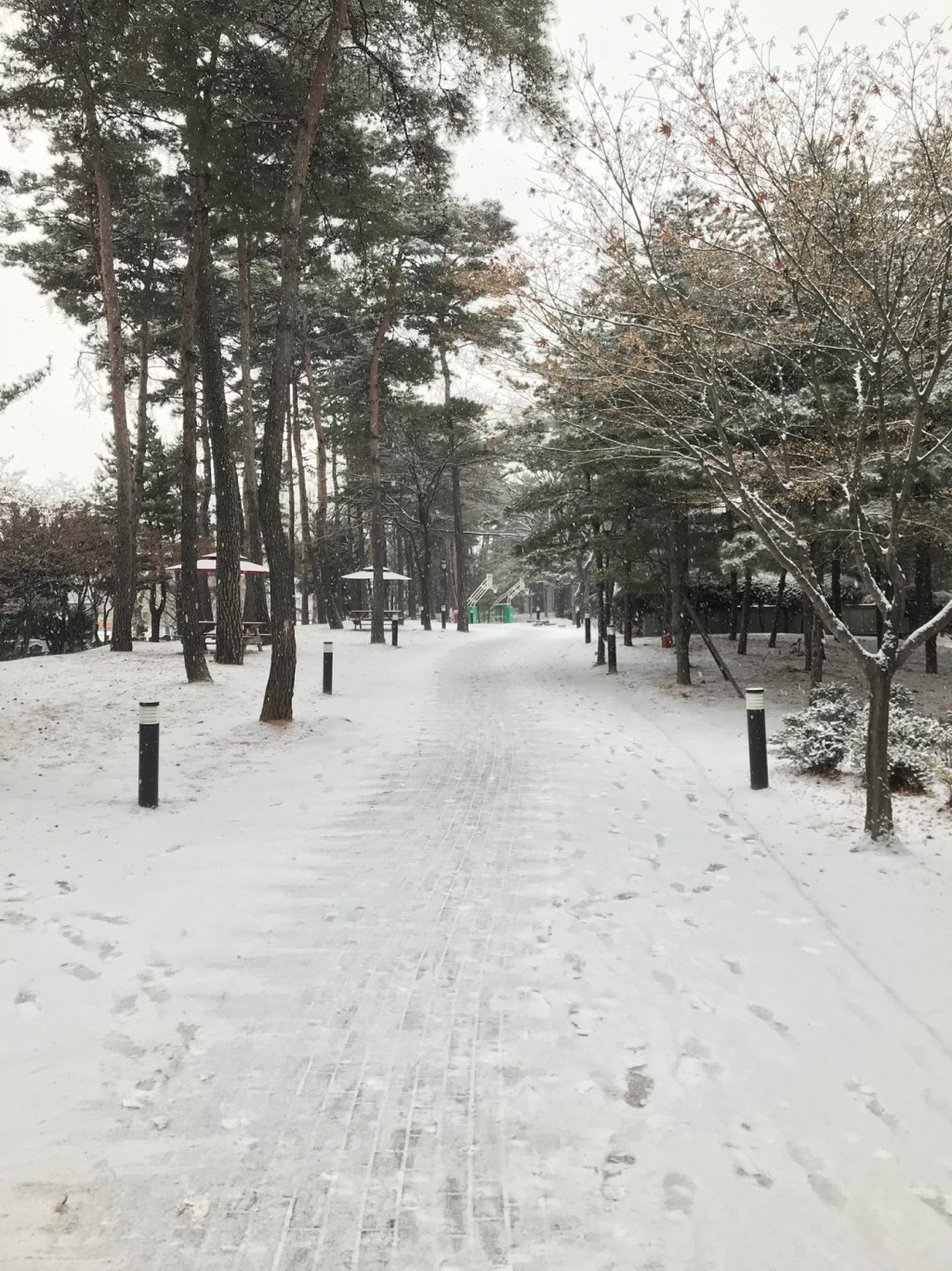
    I am currently studying at Korea University for one year. The facilities here are so awesome! The campus especially during the January to February period is beautiful because of the snow. The teaching style differs to UTS as there are no 3000 word essays to write and out of the 400 to 450 marks total 10% can be awarded from participation or attendance throughout the semester. There are some subjects that only require you to do multiple choice or true/false questions for the mid-term or final exam. Although the subjects are set out as lectures then followed by a discussion period unlike UTS there are no tutorials. Majority of the classes are on either Monday/Wednesday slot or Tuesday/Thursday slots with some minorities on Fridays’. For my restricted electives I am currently studying Interpersonal Communications, Media Technology, Understanding Advertising and Marketing Management which are all very interesting and very different to what I have studied before, so I am happy to take this challenge on board for 2019. For my free electives I am doing Advanced Korean which is a little challenging as this class requires academic and advanced knowledge of Korean words, but I only have ability to have every day conversations rather than trying to professionally demonstrate an academic presentation.

    Life in Seoul is very busy and hectic. Almost everyday I am outside and never at home because I’m always doing something! The orientation program at Korea University is exceptionally good as it was organised and the KUBA (Korea University Buddy Assistance) were very helpful and kind to the exchange students. They also spoke very good English. Currently I’m not staying on-campus but I found my own place by looking through the website Come and Stay and found a sharehouse to live in. A new sport and activity I have taken up is Pilates and attending acting school.

    My number one tip in Korea is to stay away from strangers who come up to you randomly out of the blue trying to start a conversation going. Most of them will be associated with cults and it already happened to me twice, mostly the scenarios consisted of them trying to create a webdrama with your help or something about meeting you was “fate” and meant to be and that your luck is currently blocked which needs to be unleashed by attending some sort of event. NEVER fall for these!

    I really hope you all have a good time in Korea if you do end up studying in Seoul! 🙂

    Patricia Kim
    Bachelor of Music and Sound Design
    Korea University
    South Korea

    Australian Government New Colombo Plan Mobility Grant recipient.

    For more information about the UTS Global Exchange program please visit: www.global-exchange.uts.edu.au
  • Universidad de Montevideo, Uruguay

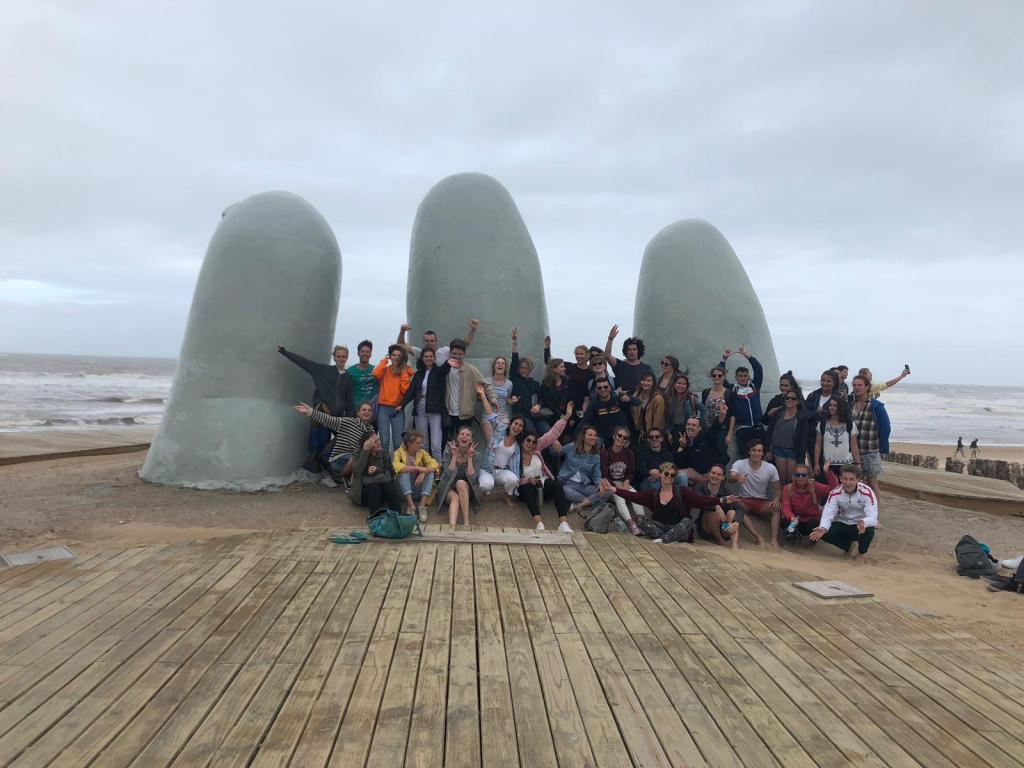
    Upon my arrival in Uruguay I wasn’t entirely sure what to expect. Tucked away between the giants of Brazil and Argentina, Montevideo doesn’t have the same glamorous ring to it as Rio de Janeiro or Buenos Aires. However, this country with a population of only 3 million has European charm, friendly people and a nearby beach so I was off to a good start.

    The university itself has been a different experience to what I’ve come to know at UTS. The Universidad de Montevideo is a private Catholic university with only 2500 students, so much like Montevideo in general everyone knows each other. The main building is always full of students greeting one another with the customary kiss on the cheek or sharing a ‘mate’ (a popular tea throughout South America) in between classes. The small size of the university and exchange group, as well as the kindness of the Uruguayans, has made it easy to meet people. This sociability is also strongly encouraged in the university through the opportunities to participate in sports, volunteer or attend university events. In my experience through two different exchanges (UTS ICS and Global Exchange) one of the most important things when on exchange is to throw yourself into all the opportunities that are made available to you.

    The classes at the UM also encourage interaction with other students and professors. Much like UTS, the UM seeks to keep classes interesting and participatory, whilst also teaching through practice and theory. Unlike UTS, the UM does not incorporate a lecture component to classes but only has a more ‘tutorial’ style class. I am currently taking a mixture of communications and business classes which require attendance and participation in class, as well as assessments throughout the semester. Although presentations, participation and oral assessments in Spanish still make me nervous I am thankful for the practice that it gives me as I am seeing constant improvement in my language abilities. However, the university also offers a range of subjects in English for both international and local students if desired. From my brief experience thus far in Uruguay I can safely say that I am eager to see what else the country, university and semester will bring.

    Alicia Child
    Bachelor of Communications & BAIS
    Universidad de Montevideo 
    Uruguay

    For more information about the UTS Global Exchange program please visit: www.global-exchange.uts.edu.au

  • Nether-leaving Tilburg!

    Hello from Tilburg, the small town in the south of the Netherlands that I have called home for the past seven weeks. I live in student accommodation called Verbs that I would highly recommend to anybody looking to study here. They are two buildings situated side by side, both containing five floors with seventeen students on each floor. Whilst that may sound like a mess-ridden nightmare to some, it is so much fun, as you immediately develop a family like feel with the people you share your floor with. My floor includes three Australians, including two students also from UTS (couldn’t escape them!), as well as Spaniards, Americans, Peruvians, South Koreans, Canadians, Hungarians and Taiwanese.

    The teaching style here is quite similar to UTS, with greater emphasis on lectures and only occasional tutorials, however it does depend on the type of subjects you are studying. I am mostly studying EU focused law subjects, which have provided an interesting twist on what I learn back home.

    Life in Tilburg is very different to back home. We ride our bicycles everywhere, which is a lot of fun, although we had one week of snow which made staying upright much more difficult. The intro week that Tilburg University arranged for us was an incredible week of fun. We did pub-crawls, a tour of the city, we met our Dutch mentors who provide us with answers whenever we need, and most importantly of all we did a Cantus. Cantus is like a Dutch Oktoberfest, where over a thousand people were packed into a massive hall for a few hours, with a live band playing classic covers of both Dutch songs and rock classics like Hey Jude and Sweet Caroline. At the end of each song we were all then required to down our drink. That night was definitely one of the highlights of my trip so far, and a must do experience for anybody on exchange in the Netherlands.

    The other great aspect of being on exchange in the Netherlands is the ease at which you can travel to different parts of Europe. Already I have been around the UK before I arrived in Tilburg, and since being here I have been to Germany twice, Prague, Rotterdam and Amsterdam. On top of that I have upcoming trips planned to Switzerland, Iceland, Italy, and Berlin. As somebody who had hardly been to Europe before coming here, this has been an incredible eye-opening feature of living and studying in Tilburg.

    Jack Bresnahan
    Bachelor of Business / Bachelor of Laws
    Tilburg University
     
    The Netherlands

    For more information about the UTS Global Exchange program please visit: www.global-exchange.uts.edu.au

  • Sophia University, Japan

    Finally, after a grueling few months of administrative work, filling in documents, subject approval and preparation, I set off and arrived in Japan on April 1st ready for my year of exchange.

    Although I have previously been in Japan, it’s definitely hard to get used to the city, people and population. It’s crazy how just the city of Tokyo has more people than the entirety of Australia, the peak hour trains are just about the most squished you’ll ever feel. Most of the people are very systematic and rule following is stressed. But these are just minor issues that I adapted to very quickly.

    But there are also many great things about Japan such as the abundance of vending machines which will spoil you with choice or the convenience stores which compared to Australia’s convenience stores, are actually “convenient” and can support someone through their daily life. When talking about the great things of Japan, I just can’t not mention that a lot of things are cheap! You can get good curry meal for $4, a hot bowl of ramen for $5 and even a can of beer for approximately $1.

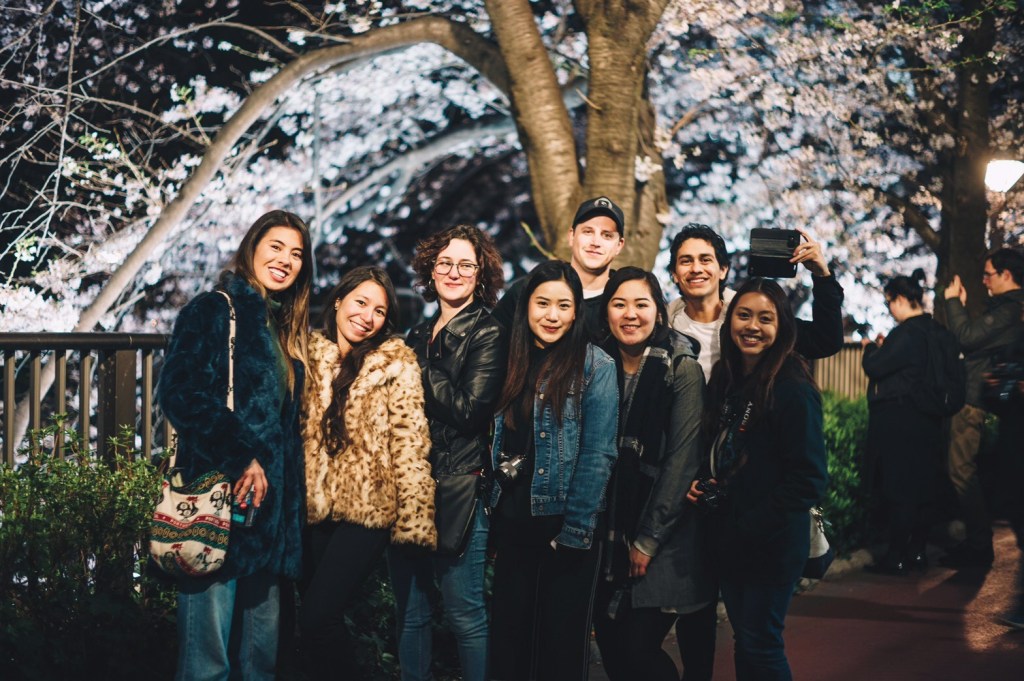
    I also arrived just in time to participate in 花見 (hanami) which is a Japanese Cultural Event for sakura tree and flower viewing.

    My exchange university is 上智大学 which in English is called Sophia University and is a catholic university based within Tokyo. Sophia University’s facilities are quite similar to UTS, being a university with its campus spread out in a metropolitan area. You have all the basic facilities such as cafeterias, library, computer and printing access, global exchange and education support etc. Everything to make even an exchange student comfortable.

    They even had a digital globe which contained the location of UTS.

    The teaching style and education system is definitely different when compared to Australia. For instance, most Japanese classes will grade you on attendance very harshly, missing a few classes without a proper explanation can result you in failing the class. Japanese classes also differ in respects to grade allotment, where the final exam will make up for most of your grades, from a normal 30% to 40% all the way up to 80% of the total marks. In terms of teaching, one would expect about the same as UTS, where teachers will lecture at the front and provide individual support for students later in the class. It seems that most Japanese classes tend to only be lecture classes and emphasize rote learning.

    I have enrolled in the Faculty of liberal arts at Sophia which is quite different to my IT degree at UTS as Sophia University does not provide IT subjects in English. These subjects include but are not limited to social sciences, anthropology and sociology, Japanese society and culture. This is quite different to what I learn at UTS and I believe will be quite interesting as studying social and cultural content may help me with the humanitarian side of IT.

    Japanese Universities, and culture in general also provide “clubs” and “circles” which are officially supported student made groups and collectives that participate in things such as but not limited to: Martial arts, music, learning, volunteering, cooking, gaming and sports. Many of these clubs are taken seriously and when one joins, they must commit while other clubs are more casual and social and have no strict attendance requirements.

    The clubs I’m looking into are the Karate club (strict attendance), Judo club (loose attendance), cooking club (loose attendance) and pop culture and gaming club (loose attendance).

    Here is a picture of the karate club performing an act during a new student reception event.

    Overall, I find Japan to be an extremely fast paced and exciting country (at least in the heart of Tokyo) as well as an extremely serene and beautiful place (while in the more rural areas). I highly recommend any students looking for a country to exchange to, to give Japan some thought.

    Benson Zhang
    Bachelor of Science in Games Development
    Sophia University
    Japan

    Australian Government New Colombo Plan Mobility Grant recipient.

    For more information about the UTS Global Exchange program please visit: www.global-exchange.uts.edu.au
  • Kungliga Tekniska Högskolan (KTH), Sweden

    My 2019 Autumn semester took me across the world on a study exchange to Kungliga Tekniska Högskolan (KTH) in Stockholm, Sweden. Having never been outside Australia on my own, let alone to Europe I was filled with a mixture of fear and excitement. Hopefully this post will shed some light on the highlights of my trip thus far, and also teach you what it means to Study abroad in Sweden.

    Stepping out of the airport, the brisk -14°C wind quickly shocked the 40°C temperatures from Sydney out of my system. My first impression of getting around were blown away, with the public transport network around Stockholm being second to none – max wait time during the day about 3 minutes for any service. Aside from that, Stockholm doesn’t get the title of “Safest City in Europe” for no reason. Whether I’m rummaging through the markets or catching a bus home at 4am I’ve never once felt threatened or unsafe.

    Sunset at Kungliga Tekniska Högskolan Main Campus

    Moving onto the university life, the initial orientation week hosted by the Student union was unbelievable. The multitude of pub crawls, activities, and overnight parties allows you to not only soak up different Swedish traditions; it enables you to meet the other 300+ exchange students from all around the world. It is in these events that I was able to make groups of friends whom I continue to spend the majority of my free time with and planning trips around Europe & Scandanavia with!

    This exchange opportunity allowed me to challenge myself with subjects that didn’t relate (directly) to Structural Engineering. This semester I’m studying the following 3 subjects:

    1. Introductory Astronomy for Engineers
    2. Swedish Society, Culture and Industry in Historical Perspective
    3. Transport, Communication and Sustainable Development

    KTH and UTS have their similarities and their differences in terms of academic life. Alike UTS the classes run with similar structure, with assignments and exams having similar weighting and importance. The structure of the semester/s is something that I’m finding difficult to become accustomed to. Being required to cram and complete 2 subjects in the space of just 7-8 weeks, myself and other international students are finding it challenging to learn the content thoroughly – but we manage all the same. In saying this, the benefit of having a dedicated campus with cafes, bars, and of course accommodation you are constantly immersed into the student culture of the university inside and outside of class. It is this culture that makes coming to university that much more enjoyable.

    Cruise ship returning from Riga, Latvia

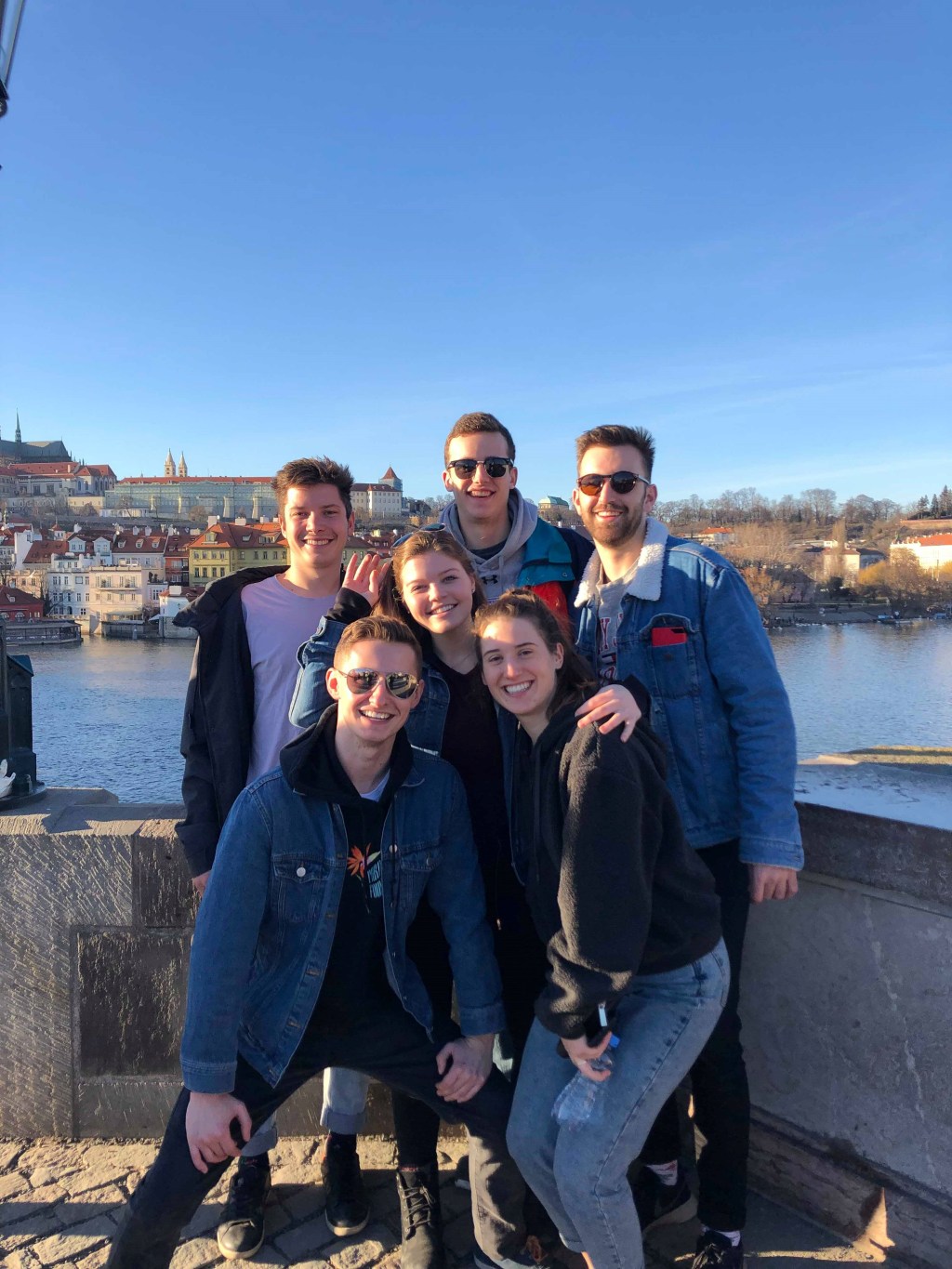
    It is now March and just as I started getting used to the cold, dark, and gloomy Stockholm, it has stopped snowing and is a summery 4°C outside. To fill in my time between classes and study I’m constantly looking for new places to explore and travel, whether it be museums, ice skating rings, or simply second-hand shops; Stockholm has an abundance of attractions to offer. Looking towards the weekends and the benefit of being so close to Europe shines through with trips to the snow, Iceland, Riga, Lapland, Prague, and Amsterdam all being complete. In the coming months trips to Finland, Russia, Estonia, Denmark, and Norway have all been booked – and that’s all before semester ends!

    Aside from my travel, I’ve taken full advantage of the Swedish custom ‘Fika’, which by definition means to “go get coffee and something sweet”. However, this local custom means so much more. This outing becomes more about socialising, meeting new people, and just catching up with old friends than drinking coffee. It is this single cultural tradition that has taught me so much about not only Swedish cultural but about the importance of simply talking to someone and asking ‘how their day is’. Especially being in a community of international students who are away from friends and families, the importance of being open and friendly with one another is so much more important.

    Student exchange will challenge you in more ways than just your academic life. It will teach you the intricacies of different cultures around the world, it will teach you how be daring, it will teach you how to be a financial planner, it will teach you the power of friendship, it will teach you how to be a travel agent, and it will teach you how to cook (me). But most of all, it will show and test just how strong you really are.

    Don’t stop challenging yourself and keep moving forward.

    Brock Westwood
    Bachelor of Engineering
    Kungliga Tekniska Högskolan
    Sweden

    For more information about the UTS Global Exchange program please visit: www.global-exchange.uts.edu.au

  • TU Delft, The Netherlands

    Hey there!

    My name is Alex and I’m currently doing a semester of exchange at TU Delft where I’m studying my masters in Architecture. The Netherlands have been one heck of a ride and a bit of a learning curve but it’s been absolutely incredible so far!

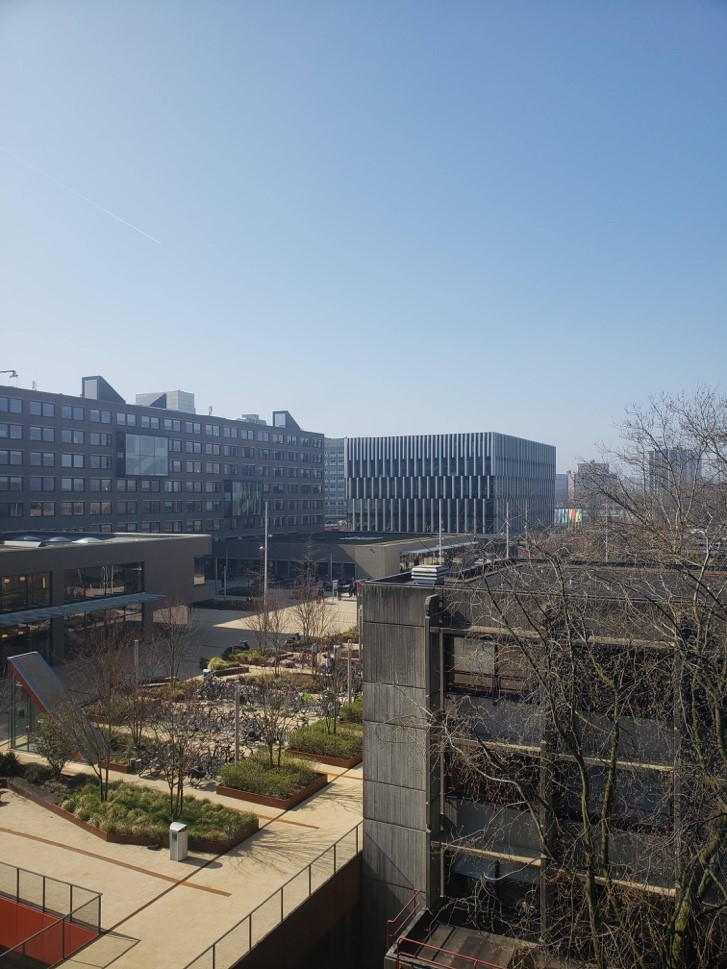
    I’m living on campus, practically next door to my faculty building which makes the morning sleep ins nice and easy. I’ve found TU Delft quite challenging as it is ranked in the top 3 universities in the world for architecture, so it’s needless to say that every student and academic here is so incredibly talented. I’ve quickly become accustomed to the infamous directness of the Dutch, but I’ve come to appreciate their to the point and no fuss honesty, in saying that, all of the Delft students I’ve met have been super helpful in showing me how the machinery and 3D printers work. Our faculty is centered around this amazing modelling hall with CNC machines, robot arms, wood working machinery and wet areas for concrete casting… its essentially every architect’s dream. I’ve definitely noticed that there is more of a focus on the group work and shared teaching experiences…you’re forced to work with other people and the amazing facilities actually make you want to work. Social life is also really important and the whole university flocks to the architecture pub also located within our building. The atmosphere is always buzzing and the whole faculty never stops and even if you don’t have class there is an internationally renowned architect giving a talk, or a workshop, or a group of students having beers.

    The work culture within the university is way more healthy than Australia as the building closes at 10pm and on weekends so it forces you to make the most of your day and gives you free weekends. I’ve found this schedule really helpful in giving me free weekends to travel around Netherlands, Germany and next week I’ll be off to Paris! The courses I’m studying have also allowed me to travel – being quite central to Europe, we go on tours and study trips to see some of the world’s best architecture. In Australia we simply had to read it from a book so it’s been great to actively engage with architecture.

    Alexander Galego
    Master of Architecture
    TU Delft
    The Netherlands

    For more information about the UTS Global Exchange program please visit: www.global-exchange.uts.edu.au

  • Sogang University, South Korea

    Choosing to come to South Korea will be one of the most spontaneous and wild decisions that I have ever made. It has almost been 3 weeks since I have lived in this country and all I can say is, I am in LOVE. If I could give you one advice, that is to DO IT.

    South Korea really does have an interesting culture, food and lifestyle that I could rave about it all day. I find walking down the neighbouring streets alone is fascinating, as you will notice that there is so much to see. From underground restaurants and bars, to really high buildings with many restaurants and businesses stacked into one. You will also notice that as you walk into the supermarkets, the security guard will acknowledge your presence and do a slight bow. Restaurants will give you an abundance of complimentary side dishes to to eat from and the best thing about it, its refillable!

    However, be aware that there are hardly any public rubbish bins! It can be very frustrating at times. Anyways, I don’t want to spoil anything for you by listing too much of the little things that I have noticed or discovered…as I want you to enjoy the experiences here yourself. So be prepared to be surprised! So keep an open mind and heart when you come here. Soak up the atmosphere and uniqueness of this country and enjoy it!

    Now…I know you’re probably wondering…so what’s the academic life here? I’ve listed them in dot points below so it’s easier to read.

    Academic life (These will vary on the subjects you take)

    • You will be required to take 5 subjects (that’s if you don’t do the Korean language academic course), so choose them wisely but also be prepared for changes as I had to change twice. The first change was when I tried to enrol online and the original subject I wanted had no classes so I had to pick another one. The other change was during my first week here, I realised the class was not right for me.
    • The teaching style here is completely different to UTS. They take attendance very seriously. The classes you take will have their own separate rules but the universal rule is, there will be consequences especially if you are over 15 mins late (etc. marking you as absent even if you turn up later).
    • Each lecturer will have a TA (teaching assistant) to help them with marking attendance or if you have any miscellaneous questions you may contact them or the lecturer.
    • There is a sitting plan here. Whichever seat you choose on the first day will be your seat for the entire semester.
    • Classes run twice a week for one subject and it is taught in a lecture setting.
    • I’m currently taking a class called “English Syntax” and it is actually really interesting but really, really stressful. We cover sentences and the English language in depth. A lot of new terminology is thrown in this class, and we even draw these tree diagrams to illustrate our understandings. We compare all different types of languages in the world to English, and many times my lecturer would write Hangul on the board to demonstrate his purpose too. It’s actually really hectic. It’s stressful especially for me, as I made a mistake of not reading the syllabus properly before signing up. I completely missed the part where they said this course required ‘prerequisite of X subject’. So don’t be like me.

    Overall my experiences here has been great. It has been great especially due to the people that I’ve met. I highly suggest that you live on campus, because you will make a ton of friends. I made so many friends here that it has been so overwhelming. Everyone is just so friendly! Remember to like and join any facebook groups relevant to the semester you study. That way you can keep up to dates with who’s doing what.

    This year, one of the students created a massive Kakao chat and there are constant updates on what people’s plans are and all you do is turn up and explore with your new friends. It’s as simple as that! You will make and meet people everywhere; In the elevator, the walk to your room or even simply as you take out the rubbish. It’s funny, but when you live in the dorm you will consistently bump into people and consistently interact.

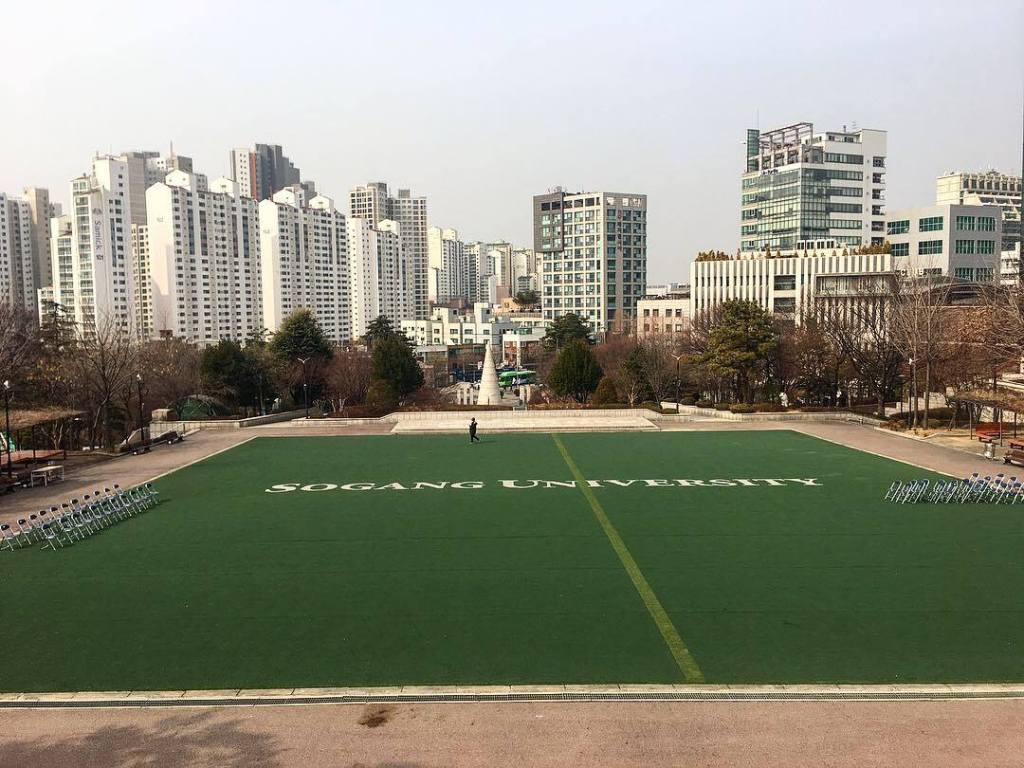
    I also suggest that you sign up and be apart of the H.U.G social club. It is where the Korean students at Sogang university organise events for the local students to hang out with the exchange students. They plan really interesting events regularly. I’ve only been to one so far (as seen in the picture below/Naksan Park) but there will be one almost every week.

    Oh, one more final advice that you must take with you especially if you plan to live on campus. Make sure when you to arrive to check in, that you ask your taxi driver to be dropped off at “SOGANG UNIVERSITY BACK GATE”. I repeat “BACK GATE” (서강대학교후문). You do not want to be dropped off at the front gate and walk up a massive hill with your massive luggage. My roommate and I learnt it the very hard way…I mean the back gate also has a hill but it is a shorter distance to your dormitory compared to the front gate.

    Anyways, I hope you also enjoy your experiences here as much I do.

    Until then,

    Sally Do
    Bachelor of Education (Primary)
    Sogang University
    Korea

    Australian Government New Colombo Plan Mobility Grant recipient.

    For more information about the UTS Global Exchange program please visit: www.global-exchange.uts.edu.au

  • A Semester in Milan

    Ciao ragazzi! If you are considering Global Exchange even in the slightest I would definitely recommend! In a few words, it is the one of the most rewarding and stimulating experiences!

    I am currently studying at Bocconi University, a 20 minute metro ride from the centre of Milan. The university itself is not too different from UTS in terms of its teaching style. The main difference is that there are no tutorials, only lectures which will run two or three times per week for each subject. The workload is of the same standard as UTS, with the option to take classes as attending or non-attending (where majority of the time you are only required to take a final exam worth 100% – a perfect opportunity to fit in travel throughout the semester).

    The university hosts over 1000 exchange students per semester, making it quite easy to constantly meet new people from all over the world. Besides making friends in your classes, there is an exchange group called ESN which is constantly hosting various events from aperitivos to weekend trips in Italy.

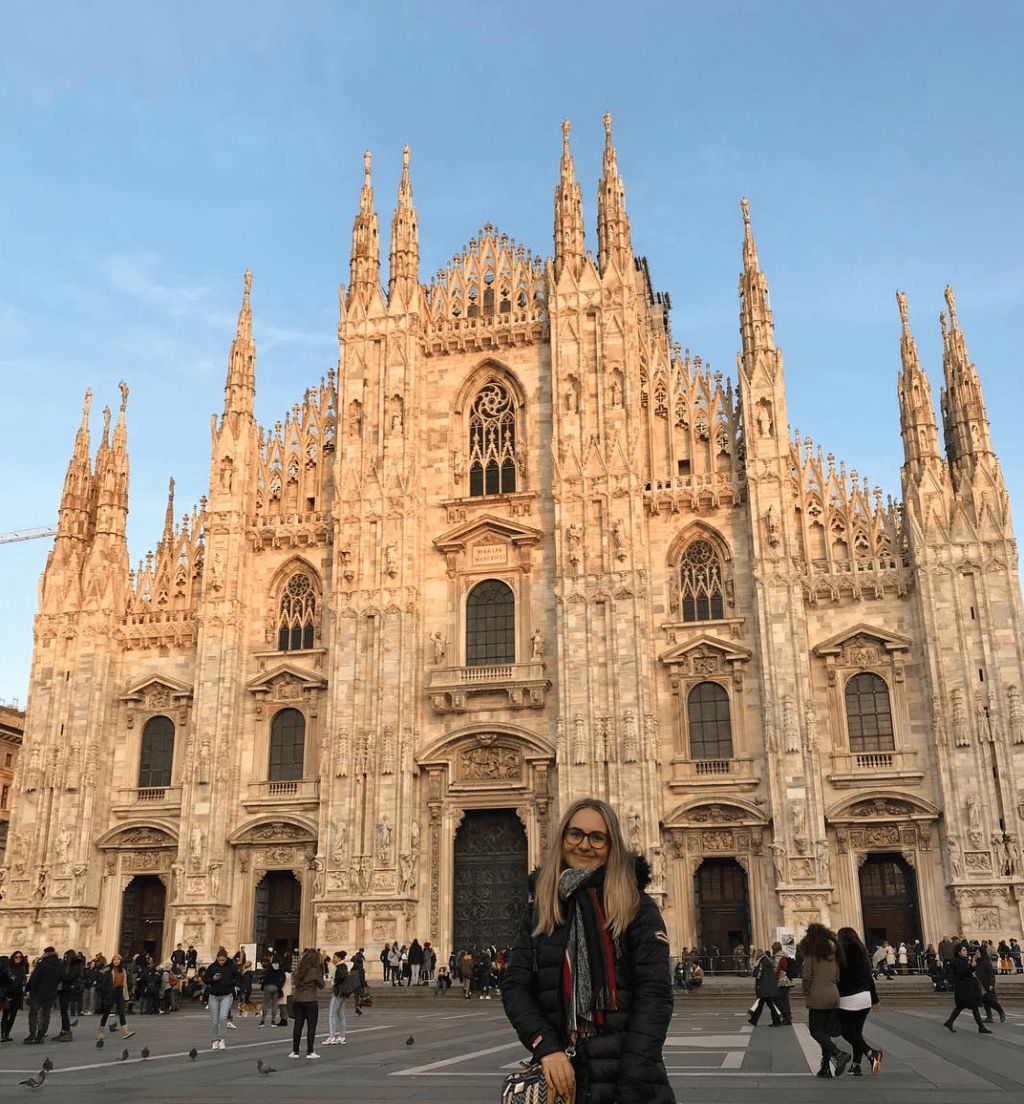
    Milan is a fast-paced city, much like Sydney in the business sense. However, taking a walk along the streets of Milan you can definitely see the difference. From the Duomo to Galleria Vittorio Emanuele II, Milan also has many hidden gems. A casual stroll from the centre to Navigli will lead you to stumble on ancient ruins and churches. It also does not cost much to have a good time here! Aperitivos range from 8 to 12 euros in which you receive a drink and unlimited access to a buffet full of different foods. The one guarantee you can have about living in Milan is that you will not go hungry! Aside from pasta and pizza, the city has a wide variety of relatively cheap eats which will leave your mouth watering. English is widely spoken in majority of the city, however it does not hurt to try your hand at some basic Italian. Bocconi offers Italian classes prior to the official start of the semester which definitely ease the transition from Sydney to Milan.

    The central location of Milan also makes travelling very easy! Flights and trains are relatively cheap and make weekend trips overseas a breeze. One weekend can be spent exploring Italy with the next in Austria, all in time for classes on Monday. Milan has two main airports, both with coaches running to and from the central station. The transport system in Milan is also very simple and efficient making it easy to travel from one side of the city to the other within 30 minutes. Would recommend to explore every chance that you possibly get!

    Thank you to UTS, Bocconi and the global exchange team for making this trip possible!

    Paraskevi Georgopoulos
    Bachelor of Economics
    Bocconi University 
    Italy

    For more information about the UTS Global Exchange program please visit: www.global-exchange.uts.edu.au

  • Erasmus University Rotterdam, the Netherlands

    What are the facilities like at your host uni?

    Rotterdam offers a wide range of facilities. Notable ones that I access are the library and study buildings. Although these study areas tend to fill up before 12pm most days they are an exceptionally conducive study area. Additionally, there is a communal food court that has different foods from all different countries.

    How does the teaching style differ to that at UTS?

    Rotterdam is a very interactive university. It involves a lot of class engagement and activities. I do not know how it is for other faculties of study but media and communications is very engaging. Although it follows a similar teaching style to UTS the tutorials/ seminars go for 2hrs and 45 mins for each subject. This allows for increased range of teaching styles, from teaching, to discussion, pitching presentations, and other class activities. I thoroughly enjoy this teaching style as it has helped me to boost my confidence in speaking in public and drives me to want to learn more about the subjects so I can engage more.

    Do you have both lectures and tutorials?

    Mainly tutorials and one lecture for the 3 subjects I’m doing this block of the semester.

    Are you studying something really interesting or different to what you have done before?

    I study a Bachelor of Business back at UTS and thought I would try something new with media and communications and I am very pleasantly surprised with how interesting all the subjects I’m taking are namely ‘ICT’s and emerging markets’ and ‘Innovation and entrepreneurship in creative and media industries’. These topics sync in well with my business course back home offering me new insights to different ways of thinking.

    How’s life in the host city?

    Rotterdam is not as packed as Amsterdam which is very nice. It makes it a very liveable city and it is super easy to get around via tram to anywhere in the city. They have lots of bars and good university spirit.

    Orientation

    Orientation was set out perfectly, equipped me and reduced my stress upon coming to the Netherlands. Allowed for a perfect transition into exchange life.

    Housing

    I am living in the Hatta Building on campus. I love my accommodation, it is a little expensive compared to other on campus accommodation but from what I have seen all the accommodation on campus is really good.

    New sport or activity?

    I have not taken up any new sports, however they have gym and classes running everyday which look amazing.

    Most surprising thing about Netherlands?

    Pretty much 98% people here speak perfect English/ despite pretty much everything being written in Dutch. i.e. advertisements

    Top tips

    If you’re interested in coming to Rotterdam I highly recommend it, especially if you are looking to gain some independence. Top tips I can recommend if you come here, be very open towards meeting new people, you will find that most of the interactions you have are with other exchange students who are also very keen to meet new people. Make sure you are on top of your immigration stuff.

    Michael Evans
    Bachelor of Business
    Erasmus University Rotterdam 
    the Netherlands

    For more information about the UTS Global Exchange program please visit: www.global-exchange.uts.edu.au
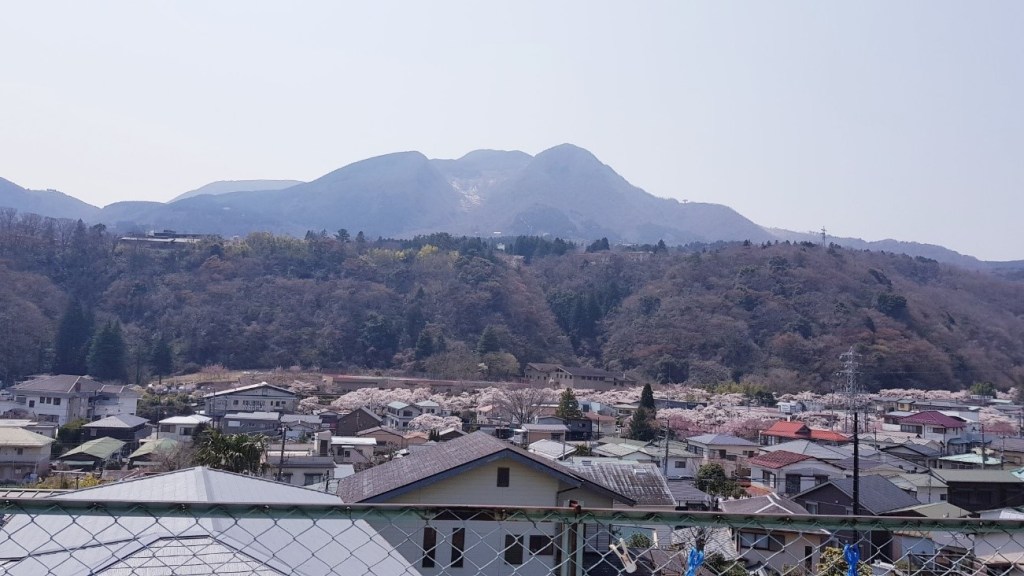
  • Meiji University, Japan

    My name is Hannah Allum, I am in my 3rd year of the Bachelor of Management, Major in Tourism at the University of Technology Sydney. Before even starting my degree I always wanted to do an Exchange, the idea of living and studying in another country is one that excites me. There is not a better time to study overseas than the time at University, the University supports exchange, the Australian government supports you and the experience is credited towards your degree. I mean, why wouldn’t you?

    The preparation for my exchange to Japan was not the easiest process, I found the systems and processes used in Japan for forms and applications very different to in Australia. My advice for anyone wanting to do their exchange in Japan is to be prepared for lengthy and bureaucratic form and application process. Be patient, organised and frequently check your email. Also, I only received my acceptance from the University about 4 weeks before the University started. So be prepared to wait a while for your acceptance, as hard as is be patient and if you do everything correctly, there is no reason why your application should be denied. The Visa was the easiest part, mine was completed within 3 days at the Japanese Consulate in Sydney.

    I arrived a couple weeks earlier than my semester start date, I wanted to use the time to settle in and get my bearings. Japan so far has been a whirlwind of excitement, for me learning the language is a primary goal so listening and immersing myself in my surroundings has been key to picking up the language. This blog post is being written before I start my Semester, so I am going to focus on preparation for my exchange and life in Japan so far. The Japanese culture shock and language barrier are intense to say the least, it is normal to feel overwhelmed! It does feel strange starting fresh and being new again, just small things like going to the Bathroom, ordering at a restaurant, navigating the public transport all have been relatively difficult, which can be frustrating and a bit defeating, but I know this is the reason I wanted to embark on this experience. These challenging moments and that feeling of being ‘foreign’ are all part of the initial exchange experience. I also have found it surprising with the amount of people there are everywhere, all the time! It truly is the city that never sleeps, I think in Tokyo I am going to learn to become a very patient person because the number of queues there are for everything is everywhere.

    The food has been a massive highlight for me so far, there are so many options and varieties of food everywhere, open all the time. I love trying new foods and Japan has so much to offer when it comes to food, all the places I have been to have extremely efficient and the Japanese hospitality is incredible. My advice is to be open and try the new things, ask the waiter what they recommend, if you are a foodie then Japan is definitely the place for you!

    Moving into my accommodation at Izumi International house in Tokyo, was a very smooth process. The place is how I imagined it, and what I saw from pictures. So, there were no surprises there! I have my own room with a bathroom and shared kitchen facilities, I am excited to get to know all my neighbours. This week is settling in week/orientation, we are sorting out legal documents and picking our class timetables. For Meiji University, you only finalise your class timetable after orientation, so much later compared to UTS. So be prepared that your subjects may change and have some back up options researched, as the subjects you may have researched and wanted to take may not be offered for the semester you are attending. Again, the timetable process is very different to UTS and be prepared for a vast amount of information and forms. To get to the Nakano Campus which is my main campus for the Japanese Global Studies School (English Track program), is about 30 mins on the train from Izumi International House. The public transport system in Tokyo is insane, I find it so enjoyable to go new places and use the trains, it is like a maze figuring it all out and so satisfying when you get where you want to go. My advice for anyone wanting to do the English Track Program at Meiji, learn some basic Japanese before you go, practise Hiragana and basic Japanese and this will help you with the placement test. Life here so far has been very exciting, I am ready and enthused to start my classes, create connections and amazing memories!

    Hannah Allum
    Bachelor of Management
    Meiji University
    Japan

    Australian Government New Colombo Plan Mobility Grant recipient.

    For more information about the UTS Global Exchange program please visit: www.global-exchange.uts.edu.au