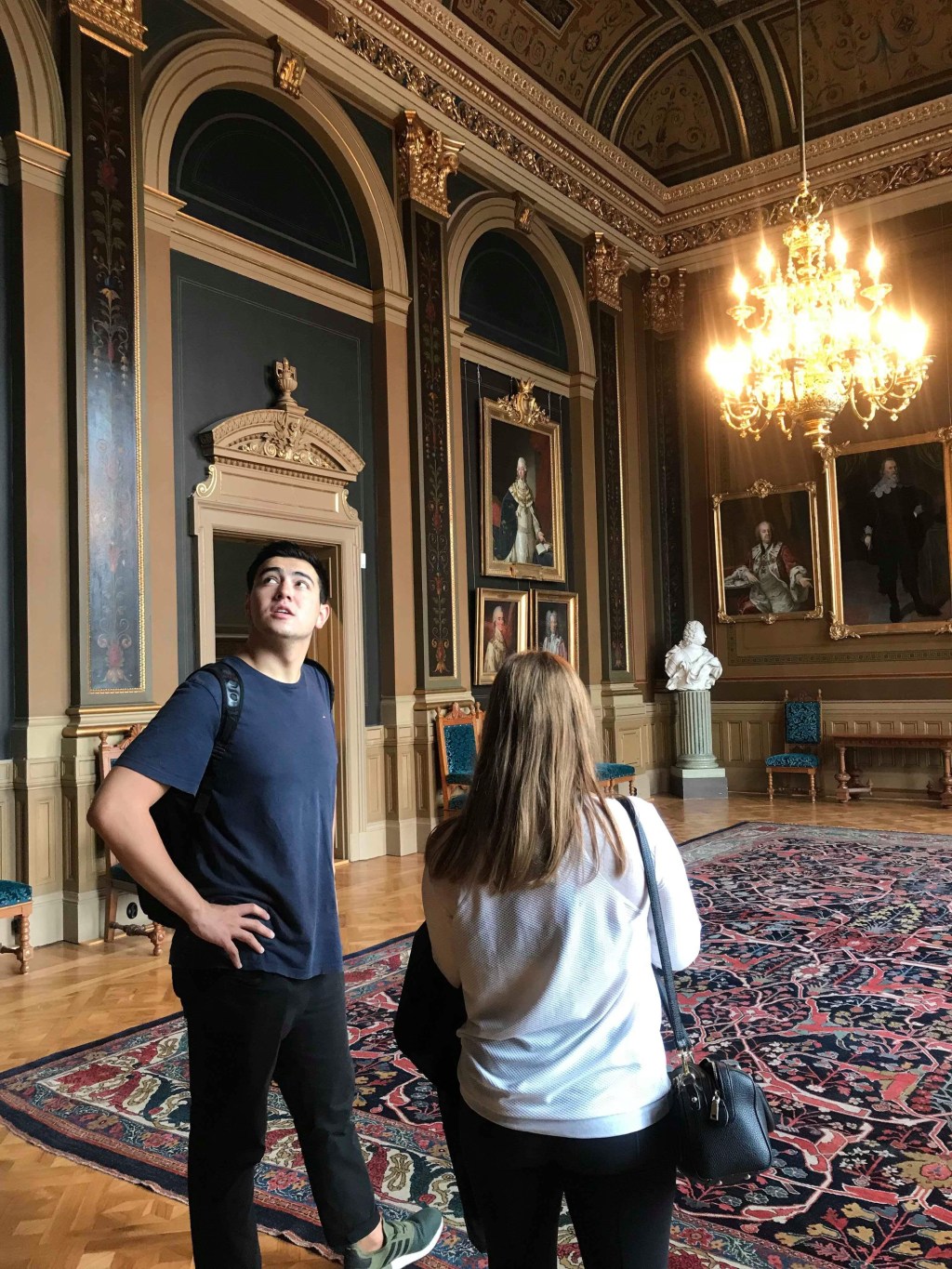
I know why you are reading this blog. No doubt you’ve read a thousand blogs by every friend who has ever gone overseas, and if you’re anything like me, there is only one thing you really want to hear about. No, not the wholesome excursions to churches and museums. Nor the sudden realisation of what travel really means. It’s the food. The delicious, succulent meals that you would never eat back home, but while you are away, you say ‘why not’ and dig in.
~
From the moment I landed in Munich, Germany, my low-carb diet went out the window. In my defense, it was cold, it was snowing and all the restaurants seemed to serve potato and sausage only. Once I had started down that path, there was to be no return.
Let me tell you about the dish called ‘pork knuckle’. To all the vegetarians reading this, I suggest you skip to the next section. Pork knuckle is pure, succulent, dripping meat, accompanied by a potato dumpling. What is a potato dumpling, you ask? The easiest way to describe it is ten potatoes compressed into one and fried. The heartburn soon ensues, but it is worth it.
~
Pretzels were 29 cents in Berlin. 29 cents. What a bargain! Yes, the miser within me cannot resist a good deal, and so every morning I would detour past the supermarket to get my 58 cents worth of salty bread.
Much to the delight of myself and my fellow travelers, doner kebabs were everywhere and they were cheap. Not to mention these doner shops were run with pride, every kebab a work of art.
The other great food of Germany was the pizza. Italian immigrants over the years have established authentic Italian restaurants all over Germany. The one weird thing, however, was they never cut the pizza into slices! It mystified me the first few times, initially thinking that they had forgotten. I mean, it’s not exactly asking much, is it? Despite this, the pizza was fantastic.
~
I did have two pet peeves during my time in Munich and Berlin. One- water was never free. Gone were the days where you walk into a restaurant and are greeted with a chilled glass of tap water- on the house of course. Oh no, even the hard labour of filling a jug from the tap had to be rewarded to the tune of three or four euro.
Following on from this was the lack of public bathrooms. Every bathroom had to be paid for and there was no ducking into Maccas if you were bursting! I was outraged. Isn’t access to toilets an international human right?
All jokes aside, I had an amazing time while overseas. I thoroughly enjoyed my course at Humboldt University in Berlin and would 100000% do it again. I loved meeting new people, and yes, I do have a soft spot for museums and art galleries so I was in paradise. It is an experience that will stay with me for the rest of my life.
Although it’s already been a few days since I arrived here in Osaka, Japan, I still find it hard to believe that I will be living here for the next few months.
When I first arrived in the airport, one of the first few things that I noticed about Japan was the weather. It was summer when I first arrived here and so it was very hot and humid which was a stark difference from the cool and comfortable winter here in Australia. After wandering about the airport, I found a representative of Kansai Gaidai University who would take me from the airport all the way to the dormitory via a shuttle bus. This bus service provided the university was really convenient as I didn’t have to carry my suitcases while trying to find my way to the dorms on my own using public transportation.
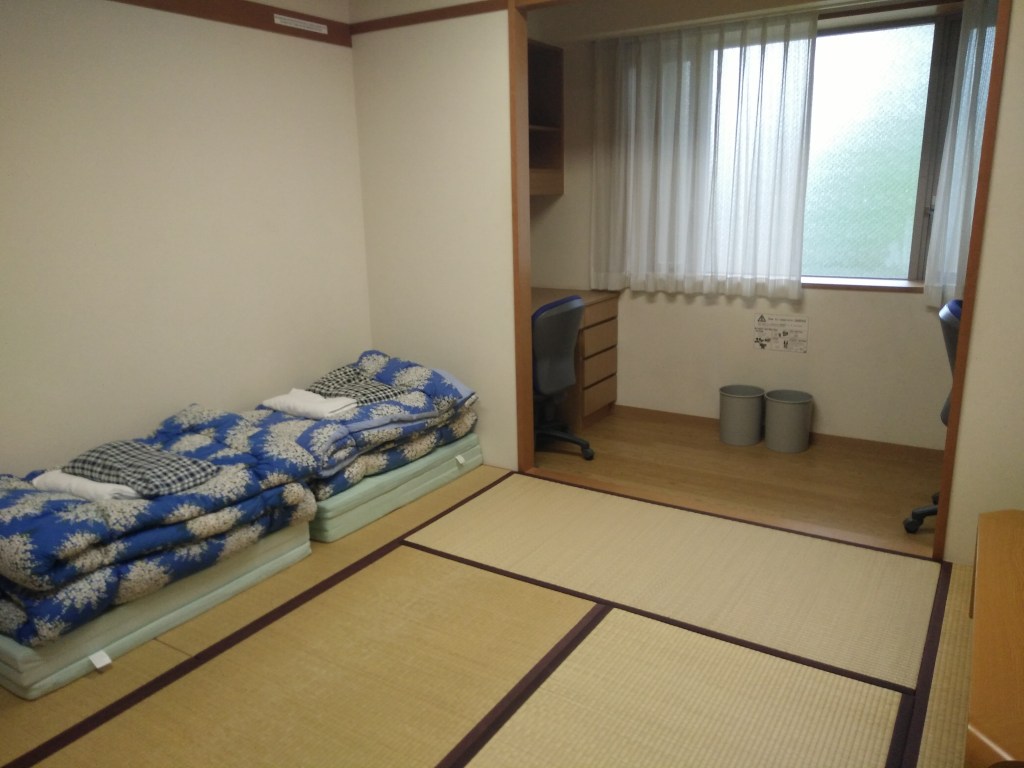
After the long bus ride from the airport, I finally arrived at the dormitory where I was guided to my room by a local Japanese student. My room which was shared by two other people was small but cosy as the flooring was tatami. I then went to the lounge where I befriended other fellow exchange students who were of many different backgrounds. After complaining both the weather and jet lag, we decided to brave the heat and unfamiliar streets in order to find some dinner. We soon find a BBQ restaurant after stumbling around in the dark for a bit and to our surprise we ordered wagyu beef which was very delicious but a bit pricey. We then decided to explore the neighbourhood for a while and then found a small shrine which was really interesting.
When we finally returned to the dormitory, we were all very tired and in need of a shower so we decided to call it day and go about our ways. And after a quick cold shower, I set up my futon which in itself was a small challenge and went to bed.
Overall, I have been really enjoying my stay here in Japan and I can’t wait to see what else the country has to offer as the season changes.
Ivy Weng Bachelor of Design in Animation Kansai Gaidai University Japan
Australian Government New Colombo Plan Mobility Grant recipient.
The heat clings to the back of my neck. In front of me the upturned roots of the coconut tree stare up at the sky. This isn’t the postcard island scene – something is wrong.
I’m in Fiji for a two-week, sustainable development course. A sense of responsibility has brought me here, and the guilt that I contribute to a system that wreaks havoc on the planet and spews waste. The planet is dying, heaving with the weight of our carelessness. It is incredibly easy for us in Australia to close our eyes and build safety in our daily routines. Buy the latest gadget. Upgrade my sneakers. Numb the mind with a Netflix binge.
But this trip is jarring with its inescapable heat and unpredictable downpours. We stay for a week at Waivaka Village, a relatively small community in the central mountains of Viti Levu – Fiji’s main island. Internet free, the main source of entertainment is floating down the river on a plastic carton. The people are incredibly welcoming; wide open hearts reflected by their wide open doors. It seems awfully cruel that they come from one of the fourteen South Pacific island nations that contribute a miniscule 0.026% of global carbon emissions, yet they will be one of the first to go under due to rising sea levels.
I spoke to Jim, an architect who resides in Waivaka Village who told me that the mandarins outside his house no longer bear fruit. All the villagers’ plantations have suffered as a result of the fluctuating weather patterns causing soil erosion and flooding. The fragility of the ecosystem which we rely upon is teetering to a point of no return. This terrifies me. It should terrify all of us.
Yesterday, I read that back at home in New South Wales, up to a million Murray Cod died due to similar unstable weather patterns. From a scorching 46.2 degrees on Friday, temperatures plummeted to lows of 16, killing the local algae. This released toxins that further depleted oxygen levels and thereby suffocating the fish. The Murray Darling is Australia’s most important river system and yet is another example of the out of sight, out of mind attitude of our politicians.
But we mustn’t lose hope. Here in the Pacific, the inspirational 350 Pacific Climate Warriors blocked the world’s biggest coal port in Newcastle through a canoe blockade. They defiantly chant ‘We are not drowning, we are fighting’. Samuela Kuridrani holds a similar fighting sentiment, as the founder of Kai Ni Cola. It is the first village based NGO in Fiji that works at ground level – through coral planting restoration projects and preventing soil erosion by planting mangroves. Kuridrani warns ‘for the youth, it’s our future at risk… in a hundred years even if we fail – at least we can tell them we tried’. We have so much to fight for.
The fight for me starts within. As spokesperson of Waivaka, Petero says to me “If I say I love you then I should love nature… nature is myself, we are nature”. A lot of what we do is unnatural but fundamentally we are part of the earth. The Fijians have a word – ‘vanua’ – which describes this relationship between the natural world and our bodies as one; we are not disconnected.
Turn off your phone, take off your shoes – go outside and get soil under your feet. Observe the ants and count the birds and listen to your body. Then shift how you interact with your surroundings, tuning in attentively to all that is around you. This isn’t easy – our modern world is screeching for our attention. But we must try.
Let’s try.
// Images and words by Nina Pirola @nina.pirola
Bachelor of Design in Visual Communications, Bachelor of Creative Intelligence and Innovation
Rotterdam, the city with more heart than any other.
After living in Rotterdam for just over a month, and having travelled Europe for almost 2 months, I would highly recommend, support and applaud any smart soul considering studying in this beautiful city which is now no longer Holland in my mind, a far and distant land on the other side of the world, but rather my home.
When planning your exchange experience you will be faced
with a multitude of questions, all battling one another for the top-priority
spot on your exchange check list; the following is an extract of 10 of the
questions I asked myself before my departure.
Where
do I want to travel?
What
to I want to see?
What
do I want to do?
What
do I enjoy?
What
languages do they speak?
Do
they speak English?
What
cuisines do I like?
Will
it be cold or warm?
What
will the university be like?
How
will I manage my studies?
(Notice how I put studying last…?)
That’s because when you leave to go on exchange you’re not
leaving to just study (Regardless of what your parents, mentors and tutors
might tell you) You’re going overseas to LIVE. For 6 months of your life you
will be living, breathing, walking, talking, and yes, occasionally studying…
amongst new people, new ideas and new cultures, and it’s important to chose a
location that not only ticks the boxes you place on your studies, but a
location that you can picture yourself actually living in for 6 months or more.
I remember the planning stages of my exchange vividly. Making all the necessary pre-departure arrangements with the university, applying to several host universities, attending pre-departure workshops, tending to a seemingly endless string of emails, and yet it’s all worth it. The day I received my acceptance letter to study at the Erasmus University in Rotterdam was probably the happiest moment in my whole academic career at UTS.
The Netherlands is a small country located almost in the heart of Western Europe, sharing borders with Germany to the east, Belgium to the south and the United Kingdom to the North. Whilst Amsterdam steals much of the glory of the Netherlands, the country is rich in culture with the Hague holding the seat of the states general, cabinet and supreme court, whilst Rotterdam is the largest port in Europe, and the largest in the world outside of Asia.
As such, whilst the Netherlands is a country bustling to the brim with culture and pride, Rotterdam is renowned as one of the most commercially progressive cities in the world. The city is fresh and modern, and almost strikes one as a 50-50 blend of Sydney and Melbourne, incorporating the best elements of each. The nice thing about Rotterdam is that you will feel comfortable. Whilst pushing me out of my comfort zone and exposing me to a reasonable degree of culture shock, I still feel comfortable waking up every day in Rotterdam. The city is accommodating and inviting, but close enough to everything else that you can escape for the weekend to Germany, Belgium, London or France and Italy, as well as broader Europe.
Another great benefit of Rotterdam being such a professional and commercially progressive city is that everyone, and I mean EVERYONE, speaks English. One of the great deciding factors influencing my choice to study in Rotterdam was that everyone spoke English. Whilst street signs and food packaging are written in Dutch, there is nothing nicer than being able to resolve tricky university timetable clashes, ask for directions to the local pub or sort out important travel documentation in English, as opposed to being trapped in a foreign country with a strange and foreign language.
In addition, the people in Rotterdam are lovely and
university life is far different from Australia! Whilst at home we pride
ourselves on having an inclusive and active university, university life in
Rotterdam and the Netherlands is ramped up tenfold. From the university
societies hosting events almost every day, to the fraternities on and
surrounding the campus, university pride in Rotterdam and the Netherlands makes
both studying and living at or in the close vicinity of the universities an
experience in itself.
As such a new city, with such a progressive people and culture, the city boasts the most accommodating bicycle network in the world! I would highly recommend purchasing a bike to anyone considering travelling to the Netherlands, as it not only enables for fast and cheap transportation, but is also a great way of maintaining fitness and stay in shape despite the amount of chips with mayo (Yes, that’s a thing in the Netherlands) and Dutch pancakes that one may consume.
I was incredibly fortunate to have been accepted into the
Hatta Building on the campus of Erasmus University, and I would highly
recommend living on campus to anyone considering going to Rotterdam, or on
exchange in general. Within one day you’ll have made friends, and within one
week you’ll have made a family. It
allows you to be close to your friends and ultimately your friends will be your
greatest support network whilst you are away from your family. It is up to you
on exchange to independently organise your life. Whether that be sorting out
important travel documents, cooking for yourself for the first time or even
learning how to fold your underwear!
The greatest piece of advice I can give is to get involved!
Learn new things! Try new things! Do your assignments and attend your lectures,
but join a society, take on a new sport, join several societies! Ask the local
students what they do for fun and get involved! Feel comfortable being
uncomfortable. Allow your new friends to take you out of your comfort zone to
try some of the local cuisine, or to attempt learning a national sport. If you
don’t know where to start, just sign yourself up for your university’s
orientation week. This is a great experience to meet thousands of other
students, and will most likely involve a showcase day where you can find and
sign yourself up for societies that interest you, as well as sporting
associations and student networks.
They say that Rotterdam has no heart, but I can promise you,
it is the city with more heart than any other.
Asher Benjamin Silove Levitt Bachelor of Accounting (Accounting Co-op Scholar) Rotterdam School of Management,Erasmus University the Netherlands
As I disembarked from a tiny plane that had just travelled 45 minutes from Madrid, I arrived in Granada, the place that I would call home for the next 3 weeks. Having just travelled for more than 28 hours I was welcomed by a fresh cool breeze, unsurprising given that it was in the middle of the European winter.
I remember feeling very excited and slightly aprehensive as over the coming days and weeks I would be completely immersed within Spanish language, culture and society and I undertook an intensive Spanish course at the Universidad de Granada.
While I understood that I would be communicating solely in Spanish in the classroom, I did not have a prior understanding as to how much I would be speaking outside of the classroom. To my surprise, delight and slight concern I would come to realise that the family that would host me during my time in Spain, spoke very little English, meaning that our conversations were solely in Spanish.
While this scared me at first as I hadn’t properly spoken Spanish since last at Uni in November I was quickly surprised by my ability to communicate with my host family about a range of diverse topics and ideas. My host family was a single mum who is a freelance artist, with a studio close to where my classes were held.
Huerta de Los Angeles – the building where my classes were located
As I am sure is synonymous with the experiences of most people who are learning languages, it is scary when you think that you should always be using the correct grammar and conjugations of verbs that you have learnt when in the midst of real life conversations. However, as I quickly found, while it is of course important to try and use the correct conjugations of verbs, for the most part, grammatical mistakes here and there do not significantly impact on a meaningful conversation.
This realisation was just one of many during my trip to Granada, and I am sure over time I will come to realise further how seemingly mundane experiences have helped to shape my overall experience. I have come back to Sydney looking forward to future international opportunities available through Uni (including my ICS next year to Colombia), as well as utilising a wealth of new skills and outlooks.
Written by Yasmin Johnston.
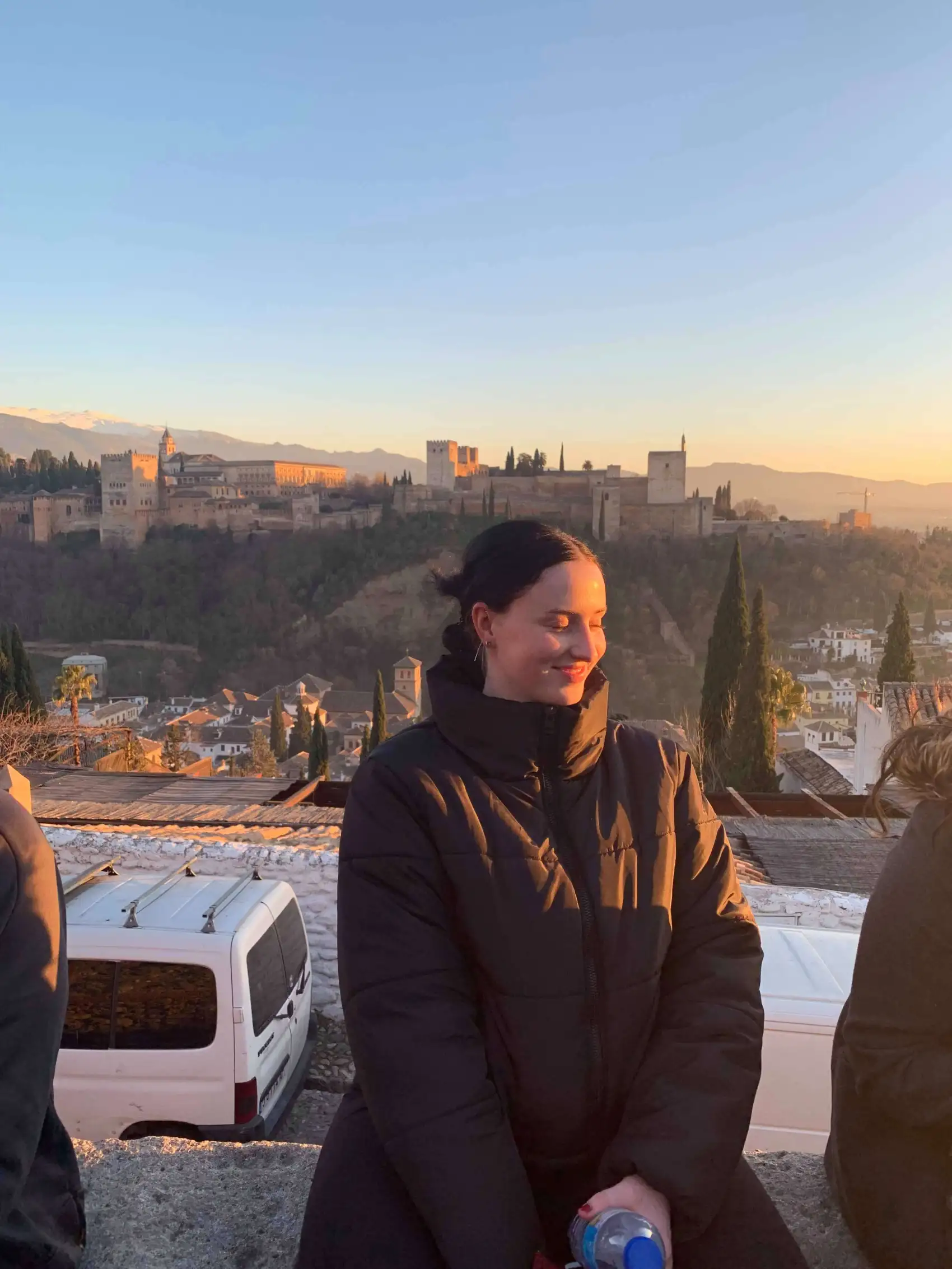
At La Alhambra, a palace inspired by Islamic architecture
Coming off the back of a
month of travel, I was very excited (and a little nervous) to enter my little
room in the heart of Copenhagen. My arrival signalled a significant change in
pace from my regular hostel travel and the start of something completely new. I
was greeted by a man named ‘Thor’, who unfortunately fell a little short of
Chris Hemsworth, but to my extreme delight was still able to tell me about the
most ‘hygge’ dinner and bar spots around town.
Hygge? What’s hygge? I first
became acquainted with this concept when I read a little book about this Danish
philosophy of life that was gifted to me by some close friends. Best translated
as ‘cosy’, the word encompasses the smell of an ice cream candle, the crackling
of an open fire and that feeling you get when you switch on all of the fairy
lights in your apartment after a long day at work. It is the reason why you can
feel entirely at home and happy in a place like Copenhagen, which is known for
its cold and rainy weather.
It is surprising how
quickly you get settled into a life in an entirely new city (especially a cosy
city like Copenhagen) and start to consider parts of its culture essential
parts of your own life. I now too feel infected with the hygge bug and look for
it in everything I do. Cafes on rainy days are hygge, cooking with friends is
hygge and warm lights and hot beverages are a must. Already, I feel like I have
learnt to make the most of both the sunny and the rainy days and to stop at the
lolly aisle every time I exit the supermarket metro.
The Danish Lifestyle
Copenhagen is famous for
its food, fashion and attitude. This small place packs a surprising number of
fine dining restaurants (that can likely only be explored during parental
visits) and bakeries that produce deliciously sugary cinnamon scrolls. Luckily,
apps like ‘too good to go’ offer wallet friendly bargains, and homecooked
dinners with friends and kitchen mates are common and loved.
It is also very easy to get
around the city. There are only two metro lines; however, the easiest and fastest
way to get the most out of your commute to work/uni/brunch is via bike. Besides
successfully clearing your conscience for skipping your normal ‘leg day,’ bike
riding also provides you with the opportunity to quickly and cheaply get to all
parts of town, from the open-air food market ‘Reffen’ to the trendy suburb of Nørrebro.
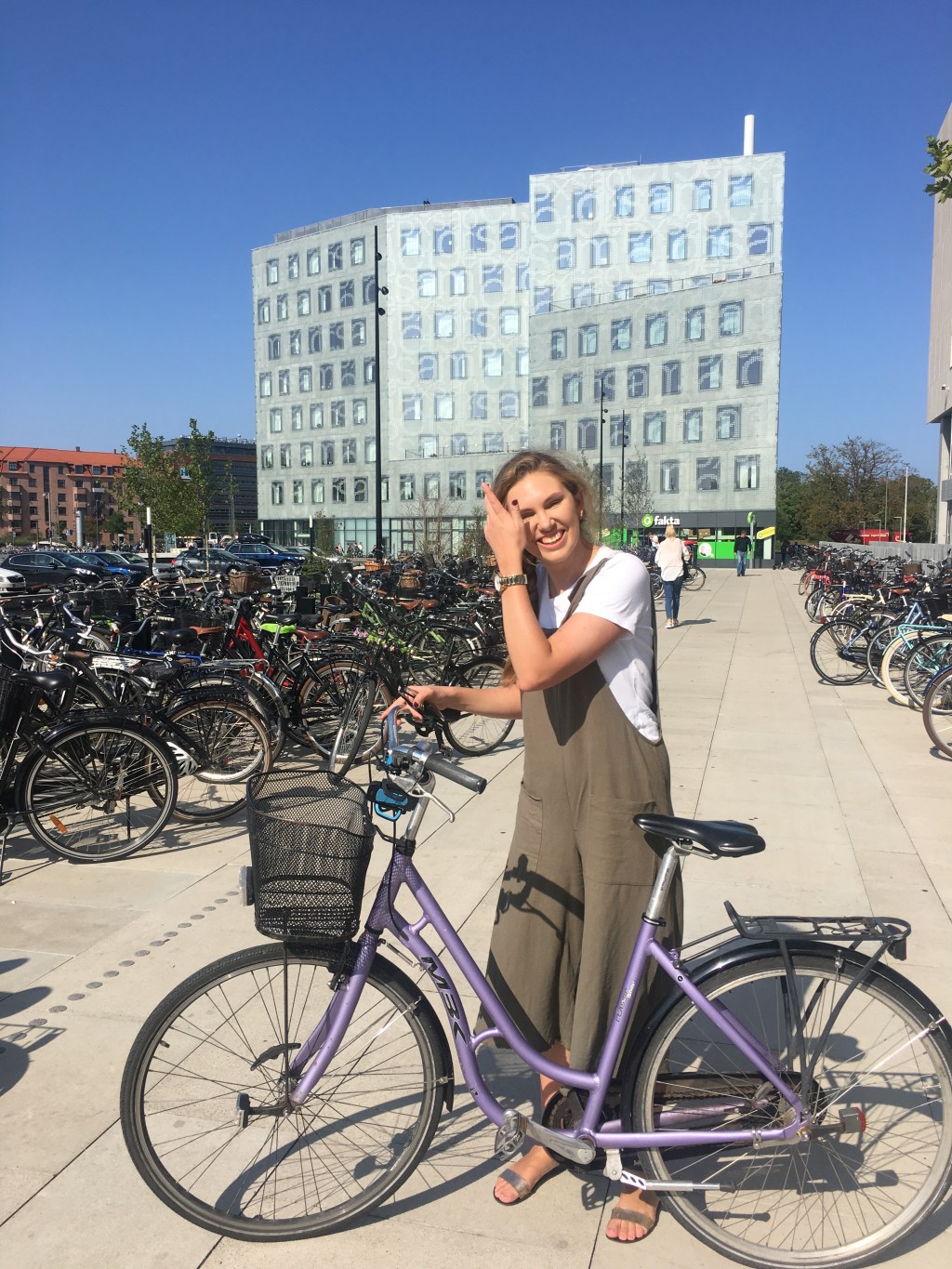
My bike Gertrude (or Gerty for short) is purple and sassy and has been able to
handle my frequent bad starts and sudden stops in traffic surprisingly well. Although
I still don’t feel entirely confident on a bike, I am proud that the idea of draping
myself in lycra and riding into the Sydney traffic has become slightly less
terrifying.
Copenhangen is also a
great shopping destination. Fashion flea markets are frequent and good, and
vintage shops are around every corner. The Copenhagen style is comfort meets
chic, which is effortlessly achieved by most Danes. It is surprising how good
sneakers can look with all kinds of dresses, shorts and jeans, and how easy it
is to jump off your bike and head to Uni or a dance club.
Thus far, studying at the
University of Copenhagen has also been an entirely enjoyable experience. Both
my subjects are taught at a Masters level and technically do not require class
attendance or any class participation throughout the semester. I was slightly
shaken when I realised that my grade will be entirely determined by my
performance in my final oral exam, which I have never done before. However, I
have selected subjects that excite me, which means that I am more than happy to
cycle to class and invest time into getting to know my Danish classmates
(post-class ice creams included).
‘Cope-ing’ in Copenhagen
Thus far, the exchange has been everything that I have wanted it to be and more. I have committed to doing something new every day, which has allowed me to make the most of my time in Copenhagen. Activities have ranged from baking banana and choc chip muffins to taking a trip to Norway for the weekend. When winter finally comes, I am looking forward to making lots of mulled wine and playing board games with my friends in our kitchen. The knowledge that my life is, and will remain, both exciting and hygge for the next three months of my exchange is something that everyone must experience during the course of their degree at UTS.
Daria Konnova Bachelor of Business, Bachelor of Laws University of Copenhagen Denmark
It’s been three weeks since I landed in Seoul, South Korea and the
change in pace from life back home in Sydney has been a very welcomed change.
Prior to leaving Sydney I was extremely anxious, and even regretting my choice
to leave, but I can now gladly say that I think so far it’s been very worth it.
Yonsei University is a huge University – from one end of the campus to
the other is about a 15-minute walk! It’s a very beautiful University, and the
facilities they have sometimes may seem a bit much. For example they have two
libraries, several cafeterias/food courts, to even their own hospital and
funeral hall. Not to mention, Yonsei is right next to Sinchon (a mini Hongdae
in my opinion), a hotspot for students full of restaurants and cafes. From
Friday-Sunday they block off the streets and allow only pedestrians, and is
also a popular spot for kpop groups and buskers. So far I’ve seen IKON, The
Rose and Dreamnote just in passing.
Classes are really fun as well. Depending on the class, there could be
60 students in one classroom! I’m lucky that all my professors are really nice
and easygoing, so I’m very happy in my course choices. Undoubtedly you will
meet many new people from all around the globe, and I really encourage you to
put yourself out there in the first few weeks of class as that’s the best time
to meet new people. The facilities/clubs available for Exchange students to
help in adjusting with the change is very abundant. There are clubs such as
Yonsei Global and Mentors Club to help connect you with local Korean students.
My first week in Seoul consisted of travelling around everyday with the
friends I’d made. You’ll be able to eat a lot of new food in Korea. Back in
Sydney I frequented KBBQ spots and had my share of bingsoo, but there is so
much more to Korean cuisine that isn’t available (at least in abundance) in
Sydney. Another great thing about Seoul is that shops are opened late everyday and
the streets are well and alive even past 3AM (lock out laws who?).
Kimberly Nguyen Bachelor of Business Yonsei University South Korea
Australian Government New Colombo Plan Mobility Grant recipient.
“Malawi… Where exactly is that?” This was a phrase I became well acquainted with before jetting off to my Legal International Internship. For those of you who aren’t aware, Malawi is a small, land-locked country in Southern Africa. It’s one of the poorest and least developed countries in the world and one of Africa’s principal hubs for the illegal trafficking of wildlife. Having recently learnt all of this myself, I decided to organise my legal international internship with the Lilongwe Wildlife Trust, and discover what life, work and the law were like in Malawi.
Full of anticipation, I set off on a long flight to the nations capital- Lilongwe, hoping this experience would be worth the countless, painful vaccinations I’d endured over the preceding 6 weeks. Arriving in Lilongwe, everything was unfamiliar. The airport was crowded, disorganised and chaotic but amongst the crowd a grinning face welcomed me with a huge sign baring my name. This is probably the best illustration of Malawi as a country- it can be disorderly and confronting, but it’s warm-hearted people make it all worthwhile. Lilongwe itself is a dusty and vast city where land can run for miles and miles with just small clusters of buildings. The roadsides are populated by enthusiastic farmers showcasing their goods, mothers with babies bound to their chest, and young women balancing kilos of fruit on their head in what can only be described as the engineering feat of the century. It’s hard to walk more than 20 metres without receiving offers to by some form of miscellaneous good (anything from mangoes to deep fried mice- not rice, mice). It’s a simple existence, but all of these little quirks helped me take a real shine to a much more simple, cheerful and slow-paced life.
I was working as a legal intern with the Lilongwe Wildlife Trust (‘LWT’), Malawi’s leading wildlife NGO, who, from a legal perspective, play an important role in the change and implementation of wildlife policy. This internship gave me a chance to not only learn so much about the law in an international context, but to develop skills as a legal professional beyond what I had ever imagined. I was attending court regularly, drafting speeches for parliament and completing legal research projects. I felt I was thrown in the deep end and really pushed to challenge myself, but was constantly supported along the way. There is something incredibly satisfying about working in an environment where ‘intern’ doesn’t equate to coffee sherpa, and you’re given a platform to showcase what you’ve learnt throughout your studies, and the guidance to improve upon areas of weakness. Sure, working in Malawi wasn’t all roses and sunshine. It’s not always easy working in an office with intermittent power in the summertime heat, or finding geckos running rampant in your kitchen, or travelling for 7+ hours overnight to attend court in another city (in the pitch black darkness, guided only by a car with temperamental headlights). However, the luxuries and comforts that the country lacked were very quickly overshadowed by all of the positives this experience gave me. I’ve left with a greater sense of purpose and passion for my future work, an increased level of empathy and admiration for those working in the foreign NGO sector… I’ve even overcome my fear of those wiggly, little critters than made my skin crawl on arrival.
One of the most exciting parts of my internship was being afforded the opportunity to travel all around the country, attending cases in various cities and assisting with court monitoring. My supervisor, Arthur, was with me every step of the way. We spent tireless hours road-tripping across the country, surviving on little sleep and attending court. He never hesitated to go out of his way (in his own time) to ensure I would experience the best of what each city had to offer- from breathtaking mountain ranges, to cheeky baboons or even the pride and joy of the nation (the Carlsberg factory). I was able to see and do so much while interning, without having to plan, stress and coordinate on my time off. I was also lucky enough to squeeze a weekend safari trip to South Luangwa National Park into my schedule. Spotting wild lions, giraffes, hippos and zebras from mere metres away was an unforgettable, once in a lifetime experience and something I will treasure forever.
My time in Malawi was truly unbeatable. I grew so much from a professional standpoint, but also as a person. I am so thankful to the faculty of UTS Law for organising an international internship subject, and to the UTS BUILD team for making this wild dream of interning in Malawi a reality.
I have been in Sweden for three weeks and have loved every
minute. Uppsala is like no place I have been before. The lifestyle and
surroundings are so different to Sydney which, in my opinion, makes it the perfect
place to go on Exchange.
Uppsala is a very old town which gives it so much character with its famous cathedral and castle. It is such a nice place to explore or have a coffee by the river. Everyone in Uppsala rides bikes… it is essential to get anywhere which is a cool change up from home.
The student life is unreal. It is very much a student town
making it so easy to meet new people. There are thirteen “Nations” which are
groups the students join. The nations are the heart of student life in Uppsala
and are a great place to socialise. Whether it be having catching up for lunch
or fika (coffee and cake) with some mates, having a few beers, or going out on
Nation club nights.
I am living in a student housing complex called Flogsta.
While the accommodation is quite old, it is the place to be. The majority of
exchange students stay in Flogsta making so easy to meet people as soon as you
arrive, and there is always something to do. Near Flogsta, there are also
forest areas which are great for a bike ride or walk in the summer.
I am studying business subjects as my free electives while on exchange. I study business as home, but the subject fields are different from my major and sub major. The number of contact hours are far less (6 per week for a full-time student), and the subjects are taught differently where much more participation is required. Most of the business subjects are dominated by local Swedes. This is a great benefit as it can be difficult to meet Swedes as your social circles are usually made up on exchange students. I have only had two weeks of classes but have already met so many great Swedish people in my class.
The Swedish culture is very different to Australia and the
locals are quite reserved, but still very nice. However, at no stage have I
felt out of place. The benefit of also being in Europe and having less contact
hours are that there is the ability to do weekend trips to other European
cities.
While I have only been in Sweden for three weeks, I could
not have asked a better start to my exchange. The friends I have made, and the
things I have experienced already have been unrivalled. I can only imagine what
I still have to come.
Thomas Hill Bachelor of Accounting Uppsala University Sweden
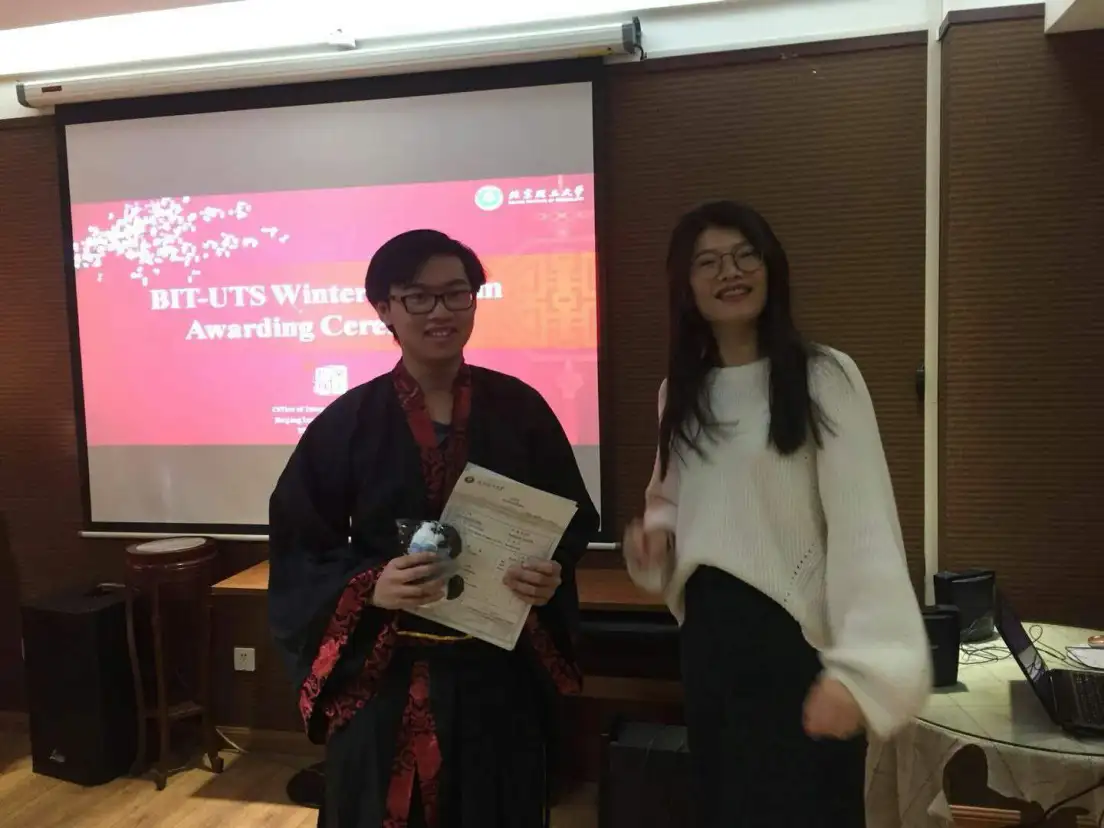
When I stepped out of Sydney Airport and was hit with a blazing hot summer breeze, I felt a sense of relief to be back home but at the same time, I yearned for the times I enjoyed in Beijing over my 2-week language and culture program with the Beijing Institute of Technology. I will cherish those moments of joy, trepidation, fear and disbelief for a long time.
Because I live off-campus while commuting to UTS, I never before experienced dorm life at university, so BIT was my first. The freedom I felt to be able to run to both classes and a nearby convenience store in a matter of minutes was far different to my usual hourly commute back home. The room was basic, the wifi worked only some of the time and I was always subject to the freezing night air entering through a hole in my balcony door. By pure coincidence, I was the only one assigned to a dorm room without a partner. But my friends stayed just next door and it was fun organising outings and dinner together within a minute’s notice instead of a week in advance. My involvement in the shopping process though was hindered by my limited Chinese, so I was stuck with saying 我要这个 (I want this) and pointing to the item in question. But it was good (Canteen 2 was my favourite) and goddamn cheap, even though I still overspent on fruit (also sold just next door) and milk tea.
I sympathised with our Chinese language teacher, Zhang老师, having to teach a class with students of varying levels of Chinese ability. The interactive parts during the class (racing to form Chinese characters from basic radicals, roleplaying a restaurant scenario) were fun and different from the standard affair, and her using Chinese in-class helped myself become more immersed, even though her English was also good. For my current level, the class felt just challenging enough, although I understood my friends who thought it was too easy.
Culture classes brought in guest teachers to introduce us different aspects of Chinese culture in a practical way. Zhai老师 graced us with a beautiful demonstration of a traditional Chinese tea ceremony and we tried it out ourselves, though for me it turned out messier than expected. Peng老师 taught us Chinese paper-cutting but it ended up with me torturing a Peppa Pig cut-out instead. Xiong老师’s lesson on calligraphy was also insightful, but my trembling hands kept my artwork from being the masterpieces that could have been.
The excursions were less like a guided tour and more like free-time, allowing us to traverse places such as the Forbidden City, the Summer Palace and the Temple of Heaven. I will always treasure my accomplishment for trekking through a full course of the Great Wall (to be honest, the uneven steps and descent down were the scariest part). While I believe that these sights would have been more scenic during spring or summer, winter gave us fewer tourists so taking photographs was much easier. However, my favourite excursion has to be the impromptu night trip to watch “Get Together In Beijing”, a dance performance by students from the Beijing Dance Academy with other BIT International Students. The theatre was stunning, the choreography was on point and the dancers themselves were very talented. It has given me the inspiration to try dancing more often for fun.
However, if you asked me what was the most memorable experience of my 2 weeks at BIT, it was not even the BIT program itself, but the other UTS students within the program. To be able to meet and become friends from different walks of life, all sharing an interest in China was new and refreshing. The classes, excursions, and sightseeing wouldn’t have been the same without them and playing cards until the late night of 10pm was filled with many laughs. I remember the long night walks, coming back together from touring, to listen to personal stories from my friends. All of them were older than me, and most were from different disciplines at UTS, but their stories of work, life, family and relationships were relatable, raw and very emotional. I was empathetic to the pain they experienced in the past but amazed in their emotional resilience and their growth from it. It also has given me the opportunity to self-reflect and gave me more confidence in being more proactive throughout university life so that one day, I would have a story worth telling others, (well at least ones not hours long). I know that that I wouldn’t have become friends with them in any other circumstance, and that I wouldn’t likely see them again, but I wish them good luck in all their future endeavours so that they would have more stories to tell.
I am grateful for BIT for supporting us throughout those 2 weeks, I am grateful to UTS for providing this opportunity to travel to China and I am grateful to BUILD Abroad for providing me a financial scholarship to allow me to fund my travel. I am grateful to the friends I made at BIT for the stories they shared. In return, I endeavour in continue practicing and learning Mandarin, whether through classes or self-studying, and perhaps pick up a new hobby to find a new way in expressing myself and make my own story to share with others.