The Real Fiji. That is what myself and 20 other students from the University of Technology, Sydney were able to experience in the early summer days of 2019. I had heard about the beautiful sunsets but I have never seen a place so green and met people who are so welcoming, in my life.
It was smothering hot to be honest. A different kind of heat that I have never experienced before. Very tropical, very wet and very humid. Despite this, our stay at Waivaka Village and Namatakula Village made me forget about this and immerse myself in the beauty of the villages – both internal and external.
Externally, the landscape was beyond. Mountains, rivers, coconut trees and a lot of Kava. Also a lot of rain but I didn’t mind that because it cooled things down. Internally – the people, the families, the connection and ties with oneself, each other and nature surrounding them. The culture was rich and there was so much positivity, happiness and comradery. The stories were motivating and amazing.
When delving into the causes of the current climate situation and disruptions that climate change has caused in Fiji, it was clear that these villages were affected. “Certain fruit and vegetables do not grow anymore”, said one villager. However, their resilience was awe-inspiring and empowering.
Based on this we formed groups and chose the topic of Storytelling in order to tell stories of resilience and empowerment towards climate change and how Australians can transition from a disengaged attitude to one where they can act upon this in their daily lives.
We created a social enterprise called ‘Vanua’ – a Zine to showcase these stories in an innovative manner that BCII has taught us in order to help solve this issue that affects us all.
Overall, Fiji was a life-changing and educational phase of my life that I will never forget. It will never escape my mind how nice, friendly, unconditional and positive Fijians are. “If I say I love people then I love nature – we must preserve that”.
Although it has only been my third week here in Tilburg, my
experience so far has been amazing. Getting off the train at Tilburg University
Station, I was immediately greeted by friendly I*ESN (exchange student
association) mentors who picked me up from the train station and drove me to
the university. The administrative aspects of exchange such as orientation week
registration, bikes and setting up a Dutch bank account were so easy to
organise once I got to Tilburg University. Most importantly, the activities run
by I*ESN really made me feel like home – these activities included a city tour
of Tilburg, welcome drinks, TOP Week and many more!
Highlights of my time
so far in Tilburg include:
TOP Week
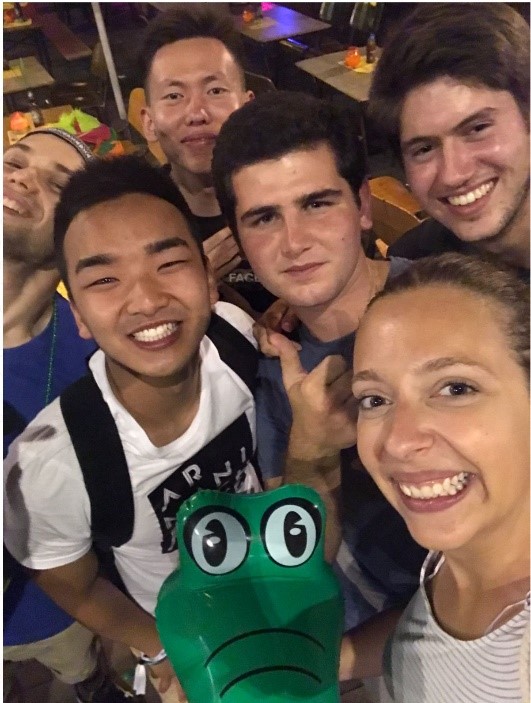
TOP Week is the week-long orientation program run by I*ESN. You are put into mentor groups where you meet other exchange students from all over the world. In my mentor group, there were students from Italy, France, Portugal, Spain, Kazakhstan and Taiwan. As a mentor group, we participated in many activities such as a sports day, pub crawl, scavenger hunts, Cantus (will talk about this more later) and an outdoor cinema. At night, there was always a party at Carpe Noctem (the university bar) and plenty of beer to make sure we all had a good time. It’s a great opportunity to bond with other exchange students and I highly recommend all exchange students to attend TOP Week, you won’t regret it!
Cantus
Cantus involved sitting in a large warehouse with hundreds
of other students while singing songs and drinking beer. After every song
ended, everyone had to drink beer. It’s an amazing experience and by the end of
the Cantus, most people are standing on the chairs/tables having the time of
their lives.
The People
Throughout TOP Week, my mentor group did many activities together which allowed us to bond and get to know each other well. Everyone in my mentor group is so friendly which has made it so easy to make friends. Even after TOP Week, we’ve organised weekend trips to Breda and Rotterdam. Also, I’m currently staying at Professor Verberneelan where I’m sharing a floor with 17 other exchange students. My floor has 3 bathrooms, 3 showers, a shared kitchen and a common area where we eat our food. It’s been great to meet exchange students from so many different countries such as Spain, Hong Kong, Colombia, Sweden and Peru. I highly recommend staying at Professor Verberneelan but securing a room can be quite competitive so log in to the website as soon as room registration opens.
Also, a tip for students who are going to study at Tilburg University is to get a bike as soon as you get to Tilburg. You’ll literally be using your bike for everything you do from going to class to riding home from the city centre after a night out. I recommend going with a bike rental company called Swapfiets because their bikes are in good condition and it’ll only cost 12 euros per month to rent a bike.
Although Tilburg is a small town, the exchange program here
is great and it truly is a student town. If you’re still undecided about what
university you want to go to, look no further and give Tilburg Uni a go!
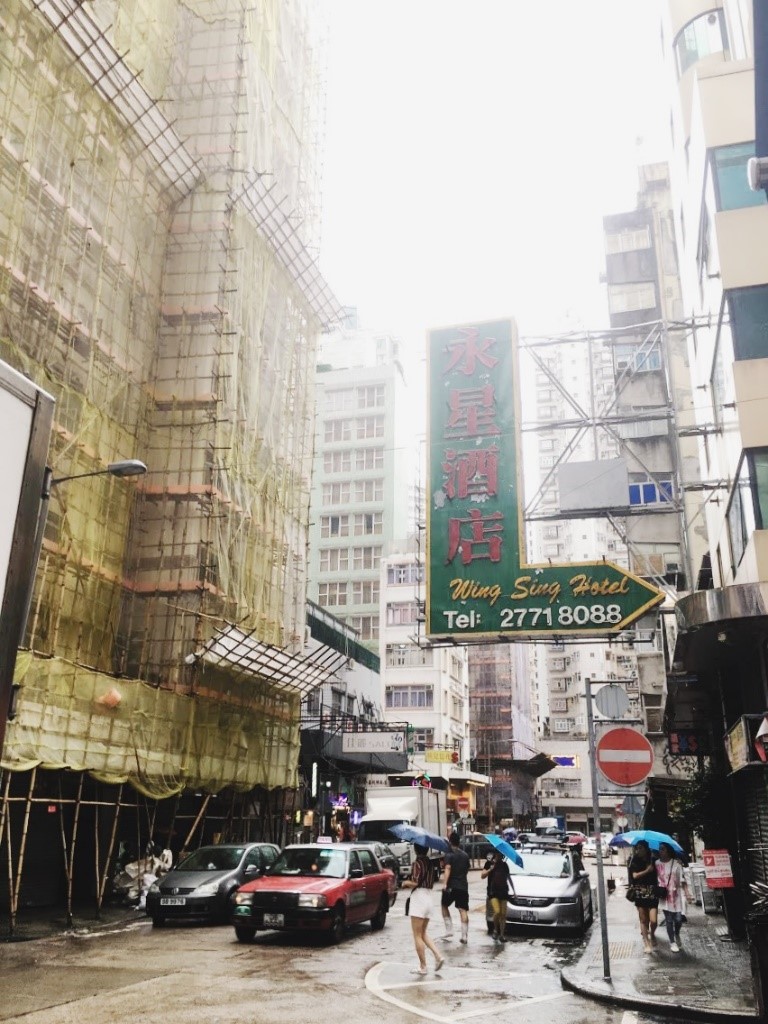
It has been exactly a month since coming to Hong Kong and that feels so strange to think about how fast time is passing. As someone who hasn’t lived away from home before or travelled much overseas, I was surprised how easy it was to adjust to this new life and culture. It’s such a beautiful city where I appreciate the humble pastel coloured apartments and living so close to the Harbour. Hong Kong is a fast-paced environment where the city doesn’t sleep and there’s always something to do or see.
I am currently studying at Polytechnic University and the
classes have been great so far since I’m learning about subjects/skills and
have access to facilities that aren’t offered at UTS. Studying Fashion and
Textiles here is much more commercialised but having a different perspective on
this has been really insightful. I am taking Knitwear Design, Design Studies,
Textiles Studies III and Bra Construction and have already learnt quite a lot
in the past 3 weeks! This uni offers an add/drop period for the first 2 weeks
for any subjects that you wanted to pick up/weren’t what you thought and they
are usually flexible with this especially for exchange students (within the
subjects you’re allowed to take).
I would recommend looking out for the Art Pal booklet around
2 weeks in because there are a range of different workshops/short courses you
can take. Some examples are Western Calligraphy, Ceramics, Singing, Kung fu,
Mooncake making etc. that are offered to students/staff at a reasonable price. They
also have day cultural tours around Hong Kong that would be a good way to see the
attractions while meeting new people.
For accommodation, exchange students stay at the Hung Hom
Halls which is honestly the best way to go because it is really cheap and
convenient since it’s a 15 minute walk via footbridge to uni and close to many
shops and restaurants. There’s a 24/7 supermarket called Wellcome (for all
those midnight cravings and supplies), many cheap eats including Bafang
Dumplings (honestly my favourite place so far – dumplings and an iced
fruit/milk tea for $7 AUD), MacDonald’s (if you’re ever feeling homesick),
Saizeriya (cheap pasta and unlimited drink refill for $2.5 AUD if you eat in)
and many more.
The room itself is quite compact, though I expected nothing
less considering how densely populated Hong Kong is. You do however get a lot
of drawers (in the wardrobe, under the bed, next to the desk) and shelves to
sort all your things which is really space efficient and will keep away the
clutter despite the seemingly small room.
You are also assigned a roommate who you share this space
with (you can pick if you want someone from the same country or not) and you
share the bathroom with the 2 roommates that live next door (essentially suite
mates). My roommate is from France and
my suitemates are from France and Sweden which is a lovely mix! Though I’ve
never imagined myself enjoying the lack of privacy, I have been really happy
with this arrangement because I get along with them really well and they were
my first friends here. Almost like a little family away from home.
There are also many
common area facilities such as a gym, swimming pool, printing room, games room,
food canteen, kitchenettes etc within the building that makes it much more
interesting and convenient to live at Halls. Also, most people that go on
exchange to PolyU do pick this accommodation (I mean, bottom line is the price
is too hard to resist) so you’ll be living minutes away from the friends you
make.
All in all, I think coming to Hong Kong (especially Polytechnic University!) is such a great option for exchange and I’ve learnt so much about not only the Hong Kong culture but the cultures from all around the world through talking to other exchange students. It’s honestly so adaptable living here and a great way to learn to be independent.
Shanni Sun Bachelor of Design in Fashion and Textiles Hong Kong Polytechnic University Hong Kong
Australian Government New Colombo Plan Mobility Grant recipient.
‘Fiji time’, a term I heard a lot whilst sweltering in the heat and humidity of the Pacific Island Nation Fiji. A reference to how things happen in their own time that is a lot slower than what we Australians are used it. Whilst it can be irritating and frustrating to most, it is actually a great way of reminding yourself, just be in the moment, be present, be here.
My experience in Fiji will be something I always remember. Going over there as part of a group of 21 UTS students with Unbound, our lens of observation was climate change, sustainable development, and social enterprise. Through the 14 days that I was there, I experienced culture, food and heard stories like none other. With Fiji time, everything seemed so much truer and genuine. Across the program, we had the opportunity to completely immerse ourselves in their way of living through our two homestays in Waivaka and Namatakula, and saw and heard of their ongoing battles against climate change. I saw and felt firsthand how the rising sea levels and changing weather patterns are tearing at the shoreline, eating at the earth and muddying the waters.
That is not to say they are drowning though. They are fighting… after all Fijians have the blood of warriors, sea warriors. They fight everyday against the effects of climate change. Being in Fiji time, they have observed and begun retaliating to these effects already. One NGO, Kai Ni Cola has already taken steps through mangrove plantations and coral reef restorations. They fight everyday so they can maintain their way of life that is rich and vibrant, filled with the spirit of community and family. Despite their villages set to be underwater within the next 100 years, in the words of one village elder ‘We would rather drown than relocate’; that is their willingness to fight.
“Their resilience and adaptability to climate change is astounding – and we Australians could do to learn from them. After all, Fiji are our neighbours, our mates in the backyard that we all should chip in to help. “
Adrian
The experience was incredibly enriching to me as a designer, allowing me to draw on my skills of visual communication and design thinking to create ways of communicating their stories and experiences. My ability to work in a team, empathise with others and connect despite cultural differences have been massively improved so I have no doubt this experience will never be forgotten. I would recommend this program to other UTS students with ease and hope to go back in the future – to see our new families and maybe see how those mangroves we planted together are doing.
My time in Fiji was nothing but an experience of a lifetime!! Myself, along with 20 other students in our 4th year of the Bachelor of Creative Intelligence and Innovation completed a social enterprise and sustainable development program with Unbound.
We immersed ourselves in the communities of Waivaka and Namatakula where we ate and drank the local cuisine (hello tarot and kava), danced and sang to the beat of the drums, and laughed and cried at any given moment (almost always simultaneously). But nothing can compare to the beautiful moments we shared with our host families in our homes – playing games, sharing stories, taking many photos for the both of us to cherish. Memories and friendships that will surely last for many years to come!!
We also had the opportunity to visit many cultural sites and local social enterprises with our action projects in mind. We planted mangroves with Kai Ni Cola (the first NGO to come out of Fiji and Namatakula village), spoke to the founders of Growing Tall and Climates over a delicious dinner, visited Suva Museum, participated in a 3 hour dance workshop with Rako Pasefica, and on our final day, visited the Pacific Islands Development Forum to learn about how island nations are dealing with the impacts of climate change. The resilience of these communities is astounding.
This program has not only allowed me to draw on my skills in journalism and storytelling, but it also allowed me to recognise the beauty in the ‘real’ Fiji – through our families, their way of living and how truly innovative they are with the minimal technology and resources they have. It enabled me to recognise my leadership potential and willingness to take on similar opportunities in the future.
While at times I found it challenging to adjust to this new way of living, there were so many lessons learned and connections that will stay with me for the rest of my life. I’d do it all again in a heartbeat and would recommend all current and future UTS students to apply for an overseas BUILD program at least once in their degree.
I’d never heard of the
place, and neither had any of my friends or family. But now that I’m living
here in Aarhus, Denmark’s youngest and second largest city, I can’t imagine
spending my exchange anywhere else. Here’s why…
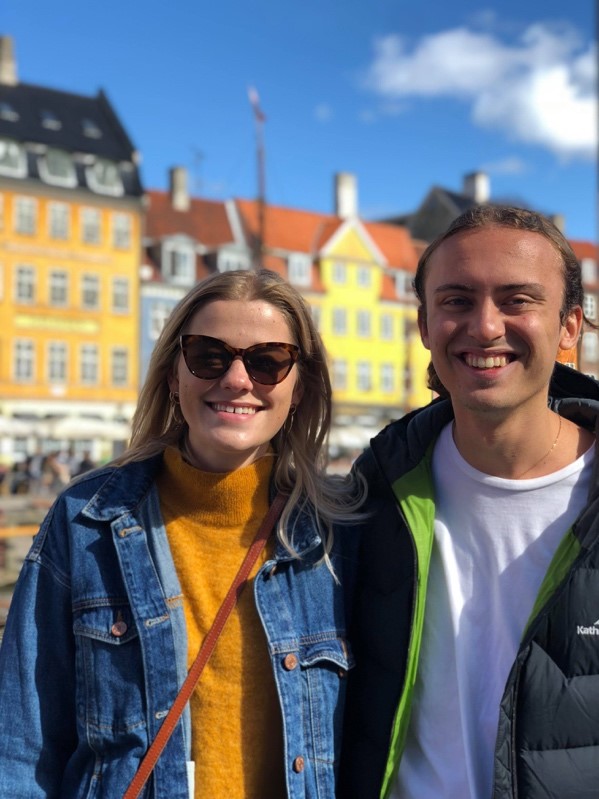
In the four weeks I’ve been here, I’ve gone out and filmed stories all over town (from a ride share driver to a drag queen), I’ve made friends from across the world and I’ve learned to live like a Dane. Or really, I’m trying to. I can’t even pronounce my address (Danish is hard) and I only feel half as stylish as the locals (they’re all unbearably chic), but it’s the routine that I love; riding my bike to school every morning and counting down until Friday night drinks with my classmates.
But if there’s one bit
of Danish I’ve picked up, it’s the term hygge.
It denotes a feeling of comfy-cosiness, and it’s come to define Danish culture
and my life here. I got my first taste of it when I was picked up from the
train station by my Danish mentors. Instead of feeling lost and overwhelmed, I
made local friends within my first hour in the city and got taken straight to
my dorm. You really feel looked after here; when I arrived I was assigned my
own doctor down the road. Free healthcare, anyone? I just wish my education was
free and I got paid 400 euros per month to study like they do…
And the same can be
said for my uni. I’m doing a video journalism course at a small media school;
the Danish School of Media and Journalism. I’m in a small class of 19 students
with one teacher and attend lectures with a slightly larger group. It gets
intense sometimes as we’re at school five days a week, but we’re always given
time in our day to shoot and produce assignments, leaving our weekends free. Hallelujah.
All up, there’s 66 of
us international students from 26 countries. If you’re wondering how close
we’ve become, a big group of us are currently in Copenhagen together and I’m
already planning trips to see friends in Dublin and Oslo when we finish. I’ve
also made some Aussie friends, and a Tasmanian girl tells us she could have
been Princess Mary’s niece, as her uncle went out with her back in the day. I’m
not so sure about that. And thanks to my persuading, my friend from San
Francisco has applied for exchange to UTS!
Aarhus is really a
smaller, cuter and younger version of Copenhagen. It’s Denmark’s student town, so
there’s no shortage of student events and you’re always guaranteed a good night
out. It’s super cultural, too. We just had the Aarhus festival, which literally
took over the city and filled it with outdoor art, live music and street food.
If you’re in Copenhagen, I really encourage you to make the trip. Sometimes
it’s worth getting off the beaten track and away from the tacky tourist
gimmicks.
When I told people I
was going to Denmark, I can’t tell you how many banged on about it being
expensive. I really think this is exaggerated. Some things are expensive; a barista-made coffee will cost you
around 8 AUD, but you just don’t buy those things often. Everything else is
around the same as Sydney, while rent and groceries – your main expenses – are
considerably cheaper. If you’re considering Denmark for exchange, do not let this stop you. And don’t choose
a country just because it’s cheaper.
If you are considering
an exchange, just know that you’ll feel low and uncomfortable sometimes. You
might have a mini breakdown in the supermarket when you’re tired, stressed and
you can’t tell the milk apart from the yoghurt. Or maybe that’s just me. But I
can guarantee you the amazing, unforgettable moments will trump the bad ones.
You just don’t get
this experience when you’re backpacking or on holiday. You go from outsider to
insider, make invaluable connections and you earn a semester’s worth of credit!
What’s not to love?
Matthew Hodges Bachelor of Communication (Journalism) The Danish School of Media and Journalism Aarhus, Denmark
Going into this project I was unsure of what to expect. I had little knowledge of Christchurch or of the destruction and damage caused to the city and its people by the devastating earthquake in 2011. When drafting and researching for the design our team wanted to acknowledge the past and look towards a brighter future for the local community and city. With the inclusion of food specified by FESTA, we had to find ways to incorporate memory and place into this idea.
We started brainstorming our initial ideas including food collection, materials and layout. Many materials, such as bags, crates and trolleys were suggested. Our team got together and presented our ideas to one another and from this we formed our final design.
The final design of our project, titled ‘Cottage Connections’, looks at a way in which the audience (mainly local people from Christchurch) can share their memories of food in Christchurch in exchange for a food product, donated to us by local Canterbury producers. These memories were recorded via audio recorders and then mapped on paper, to be donated back to the local community to add to their collection. In the centre of the design is a large table, made from a reused electrical spool, which displays the food donations. Three recording booths are connected to the large A-frame structures, which surround the table. The exterior of the A-frames is covered in dinner plates, which were collected by us in both Australia and New Zealand from local op-shops. The plates have been created to spin, on one side showing a map of Christchurch and the other quotes from the generous Canterbury producers who donated to us.
Our project contributes to the city of Christchurch because of the effect it has on the local people. It allows them the chance to reflect, remember and share a memory they have of food related to Christchurch. It encourages them to look at the past, acknowledge the good and bad memories and remind them that they are not alone, and together they create the heart of the city. Food is such an important part of our social life and often is the central part of many memories and stories. By sourcing food from local Canterburian producers we are encouraging the people of Christchurch to support local businesses and continue to help the city grow.
On the night of FESTA it was clear the impact that our project had on the people of Christchurch. The feedback we got throughout the night was extremely positive and many participants showed gratitude towards our design. The work was a greater success than any of us expected it to be, with our team collecting over four hundred memories that have been recorded and mapped for the local library. I’m extremely proud of our team and grateful that we had the opportunity to see our design come to life and experience first-hand the impact that it can have on the audience participating in the design. It could not have been achieved without the kind-hearted people of Christchurch who so openly shared their personal memories and it is truly an experience I won’t forget.
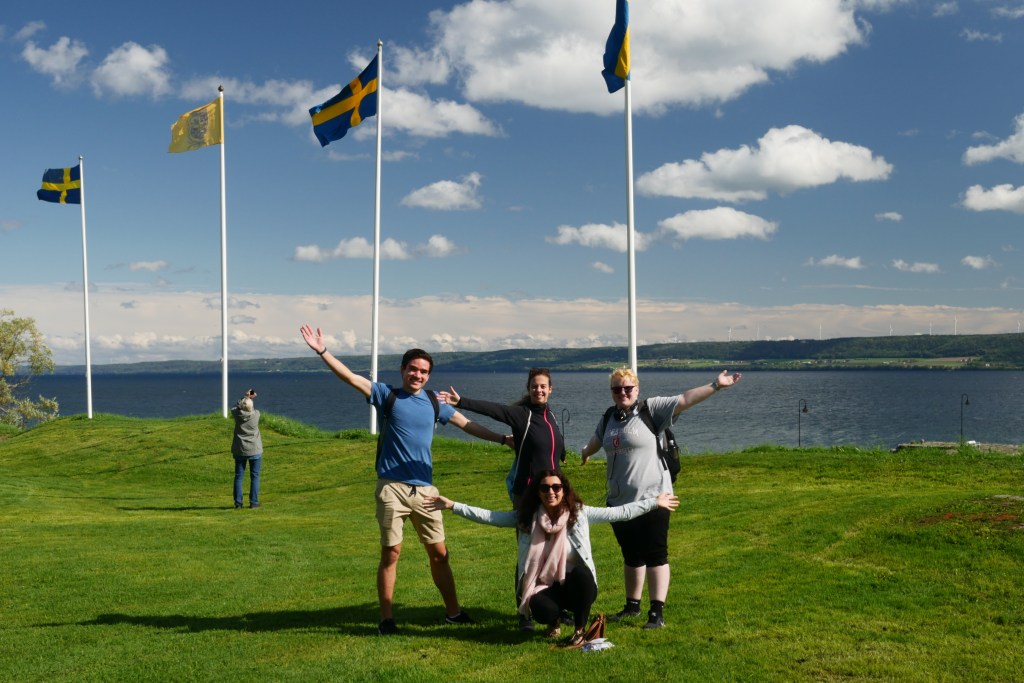
I’m sitting here doing something I never imagined would become a reality for me. Writing a blog post from my student accommodation in Jönköping, Sweden. Pretty much the complete opposite side of the world from home. It’s only been three weeks, and I can honestly say it’s been one of the best experiences of my life. When you consider going on exchange, you spend hours researching and comparing different cities and cultures to try and find what you’re looking for. In the months leading up to my time abroad, I began to wonder if the small city of Jönköping really was the right choice. But you know what? I couldn’t have picked anywhere better.
You can probably see the whole city of Jönköping in a day or so, and then you’re left wondering what you do for the next 5 months. But luckily Jönköping University is an institution which prides itself on providing the best student experience for all who study there. It all begins with the Kick Off. A week and a half of introduction to the university from both an academic, and also social perspective. It’s a fantastic opportunity to meet international students from all over the world, as well as meet the local students. You’ll be taking part in activities like dance battles, raft races on the cold waters of Lake Vattern, soap soccer, and city quests. This week and a half is also a little on the expensive side, but it’s something you’ve really just got to throw yourself into because you won’t regret any moment of it. The people you meet during this Kick Off will become some of your closest friends on exchange, and you might even find that you’re roommates with a few of them!
The academic system in Sweden is different to that of
Australia, in that you study one subject at a time, for about a month or so,
then switch to the next subject. So far, the study load is similar to back at
UTS, but you need to be prepared to hit the ground running! Classes start
immediately, and you might have your first assignment due a week after starting
the subject. Lecturers are really quite friendly, and the relationship between
the students and staff is casual and welcoming. You definitely won’t struggle
to find time to explore the area around Jönköping, or take weekend trips to
nearby Stockholm or Gothenburg.
While I study IT back at UTS, I’ve taken advantage of my electives, and have decided to study a few marketing and advertising courses here at Jönköping University. This has definitely been a welcome change for me, and a refreshing way to wrap up my degree. It’s really quite interesting to study something out of your field when you get the opportunity to, so if you have the chance, study something different.
When it comes to the Swedish culture and Swedes in general,
they are extremely helpful, so you just need to ask if you’d like help. The
Swedes are also quite reserved and have been known to seem quite shy or cold,
but this is just seen as being respectful in the Swedish culture. Quite a few
of the Swedish students have already been to Australia, so you’ll have plenty
to talk about, and if they haven’t been yet, they’ll want to hear all about it.
In terms of cost of living, a lot of things are comparable to Sydney prices,
but generally it’s a little more expensive.
If you’re not sure whether to go on exchange, do it! You
definitely won’t regret it. If you’ve already decided to go on exchange, but
you’re not sure where to go, consider somewhere small like Jönköping. You’ll
meet fantastic people, study at a great university, and it’s a nice change from
the big city.
Niall Darby Bachelor of Information Technology Jönköping University Sweden
The opportunity to travel, study and learn French in Bordeaux, France, was incredible. Undertaking the Bordeaux Institute of Technology Sustainable Development Summer School which, although was out of my direct area of study, was so interesting and relevant. Giving me an insight in to other aspects of engineering and the different contributions that these fields can have on creating a sustainable and fruitful future. Travelling with 4 other UTS students, all taking different degrees and majors, allowed for a diverse bunch of individuals to experience everything Bordeaux had to offer. Other participants of the summer school included a group from Melbourne’s RMIT university, Morocco, Norway, China and South Korea.
When you think of Bordeaux most people think of silky red wine varieties and endless plates of cheese and cold meats and this is exactly what it was. Daily! Combine this with cloudless skies, endless sunlight, with the sun setting at around 10 pm every night, and 37 degree Celsius days the stage was set for an incredible summer adventure. The relaxed culture and cheerful vibe of the Bordeaux people made it easy to feel connected and really enjoy the time spent outside of the classroom during the trip. Timing was perfect with the 2018 FIFA World Cup being held and televised throughout our stay in France. Especially with the wild success of the French national team, les Bleus! It did not take long for the UTS crew to splurge on official French jerseys to be worn throughout the final series. With jerseys on, the French tongue flowing after days of intense language lessons and sipping on Frances finest 1664 lager we blended in to the crowds and getting among the action for the finals was definitely one of the highlights of the trip.
Inside the classroom we had some of the leading researchers and professors deliver briefs on different environmental and sustainability topics. Some stand outs include:
The UN Agenda for 2030 on Sustainable Development
Recent development in photovoltaic cells – Laurence Vigneau
Future of telecommunications – François Rivet
Sustainable Wood Production of the Landes de Gascogne Maritime Pine Forest – Florian Delerue
Wave-based resonant microsensors for environmental applications – Corinne Dejous
As well as these lectures, Bordeaux INP had organised many half day trips to break up the time spent in lecture halls and classrooms. We visited the Bordeaux Metropole, the architecturally impressive and futuristic wine museum, Chateau Baycheville, the waste management facility and greenhouses utilizing the processed waste to grow tomatoes that are then sold all over France. There was even a morning cooking class by the river learning the fine art of creating different French style, buttery, delicacies.
Leading into my final semester at UTS I feel so lucky to have applied and taken advantage of this opportunity. It has been one of the most impressive and incredible experiences of my time at university and encourage anyone reading this to give it a go. The places visited, the people met and the memories forged, it really was an unforgettable trip.
Am I really in Tokyo? I feel as if I’m stuck in a lucid dream and any
day now, I will jolt awake and find myself back in my comfortable Sydney home.
But no, after 3 weeks of (actually) waking up, I am still in Tokyo – alive, surrounded by the bustling Japanese city life and navigating new friendships and a new university. I must say, it really is unbelievable that I’m on exchange. I’ve been dreaming of being an exchange student and living that #animelyfe since I was a kid, and after one whole year of applying for exchange and worrying that along the way an error might happen, I am currently sitting up way past my bedtime in my dorm room.
Living in a dorm, and away from home, is a first for me. It felt like a camp trip at first – the showers and toilets require some walking distance and all the facilities require sharing with many students you don’t know. However, I’ve been really lucky to be roommates with some wonderful people who come from all over the world but chose to go to Japan to further their language skills and to insert themselves fully into another cultural lifestyle.
They say exchange trips make you realise things about yourself that you would never have come to terms with when you’re so comfortable in your hometown. I know, super cliché. But let me tell you this: I never thought I’d get homesick. Like, EVER. Because what is so sad about going on exchange? It’s only for 6 months, and you get complete freedom to sleep when you want, eat what you want, and really tailor your lifestyle to however you desire. After 19 years of living at home you’d think that I would appreciate this newfound independence. I mean, I didn’t even cry at the airport.
But the second I stepped into my new dorm room and saw an unfamiliar bed, a smaller table and different scenery from my window, the enormity of the exchange and how alone I was hit me like how that yellow school bus hit Regina George in Mean Girls. Despite being in a country with a population of approximately 127 million, I felt all alone and spent the rest of the day crying and skyping my mum until I slept.
However, that fleeting loneliness was soon superseded with my roommates,
the energetic Tokyo scenery that popped straight out from my anime, and my
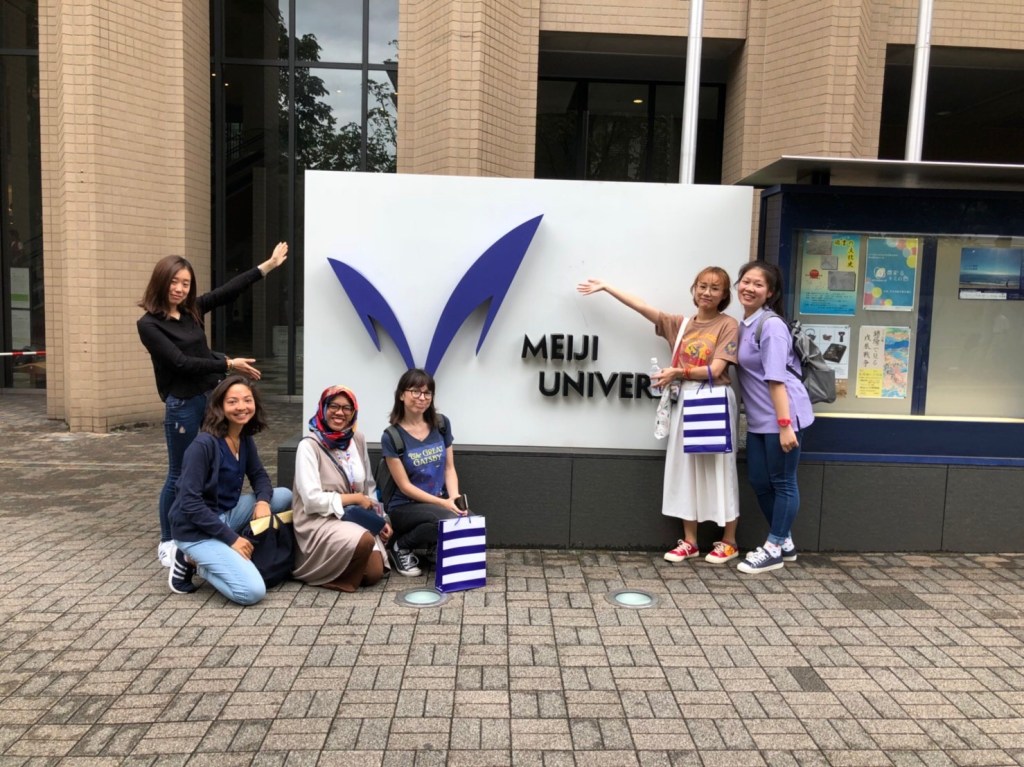
Japanese friends from Meiji University. I haven’t had the chance to travel
outside of Tokyo, but there is more than enough to have an adventure in this
city. The balance between modernity and tradition, and nature and metropolis demand
the awe of tourists and locals alike.
So far, before school starts I’ve activated my ‘tourist mode’ and have tried to go to all the popular locations on weekdays because walking through touristy Tokyo on a weekend is like trying to wade out of a Tokyo train during rush hour. Not easy.
For example, I’ve tried the best seafood EVER at the famous Tsukiji market – waking up at 5am was so worth it. I’ve also popped over to Little Europe in Jiyugaoka and met some penguin and otter friends at the Sunshine Aquarium.
I’ve also been to an owl café and felt like Harry Potter.
The orientation process here has been quite smooth, although the faculty has given us thick syllabi and spreadsheets for us to look over as we choose our own subjects. However, each student is introduced to a Japanese buddy group if they choose to join one and is also assigned an academic advisor which is great as I know I’ll have people to turn to if I have any questions or concerns.
Aside from the lovely glass architecture, one of the best thing about Meiji University is their cafeteria! A filling and delicious lunch is less than 500yen (roughly $5) which means I am definitely going to be frequently at that place often. Needless to say, I am thrilled to start my school life here in Tokyo. With no regrets or lingering feelings, I will study my hardest and go where my feet and stomach guides me.
Hui Min (Vivian) He Bachelor of Communication (Public Communication) Meiji University Japan
Australian Government New Colombo Plan Mobility Grant recipient.