UTS Think Global

Dream. Explore. Discover.

Disclaimer: All blog posts are written by students and do not necessarily reflect the views of UTS staff.

  • HTW Berlin, Germany

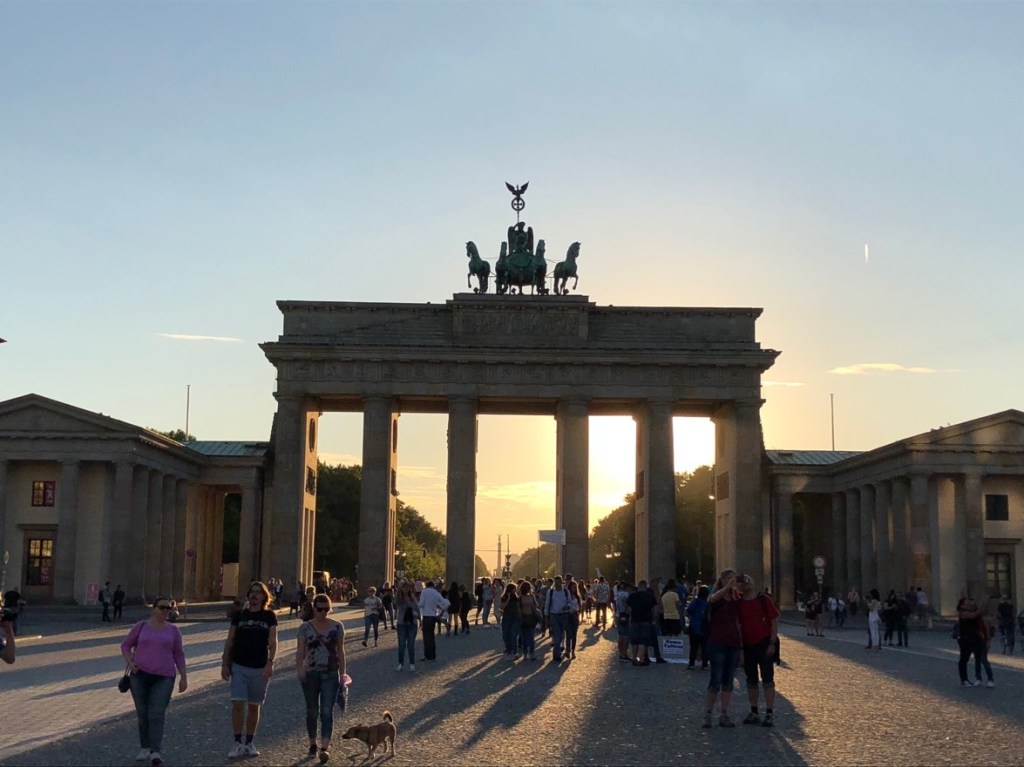
    Hallo from Berlin! Finally, my exchange session has begun after much anticipation. This semester I will be studying international business at Hochschule fur Technik und Wirtschaft Berlin (HTW). One of the two student buddies assigned to Lachlan and myself, Marusja, waited for us at the airport on arrival to take us to our student accommodation, Wonnheim Oberfelstrasse which is about 30 minutes train and bus from HTW, via bus and s-bahn (that’s one of the rail systems along with the u-bahn and Trams). Marusja took us to a nearby shopping centre in Biesdorf where we bought everything we needed like plates, cups, pots and pans, and helped us set up in our new homes. That first day was slightly overwhelming coming off our 24+ hour travel, but it allowed us to explore the city on Sunday. We went to the East Side Gallery and Altes Museum then decided to cycle to Checkpoint Charlie, the Brandenburg Gate, and the Holocaust Memorial.

    Altes Museum
    Brandenburg Gate

    Because our semester only started on the 2nd October, and our 2-week intensive language course started on the 17th September, Monday to Thursday was spent in Barcelona! The great weather, food, and sights of Barcelona made it a great pre-semester trip. I highly recommend seeing the Sagrada Familia, a Catholic Church still under construction that towers over the city (buy your tickets online to avoid lines).

    La Sagrada Familia

    On Friday an orientation for all the incoming exchange students was held at the Treskowellee campus (where most my classes this semester will be as opposed to HTW’s Wilhelminenhof campus) where we met some the people we will be studying with this sem, as well as the other people in our student dorms. A tour of the campus was also given as well as the means to purchase German health insurance which is compulsory for Non-EU students. That night we went to Union Berlin vs Duisburg with a few of the guys we met at the orientation and returned home where a welcome party in the Bierkeller (the bar in the student accommodation) was well underway.

    HTW Trekowallee Campus

    One thing I’m having trouble with is activating my pre-paid sim as in Germany there are some new rules about ID checking when registering a sim. Hopefully with help from our other student buddy, Lena, it will be sorted on Monday when she will be helping us to open a German bank account and register at the citizen’s office. Also still need to buy a router for my room so I can finally get some WiFi! Also, although many Berliners (especially the younger) speak English, the language barrier is greater back where we live in Marzahn-Biesdorf in the east of Berlin. I am looking forward to improving my Deutsch so ordering food and drinks will be easier.

    All things considered, my exchange experience so far has been great. Having met some great people, I am looking forward to start the semester. Tschüss!

    Ben Douglas
    Bachelor of Business
    Hochschule fur Technik und Wirtschaft (HTW) Berlin
    Germany

    For more information about the UTS Global Exchange program please visit: www.global-exchange.uts.edu.au
  • University of Nottingham Ningbo, China
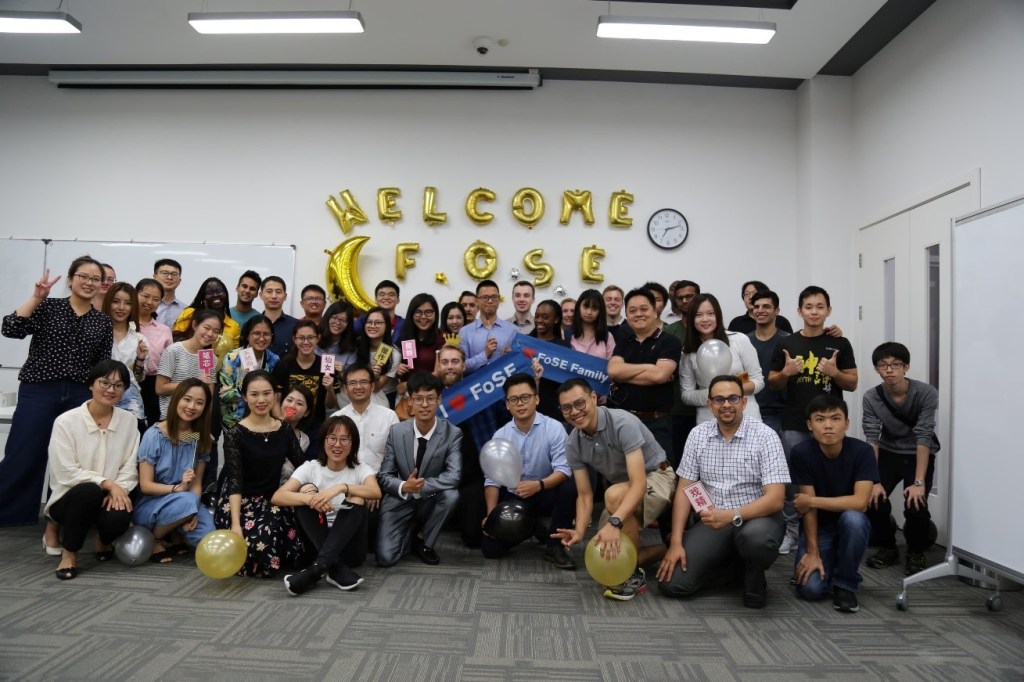
    At the International Faculty of Science and Engineering Welcome Party

    Life in Ningbo is very refreshing, relaxing and overall just amazing. Ningbo is located away from all the hustle bustle, a very suburban area with vast lands, a stark contrast from Sydney. My host university UNNC (University of Nottingham Ningbo) has a beautiful campus, with scenic views, such as rivers and parks, on the routes to my classes. They are very supportive of international students and have hosted aplenty of events to make me feel welcomed and warm.

    The campus is like a small village, with everything you need in it. We have plenty of canteens (we have Chinese food and international franchises such as Subway!), we have fruit and vegetable shops, supermarkets, barbers and hair salons, printing and technology shops, and even ATMs!! You really don’t have to leave the campus if you didn’t want to, it basically has everything you need to survive.

    Our campus has a large variety of sports and classes available such as frisbee, yoga, volleyball, aikido and many more. I’ve joined the boxing club and the rock-climbing club (YES I know its amazing, our campus has its own rock-climbing gym). It’s a great way to mingle with the locals and create deeper friendships with the other international students from around the world.

    China has surprised me with many unexpected things, but probably the most mind-boggling thing is how advanced their systems are. Whether it’s the public transport or the fact that you can scan a barcode on your restaurant table and leave (The barcode lets you pay without a waiter!), the country is more advanced than what I am used to.

    Mid-Autumn Festival Day Celebrations, making mooncakes

    A massive culture shock for me was the fact that most of their restaurants sell food that is meant to be shared. They sometimes don’t sell individual meals, and you have to pick a few dishes and rice to share with everyone. This shows that the Chinese people value spending time with each other and are definitely close-knit.

    I’m studying direct equivalents for my Civil Engineering bachelors, but I’ve also picked up a few extra language classes. Who would’ve thought I would learn French and Chinese in China?!

    Felicia Rozali
    Bachelor of Engineering (Honours) Bachelor of Business
    University of Nottingham Ningbo
    China

    Endeavour – Cheung Kong Student Exchange Program Mobility Grant recipient.

    For more information about the UTS Global Exchange program please visit: www.global-exchange.uts.edu.au

  • 你好北京 :  STUDYING CHINESE LANGUAGE AND CULTURE IN BEIJING

    I was both excited and nervous about embarking on the two-week intensive language course in Beijing China at the Beijing Institute of Technology (BIT). This was partly because I feared the course would be very difficult as it was supposed to equate to the subject Chinese 3 in just two weeks, and partly because I didn’t think my Mandarin was up to scratch for communicating with locals in everyday situations considering my lack of revision since finishing Chinese 2 last November.

    I was disappointed with the language component due to the timetable and how the language classes were managed. There was a group of 15 UTS students who attended, and we were all placed in the same classroom despite our different language proficiencies, which ranged from never learning Mandarin before to completion of Chinese 2, and completion of Chinese 4. I greatly sympathised with our teacher Zhang 老师, as she was an amazing teacher and tasked with this difficult job. As well as this the course had an unfortunate lack of classes with only six 1.5-hour language learning classes in total.

    The culture classes were interesting and enjoyable, and consisted of topics such as paper cutting, tea ceremonies and calligraphy. In these classes we learnt about the history and cultural significance of each topic as well as engaged in these activities ourselves. Additionally, these classes provided an insight as to the complexity of the many traditions and reasoning behind them.

    We also went on several excursions, to places such as the Temple of Heaven, Summer Palace, Great Wall of China, Tienanmen Square and the Forbidden City. During these excursions we were given free rein and just told to be at a specific meeting point at a certain time in order to be transported back to BIT. All these sights were remarkable in terms of their construction as well as their rich history, the immense detail and ornamentation were extraordinary and truly breathtaking.

    There was also a lot of free time afforded to us due to the lack of classes which allowed for independent sightseeing. Initially the cooler weather was a fun change from the Australian summer heat, I found it impressive just how good the heating was in Beijing but also very odd at how hot it was inside establishments. I often found myself rugged up to combat the cold weather only to be sweltering once entering a building and having to strip off some of my many layers. With this free time, I was able to explore the more metropolitan aspects of Beijing as well as venture to places such as Longqing Gorge to attend the Ice lantern festival.

    Overall, I greatly enjoyed my time in Beijing, and I am very grateful to have been given this wonderful opportunity. My interest in China’s language and culture has only increased and I cannot wait to visit China again and further improve my language skills.

    Caro-Lynn Wong

  • Hej fra København! Denmark

    At the time of writing I have been in this beautiful city for 2 weeks. And what a jam-packed two weeks they have been! I have already fallen in love with the colourful streets, countless bikes and wonderful charm of the capital. Copenhagen is a beautiful, interactive city with a huge focus on design and environmental impact. It is a great mix of historic and modern style, with numerous castles and references to the monarchy and the most amazing contemporary architectural designs.

    So far my time here has been spent settling in and sightseeing, partaking in a science orientation week and beginning my first week of university classes.

    I am staying at one of the housing foundation residences; Basecamp Sølvgade, the old military barracks converted into student accommodation. It is in the most ideal location; close to the city centre and most of the UCPH campuses, plus sandwiched between two of the biggest parks. It’s the perfect place to grab some friends, beers and have a picnic, or just to chill out with a book.

    Kongens Have and Rosenborg Slot (castle) located across the street from the accommodation

    I signed up for the Buddy Programme when enrolling, which has been an excellent way to meet other international students and local Danes. They provide a lot of activities such as walking tours, social gatherings, and most recently organised a trip down the coast to Møns Klint, the Danish version of the White Cliffs of Dover.

    The Science orientation week was well worth it, who can say no to free food and canal tours? It was another great opportunity to meet other exchange students in the faculty, see the different campuses, learn more about the university services and Danish culture.

    So far the classes are quite similar to UTS Science where you have lectures, lab days and tutorials to discuss case studies. Despite being composed of mostly Danish students; everyone speaks very good English and the lecturers are easy to understand.

    My classes are all direct equivalents so very similar to what I would usually be taking with an exception of an Ecology class. Our first week involved a field trip up north to Bøllemosen, a forest where we took some water and plant samples for future lab analysis. I thoroughly enjoyed it, so it was nice for a little change and to see a part of the city I wouldn’t have probably gone to. 

    I also joined in on Klimamarch, where 15,000 Danes marched outside parliament and through the city streets, demanding more action in response to climate change. It was a unique opportunity and amazing to see how passionate people were about the environmental health of their country.

    There is so much to see here and despite being a large city it doesn’t have that overwhelmingly large city feel to it. Just walking through the streets is a great way to spend a morning. Mostly everything is accessible by bike so it is quite easy to sight-see.

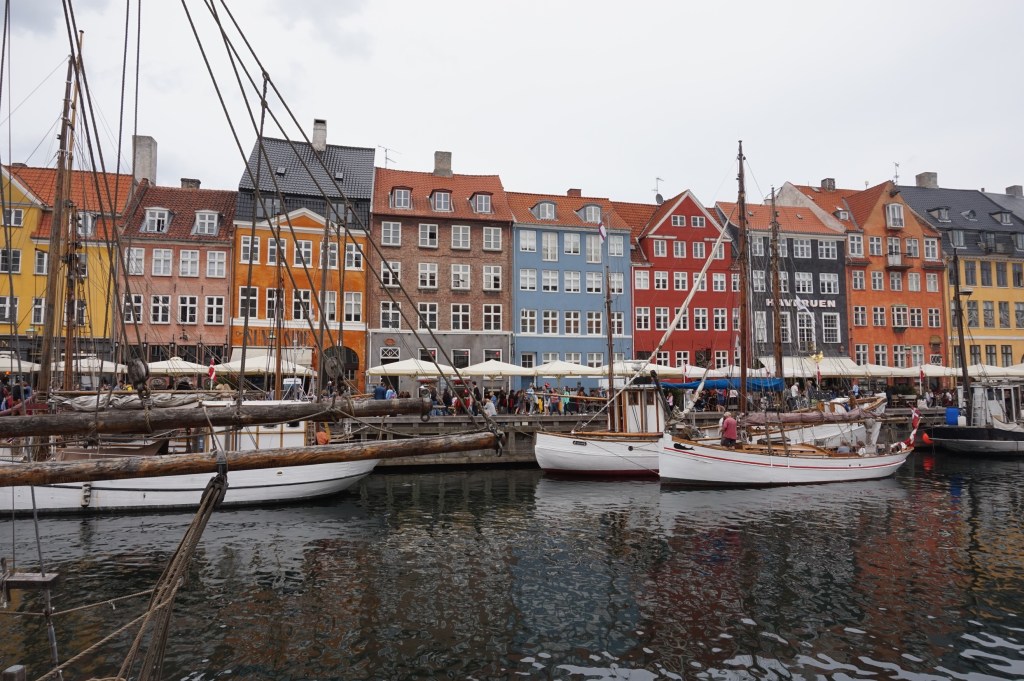
    Of course, Nyhavn was the first place I visited. It can be quite busy, but quietens down later in the evening, so is lovely to walk around as the sun is setting. The Little Mermaid statue is a little underwhelming but it’s one to tick off the list. Close by is Kastellet, a star shaped army fortress. Vesterbro and Nørrebro are very cool neighbourhoods, great to walk around with countless cafes and bars.

    There are so many parks in Copenhagen you are spoilt for choice! My top picks are Kongens Have, Østre Anlæg park, ørstedparken, and Søndermarken. Amager beach is very close by and has a long boardwalk, a perfect place to ride your bike on a sunny day. 

    Sweden is so close; you can see it from the beach. I took a day trip over to Malmo (about 45 min on train). It is a beautiful little city and its very surreal knowing you can take a train to another country and be back home for dinner. 

    It is important to note that Copenhagen is a very expensive city to live in, keep that in mind when applying. I found a lot of places in Europe expensive while travelling around before arriving here, but Denmark is on a whole different level. While there are countless charming cafes, buying that coffee will set you back at least 7-8 dollars. Luckily there are a lot of student bars and cafes near university that will offer cheaper drinks and student discounts if you look out for them.

    Mons Klint
    Amalienborg

    Overall I have only been here a short while but I have fallen in love with the place and am so excited for the next few months studying and living here. So far I would absolutely recommend studying in Copenhagen to anyone, the people are friendly and passionate about their city, every street contains its own special charm, plus it’s close to several countries so it’s so easy to travel around too.  

    If you have any questions about Copenhagen or the university, please feel free to contact me! I’m sure I’ll be more useful once I’ve been here a little longer too.

    Brittany McNaughton
    Bachelor of Biomedical Science
    University of Copenhagen
    Denmark

    For more information about the UTS Global Exchange program please visit: www.global-exchange.uts.edu.au

  • Fiji: The Welcoming Nation

    “We learn the most when we are strangers and the best way to be a stranger is by landing ourselves in a new place.”- this is the biggest motivation I bear with me as a travel enthusiast and civil engineering student. Studying in Australia as an international student, the values of getting along with people of various age, class and society are quite precious to me as it opens the door to understanding relevant industrial activities and cultural diversity. And Traveling to Fiji was yet another whole new experience to me which I had been longing for.

    I personally believe I learned and acquired more than I could imagine in these 14 days of intensive travel and working on project. And the Fijian Rural Culture is the best one to start off with. In Australia, we usually never think of keeping our doors open to neighbours and friends, nor do we allow our day to day life utensils to be used by outsiders every then and now (unless consented). Unless any occasion, more often than not we don’t aim to have a family dinner every night too or at least one meal throughout the whole day.

    In Fiji, these are totally opposite. Outside their own families, every single person living around them, let it be neighbour, friend or simply some stranger, they are always welcome to their homes. Except for night, their doors are always kept open indicating everyone is welcome and they are allowed to use anything from their house too. At least one square meal with the whole family is like an unwritten law for the locals. That’s not where their humbleness ends, when someone passes by their house while they are having lunch, they invite them saying ‘Mai Kana’ (Come and eat) to join them for the meal or to at least have some. This not only brings them closer but also strengthens their bonds with each other. Thus they can tackle any issue in everyday life being united while looking after one another.

    An unforgettable yet typical sunset in Fiji! (Credit: Tahmim Islam)

    For the program Social Enterprise and Sustainable Development, Fiji ticks all the criteria as a country to travel to. For a country with around 8 million population and not huge area of land, they have systemized their lifestyle in such a way that helps to minimize waste and carbon emission, which ultimately contribute in stabilizing the effects of climate change.

    For example, in rural places, they use reusable plates, spoons, forks, knives and so on. Plastic is barely used in such cases hence no headache of recycling. I remember going to this fuel station by the roadside for using their toilet where toilet paper needed to be bought for 20 cents because they didn’t keep toilet paper inside the toilet. This also explains how seriously they are working to reduce recycling as well. Moreover, they collect rainwater since the wet season lasts for couple of months and it rains very often and so they store it for drinking and other uses. So, no need of using extra power or electricity/ gas to purify water over that period. Most of their food and staples are produced by themselves through traditional farming so mills and factories are quite not the popular system of producing and processing food which can minimize the use of electricity, gas and last but not the least emission of gaseous pollutants (carbon or sulphur) by a great scale.

    An Illustration of Lunch in Fiji Villages. Picture Credit: Josh Hernandez

    Personally for me, one of the biggest achievements would be learning new ways of solving problem and managing projects. For an engineer, when it comes to managing projects, we usually go by top down or bottom up method. We tend to find the solution first and then tailor it according to the needs of the environment and other factors. But here while working on Social Enterprise, I learnt about ‘pivoting’. Rather than jumping to the solution, the system and environmental factors are analysed first and based on the needs and obstacles, the solution is designed and tried out. An instance would be, for engineers (Civil), if we are to connect two villages to establish communication, we’d jump straight to constructing a road and based on geographical factors and transportation we would come to a decisive conclusion whether the road should be appropriate and if not, how to design it effectively rectifying its flaws. Unless the design solution is unsupportive, we will most likely stick to the solution of road or the solution we choose initially. But in Social Enterprise and working with the students of BCII (Bachelor of Creative Intelligence and Innovation), we will go through empathy stage, will talk to the villagers, pay attention to what they need and what can improve the communication and based on other factors we will choose if a road is effective or maybe a bamboo made bridge. If the solution has flaws, then more pivoting is done and this goes on until and unless the most flawless and suitable design has been discovered. In a nutshell, the trip, project and the country, Fiji developed my personal attributes in the shortest possible time. I got homesick from the second day but I was kept away from that feeling by the amazing hospitality and unforgettable friendliness, enthusiasm and humour of the Fiji villagers.

    Living off the grid for 5 days helped me understand the value of non virtual life in a new way and how we can actually remain happy with our family and friends without what we think is ‘true happiness’ on the social media and virtual world. Any situation can be overcome by staying united as a nation and it doesn’t have to be always starting from the Government level, rather can be from community and personal level, especially for Climate Change-Fiji sets the best instance for that out there.

    Happiness is, indeed, a choice and life is just a drawing canvas. Just a simple shape drawn on it can make you as happy as the most time consuming one, choice is yours.

    Tahmim

  • 3 Weeks in Buenos Aires

    I have always loved South America and have wanted to travel to Argentina specifically for a very long time. I am also passionate about social justice and human rights, in fact these are the things that motivated me to start studying law after working in fashion design for a few years. So when I saw that I could spend three whole weeks in Buenos Aries learning about human rights I was sold!

    When I arrived in Buenos Aires it was just 1am on a Saturday morning and as my taxi drove through the city to the hostel the first thing I noticed was how alive the city was. Groups of friends were out for dinner, cafes, bars and restaurants were all open and the streets were crowded with people. I already loved it.

    The program itself did not disappoint, we had extremely inspiring lecturers and the course content was so interesting. I felt naive for not knowing Argentina’s complex political history, including the last military dictatorship they had, in which 30 000 people were kidnapped and murdered. It was so inspiring to hear about the work of NGOs and Government human rights organisations and the work they have been doing for decades and continue to do now to prevent future human rights violations and try to repair the damage done in the late 70s – early 80s.

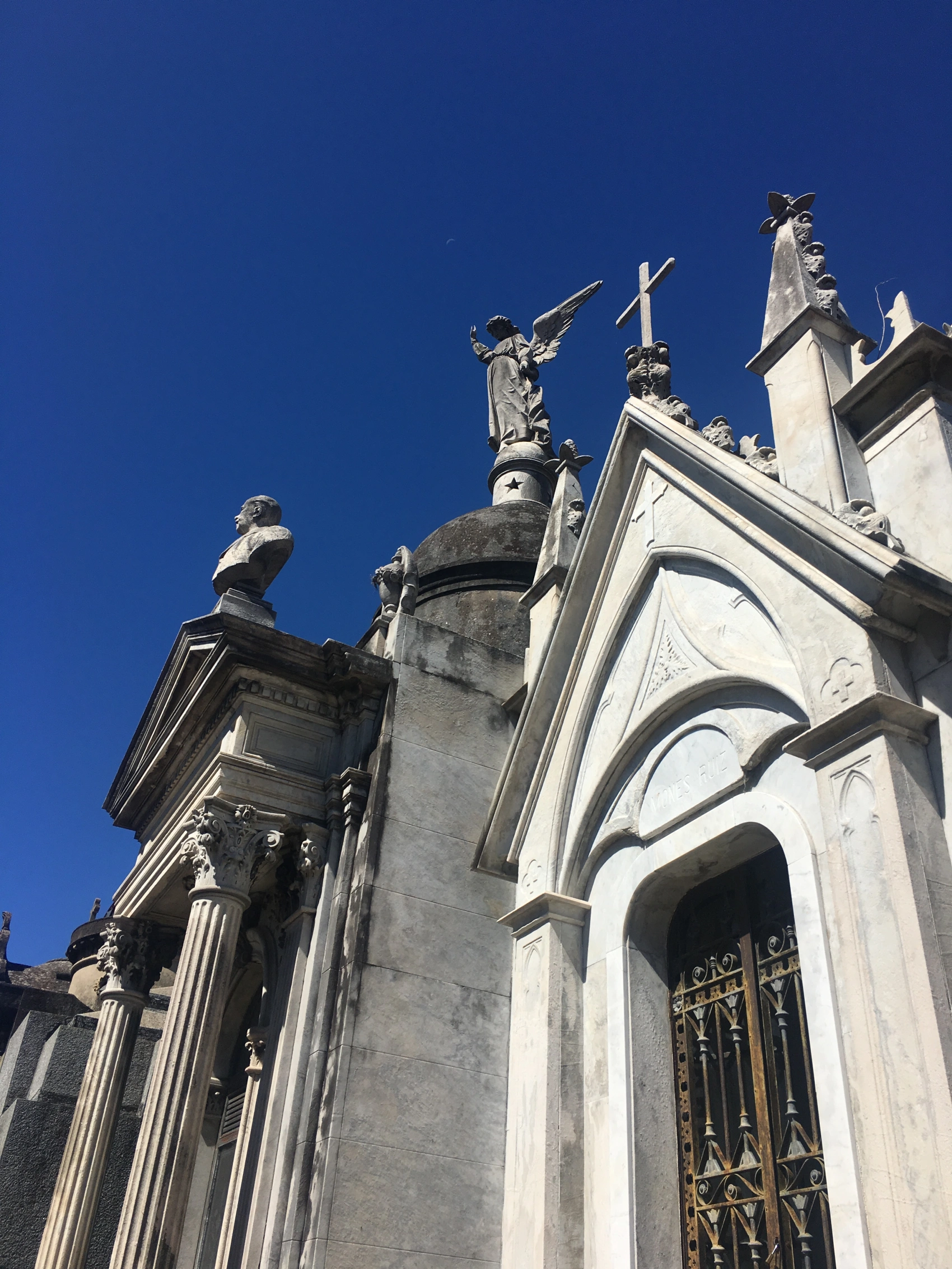
    Home for three weeks

    At first I was a bit nervous about going on the trip alone, especially as a postgraduate student. I was worried I would have a hard time making friends and be much older than everyone. However I was happy to be so wrong about that! I made great friends quickly and together we immersed ourselves in everything Buenos Aires had to offer. Every minute that we weren’t studying we were making the most of our time in the city. Buenos Aires is filled with so many amazing art galleries, it also has great cafes and boutiques filled with locally made clothes and home wares. The food is diverse and the nightlife is wild.

    Another MASSIVE highlight of the program was travelling to Iguazu Falls, I feel like I could post a thousand photos and still not do it justice. The scale of the waterfalls was overwhelming. It honestly was one of the most amazing things I have ever seen.

    First impressions aren’t always accurate, but after three weeks in Buenos Aires I stand by mine. The city is so alive. The people, nightlife, history, food, and everything else – this is my favourite thing about my new favourite city. And I already can’t wait to go back.

    – Megan

  • Shanghai- A City Where East Meets West

    Attending a business course at Shanghai University right after a stressful exam period was not how I envisioned spending the beginning of my summer holiday.  There was a moment of sheer panic when I realised that I had just over two weeks to organise my flights, apply for a visa, and prepare for the cold, damp weather.  Before I knew it, I hopped off the plane in Shanghai with a gut feeling that the experience of a lifetime was about to take place.

    Shanghai, you did not prove me wrong.  Known as the most prosperous city in China where East meets West, how could you not fall in love with its blended culture, high-rise buildings and ever-expanding skyline? I constantly found myself in awe of the views that the dynamic metropolis had to offer and was mesmerised by its intricate twist on tradition and hybridised pop culture.

    Shanghai University, Yanchang Campus

    The program I attended (Chinese Language and Doing Business in China) at Shanghai University- SILC Business School consisted of a combination of Chinese classes, business lectures, industry field trips and cultural activities.  Aside from weekends, the day would begin with a 4-hour block in the classroom, followed by an excursion or activity and free time for the remainder.  Waking up for an 8.30AM class every morning was probably the most challenging part of the trip, however knowing what lied ahead of us for the day made it all worth it.  Some of my favourite activities included learning calligraphy, Chinese water painting and archery.  As you can tell, painting was definitely not my forte.

    If by now you haven’t changed tabs and still happen to be reading this, then let me share with you a few of the favourite touristy locations that my friends and I visited!

    The Bund

    As you’re probably already aware, The Bund is a famous waterfront located on the bank of Huangpu River.  It is a popular tourist spot across from four of Shanghai’s highest skyscrapers and offers a dazzling view of Pudong’s futuristic skyline.  I would recommend going at sunset as you’ll be able to witness the bustling esplanade transform into a magical neon-lit light show.  Shanghai’s nightlife definitely does not disappoint!

    The Bund

    Yuyuan Garden

    This attraction was no doubt the most memorable for me.  Not only because of its beautifully picturesque scenery, but because it snowed.  Apparently, it was the first time in a decade since Shanghai had experienced a snowfall.  With that, and on top of the fact that I had never seen snow before in my life, you can only imagine the excitement and happiness I tried to contain.  Oh Shanghai, you picked the most perfect day to snow.  It felt surreal being surrounded by the bamboo trees and ancient wooden buildings whilst watching the snow fall gently down.

    Shanghai Tower 

    I wish I could say the same about my visit to Shanghai Tower.  This attraction was unfortunately a disappointment due to the cloudy weather conditions on the day.  As I got off the elevator on the 128th floor, all I could see through every window was white smog.  I have to admit, it was quite impressive that I couldn’t even make out a single building or road no matter how hard I looked.  I did also manage to take a cool photo of the tower disappearing up into the clouds, so I guess it wasn’t all that bad.  If you’re planning to visit the Shanghai Tower, make sure you check the weather first!

    Shanghai Tower

    Tianzi Fang

    This is the best place to shop for souvenirs and explore street food.  Situated within the French Concession, it is home to many boutique shops, bars and restaurants with an international flavour.  I spent hours here exploring the little labyrinth of narrow alleyways to discover coffee shops, small craft stores and trendy art studios.

    Nanjing Road

    By now you’ve probably heard of Shanghai being referred to as “a shopper’s paradise”.  Nanjing Road is no doubt where you want to max out your credit card if you’re a shopaholic like me.  Along the bustling street filled with shops of every brand and size and the plethora of luxury designer goods for sale, Nanjing Road will keep you preoccupied for hours!

    Last but not least, my journey in Shanghai would not have been complete without the friendships and connections I’ve made.  I am thankful for everyone who has made this opportunity possible and helped me achieve my dream of studying abroad.  By putting myself outside of my comfort zone, not only has it taught me to be patient and resilient, it has also changed my view on the world.  I can’t wait to see where my next adventure will take me!

    Nanjing Road

    P.S. If I had to give one piece of advice, pack stretchy comfortable clothes because the food in Shanghai is insanely cheap and too delicious to resist.  Needless to say, I have eaten my weight in dumplings and really pushed my lactose intolerance beyond limits with the amount of bubble tea I’ve consumed.

    Vivian Cheung

  • St Edwards University, United States

    Austin, Texas is a very interesting place. Before coming here, I had a picture in my mind of a very Texan town with cowboy boots and big hats, but it’s quite the opposite. There’s interesting and different people everywhere all with a different story, whether they’d grown up here or moved from out of the state. It’s been extremely hot which is kind of nice coming from the cold weather of Sydney, and makes going out a lot more fun. You’ll never get bored here as 6th Street and Rainy St in Downtown are filled with back to back bars to keep you entertained nearly every night of the week if you’re up for it. Rainy Street has transformed houses into bars which is something you’d never see in Sydney, so I found that very interesting.

    I haven’t started classes yet, but the college I’m staying at is extremely nice. It’s a fair bit smaller than the University of Texas which is about a 10-minute drive away. Everyone in the city is so excited for football season to start in a couple of weeks. The UT football stadium holds around 100,000 people, so I am very excited to go to the opening home game against USC, should be a lot of fun. One thing I’ve realized is it is so helpful to at least know one or two people in the city before you come, or even friends of friends who can show you around the first time you get there. Meeting people isn’t hard, as everyone is so nice, but it’s really helpful to have a reference point.

    Austin also has a wave pool about 20 minutes from Downtown. Some of my American mates took me there the other day which was definitely an experience, topped off with some beers which they brew at the park. I was lucky enough to get invited to Colorado as well with a few boys which was very cool. It just showed the opportunity to travel around as well, as each state in America is very different. The people you become friends with will most likely invite you to other places which you should definitely take advantage of! I’ve already been in the states for a month and time is flying.

    Louis Collins
    Bachelor of Global Studies
    St Edwards University
    Austin, Texas
    United States

    For more information about the UTS Global Exchange program please visit: www.global-exchange.uts.edu.au

  • Three weeks in Granada!

    Having left a snowy Vienna, I arrived in Granada expecting a little heat as one generally associates with southern Spain yet was met with a mere five degrees. At this moment I realised that this experience was going to be slightly different to what I had expected.  

    I arrived at my apartment hoping to dazzle the host, Raúl with the Spanish I’d learnt over two semesters at university. My, ‘Buenas Noches’ was met with a string of words that sounded like Spanish, none of which I caught. After seeing my face, Raúl explained (slowly) that he didn’t speak much English and asked if it would be okay if he explained the apartment in Spanish. To which I hesitantly replied “Sí” hoping I would be able to pick up enough words in each sentence to guess at what he was saying.  

    Upon his departure, I began to question whether my two semesters of Spanish would be enough to get me through the next three weeks. My apprehension continued around 30 minutes into my first class. After struggling through the first 30 minutes of continuous Spanish, I noticed the shared look of shock in most of the class. 

    Spanish study spot

    Fast-forward two weeks and the difference in our facial expressions was undeniable. We settled into the four hours of daily intense Spanish and (mostly) understood everything our teacher was telling us about her plans for the upcoming Chinese New Year party in which she was going to attempt making dumplings. A strategy that has me thinking of the simple Spanish future tense whenever I eat dumplings. 

    Centro De Lenguas Modernas

    Towards the end of my time in Granada, I found myself speaking in broken Spanish with my fellow classmates. An idea that was far from what I could have imagined on the first night when I was trying to understand Raúl asking for my passport.  

    My brief stay in Granada was one that drastically improved my Spanish but also my understanding of Spanish culture. Being home has been strange as I often catch myself wanting to greet and thank people in Spanish as this became second nature on my trip. Looking forward into the coming semester, I hope to continue my language skills both in and outside of the classroom. The opportunity to study in Granada was one that I will never forget and makes me even more excited for my In-Country Study in Spain in 2020.

    • Katherine
  • Skating the Surface in China

    Something I hold dear to my heart is skating on the lake of the Summer Palace in Beijing. I’ll never forget it. I had been to the Summer Palace twice, heard all about the Empress Dowager Cixi and walked under the gorgeous corridor. It was one of my favorite places to have visited and so I was excited to go back. When we arrived I didn’t expect to see that the lake had frozen over and that people were ice skating using sleds and ice bikes. Immediately my friends and I hopped over, paid around $10AUD and jumped on the ice for the next few hours, seeing the beauty of the Summer Palace from a completely different perspective. Just when I was looking forward to experiencing the beautiful Summer Palace again I was surprised to find more depth to it.

    In my two weeks in Beijing as part of the intensive language and culture short course at the Beijing Institute of Technology I was constantly reminded of the utter complexity and depth of culture and history that exists in China.

    We were there during the lead up to the Lunar New Year, and were lucky enough to gain an insight into how language is often tied to culture and history whilst being transformed again for a contemporary era. During our lesson on the Chinese tradition of paper cutting we learned about why fish are often used as symbols of good fortune, as they sound similar to the character for more. Similarly, we found out that Pepper Pig was the modern poster child for the year of the pig, which was often reaffirmed through her constant presence around Beijing.

    When studying calligraphy, we looked at how characters had been simplified from their more complex and more pictorial beginnings. I found it particularly interesting to look at how the freestyle way of writing a character changed it and highlighted calligraphy as more of an art form and the experience as meditative.

    Language is intertwined with culture, and although two short weeks wasn’t enough time to take it all in, I was reminded of how the traditions of eras past in combination with a new modern age make Beijing, let alone the rest of China, a place with incredible diversity.


    Annabelle Parmegiani