UTS Think Global

Dream. Explore. Discover.

Disclaimer: All blog posts are written by students and do not necessarily reflect the views of UTS staff.

  • The Sophian Experience

    So I’ve been gradually adjusting my life here in Japan and so far, I think I’m finally getting out of that holiday mood and into study mode. My grades thank me.

    I applied for Sophia University in Tokyo thinking that university life here was going to be similar back home in Sydney, but there were so many things to understand upon starting university here, such as memorising certain procedures, registering for classes and making changes to your timetable. There is a noticeable difference is the way classes are held in Sophia University, which is in periods or sessions, with 6 in one day, with period 1 starting at 9 in the morning and period 6 ending at 9 at night. One period is for 100 minutes, and a 4-credit subject will usually take up 2 periods a week. However the Japanese beginners class that I am currently enrolled in requires me to attend class at period 1 everyday, which means waking up early and dealing with rush hour every weekday. The rush hour here in Tokyo is so insane, the morning commute to UTS pales in comparison, that I make sure to leave at 7 to take a slightly less packed train (1 or 2 less people) for my own comfort and to ensure I am never late to class. Speaking of attendance, the Japanese university system will grade most classes quite harshly on attendance, and missing past a given number of classes can actually result in failure of the class. Another example of how the education system differs from Australia is how the class is taught. I have noticed that most of the classes here tend to be lecture classes with hardly any workshops, labs or tutorials. One comforting bit of information is that the campus is similar to the campus at UTS, a confusing layout with buildings in nor particular order! For example, building 12 is right near the entrance next to building 1, whereas building 11 is all the way at the back of the campus.

    Food here in Tokyo is cheaper and more convenient than Sydney, especially in the university and around it. There are multiple options of where to eat in Sophia University, from its multiple cafeterias, cafes and various food trucks. One thing to note that it might be hard for a vegan to find food in Tokyo as most food products sold here are animal-based.  Some other food practices such as vegetarians, and pescetarians might also find it a bit difficult, although more places have started to come up with options for those people. Sophia University has put some thought to this issue and does have a halal restaurant on campus. Food options offered in the cafeteria also have signs showing what each meal is compromised of, with English translations.

    I’m currently living at Soshigaya International House, around 50 minutes from the university, because of the sky-high property prices in the city (which is also where the uni is). The main reason I applied for this dormitory was mainly because it was one of the two residences that were managed by the university itself. This meant that if I had an issue at the university or with my residence in Tokyo, it would be quickly solved with the help of the uni. Because of this, there is a program called the LGLs at the dorm, where there is a person in charge on every floor. These people would help any new students settle down at the dorm and will also help with any issues the students might have. An example would be when a person from the LGL took a group of us to BIC Camera in Shinjuku to get us all Japanese sim cards. It’s a really complicated process, and I recommend getting help from someone who can speak Japanese. It took nearly 3 hours to get sim cards for 8 people, even with help. I recommend not getting a travel sim card. Data here in Tokyo is really expensive. $30 for a 3gb prepaid sim card? No thanks.

    The dorm also has plenty of great facilities such as a gym, sports hall and a music room. There are other options of residence to choose from, such as other dorms and housing options from third parties like Sakura housing, each one with different facilities and prices. However the most popular option right now by far are residences called share-houses (similar to a dorm) managed by a company called Oakhouse. However, unless you are willing to pay a premium to live near the uni and in the city, most residence options will be at least 30 minutes of travel from the city centre.

    I’ve found Tokyo is a very fast-paced city to live in, with so many things going on at once; it’s sometimes so hard to concentrate on a single thing to do. So far, I’ve experience what it’s like to attend a fireworks festival here and I’ve eaten at a traditional izakaya. It’s only been two weeks in, and I can’t wait to experience more of Japan!

    Nicholas Lukito
    Bachelor of Science in Information Technology
    Sophia University
    Japan

    Australian Government New Colombo Plan Mobility Grant recipient.

    For more information about the UTS Global Exchange program please visit: www.global-exchange.uts.edu.au

  • Copenhagen University, Denmark

    Hej from Copenhagen! It has now been 4 weeks since I packed up life in Sydney and got on the plane to Denmark to begin my semester abroad at the University of Copenhagen. I have absolutely fallen in love with the city – it is the most beautiful city I have ever been to and it has so much to offer. Although only a month has passed I have made so many memories and met so many wonderful friends!

    I decided to enrol in the Danish language course which began in the three weeks before semester started. I highly recommend enrolling in this course as not only did it give me ample time to settle in before actual classes started but it also provided me with a great avenue to meet many new international students like me!

    For my exchange, I have chosen to live at Basecamp Solvgade. This is an old military barracks converted into a hall of residence for students with arguably the best location as it is so close to city centre. There are many international students who live here and it has several communal areas making it a very social place to live. I would recommend staying at Basecamp or another hall of residence/dorm as they make it easy for you to make friends.

    I was surprised by how easy it was to get around the city. Copenhagen is a very bike friendly city and riding a bike around town is the way to go – it is by far the easiest, cheapest and quickest way to get anywhere you need to go. Once you get on your bike you’ll never want to commute around the city in any other way! I would recommend looking up the road rules before you get on the bike, but don’t worry Danes are quite patient and you’ll pick it up it in no time!

    Although I have only been here for a month, Copenhagen is beginning to feel like home. It’s crazy how quickly you can settle into a new city and fall in love with everything about it.  Copenhagen offers you all the benefits of a large city, yet somehow has that hygge charm to it (hygge being cozy). From the architecture, the cobblestone streets and the stunning canals to its food, cafes, bars, markets and fashion there isn’t much Copenhagen doesn’t offer. I would recommend checking out Reffen for an awesome food market, the meatpacking district if you’re looking for a boogie, Francis Pony for cheap drinks (especially on Tuesdays and Wednesdays) and Sankt Peders Bageri for onsdagssnegle (delicious sticky cinnamon rolls only made on Wednesdays).

    On top of what Copenhagen has to offer, it is also really easy to travel from with the airport being a 20-minute metro ride away. So far I have been able to travel to the UK and Portugal and am planning many more trips for the coming months to places including Germany, the Netherlands, Norway and Sweden!

    To give fair warning, Copenhagen is one of the most expensive cities in Europe. Despite this, groceries are reasonably priced so if you cook at home most of the time (this means lots of communal dinners with friends), have picnics in the park, find the cheap eats and bars it is easy to remain under budget.

    So far, exchange has been amazing. Every day there is something exciting to do or a new place to explore. Knowing that this is only just the beginning of my exchange makes me so excited for what the future holds in the next 4 months. Going on exchange is an amazing experience and I would strongly recommend to anyone that they should DEFINITELY take the opportunity to study abroad if they can during their degree at UTS.

    Katherine Shliapnikoff
    Bachelor of Business / Bachelor of Laws
    Copenhagen University
    Denmark

    For more information about the UTS Global Exchange program please visit: www.global-exchange.uts.edu.au

  • Copenhagen University, Denmark

    It has been a month since I arrived in Copenhagen, and I can safely say it has been one of the best months of my life. I have been staying at BaseCamp, which is student accommodation that is situated right in the centre of the city.  My room is lovely and spacious, and adding a few plants made it even better. The location of the accommodation is a major bonus as it makes getting around the city very easy. It has been summer, so a lot of time has been spent swimming and tanning by the harbour. There are many swimming spots in the city which get very busy after work and on the weekends.

    Another popular activity is sitting in the parks and having a picnic or a few beers to make the most of the warm weather.

    Throughout August, I attended the pre-semester Danish course. This was a great way to make friends from all over the world and learn a little bit of Danish to help at the grocery stores. The course ran in the mornings from Monday to Friday. On some afternoons there were trips to museums that were organised by the university. These included the Jewish Museum and the National Museum.

    The staff at Copenhagen University have been great towards the exchange students and making sure we know what needs to be done before the semester starts.

     All classes begin next week with orientation happening this week. The orientation events have been a good way to get to know other international science students and also understand the different systems at the university.

    I will be studying theoretical and experimental molecular genetics for the first half of the semester and immunology in the second half. I am excited to begin these subjects and experience a new method of teaching. The practical classes only have a maximum of 30 students. I can’t recommend this city enough for exchange. There is so much to see and do and adapting to the Danish lifestyle is easy. The next five months are going to be full of excitement, challenges and learning.

    Amy Farnsworth
    Bachelor of Science / Bachelor of Creative Intelligence and Innovation
    Copenhagen University
    Denmark

    For more information about the UTS Global Exchange program please visit: www.global-exchange.uts.edu.au

  • Sogang University  – 4 month experience
    • What are the facilities like at your host university?

    The facilities are quite clean upon arrival but future newcomers must be prepared to realise that there is no kitchen available to cook any food, which was quite a downfall. But the cheap food will make up for that predicament.

    • How does the teaching style differ to that at UTS?

    The teaching style is very different and absolutely nothing similar to how it is done back home at UTS. It has similar teaching methods to classes in the United States. It can be quite daunting at first but you will eventually get the hang of it after the first week.

    • Do you have both lectures and tutorials?

    The classes that I have taken, lectures and tutorials can be considered the same so there are no separations between the two.

    • Are you studying something really interesting or different to what you have done before?

    I have taken upon subjects from psychology; sociology and history fields, which are quite different to what I am studying but have a lot of experience to take on board to my major back home.

    • How’s life in your host city?

    It is an absolutely beautiful city with beautiful people, which will make your experience here unforgettable.

    • How was the orientation/arrival program at your host university?

    Very long and tiring but was able to make great friends along the way.

    • Have you taken up a new sport or activity while on exchange?

    Yes, I have joined 2 soccer teams. One from the dormitory, which is a lot more casual and another team that is, based within the university which is a lot more competitive.

    Macintosh HD:Users:Yudianzah:Desktop:thumbnail_Image-3.jpg
    • What have you found most surprising about your new country/culture?

    The K-pop culture is heavily idolised here in Korea. To the point where they can be deemed as important politics. The influential status they carry behind these K-pop groups can be quite frightening.

    • Any top tips for future students!

    Do not be afraid to jump into the deep end! The whole exchange experience can be quite frightening (and tiring) but I guarantee anyone that they will have one unforgettable experience.

    Yudianzah Bahnuni
    Bachelor of Arts / Bachelor of Education
    Sogang University
    South Korea

    Australian Government New Colombo Plan Mobility Grant recipient.

    For more information about the UTS Global Exchange program please visit: www.global-exchange.uts.edu.au

  • Erasmus Universiteit Rotterdam, Netherlands

    -How’s life in your host city? What’s the uni like?

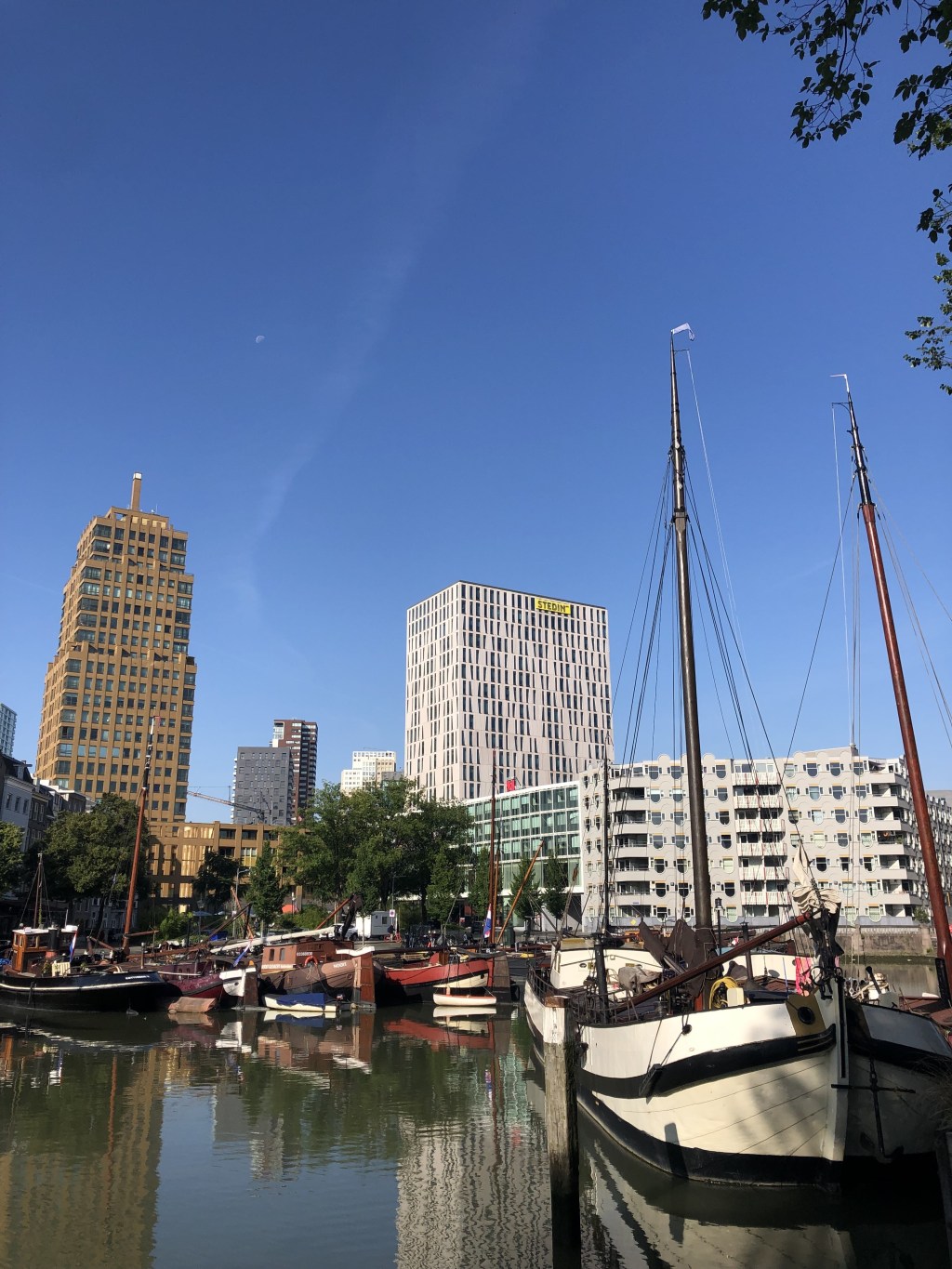
    Life in Rotterdam seems to be much more laid back then Sydney. The people are all lovely and are happy to help you navigate your way around the city – the most popular way to get around the city is by bike, I ended up buying one on my first day here.

    – What is your accommodation like?

    I am staying in the Hatta Building. The accommodation is great and the room a lot bigger than I thought it would be. You have your own room and you share a kitchen and bathroom with two other people. Be warned the mattress is uncomfortable and a lot of people end up buying their own. You will always need to buy your own plates, cutlery, pans etc. Just go to IKEA (15 mins away) with a roommate and you’ll be sorted.

    – Have you taken up a new sport or activity while on exchange?

    I have joined a few clubs; however, I am not really a sports person. I am interested in doing a Dutch language course whilst here and I kept my anytime fitness membership as there is a gym a 10-minute bike ride from the university.

    – What have you found most surprising about your new country/culture?

    I found it surprising how involved everyone gets in university life and the clubs / fraternities. At UTS I didn’t get involved in any clubs and didn’t think I would in Rotterdam either however when looking around at orientation week I realized it is a great way to meet new people with the same values and hobbies as you.

    – Are you studying something really interesting or different to what you’ve done before?

    Our semester is yet to begin however it is helpful to note that the equivalent of 3 UTS subjects is 6 Dutch subjects over 2 terms. You also have exams at the end of each term which for me is much different from the communications course at UTS as we don’t have any exams.

    Emily Burke
    Bachelor of Public Communication
    Erasmus Universiteit Rotterdam
    Netherlands

    For more information about the UTS Global Exchange program please visit: www.global-exchange.uts.edu.au

  • Uppsala University, Sweden
    A picture containing person, outdoor, man

Description automatically generated

    At the start of this year, I would never imagine that I would have travelled to Sweden alone to study at Uppsala University. Uppsala is a relatively small town in the grand scheme of things however, it is the 4th biggest city in Sweden. I am in awe of the country’s approach to recycling and the overall forethinking to save the planet. There is a vast amount of greenery here that I have already explored with my friends, hiking and swimming every day. For example, last week we stayed in a traditional Swedish cabin in the middle of the forest (free of charge!).

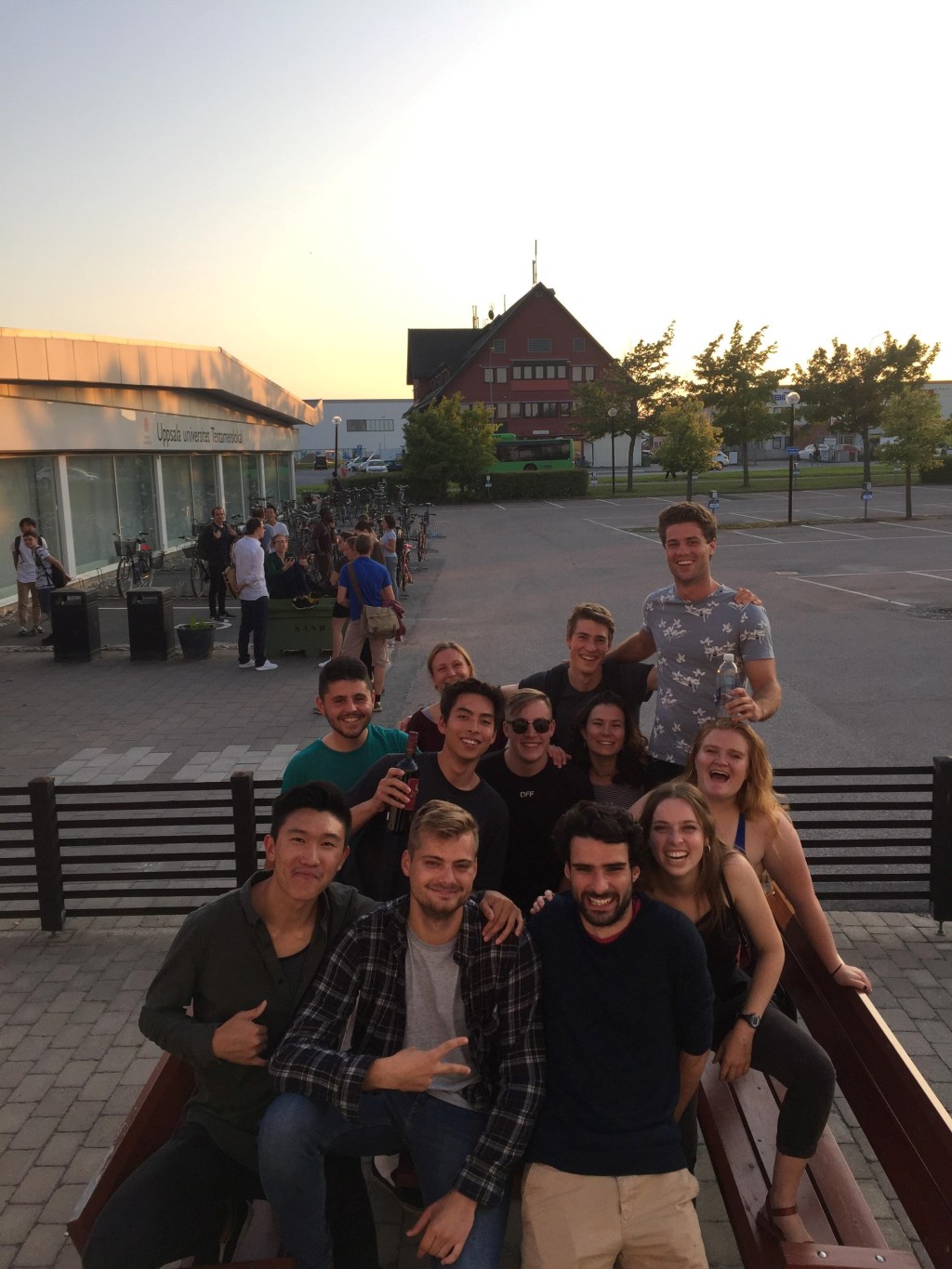
    I was quite hesitant the last few days before coming to Sweden, I knew that there would be people coming from UTS in the same boat however I was still quite nervous. There was no real basis for this, and I have already made a great bunch of mates. We regularly have family dinners together where we all contribute toward to ingredients, cook and eat together. Although the main cook is generally the wonderful Tobias, the crew consists of around 8 people, although we have a much larger group as well. Myself, Jordan- who comes from UTS- he’s the unorganised one of the group (having to stay on my floor the first night because he didn’t collect his keys) and always needing a personal 4am bike escort home from one of the nations , Annie- a sporty English girl who studies at Durham, Celia who pretends she comes from the ‘ends’ of London when really she’s a privileged posh Londoner, Emma and Tess add some diversity both coming from the States with Tess having a new bike story every week ranging from crashing into car barriers to popping tyres 15km away from Flogsta in the middle of nowhere. Charlie the chav who comes from London – everyone says the pomms can drink but I still am yet to see this guy finish a night out.

    A group of people posing for the camera

Description automatically generated

    I came to Sweden at the start of August to do an intensive Swedish language course before the actual semester started. Even though the semester hasn’t properly started yet, this month has been the busiest of my life, with new weekend or daily trips constantly being organised all whilst attempting to learn a foreign language. For example, I went to Amsterdam with Celia, Jordan and Julian for a festival 2 weeks ago called lowlands, it was a super fun experience and it’s given me an even greater urge to continue to travel over Europe while I’m here. There’s a big group of us planning to go to Berlin in a few weeks for a friend’s birthday, as well as Munich for Oktoberfest and many many more (and Stockholm this weekend).

    A person that is standing in the grass

Description automatically generated

    There’s so much to write about but I think this blog is already a tad too long. Exchange has been an unreal experience so far and if you get the opportunity, I wholeheartedly recommend you do it. So that’s been some of my experience so far and I’ve loved every minute of it, I can’t wait to keep studying here and continue to explore Europe! Vi ses- see you later in Swedish.

    If you want any help or are indecisive about exchange and taking the plunge, chuck me a message on fb! Or if your just feeling lonely and want a chat, I’m all ears. Cheers!!

    Also, live in flogsta.

    Kain Thompson
    Bachelor of Business
    Uppsala Universitet
    Sweden

    For more information about the UTS Global Exchange program please visit: www.global-exchange.uts.edu.au
  • Yonsei University, South Korea

    Arriving in Seoul Korea

    21st of August 2019.

    Sydney Airport. International Departures.

    I knew it was going to be difficult.

    It was daunting to embark on a journey which I knew was going to be the most challenging period of my life. Going on exchange would be the first time I would be living away from my parents and family for an extended period of time and learning how to survive on my own, be self dependent and budget well on my savings was something I was going to have to do while I was here in Korea on my own.

    But to be quite frank, I didn’t quite think too much about that until after I got here.

    I was more worried about my courses at Yonsei University and if I was actually enrolled in the university (“What if I had to go all the way back to Australia because I didn’t do the paperwork correctly??”). I was also worried about getting data, making my way to the university safely as well as getting an ‘Alien Registration Card’ that all my friends who went to Korea for exchange told me to do asap.

    I had no idea where to start!!!

    Thankfully, the one thing I didn’t have to worry about was housing.

    If you are ever planning on going to Yonsei University for exchange, SK Global is one of the most difficult places to get student housing. This is because the website crashes the minute the housing application becomes available due to the significant overload of people trying to access the site at once – so one big tip is, plan accordingly so you can access the application as soon as it opens… maybe even open it with an incognito browser, its literally a war to get the room you want! But it isn’t the end of the world if you don’t get into the dorms; a lot of my friends found goshiwons nearby the university)

    I had already secured my single room in SK Global – gosh bless – so all I had to do was follow the email instructions and Naver Mapped my way to student housing which will be my home for the next 5 months.

    Another tip!!! Google maps is terrible in Korea! Download the Korea Subway App/Naver Map/Kakao Map instead! Also if you need to use the taxi while in Korea, a good taxi app is KakaoT which allows you to see how much taxi trips should be (especially as some taxi drivers like to scam unsuspecting foreigners).

    A look into SKGlobal House Entrance
    (You get a card entrance pass that is also used for your room door)

    Settling in Yonsei Uni Life

    Yonsei University actually provides a lot of support for foreign students and I personally think that makes sense as they get a LOT of foreign exchange students (this year they had over 1000 foreign students!!! Apparently Maddox, Angela Jolie’s Son also attended the orientation).

    Yonsei helps set out a lot of things including emailing all the important dates for course registration, add/drop pick up, student housing options, SKGlobal check in, orientation dates, how to get Student IDs as well as the very important process of registering for your Alien Registration Card (which is needed for all foreigners staying longer than 90 days). This support really helps alleviate the stress of being in a new university environment and country, especially when the main language is not English.

    Yonsei University in fact actually sets up the entire process of the Alien Registration Card (ARC) registration, which is known to be very tedious process when doing it by yourself. The ARC registration requires booking a time at the Immigration Office, bringing the necessary documents e.g. Power of Attorney, Certificate of Enrolment and Certificate of Residence, and then collecting your fingerprints. However, Yonsei provides almost all of the paperwork and sets up a period where you can hand the forms in to the Immigration Officers stall set up at the university! The only thing that you have to do at the Immigration Office is provide your fingerprints during the time period stated by the officer.

    The Immigration Office is a slight trek from Yonsei University so keep that in mind!

    Yonsei also has specific orientations for foreigners. The first big global orientation started off with a bang as their Kpop Cover Group – Fever – performed on stage as an ‘introduction to Korea’ moment.

    Prepping for NCT Regular Cover dance.
    The start of BTS Boy with Luv Cover Dance.

    The orientation also went through the locations of all the key buildings of Yonsei, an outline of Korean law (e.g. drugs are a big no no here) and government bodies, Yonsei clubs promotion as well as an activities sign up opportunity. I signed up for one of the tours which was offered (the tour included a visit to Gyeongbokgung Palace, Korea War Memorial and the Hangang river).

    I also joined one of the orientation events which was part of the Mentor’s Club and it was a good opportunity to meet other students who are in the same shoes as you. The Mentors Club facilitated this meeting by taking the participating students to the restaurants in Sinchon (the area of Yonsei) and encouraging conversations over food. Our group luckily got to eat Korean Chicken and of course Korean beer to pair with it.

    Korean Chicken is undoubtedly one of the best creations in existence.
    Especially Yangnyeom (sweet & spicy) boneless chicken!!

    After the food, the Korean mentors brought the groups to Barfly to encourage further mingling and conversations over drinks and music and that was when the night formally ended.

    I wouldn’t say it was a really good bar/club but it was good enough for a first time introduction!

    Academic Life @ Yonsei Uni

    So after the week of orientation activities were over, it was time for me to finally attend my Yonsei classes. I had enrolled in the intensive language course (Korean Language Intensive or KLI) offered at Yonsei as well as two other subjects which were Korean History and Film Analysis and Human Technology Interaction class.

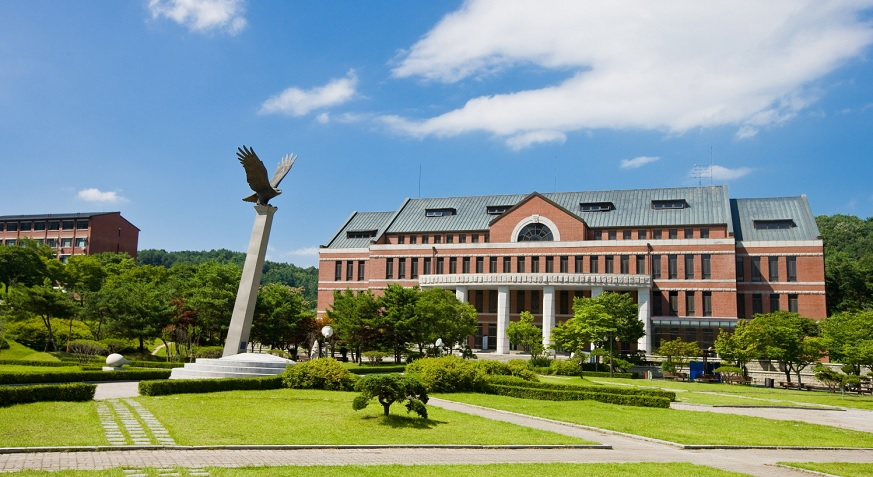
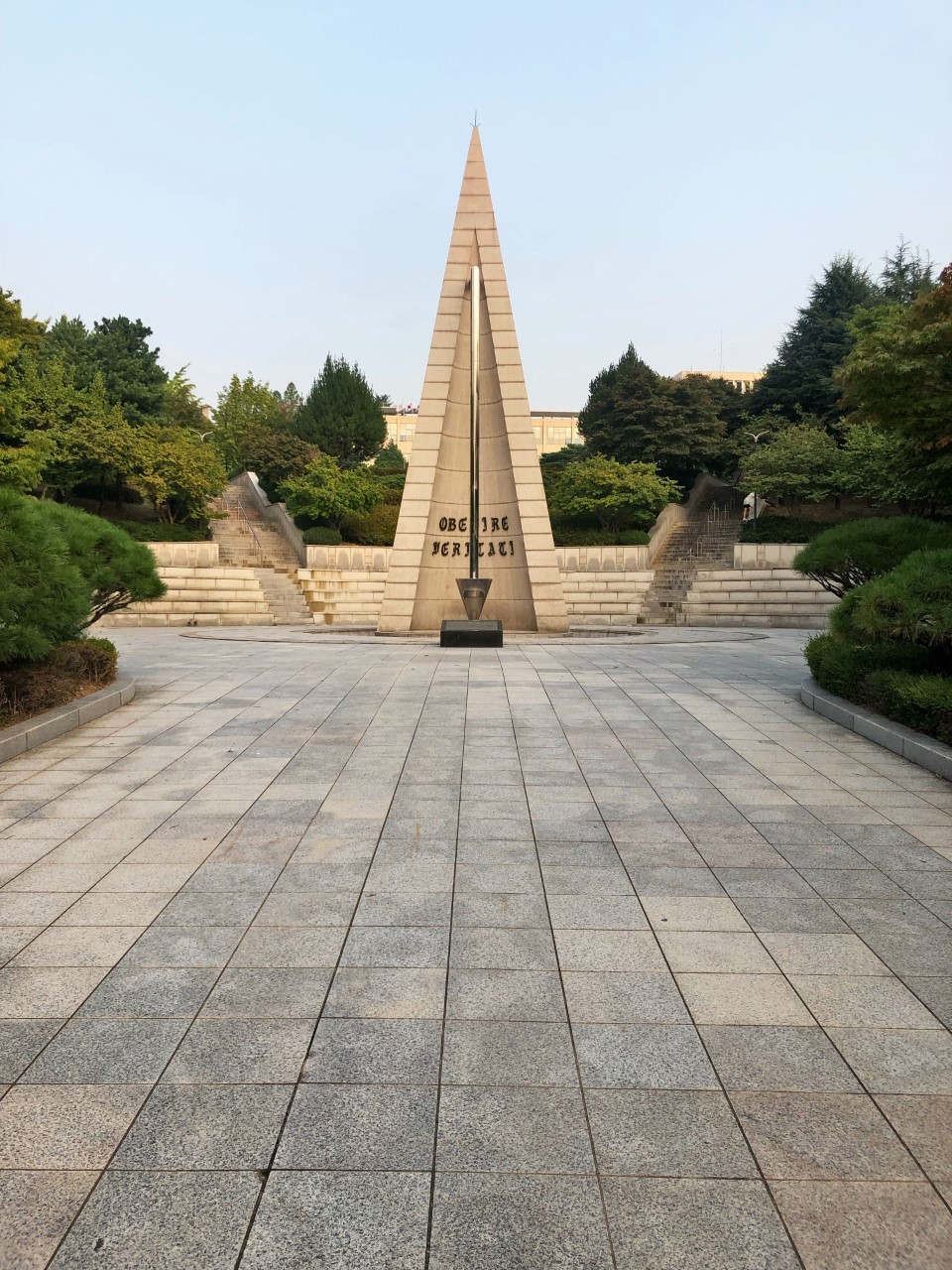
    Yonsei University boasts a massive large campus with multiple large architectural buildings and sights.

    Yonsei Samsung Library
    The eagle is Yonsei’s mascot!
    Birdseye view of some of the campus.

    The university also offers facilities that I have never seen before, including multiple convenience stores on premises including in the basement floor of the school library offering all types of food from gimbap and ramen, multiple cafeterias specialising in different types of food such as spaghetti/pizza/korean traditional food, spacious solo study areas, a co-op store selling different types of Yonsei branded merchandise including toys and even a cafe on the rooftop.

    Big Tip! I found exploring the campus prior to starting classes quite useful as this meant I knew approximately where my classes where, especially in a campus as big as Yonsei.

    I found it also quite interesting to have a ‘campus’ as UTS’s facilities remind me more of solo individual buildings around the city and are not necessarily connected, so getting used to Yonsei’s layout was quite fascinating to me.

    Study area in the library.
    It was only the first week of semester but there were quite a lot of people studying already. The library was also super quiet which is a change.
    Each cafeteria has its own speciality cuisine.
    This one was Korean food and had self serve side dishes such as Kimchi and Radish in the middle of the cafeteria.
    The Coop store sold almost every form of Yonsei branded Merchandise you could possibly think of!
    It was really fun browsing through the store.

    I also found that my classes felt quite different to my classes back at UTS. I only had classes/tutorials and no specific separate ‘lectures’ for my classes. However, with the non-language courses, the three hour classes had included sessions where the professor would present the ideas and make points like in a lecture, some of which even took two hours or more of the class.

    I also found that , while there was still group work activities, there was not a huge stress on this in the classes, and most of the work required to be completed were individual. Also, depending on the class popularity, the class sizes could be massive, some tutorials even having more than 50 students when tutorials back at UTS would be capped at around 30. I also felt that there was not as much opportunity to be friends with the students around me as during class the opportunities to have discussions within groups was not a regular class activity.

    However, with my Korean intensive language classes, as the classes would be capped to around 15 of us and we had class with each other everyday for two hours, I was able to get familiar with the rest of the students in the class. I felt that this allowed me to get a good sense of the personalities in the classroom and as all of the students were exchange or foreign students, it was a great networking space too.

    The KLI Classrooms are the old fashioned classrooms with blackboards.

    Overall, it was clearly evident that there were plenty of differences between Yonsei and UTS, especially in the teaching styles. However, at the end of the day, both have their distinct styles and I am here in Korea to develop and learn.

    Yonsei still feels like a great place to explore my potential opportunities, and I am ecstatic and grateful to be here! Looking forward to the rest of my time here!

    Clarissa Lim
    Bachelor of Information Technology
    Yonsei University
    South Korea

    Australian Government New Colombo Plan Mobility Grant recipient.

    For more information about the UTS Global Exchange program please visit: www.global-exchange.uts.edu.au

  • Danmarks Tekniske Universit, Denmark

    Having spent less than a week in Denmark, it’s impossible to properly describe Danmarks Tekniske Universit (DTU) or give justice to Copenhagen as the diverse city that it is. I’m sure I’ll look back at this post in a month or so with plenty of asterixis and caveats to add.

    I’ll start with the basics; DTU is a technical university with a heavy focus on Engineering and offers a much wider array of engineering specialities than UTS – think transport engineering, resource engineering, photonics engineering, DTU has a huge selection of subjects. As someone who has no electives in their course, this was essentially the determining factor for picking DTU. I want to stress that it is still feasible to do an exchange with no electives. I thought for a while that it would be too difficult but it’s just a matter of spending lots of time trawling through the partner uni’s course base!

    DTU is located in the gorgeous, leafy fringe suburb of Copenhagen of Lyngby (still working on the pronunciation, it’s something like “Lung-bu” and said in a deep, gruff voice). I’ve spent 90% of my time in and around campus which conveniently has its own supermarket and running trail that skirts the forest.

    I’m living at William Demant College which is right on campus at DTU. I’m the only international student living in this all Danish college which gives me a unique opportunity to become immersed in Danish culture but also make friends with local students. While this sounds cliché, it can be notoriously difficult to solidify a friendship with local students if not living together or making chocolate buns together as we did on my first night. The college culture centres around the communal kitchen, with a ‘dinner club’ planned for every Wednesday and Sunday nights where we each take turns cooking for the rest of the kitchen. Given how competitive securing accommodation can be, I feel incredibly lucky to even have a room, let alone one in such a beautiful spot.

    The introduction week has been a blast. The 400 exchange students were split into groups of 15ish students with a local buddy. The week has been crammed full of everything you need to know about the campus, Danish cultural do’s and don’t, pub crawls, a huge tour of Copenhagen, afternoon beers and a ‘pot luck’ group brunch! As a group we’re already throwing around ideas for weekends away – Sweden, Amsterdam, Berlin, London, Norway, Lapland are all on the table.

    Please reach out if you have any questions at all, I’d be more than happy to help! Stephanie.C.Palmer@student.uts.edu.au

    Stephanie Palmer
    Bachelor of Civil and Environmental Engineering
    Danmarks Tekniske Universit (DTU)
    Denmark

    For more information about the UTS Global Exchange program please visit: www.global-exchange.uts.edu.au

  • IE University, Spain

    So my name is Abhijeet Parge and I’m currently an student exchange for Spring 2019 at IE University in Madrid, Spain. So far, I’ve backpacked Europe for about a month, covering 12 countries in 7 different countries! I settled in to my student accommodation in Madrid about a week ago, however, the place is still fairly empty as the university semester is yet to start.

    Honestly, I am loving Madrid so far! It’s great weather, the people are friendly, and the nightlife is great too. The best part about it is that everything is relatively cheap which definitely does big favours for my budget! I’m currently residing at MiCasa Inn Salamanca with 2 other friends from UTS. The rooms are fairly large and we get our separate bathrooms. The kitchen is shared, however, there are lockers in which you can keep your things when you’re not using them. The common rooms are great, there’s a gym, a pool table, table tennis, a small home gym as well as a cinema room! Currently, we basically have the entire building to ourselves as not many people have moved in, however, they should be here within the next week or so! The staff are also really friendly; however, it is a bit challenging to have a proper conversation in Spanish since we’re still learning the basics.

    We haven’t started our university semester yet so there’s not too much that I can say about that. However, we did just get back from the La Tomatina festival in Valencia. It is essentially a festival in which about 22,000 participants have a tomato fight for an hour on a street in Bunol. As seen in the photos below, we had an absolute blast!

    Abhijeet Parge
    Bachelor of Information Technology
    IE University
    Spain

    For more information about the UTS Global Exchange program please visit: www.global-exchange.uts.edu.au

  • Welcome | Selamat Datang | வரவேற்பு | 欢迎 to Singapore!

    Multicultural, cheap food, great night life and close to home- what more do you want?
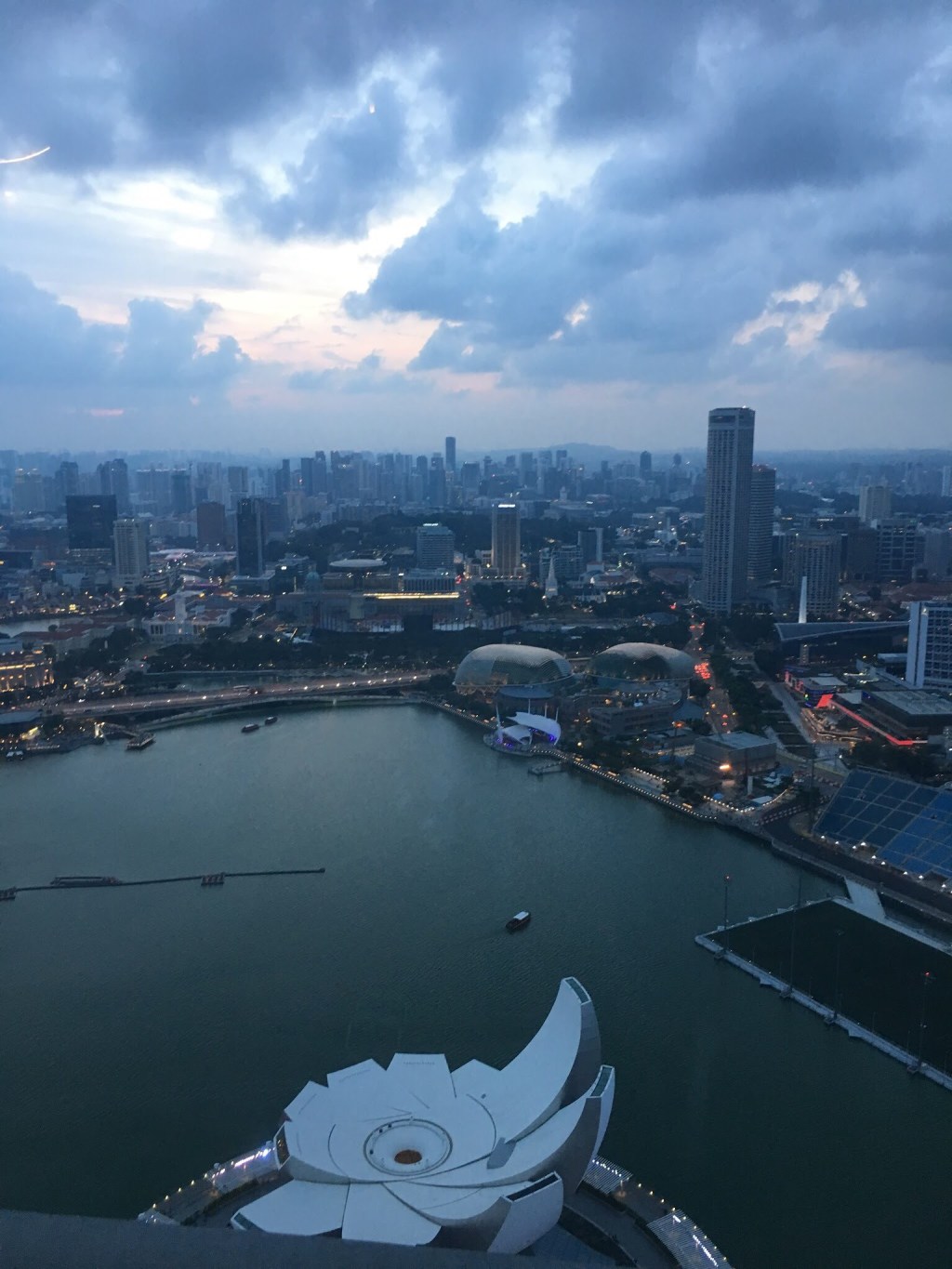
    Nanyang Technological University lies in the very west of the bustling city of Singapore. Whilst it is over an hour away from the city via public transport (20-30 minutes by Grab/Uber), the university is its own city with multiple restaurants, canteens, shops and gyms and you can get pretty much everything you need without leaving campus.

    Most exchange students live on campus in one of the 20+ dormitories. Rooms can be single or double, air-con or no air-con with an ensuite or not. All dorms have a shared pantry, bathroom, study room and lounge room. Unfortunately it’s not possible to choose your room or dorm, unless you have extenuating circumstances, and all rooms are drawn by lottery (be prepared to climb a lot of stairs). Like most people, I applied for a single room and was given a double. Luckily, my roommate happened to be another exchange student from Sydney which made settling in much easier as I had someone else to do it with.

    There are many activities organised by the dorm committees like gardening and cooking classes, stargazing sessions and mass fitness classes. My roommate and I partook in the free cooking class which was one of the only chances we had to cook since we didn’t have a kitchen. Food is never a problem though as most dormitories have a canteen with very cheap food ($3-$6 for a whole meal). You can also use the many food delivery apps such as FoodPanda, GrabFood or Deliveroo to get meals delivered straight to your dorm for a very cheap price.

    Classes at NTU are very similar to UTS. Most subjects have 3 contact hours per week and consist of lectures, seminars, tutorials, labs or online modules. Whilst exchange students take 3-5 subjects per semester, most local students take as many as 9 (that’s double a full-time load!). Choosing subjects can be quite a stressful process, especially if you are using direct equivalents, since they fill up fast. The subject allocation system is also done via lottery so even if there is a space open in a particular class, you’ll have to wait till the next day to see if you made it in. Make sure to have plenty of options to choose from as you’ll likely be on the waiting list for many of your choices.

    Visa and and other administration was very easy to do as everything is done through the university and they provide all the information that you’ll need. All exchange students receive a Student Pass which enables you to leave and enter the country as many times as you want during the semester. It also serves as an identification card for getting a post-paid sim card and enables you to use the Singapore Residents’ line at the airport.

    Overall, global exchange in Singapore has been one of the best experiences of my life. I’ve met many awesome new people and made the best of friends who I’m now travelling all over South East Asia with. I can easily guarantee that you’ll have a great time in Singapore and it will be a decision you’ll never regret!

    Mei-Xin Maxine Koh
    Bachelor of Information Technology
    Nanyang Technological University
    Singapore

    Australian Government New Colombo Plan Mobility Grant recipient.

    For more information about the UTS Global Exchange program please visit: www.global-exchange.uts.edu.au