Christina shares her reflections on culture, diversity and unconscious bias from this BUILD core workshop.
Participants in a UTS BUILD Core workshop
I grew up in China and moved here for my university studies three years ago. I had some knowledge about cultural differences, but the BUILD workshop Understanding Culture, Diversity and Unconscious Bias provided me with a deeper understanding on culture and diversity issues.
Cultural differences are demonstrated through the behaviours of people from different backgrounds, but the reason people behave differently lies in the values and beliefs they have. As people around the world may have different perceptions on a single event, it is important for us to understand and appreciate the diverse thoughts held by different people.
“Although most people understand that we need to treat everyone fairly, almost all of us may unconsciously discriminate against other people.”
Christina
Although most people understand that we need to treat everyone fairly, almost all of us may unconsciously discriminate against other people. For example, by judging someone based on their ethnic group or appearances, or by avoiding a whole group of people after having a bad experience working with one of them. We must try not to discriminate against under-privileged persons or minority groups, both directly and indirectly, consciously and unconsciously.
To deal with unconscious bias, the first thing we need to do is to have a deeper awareness of ourselves. We need to challenge our thoughts; get out of our usual environment to work with more people from different cultures; walk in others’ shoes; and therefore obtain a more comprehensive understanding of other people. Opening my mind to various perceptions and cultural values is never an easy task, but I will try to be as mindful and inclusive as I can.
Charity or Justice? Equity or Equality? Sabrina shares the lessons learnt from the BUILD core Just Society workshop.
Sabrina promoting social justice
I attended the High Resolves: Just Society Workshop as part of the BUILD Program. This topic gave me a lot of insight into the inequalities faced globally and how difficult it can be to allocate resources. It was also really useful to distinguish between charity and justice. I particularly enjoyed exploring how charity is essential to solving problems in the short-term and how targeting the root of the problem is more important for long-term solutions and sustainability.
It is really easy to donate to charities around the world and walk away feeling like you’ve “done your bit”. I think it’s really important for people to try and take it a step further and see if they can do something that works to actually eradicating the problem. For example, while donating money to homeless shelters will help the homeless, it doesn’t really go to ensuring they are not homeless forever or to ensuring other people don’t become homeless in the future. We can always dig a little deeper, think more critically and do more.
“To be an effective global leader, I think it is really important to be aware of social issues and the barriers that prevent them from being addressed.”
Sabrina
This workshop was able to use simple scenarios to highlight the challenges in creating a just society for all. A lack of access to resources is present in all communities, though at varying levels. We had some really stimulating discussion in relation to minimum access to education. While we all agreed that education is an important factor to future opportunities, we came to conclude that not all individuals will have the same priority.
My main takeaway from the workshop was the importance of equity over equality. While everyone is entitled to the same resources, specific circumstances should be considered to ensure everyone has a fair and equal opportunity to participate in their community.
Sabrina Bhuiyan Bachelor of Economics Bachelor of Laws
Kimberly is a Global Short Programs student and New Colombo Plan Mobility Grant recipient. Kimberly undertook the Virtual Public Health Study Tour in January 2021. This interview has been reposted from ACICIS.
Q: Why did you decide to undertake this virtual program?
Studying a Bachelor of Health Science and majoring in Global Health, the ACICIS Public Health Study Tour was a unique opportunity to get overseas exposure to the health systems and its associated challenges in other communities. I also saw it as a way to form relationships with others who are also enthusiastic about public health. The program description involving gaining deeper insight into community health issues was particularly relevant for me professionally as I aim to implement strategies and initiatives that aid in the provision of health in impoverished communities.
Q: Did you receive a New Colombo Plan Mobility Grant? Why do you think the NCP is an important initiative?
I did receive the NCP Mobility Grant and believe that it is a very necessary initiative as it gives more people the opportunity to engage with this experience. In doing so, it bridges an important connection between people in Indonesia and Australia.
Q: What did you find to be the most rewarding part of this virtual program?
Over the course of the program, I was constantly interacting with like-minded people who shared the same interests and passion in the public health sector as myself. This was very motivating and inspiring and has undoubtedly fuelled my excitement for similar opportunities in the future.
Q: What did you find to be the most challenging about your experience on the Virtual PHST?
Initially, the intensive nature of the program required a lot of time management and planning in order to keep a balanced workload whilst still engaging in the content and group projects. Doing short daily revision sessions ensured the heavy content load remained manageable and I was able to dedicate time to understand the pre-reading materials.
Q: What public health issues in Indonesia have you become more interested in/aware of as a result of this virtual tour?
I gained a lot of insight into community-based health services in Indonesia when understanding the role of the Posyandu and the issues related to maternal health. It revealed to me that the effectiveness of these services as well as many other initiatives in Indonesia rely on the active participation of people in the community. I found it really motivating to see communities working to enact positive health behaviours and structures within their community. At the same time, I also more comprehensively understood the role of the government priorities and planning in determining the reach of small community-based initiatives. I have become more aware of the challenges in providing health services and resources in Indonesia. Being previously unaware of the extent of the impact of the decentralisation of health and the diversity existing within Indonesia, it was interesting to see how this influenced the initiatives and strategies aimed at combatting health issues for communities.
Q: What was your favourite virtual fieldtrip?
I found the World Mosquito Program Site trip particularly memorable. The integration of Wolbachia in areas of Yogyakarta was so innovative and seemed like a huge breakthrough in contributing to the reduction of Indonesia’s dengue burden. It was great talking to the health professionals working at the site and getting an insight into the developmental and trial processes of a health strategy.
Q: Were you able to learn about the Indonesian culture from this virtual program?
Initially when signing up to the program, I was a bit apprehensive about the online learning environment and lack of ‘hands-on’ experience. However, the combination of the field trips, cultural activities and discussions with health professionals on the field engaged me and added a lot of value to my experience. I really felt a proper connection with Indonesian culture that I was surprised to develop over the course of just two weeks and online. For example, participating in the cooking and traditional Javanese dance provided me with valuable insights into life in Indonesia and the fun activities that connect Indonesian people.
Q: How do you think the Virtual Public Health Study Tour will influence your future career or studies?
I have developed crucial skills of cross-cultural communication, where I can connect with peers from various parts of the world and to work with them. I hope my career leads me to volunteer and work in cooperation with different cultures, therefore this is a skill that I will utilise in my future relationships and interactions with others.
Q: Would you recommend this virtual program to your friends?
Yes! If anyone is looking for an intensive learning experience to broaden their understanding of health on a global setting, then the virtual program would be very beneficial.
Q: Favourite Indonesian word/phrase?
Mahasiswa – meaning student. Whilst a very relevant word to myself and my ACICIS classmates being something we all have in common, it also sounds really nice!
Q: Describe your experience of the Virtual PHST in three words:
I have had one of the best trips of my life in this winter of 2019. That’s all because of a 2 week program in the University of Navarra, Spain. My project was learning how to run and function basic robots using programming. It was essential to know about Python (programming language) to operate the robots. Our classed started from 8:30 AM and ended at 2 PM with a 15 minute break in the middle. After class, there were cultural activities which were very entertaining. In the first week, the professor of the university gave lectures on robots and the importance they will hold in our future. When we acquired knowledge about the robot industry, we were taught how to use python to operate the robots. In the second week, A professor from Denmark presented to us on advanced robotics and the way coding is used like a language.
During the project, aside from exploring the beauty of Spain I learned a lot about new gadgets and how they’re impacting our lives. I have gained vast knowledge about the robotic world and acquired programming skills from this brilliant course. From this project I can now perform efficiently and constructively in a professional event. I also got to know in detail about the work ethics that are required to be a good engineer. Plus, I had a great in-depth discussion with the professor on ROS and how the Artificial Intelligence can be used for the benefit of human beings.
From learning Mobile Robotics to exploring the culture of Spain, I had many precious experiences throughout the course. I made new friends, experienced surfing for the first time, learned how to thrive in a foreign country by myself and most importantly, gained knowledge about the differences in work environment of Spain and Australia. I earned confidence to work globally and got familiar with the engineering workplace. To conclude, this course was a great learning opportunity for me and boosted my confidence to become a good engineer to work for the welfare of this world.
Hey there! My name’s Finn-Ruby Dawe and I am a third year business student completing a semester abroad in Singapore. I have to say the two months that I have spent here have absolutely flown by! I suspect because the people and culture here are so welcoming and friendly that now it feels just like home to me. I literally came back from a Phillipines trip yesterday and when I (at this point a tired/hungry traveller) managed to get back to my dorm. I fell face down on my bed and thought, “Ahh its so nice to be home!”
One of the main things I love about NTU is the campus life. Back home it’s hard to stay in contact and meet up with my uni friends as I live a good 90 minutes away. But here it’s so easy to make great friendships as we’re all literally neighbours. There are also so many great facilities to take advantage of like the pool, sports fields and gym as well as the myriad of after-school clubs to join. I myself might have taken up too many in an attempt to have a go at them all. I’ve joined the hockey, scuba diving and ball room dancing clubs (hey why not!) and tend to show up randomly to another couple of them just for fun. I think there’s a myth and toxic stereotype that ‘asians’ can be quiet and not as outgoing. But, I’m here to tell you that it’s defintiely not true! All my local friends are yes incredibly hardworking and diligent but in many ways more outgoing and louder then I am. As I’ve seen on the sports field, when we hang out after classes and expecially during chinese new year!
But let’s talk about the academic life shall we? To be honest for local students at least it’s incredibly rigourous. It’s normal for most of them to take 7-9 subjects per semester and I found during mid-semester exams I definitely didn’t see them as much. The lesson structures however are pretty much the same as back home and classes are split into lectures/tutorials/labs of about 1 ½ – 2 hours. Although, all my classes are combined to be 3 hours long which can be quite tiring but we are given breaks half way through. I’ve found most of the assessments are similar to UTS too with mid-semester/final exams, group assessments and quizzes. I’m taking all free electives and have found the work very managable. It tends to be the Engineering and Science facilites where you’ll find the work load more full on as this is what NTU is known for.
Overall, I’m absolutely loving my exchange experience and I know if you’re open to change and a new culture you will too!
Finn-Ruby Dawe Bachelor of Business Nanyang Technological University Singapore
Australian Government New Colombo Plan Mobility Grant recipient.
The last two months of my studies at Aarhus School of Architecture have been nothing but fantastic! The school has been so welcoming to all the exchange students and has a very integrated international feel. Since it is a dedicated architecture school all the facilities are tailored to the architectural field which is very refreshing coming from UTS. We all get our own desk to work at for the semester and are put into studios based on a specific theme/topic. I am doing studio 2/3F which is about architectural sustainability. So far, I am really enjoying it as it takes the angle of sustainability in a more conceptual sense. This semester we are designing homes for ageing where ageing is used as a tool for looking more closely at sustainable design.
Here at the school there are heaps of facilities that enable all kinds of creativity and design methods.
The studio – Everyone in the studio gets their own desk and it is a very free environment to make and design. Here at the architecture school there are no structured ‘classes’ like at UTS, but the tutors come through the studios every couple of days to give feedback and assist in the design process. There are also occasional lectures that relate to our subjects and of course at the end of each design phase we have pin up critiques. It is a very collaborative environment in terms of student-to-student conversation which is really nice.
The workshop – The school has the most INSANE workshop. They have all the tools and machines you could ever need to make pretty much anything. There are CNC milling machines, 3D printing machines, laser cutters, knife cutters, welding areas, woodworking machines of ALL shapes and sizes (mostly huge and intimidating), a bunch of different robots that print, cut and saw, a clay making room, a casting room… you name it – they have it. The guy who inducted us at orientation said it best – ‘your brain is the limit’.
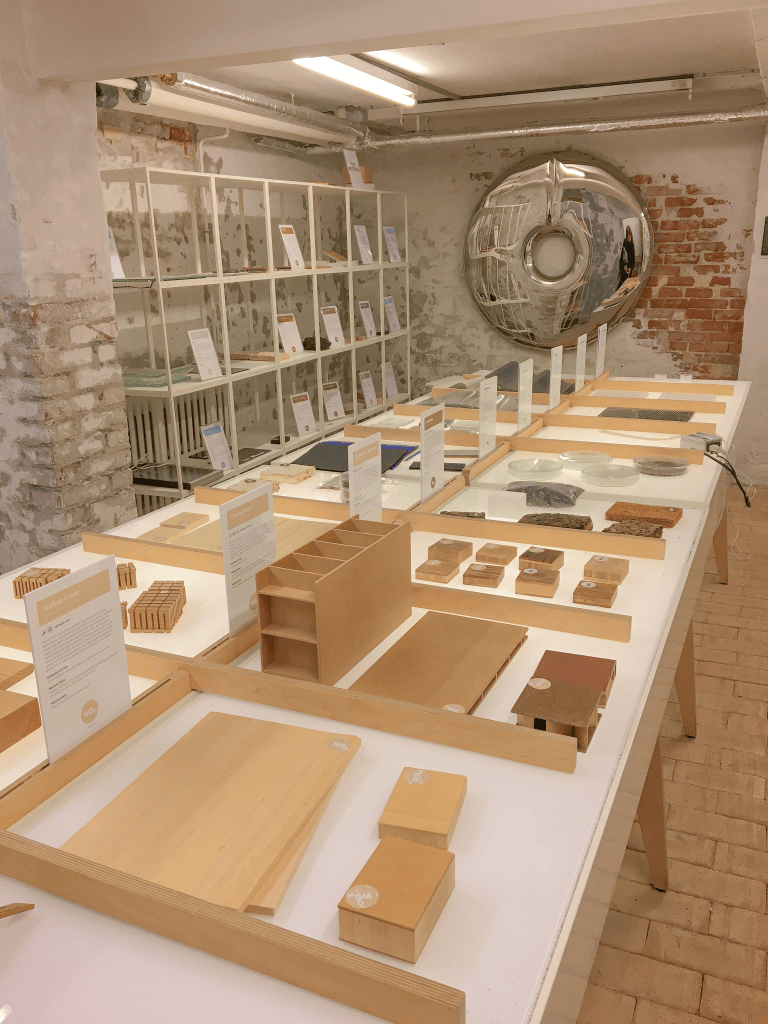
the library – The school’s library is completely dedicated to architecture and its literature. They have all the latest books and magazines, as well as every single student thesis ever produced at the school! So many references and resources to use. The best part of the library in my opinion is the basement material library. It is a huge collection of all the materials that are used to build with. There are traditional materials – like brick and timber and concrete – as well as a bunch of super innovative new materials and processes that use traditional materials in a new way. The library also has their own dedicated chair collection – again, super awesome.
the canteen – the school has a canteen where we go for lunch every day. they serve $1 coffee and lunch for like $6 which is super gourmet and always so delicious. it is quite Danish, with a LOT of pork and potatoes on the menu.
life in Aarhus – Aarhus is a city three hours north of Copenhagen and is the cutest place ever! Cobblestone streets, coffee shops on every corner and beautiful brick buildings lining the streets. Everyone here rides a bike, and it is so easy to get around. It is also super easy to do weekend trips to countries and places close by like Copenhagen and Berlin. I have found that travelling and exploring outside of Aarhus has made it feel more and more like home.
study load – I am currently doing a 24cp study load here in Denmark which equates to 30ETCS. I am using two direct equivalent subjects and one elective subject to complete this exchange semester. When I return to UTS I will be in the same academic position as my peers who were not on exchange. Overall, I am loving exchange and can’t wait for what more is to come! I would HIGHLY recommend the Aarhus School of Architecture to anyone in the UTS architecture program who is considering doing an exchange semester
Hannah Hill-Wade Bachelor of Design in Architecture Arkitektskolen i Aarhus Denmark
Moi! Kate here, & I’m currently writing to you from Sunny Helsinki, Finland. I’ve been living in Helsinki (also referred to as ‘The Sink’ or ‘Heavensinki’) for just over 2 months now, while I’ve been studying at Aalto University. To say the least, exchange has been a crazy rollercoaster so far; think sauna’s, forests, the NORTHERN LIGHTS, husky sledding, Marimekko, Finnish Sitsit party’s and of course, an amazing student life.
To begin, Aalto’s exchange program is FLAWLESS. The orientation program was not only impeccable in its organisation, but its execution too. Business exchange students are also BLESSED with KY-Sub, which is a student run organisation exclusively for Aalto Business exchange students. KY are constantly running events, parties, beer pong tournaments, Sitsit parties and different trips. I had the chance to experience the Finnish Lapland where we saw the Northern Lights in all of their glory. Along with this, we went snowboarding, husky sledding, snowmobiling, visited Santa’s Village & there was plenty of bonding and partying in between. Cottage trip was also a major highlight; learning how to mentally overcome running out of the warmth of the Sauna and jumping into a frozen lake in the Finnish winter was some straight up character building, to say the least. Finns also have a student overall tradition, so after each event you attend, you receive a little badge to sew onto your own overalls to create a little montage of memories. In terms of workload, Aalto’s teaching schedule is set out into learning periods of 6 weeks, with a one-week exam period. I am studying here for 3 learning periods, so the workload is broken up, leaving me with plenty of time to travel, socialize and explore Finland.
Aside from Uni, the lifestyle in Finland has pleasantly surprised me in every way. The city is so incredibly user-friendly and efficient. The city is clean, safe and so beautiful. It’s great for travelling to places like Norway, Sweden, Denmark, Estonia and of course Europe more broadly. The nightlife is also incredible no matter what night of the week it is (5am becomes pretty standard here). You’re usually spoilt for choice between KY events, international student events at local clubs, live music at bars and if all else fails, there will be a party in someone’s flat. The main takeaway: The Sink is always happening. But even if you’re not a party goer, there is always so much to do and see here, that you couldn’t be bored if you tried.
Exchange is 100% what you make of it and the best thing you can do is to just SAY YES TO EVERYTHING. The people I’ve met along the way and the bonds we’ve created in such a short amount of time, have made the experience everything and more. I definitely credit a lot of that to the organisation of Aalto’s exchange program, as they definitely provided the means to facilitate all of these new friendships. I remember seeing a blog post about Aalto when I was in my application process for exchange and it was exciting because Finland was somewhere, I hadn’t even thought about going to before. But I’m so grateful that I threw myself into the deep end and changed my preferences last minute, because Finland is totally underrated, and I honestly couldn’t recommend it enough for exchange.
Kate Nomchong Bachelor of Management Aalto University Finland
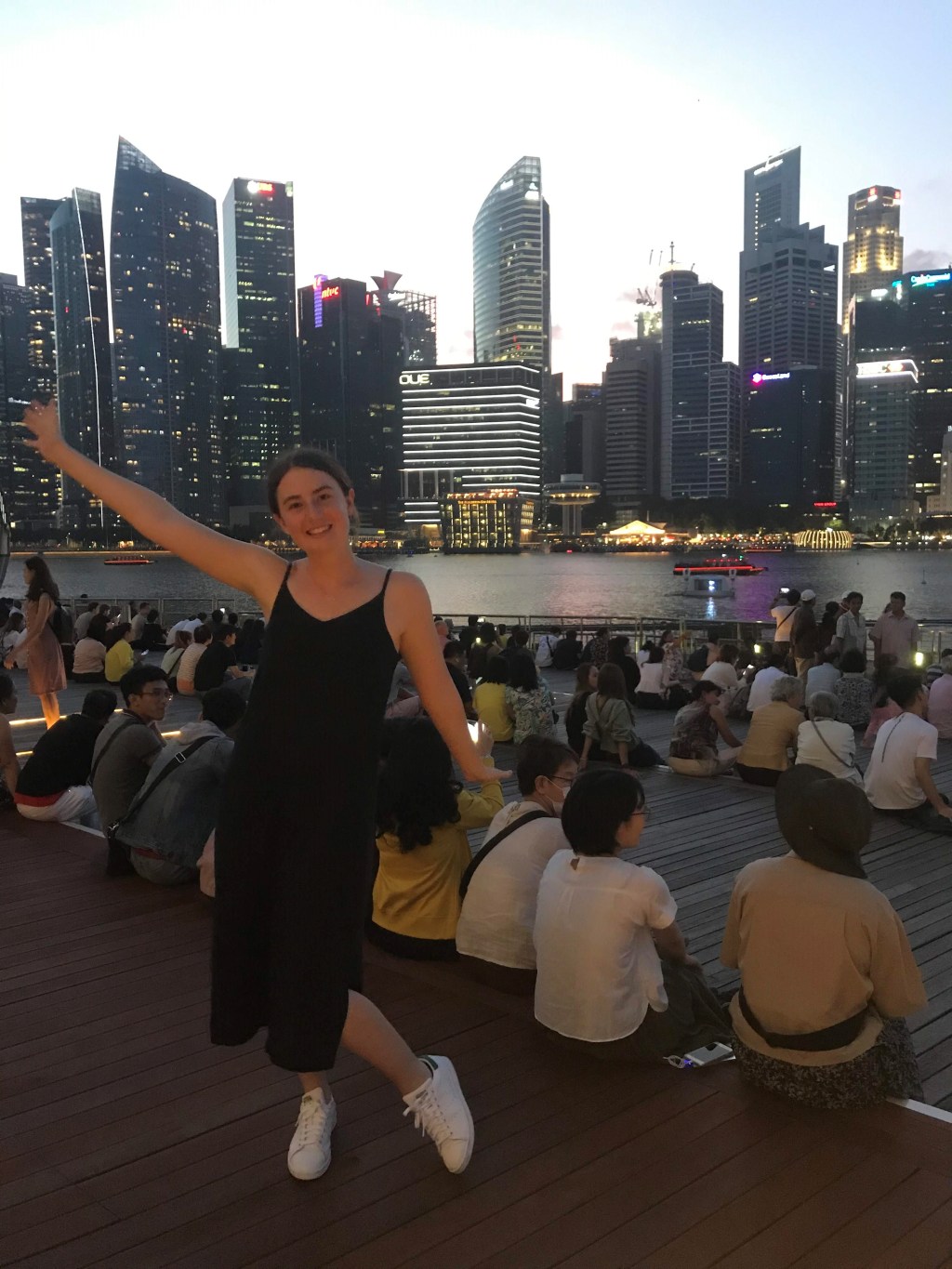
It’s been 79 days since I’ve left Sydney, 57 days since I’ve arrived in Singapore to start my exchange journey.
To say that the past 79 days have been anything short of life-changing would be a gross understatement. When preparing for my exchange back in Sydney, I was conflicted; I felt both excited to leave but also absolutely terrified of all the “firsts” I would experience. My first overseas trip alone. My first time living alone. My first time leaving my friends and family for an extended period. I won’t say that it’s been an easy 79 days, but now that I’m about 2 months into my exchange, I can confidently say that choosing to go on exchange and to Singapore has been one of the best decisions I have ever made.
Nanyang Technological University is situated on the west side of Singapore. Like a city so much in and of itself, local students have dubbed it “Pulau NTU”, which roughly translates into “NTU Island”. The university is self-sufficient, with its own supermarket, bookstore, electronics store, and a variety of canteens serving multicultural cuisines to satisfy whatever you’re craving. Free campus buses shuttle students between all major buildings and schools, and some paid buses also run between NTU and nearby MRT train stations, so getting to where you need to be is a breeze.
NTU is great in that accommodation for all exchange students is pretty much guaranteed – so long as you apply for housing by the given date. Housing is done by lottery system, and I was lucky enough to be placed in a single room in Banyan Hall, which is one of the newest halls on campus. It’s small, quaint, and though it doesn’t have air conditioning, I find it perfect. My favourite things about my dorm so far is how convenient it is to get to classes, and the amazing sunsets.
The culture here is incredibly different from that at UTS; here, a student’s role is simply to study and engage in co-curricular activities (CCAs), with part-time work being an absolute rarity over here. Because of this, you’ll often meet locals who are taking 6 or 7 subjects, which can be the equivalent of 38 to 46 UTS credit points. You can imagine a local’s surprise when I tell them that I’m only taking 3 subjects!
The three subjects I’m currently taking are Bayesian Data Analysis & Its Applications, Introduction to Network Analysis, and Computer Graphics and Visualisation. All three are completely different to what I was studying back in Sydney, but I’m absolutely loving it; my professors are engaging, the classes are relatively small (which allows for a more personalised study experience), and everyone is incredibly supportive. I have a mixture of lectures and tutorials, but for two of my subjects, the lecture and tutorial is combined into a single 3-hour long class that, while ridiculously draining, does allow for a more cohesive study experience because you’re able to directly apply the information you learn in the lecture to your tutorial work.
Because of my light workload, I found myself with a lot of spare time on my hands. As a result (and in an effort to stay healthy after eating all the delicious food Singapore has to offer), I ended up joining two CCAs: aikido and jiu jitsu. I spend a total of 8 hours training for both sports per week, and while it has definitely been a change in pace as I’ve never done a martial art before, picking up these sports has been one of the most gratifying things that I have ever done. They’ve rewarded me with both physical and mental strength, as well as a group of amazing friends – both exchange and local – that I doubt I would have met otherwise.
However, given that Singapore is located in such a central location, the temptation to travel South-East Asia definitely hasn’t eluded me; about three weeks ago, I went to Johor Bahru in Malaysia for a weekend, and with recess break coming up soon, I’ve got plans to visit Bangkok, Phuket, and Kuala Lumpur. I’ve also got weekend trips to Indonesia and Taiwan in their planning stages, and maybe even a Europe trip in the works for after I finish up at NTU. Travel is incredibly affordable in and around Singapore, so if you’ve ever wanted to explore the region, studying at NTU is an awesome option because you’ll have the time, the freedom, and the friends to share the experience with.
And finally, some tips and advice if you’re thinking about going on exchange (to Singapore, or anywhere else):
Be open to new experiences. Going on exchange is likely to be one of the scariest yet most exhilarating things that you have ever done, and though you may get homesick (I definitely have been), take comfort in the knowledge that this isn’t forever and you should make the most of it while you can.
Consider the subjects you’re studying. I found it difficult to get all the subjects required for exchange as I was doing direct equivalents (big shout out to Raffaela from the Exchange team and Nicole from the Student Centre for helping me immensely with my subjects!), so make sure to thoroughly do your research before selecting any given country, and be adaptable. The Add/Drop period for subject selection at NTU is a nightmare, but once you get through those two weeks, you’ll be right as rain. I found that NTU let me match the most subjects from my Data Analytics major, which is a large reason why I chose it.
People aren’t kidding when they say that Singapore is hot and humid, but I found that you adapt pretty quickly. So if you’re worried about the climate, I want to reassure you (as someone who is not a big fan of the heat) that you’ll definitely get used to it and that nearly everywhere on campus is air-conditioned. Maybe bring a cardigan to wear in especially cold lecture halls or tutorial rooms, but for the most part, you’ll probably be lounging around in shorts and a tee!
Bring a travel-sized bag for the weekend trips you’re likely to do during your time here.
Bit of a subtle plug, but if you’re interested in reading / seeing more photos about my exchange experience and travels, I started a photography blog: https://ongtheroad.exposure.co/. And if you have any questions about NTU, Singapore, South-East Asia, or exchange in general, feel free to reach out to me via my blog or Instagram: @jxssicaong
Jessica Ong Bachelor of Business / Bachelor of Information Technology Nanyang Technological University Singapore
Australian Government New Colombo Plan Mobility Grant recipient.
It’s refreshing to live in a city where the locals are sincerely proud of their way of life and have no need to apologise for it. Particular themes emerging from locals include: pride in their being rated the happiest nation in the world, pride in the egalitarian structure of their society and pride in their ability to solve problems through design-based solutions. The best example of this was my trip to the Design Museum, which was basically a large temple dedicated to the Danish bicycle Gods (see attached photos). The tour guide stated confidently, ‘Here in Denmark, we believe bicycles are the future.’
Cycling around Copenhagen is so effortless that cars seem outdated. It’s hard not to think that every country in the world would benefit from predominance of bicycles over other modes of transport, since exercise and commute blend seamlessly into one.
The only negative thing I have heard from a local thus far concerned Denmark’s lack of coverage for dental treatment. Interestingly, my wisdom teeth became extremely painful as soon as I arrived in Copenhagen. Taking on a primitive diet of ice cream was not something I imagined for my exchange experience, but it was a good reminder early on that sickness, difficulties and challenges still emerge as in everyday life. This sad story ended well, with UTS’s generous travel insurance footing the bill for the wisdom teeth removal and me learning that Copenhagen is one of the most relaxing and easy places to get sick in.
Many other challenges await my exchange experience, but so much opportunity is at hand. For an Australian who spends most of their life quite isolated from the rest of the world, exchange is one great way of understanding the other. I can’t wait to see how the next 5 months turn out!
Whilst I am only into my second week of exchange, I can comfortably say that stepping out of my comfort zone and choosing to go on exchange has been one of the best decisions I have ever made. The second best decision I made was deciding to spend my exchange in Tilburg.
About Tilburg
Tilburg is a well-known university town located in the south of the Netherlands. As a university town, it has a massive student population, made up of both Dutch and international students. Everything in Tilburg is located close together, with Tilburg University (and most student accommodation) being about a 10-minute bike ride out of the main town. Given that everything is so close, most people use bikes to get around (and car drivers are a lot nicer to cyclists here than they are in Australia!!!). Whilst the city of Tilburg is not huge, it is very pretty, with enough cafes, bars and other activities to keep you busy during the week and while you’re at university. In addition, the city of Tilburg is also on the main train line so it is super easy to go exploring in the Netherlands on the weekends (and during the week if you’re savvy and can organise your classes to be on the same days). I have already done weekend trips to Belgium, Utrech, Amsterdam and the Hague.
Accommodation
I was fortunate enough to get accommodation at Verbs (Professor Verbernelaan) which is the university student accommodation. From my own research before going on exchange, I had read that it was competitive to get into. Whilst not a disaster if you miss out, finding accommodation early on gives you one less thing to worry about, so if you do decide on coming to Tilburg make sure you get in quick (It sells out within minutes so make sure you are somewhere with decent Wifi and have your credit card ready!!!). While you do have to pay up front for your 6 month stay, it is totally worth it. If you do miss out, do not panic!!! There are still plenty of other options available, you just have to be proactive and get your accommodation sorted ASAP as everyone who missed out on Verbs will be in the same boat as you.
Having never lived out of home before, sharing a kitchen and bathroom with 16 other people has certainly required some readjustment on my part. However, it is an experience that I wouldn’t change as it gives you an opportunity to meet people from all over the world as all exchange students get put into the same building. This made making new friends a lot easier, as you are all living away from home (many for the first time).
University Life
I have only just finished my first week of classes, and there is not too much difference between classes here and back home. When you first organise your timetable in Australia, these are not necessarily the subjects that you will be doing when you arrive in Tilburg, as sometimes classes will not run due to lack of participants, or you have clashes between subjects. But do not fear!! It is super easy to change courses and the university gives you plenty of time to rearrange your schedule before it is set in stone.
I chose to study International and European Criminal Law, EU External Relations, Compliance in International and EU Law, and International Security in Historical Perspectives. I also highly recommend is using the free language credits given to you by the University to take up a short language course. I chose French, but there are other options available including Dutch, German and Spanish.
The university also has a really awesome gym which I definitely recommend signing up to. They have something for everyone!!
TOP Week
As everyone who has ever been to Tilburg has previously mentioned, make sure you sign up to TOP week (Tilburg Orientation Program) which was organised by I*ESN (International Exchange Student Network). Basically it is a huge week of activities and parties which is an awesome opportunity to meet new people and make new friends from all over the world. By far the best activity was the CANTUS (think 1000 people all sitting in a giant hall drinking beer and singing along to a variety of popular songs in English and Dutch).
If you’re currently sitting on the fence about going on exchange, just do it!!! It is a once in a lifetime experience that you will not regret.
Genevieve Coffey Bachelor of Business Tilburg University Netherlands