UTS Think Global

Dream. Explore. Discover.

Disclaimer: All blog posts are written by students and do not necessarily reflect the views of UTS staff.

  • HK is a bit HK CRAY (In a good way)
    IMG_6068
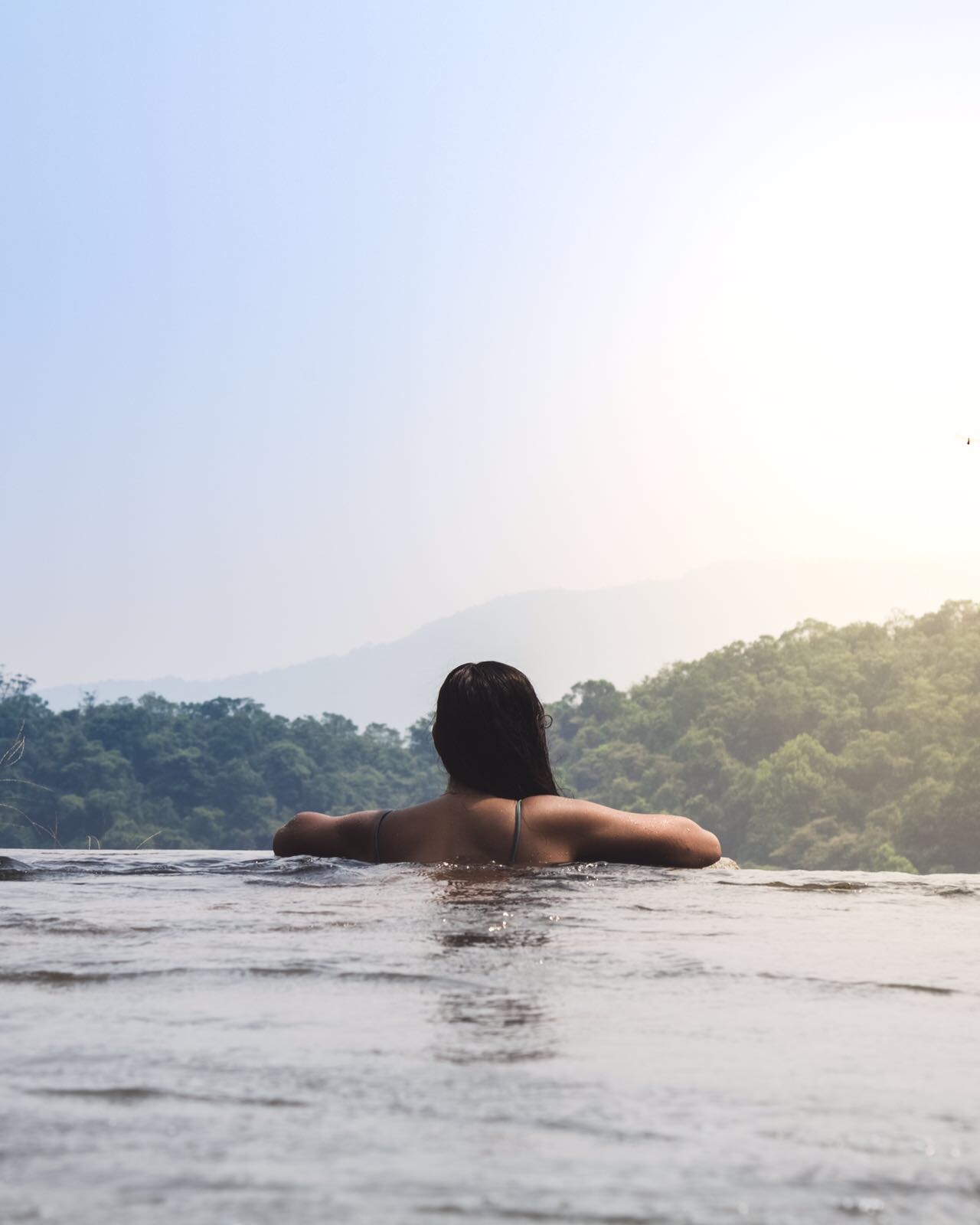
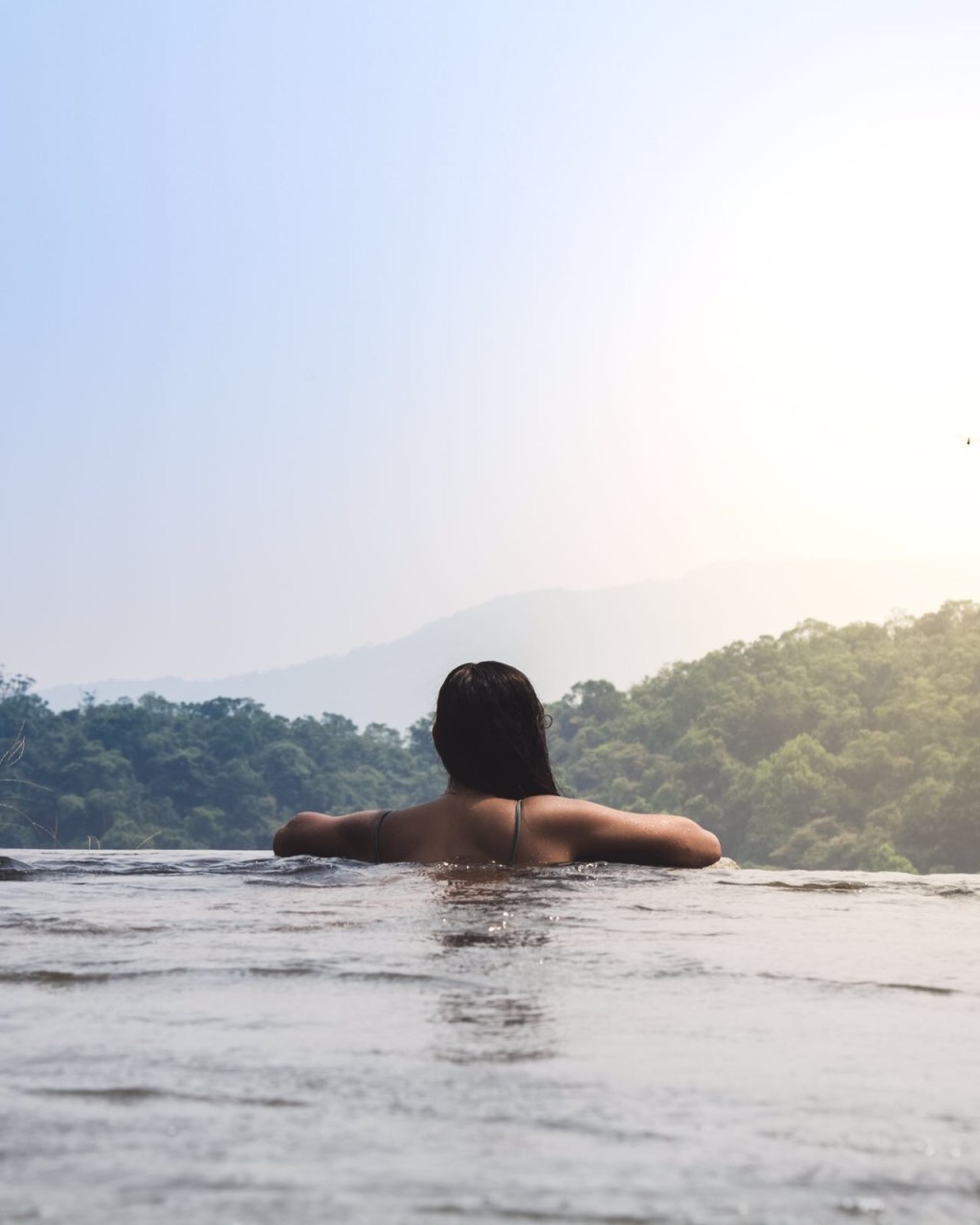
    Infinity pool in Lantau – photo credit @photosbyscott https://scott-abraham.wixsite.com/photosbyscott https://www.facebook.com/scottabrahamphotos/

    Hey I’m Chhaya I study bachelor of design in fashion and textiles and I’ve completed my semester abroad at the Hong Kong Polytechnic University in Spring 2017, and let me tell you exchange was one of the best decisions I have ever made!

    Hong Kong like I have said previously is a perfect blend of vibes, east meets west, concrete jungle in the middle of actual jungle. My time at PolyU was one that can be summed up with this one statement “HK you Cray”

    IMG_6560
    Sunset at Suicide Peak – photo credit @photosbyscott https://scott-abraham.wixsite.com/photosbyscott https://www.facebook.com/scottabrahamphotos/

    With the Uni side of things Hong Kong Polytechnic offered me so many opportunities to challenge myself, the facilities were some that were similar if not identical to those used in industry. (They literally have a mini textile factory here its insane!) My teachers were amazing and very student focused, some even enabled me to gain an internship opportunity after my completion of exchange, I’m still in contact with them now.

    PolyU is honestly located perfectly in Hong Kong. Situated in Kowloon you are close to key areas and have easy access to MTR’s and buses. Halls had restaurants and grocery stores seconds away from you and having the beautiful harbour a short walk from you student accommodation made it a perfect place for late night runs and just chilling with your friends.IMG_7946

    Uni life was honestly very stress free, I was eating dinner with my mates every single night (because it was cheaper than cooking) across the road from halls it was a luxury and experience I will definitely miss. The workload was manageable since I wasn’t working a part time job and uni is literally next door to home . Having all your friends living minutes between you is something that is really great because it’s very hard to feel lonely (yes waiting for the lift between floors did challenge my patience to the point that I used to climb flights of stairs… hey I guess it let me stay/get fit?)

    From the social scene of spending our weekends exploring and adventuring through Hong Kong finding cool hikes and food to do and try. Going out in Hong Kong was always fun and you too if you come here will be like a local and grab your drinks from 711 and enjoy the fact that you can drink in the streets of LKF (the Kings Cross of Hong Kong) before deciding which club (or few) you want to hit up.

    IMG_6038

    The friends you make on exchange help make your experience and for that I’m grateful I was surrounded by so many amazing people from all over the globe. Cheers to them for making my exchange experience great (and also giving me more of an excuse to travel so I can visit them).

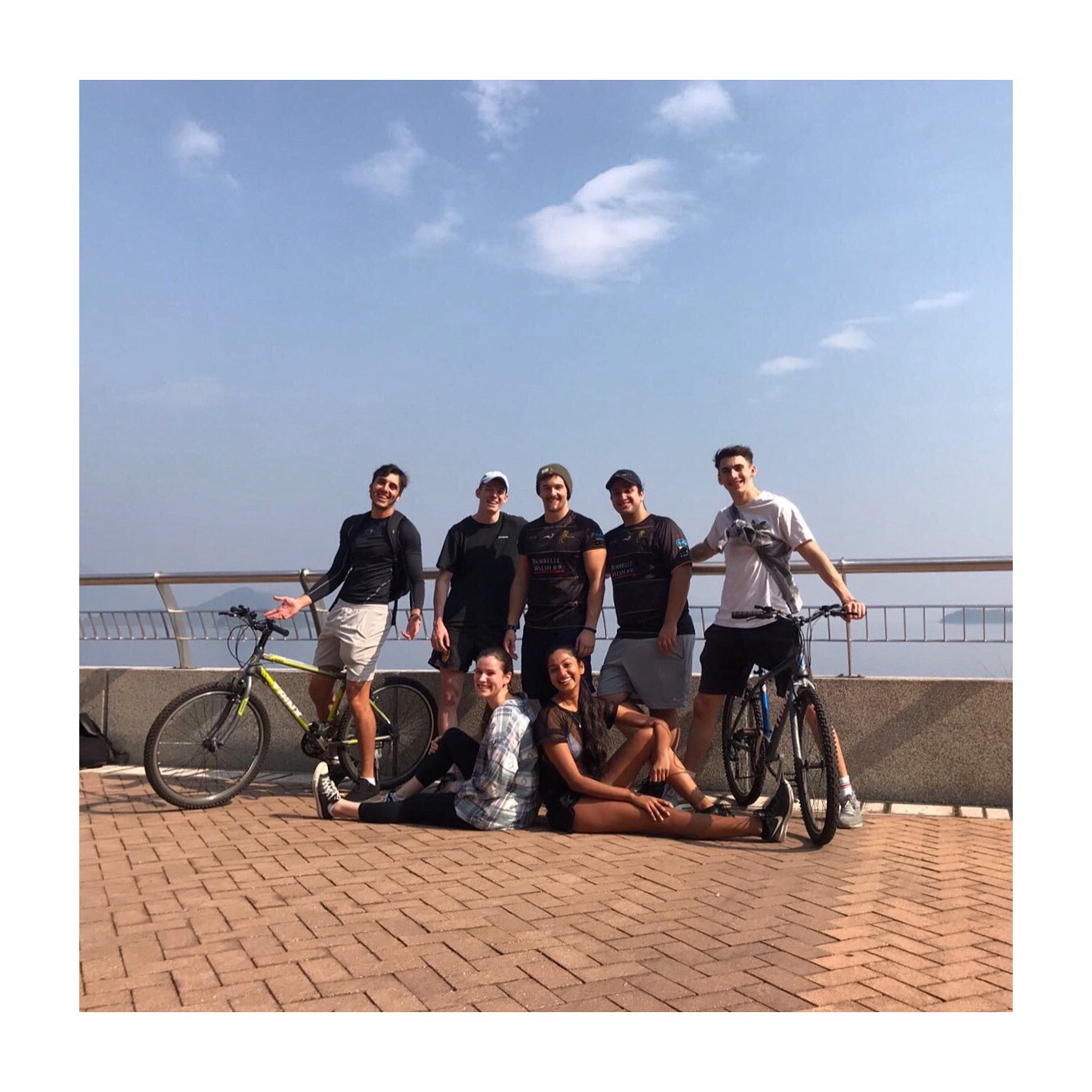
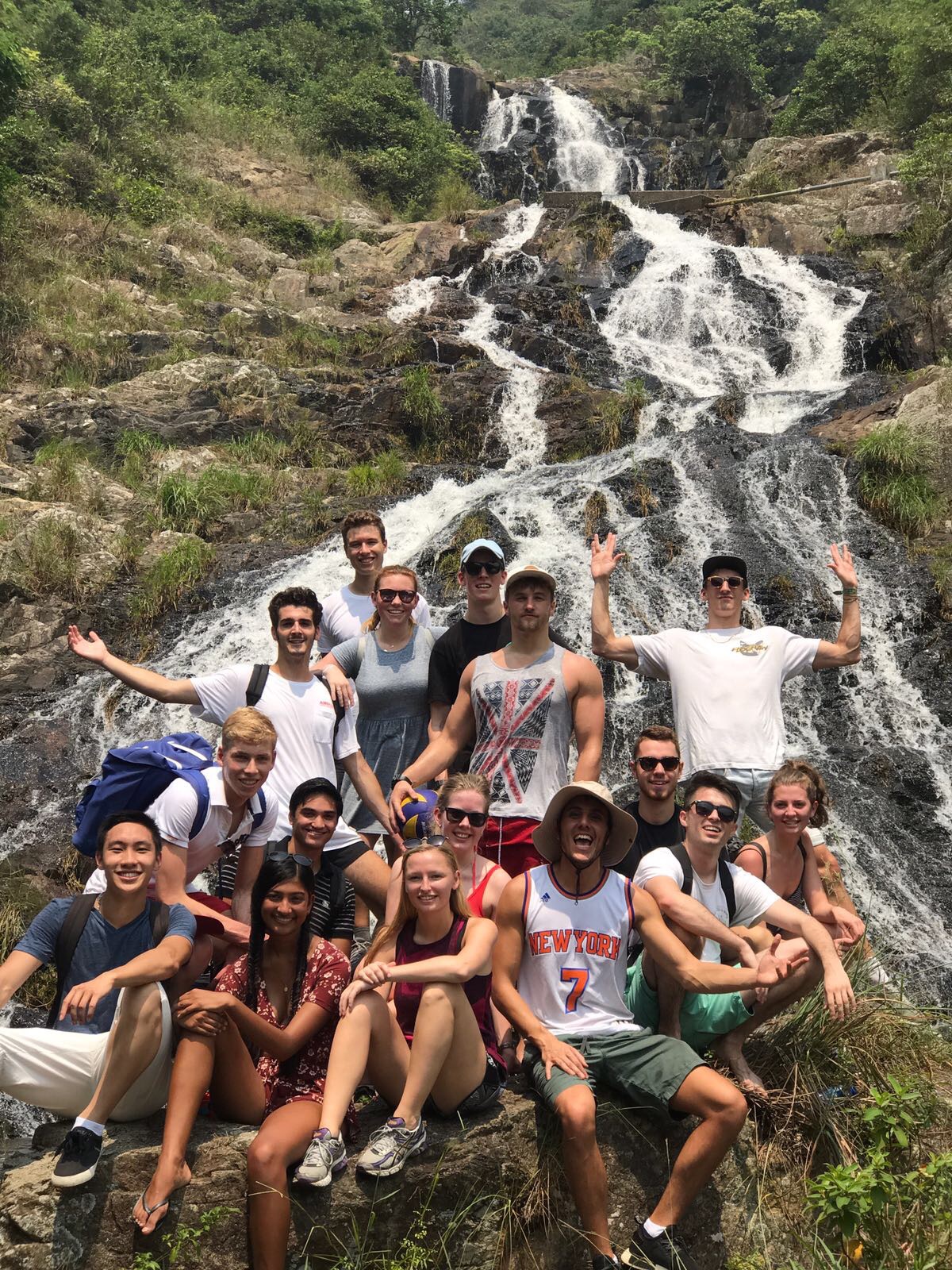
    There is so much to see and do in Hong Kong, the list is endless because there is so much more to Hong Kong than its city (which is still very beautiful and bustling). Some of my favourite days adventuring were going to a waterfall on Lantau island, Hiking suicide peak (the view is incredible) and bike riding through the new territories.

    HK you were HK CRAY! But I loved every minute of it.

    This slideshow requires JavaScript.

    CHHAYA NAIK

    12591549

    BACHELOR OF DESIGN IN FASHION AND TEXTILES

    HONG KONG POLYTECHNIC UNIVERSITY


  • Sodamn Sentimental (Drishtee Summer 17/18)

    “It was these little flashes, those little instants, that will forever stay in my heart.”

    My experience of India throughout my three-week program with Drishtee Immersion was – trying not to exaggerate – almost indescribable. Whether it was the team I met up with at the airport, the people we learned more about during our journey, to simply the culture of India itself. At times it can be overwhelming, like a torrent of information bombarding and drowning my mind with thoughts and memories. I’d often have to take a step back and pause for a moment just so I could digest everything being thrown at me. From the differing cultural norms, the stories and experiences you would hear that can break your heart, or just the environment. But without this challenge, I wouldn’t be where I am now, a much stronger mentally and emotionally prepared person with the clear understanding of what true empathy can bring.

    We started our journey in Delhi, where we met two of the best organisers you could hope to ask for, simply the best captains to control the ship which was the Drishtee team. From there we drove through the organized insanity known as Indian traffic to Jaipur and passed out at the hotel in the early hours of the morning. Once we woke up we stocked up on some Kurtas and other pieces of Indian clothing then drove onto Soda, a rural village housing approximately 7000 people near Malpura.

    As an aside, I’d love to point out how outstanding the leader of Soda was, Chhavi Rajawat. Listed as one of the most influential young Indians by GQ magazine, and honoured by multiple Indian presidents in her time, Chhavi was an individual with an amazing presence. As the youngest person to hold office of Sarpanch, and the first woman Sarpanch in India with an MBA degree, she would often control the room and the flow of conversation in subtle yet friendly ways. Chhavi helped us tremendously throughout the project and provided us insights which we simple never would have attained during our time at Soda.

    From there we spent the next week getting to know the people of Soda with the help of some amazing translators, one of which provided us with some early morning yoga sessions that I plan to continue doing for many years. Each day the group would focus in on an area, whether that be education, health, sports, and a few others. In these days we would do some basic investigation into the area with the focus being on slowly building connections and friendships with people. Some people latched onto an area and some villagers relatively quickly. I felt like I was one of the last people in the team to do this, with this causing me to feel like I was a little behind the rest of the group despite this not being the case at all.

    The area which interested me the most was in leisure and sports, essentially what do people do for fun during their spare time. This came about during the Indian Independence Day, which happens to coincide with Australia Day (January 26th). One of the local schools in Soda invited us down for a special assembly which celebrated this day. During the festivities I became transfixed by the Judo portion which consisted of many students doing some basic judo drills in a very militaristic manner. This was the moment which piqued my interest.

    One major aspect of Drishtee Immersion program was the notion of empathy. Although we can come into a place such as Soda, travel the village and identify a problem, then come up with a potential solution, the issues arise when this solution is implemented. More often than not, the solution is introduced and simply does not work, or only worsens the problem. This is usually since the people coming up with the idea do not understand the people affected by the problem and the little nuances a person not from the situation could find through basic investigation. This is where empathy comes in. Empathy bridges that gap as the person takes their time to connect to the groups or individuals directly affected by the issue. Thus, creating a potential solution that not only solves the problem at hand, but also considers the people related to the issue and alters the solution accordingly.

    After spending the first couple of days doing general investigation in areas of the village, we then focused in on an area of choice and investigated that further with another team-mate who shared the same interest. This comprised of further, more in-depth interactions with individuals directly connected to the area of choice.

    One of the people I decided to spend more time was one of the people who worked as helping hand for us at the place we stayed known as Ganesh. The man, constantly wearing either yellow or a pure white jacket with the Bosche logo emblazoned on the left breast, was noticeably friendly and would go out of his way to make sure that we were okay at all times. He was also known as the guy who would be one of the last three people in games of Uno but never took it to heart and was always eager to play.

    Spending time at Raju’s Farm

    We were taken to his village, a fifteen-minute motorcycle ride away, and given a guided tour of the hamlet by Ganesh himself. From here we learned how entrenched and important family values were for not only him but for Soda at large. Major slights like running away, stealing land, unknowingly selling off property, were forgiven simply to ensure that the family was kept together. We also learned how much Ganesh has sacrificed for his family, who left a steady job at Jaipur and came back home to tend to his ill parents. He spent much of the savings too on private hospital care for the parents.

    If there was only one person I wish to meet again from my time in Soda, it was Ganesh. His generosity, friendliness, and father-like watch over us during the trip was something I rarely find in the people I meet back home. I hope to one day at the very least emulate some of the elements Ganesh displayed and spread his positivity that he always brought.

    For my friend and I, we decided to get into further contact with the judo teachers of the village and soon discovered how important the sport was to the village. One judo teacher we spoke to had major success and climbed all the way to the national level, and multiple other students had reached the state level. However, we noticed that the equipment available for the students although adequate, were only accessible from one school and only during school hours.

    It was also at this point in the program that we noticed how segregated the genders were in the village. The boys would only hang out with boys and the girls stayed with the girls regardless of the situation. This even included the husband and wife, where during our interactions with people would rarely – if at all – interact with each other except when they needed the significant other to do a task for them. This is a stark contrast from Australia where there can be groups of just ‘the boys’ or ‘the girls’, but both genders would often and inevitably interact in social gatherings.

    The final stage of the trip we created a program or potential solution for a problem that we found during our investigations. Our solution was a sports center located in the middle of the village which stored and provided access to sporting equipment for several sports such as Judo, cricket and badminton. This was then combined with a sporting program similar to external sporting programs in Australia, where teams would be formed. Students could then play and practice a sport against each other. Outside of a few high contact sports, all training and some games are played with boys and girls together.

    The sports centre and program idea were formed using the method of co-creation. This method is a variant of prototyping where you create the outline and details for the idea then work hand-in-hand with the stakeholders directly connected to the problem to refine the solution down. We found out quickly how important co-creation was for the program as certain features of the solution would not have been included had it not have been for us showing the idea to some of the judo teachers. They pointed out areas of concern in the early forms of the project and we adjusted accordingly, creating a program that would solve these issues.

    The goal of this program was to not only help cultivate and create sporting success within the village but to also encourage interaction between both genders from the youngest age. By increasing contact between genders from a younger age, the barriers and stereotypes which might start to occur over time are slowly broken down and removed entirely. This leads to these kids treating each other as friends rather than something they are not allowed to communicate with. Moreover, this also can help end gender stereotypes around sports and that only men can play. This stereotype has already ended in Soda at least for judo, where there are also female judo students, with one competing in the state level.

    Reactions to the program were positive by each and every person we had the chance to show the idea to regardless of their age, including the main presentation to the village at the end of the project. Although my team-mate and I will not be present for when the program gets pushed further into development in a months’ time by someone else, from the bottom of my heart I hope the program is a major success.

    My time in Soda was something that I will never forget. It wasn’t the big moments such as the presentation to the village, nor the Independence Day assembly at the school which made my travel worth it. It was the small moments. The kids calling out your name on the street as they spot you walking around the village after spending a day playing hand games with them earlier. The reactions you would receive from people when you would say “Ap ke se ho” to them during your introductions. When someone in the village who was shy and reserved at the start of the program, slowly came out of their shell and even started learning my language and speaking it back. It was these moments, though small in comparison to the big picture, were special in their own manner. Although I could talk to people in Australia about the program and the great things we achieved during our time in India, it was these little flashes, those little instants, that will forever stay in my heart.

    Rhojan Viloria, Global Short Programs Student

  • Berlin 2018

    I really enjoyed my time in Berlin at Humboldt University.

    The course ‘Introduction to International Economic Law’ was extremely interesting. Our teacher, Hanno, delivered the content in a very enjoyable and understandable way. The classroom atmosphere was relaxed and open, and our classmates gradually became our friends. There were students from all over the world including Indonesia, India, Poland, South Africa, Switzerland and Brazil. In a class of 15 students, there were 6 Aussies and 5 of them from UTS (easily could have formed a voting bloc with these kind of numbers). It was educative to listen to economic issues from the perspectives of different countries and highly entertaining to listen to personal stories of people who have lived such different experiences. I really hope we have a chance to catch up one day and see if our dreams and aspirations have been realised.

    I also enjoyed the cultural aspects of the program including the tour to Potsdam, tour of the Chancellery and the Bundestag, and outdoor ice skating at night. It was a fun way to get to know our classmates better and students in other courses. Of course, we also learnt a lot about German culture and history…and German humour.

    Germany is very different to Australia in many ways and the most obvious one was the weather. I got to escape the series of heat waves of the Australian summer as it was winter in Germany. It’s easy to ‘brag’ that Australia was the hottest place on Earth when you’re far, far away. Watching the snow fall through the classroom window was a simple but mesmerising pleasure on the dew days we were lucky enough to experience snow. One thing I did not enjoy was that you have to pay to use the public toilets in Europe. Also, do not assume that ‘office hours’ means Mon-Fri 9am-5pm because it might mean 8am-9am Tues-Fri (yes I’m looking at you, Janitor of student accommodation).

    I highly recommend this program to anyone who is looking to do a short exchange overseas (or is just looking for an excuse to get away). The program is well structured with classes (3.5 hour classes x 4 days per week) with many cultural activities that you can sign up for if you are interested. You have plenty of free time to go out with your new friends and also travel to neighbouring countries during/ before/ after the program. I travelled with another UTS student to the top of Germany, Zugspitze, and saw some really cool dogs!

    Overall, the BUILD program has heaps of different programs on offer so definitely take the opportunity to get out there!

    Theresa Duong, Global Short Programs Student

  • My Halli-day: Never Paint Over Your Butterfly.

    Namaskara!

    Over January 2018 I was fortunate enough to be able to participate in 40K Globe, rolling out 40K Plus, an education program in the rural village of Harohalli, in Karnataka, South India.

    Daily Routine

    Each day we would wake up at a time ranging from 6-8am, have breakfast and go to our morning meeting which was at 8:33 sharp. Why 8:33? Beats me. We would have to state our mental, physical and bowel status on a scale of 1-5. 5 being the optimum for mental and physical health, and 3 being a healthy stool. The best you could be was a 5, 5, 3. One memorable morning, someone ran past (most likely, to the toilet) screaming 5, 5, 1! 5, 5, 1!

    The group meeting was taken seriously, and the three times I was late (by a few minutes or less), resulted in punishments ranging from washing my team’s dishes to giving all the Group Leaders and Team Leaders a kiss on the cheek at the final dinner. Pretty bad, but not as bad as someone who had to wash the dishes of the whole cohort or the people who had to wash their team’s shirts.

    Speaking of shirts, we were only given one 40K Globe Shirt, and were expected to wear it at all 40K related activities. Given only one shirt for the whole week. In India. We quickly learned to wear an expendable shirt inside, or wash it in time for it to dry, or be faced with the feeling of getting an upsetting smelly hug each day.

    Washing was to be done in buckets with soap whether it be our bodies or clothes. Toilet paper was not to be flushed, rather thrown away in the rubbish bin, leading to a fearful few seconds of your foot hovering over the bin pedal, unhappily anticipating what you’ll see inside. The taps in the bathroom sink slowly stopped working, with one tap gone per week. This taught us to wait before the bucket was full before stripping off or soaping up. Our beds were a prison mattress of pure granite, haloed by mosquito netting. It wasn’t the most glamourous of set ups, but it sure was fun. Late night intense conversations, games of mafia, snacking and banter every night, before passing out by 11pm from happy exhaustion.

    The whole cohort stayed in what was essentially a dorm. Each morning we went to work with our respective teams. Our team travelled one and a half hours on a bus to the village. Our bus rides were with another team ‘The Kingfishers,” and it was a real highlight. Games, riddles and singalongs were a daily staple.

    There was a beautiful cat at our accommodation. There were three dogs too. The first one, Cancer Dog had a large tumour on its side, lay diseased and sick on its favourite patch of dirt outside the dining hall. The other one, Scaredy Dog was completely afraid of people and would run away the second you came near it. And the last one Friendly Dog, also flinched when you went to pat it, but after determining your hand was not a stick, it stood happily while you rained down pats. But Julie, better known as Snowball de Beauvoir, due to her penchant for feminist literature, was our favourite.

    She was ginger and gorgeous and we were absolutely shattered to find out during our last days there she had been mauled to death by two of the dogs. Scaredy Dog had started it and Friendly Dog joined in, whipped in a frenzy of teeth, snarling and hatred until there was very little of recognisable left of our precious girl.

    The Project

    Our overall purpose was to set up a classroom and hire a teacher from the rural village, that would be trained and monitored by staff in Bangalore, so the program could go on uninterrupted when we left. Each day we went into the village to promote 40K through community engagement.

    Our main tasks for the month, looked roughly like this.

    Week 1 – Find a venue/facilitator

    Week 2 – Finalise venue/facilitator

    Week 3 –  Set up the classroom

    Week 4 –  Opening ceremony

    It wasn’t the work that was hard, more the environment. It took us a week to figure out that we would get more done by splitting up and wandering around the village than it would to be huddled together, following instructions on a booklet. We eventually got in the swing of things and were very successful in hitting our targets.

    Our facilitator (teacher) Mala was very beautiful, kind, sweet and funny. An intelligent person and not at all a pushover (an important quality in managing 25 rowdy kids). Her daughter was our favourite in the village (not that we told the kids we had favourites).

    I was the one who asked her if she wanted to be our facilitator. The idea struck me when I saw how interested she was in what we were doing and realising she was educated and her English was pretty good. I consider that moment to be one of my two triumphs.

    The Village

    I felt at home in Harohalli.

    It could be quite a harsh environment, alleviated by the endless cups of coffee offered by smiling people. There were an endless stream of goats, sheep, cows and chickens, the children were happy, the parents were proud, and everyone was curious about us.

    The villagers were unforgettable. There was a raisin like grandma who worked at the Panchayat’s (local government) office was laughed at us with her red, toothy smile, stained from too much beetle nut and slapped us on the back as she ran upstairs with chairs and tables without breaking a sweat.

    The local government school was beautiful, kids in starchy pressed uniforms, girls with braids and ribbons, boys with tucked in shirts and polished shoes. The oldest of them, took your hand and helped you with whatever you needed as the rest of the kids trailed behind you, laughing and joking, playing with spinning tops. Government school teachers hardworking and cheerful. One lady Poornima, with impeccable English and a rapier wit, travelled one and a half hours each day from Bangalore to teach.

    Each time we were invited into a house, we were humbled a little more by the immediate and unthinking warmth from people. We even got invited to a random wedding!

    The kids were lovely but demanding. It was like being a celebrity. So much attention, affection and demands to play games with them. It was exhausting and days where you didn’t feel like seeing anyone, when you felt like having a Sprite in a glass bottle and sitting around without speaking, you were inundated with children shouting for your attention. I felt like Justin Bieber. If it was more than a month, who knows I might have peed in a bucket. Except, in rural India, that wouldn’t really be a problem.

    Individual v Team

    We were efficient but at times our dynamic was strained. Sometimes, the groupthink of a team lends itself to being wary of new ideas. Sometimes it was a clash of personalities, sometimes it was an unfamiliarity with cultural norms in India which led to strange and incongruous statements.

    Here are some remarks that struck me as very odd particularly in the context of rural India.

    In regards to painting the classroom:

    “We don’t want it to be too colourful.”

    “Not purple. Purple is too feminine.”

    In regards to giving chocolates to kids:

    “We don’t want to give the kids anything, it might make them dependent on us.”

    “We don’t want to be seen as charity.”

    “They might have allergies.”

     In regards to the community meeting:

    “We must be on time, or it’ll reflect poorly on us”

    “We said 5 o’clock, where is everyone?”

    “We shouldn’t be too noisy, we don’t want to disturb the neighbours.”

    The worst moment culminated when we were painting our classroom. We had decided on sunflowers for our feature wall. I had painted a big red butterfly in oil paint and another of my group mates came in and I felt like I was kid caught drawing a penis on the blackboard.

    “Did we say butterflies?”

    “No.”

    “Vam, we said no butterflies.”

    And with that I was made to paint over my butterfly, brave red buried under passive aggressive blue.

    But that moment was quickly remedied by everyone’s kindness and enthusiasm for our project and we ended up doing something we all were very proud of.

    Thanks to everyone’s efforts, we successfully:

    • Set up our classroom on time with all its resources
    • Enrolled 50 kids (the maximum target), with about 20 on the waiting list
    • Successfully promoted and engaged the community and created a buzz around 40K
    • Created a beautiful and safe learning environment that the whole community could be proud of

    Our opening ceremony was chaotic, starting with two ribbon cuttings (because why not?)

    We managed to settle everyone down on the rooftop of our building, in the evening sunset, kicking the ceremony off with two children singing a bhajan. Everyone gave speeches, we handed out 40K Plus T-shirts, chai, biscuits and finally explained to the parents in detail the way the classes operated.

    Mala’s speech was inspiring.

    Our first lesson was an unbelievable success.

    We were on hand to make sure Mala was alright, but after a few shaky moments, she was in the zone.  The confidence, the energy, the stern commands of “galte madh bedi” (translation: no more ruckus or you’ll be sorry) and her obvious love and enthusiasm for the job made us all a little weepy. We as a group shared that moment, and all our trifling conflicts wandered away like an errant goat.

    The initial strain and tension in our group was resolved, we had put in all our efforts, and things couldn’t have gone better. We may have had different opinions and personalities, but we all had the same passion.

    My final personal triumph was my suggestion, cited by one of the 40K staff to be her highlight of the program. During our weekly pitches I suggested we ‘level’ or test the facilitators, find a way to track their progress throughout the program. As most of the facilitators are women, it can provide data on female empowerment and education, attracting opportunities for further philanthropy.

    I was told by a team member before the pitch not to say my idea, rather just mention it in feedback. Regardless of their good intentions, I was not going to make that mistake again. I refused to paint over my butterfly a second time. Sometimes it takes being in a team to remember the worth of your individuality.

    Global Short Programs Student
  • Adventures in Berlin

    Guten tag!

    In January, I was lucky enough to study abroad at Humboldt University in Berlin. It was an incredible adventure that I wouldn’t have experienced if I had just travelled there for a holiday.

    At UTS, I study forensic biology but the course I chose to complete in Germany was “Human Rights: Gender, Racism and Social Justice”, which was definitely challenging considering how different it is to science. However, I don’t regret it at all – in fact, I learned so much and I feel far more aware of the issues relating to human rights which I would have otherwise been unaware of.

    Humboldt University also organised cultural activities for all students and it really exposed us to Germany’s history and culture. Our timetable allowed us to learn and explore without any stress, which definitely made this trip extremely worthwhile.

    I would highly recommend students to participate in a study abroad experience when given the opportunity as it’s a great way to become more independent and learn about different cultures. If you are curious as to what kind of places you can visit in Berlin, click here to watch a video I made about my experience.

    Berliner Dom
    View from the student apartments after a night of snow

    Tschüss!

    Veda Raman, Global Short Programs Student

  • Judicial Internship in a Frozen Tundra

    A grand adventure is about to begin

    I left Australia after having been offered a position as a Judicial Intern with Judge Mark Gundrum, the Wisconsin Court of Appeals Judge and Ex-Wisconsin Lawmaker, who worked on the infamous Steven Avery murder case. I understand a lot of people, including myself, caught themselves binge watching the Making a Murder true crime series in the recent past.

    Without giving it a second thought, I set off on an adventure…

    On transit at Tokyo, I walked into Haneda airport feeling soulless. At 4 a.m. the transit hotel was booked out and I was sent into the digital jungle to fend for myself.  At 7 a.m. my destitute carcass stumbled into the Sky Lounge in search of life. It’s amazing what a shower and a coffee can do for morale.

    Twenty eight to zero

    When I left Australia the temperature was hovering around twenty-eight degrees Celsius. When I arrived in the USA, twenty-seven hours later, it was zero degrees Celsius.

    I initially believed that the Wisconsin weather would negatively impact my wellbeing, but it has not been an issue at this stage. I say ‘at this stage’ because it’s likely to start snowing soon and as an Australian I’m not acclimatised to the cold weather.

    Court and self doubt

    The key events in the first week of internship included pre-starting jitters, trying to remember all the new names and faces, and being thrown in the deep end. On my first day, I had a quick orientation with the district attorney (Clare). As Clare was showing me around the office and introducing me to each judge and assistant, I had two thoughts: “How am I going to remember all of these names” and “sometimes it sounds like she’s speaking another language”. I was unfamiliar with some of the legal terminologies, but Clare was nice enough to give me a run down on the court structure and some unfamiliar terms.

    Accordingly, I presumed that the judge would ease me into the internship in the same way Clare eased me into the workplace with her friendly introduction. I did not consider that the workload and content would be too overwhelming in the beginning (especially on the first day). However, Judge Gundrum loaded me with tasks from day one. At that point, I was cool as a cucumber on the outside, but on the inside I was flailing about like a fish in a net. I was concerned about my capacity to handle the workload. I could also hear other in-house judges yelling out, “if she’s free, I have some work for her to do”. I hit the internal panic button and took a trip to the bathroom. I stared into the mirror for a short while, collected myself, and went back into the office. One of my biggest challenges this week was trying to grapple with my self-confidence. I have always struggled with this and have consistently worked hard to prevent my lack of confidence standing in the way of success. I achieve this by reminding myself, in these moments, of the power and influence of positive thinking. It has been helpful that Judge Gundrum provided immediate positive feedback regarding my work.

    Going into the internship I considered that the differences in the legal jurisdictions would be the most difficult aspect of learning. As I mentioned earlier, the differences in the legal systems is apparent, but not too cumbersome to navigate. I am learning the US laws quite rapidly and I am able to transfer my Australian university knowledge without difficulty. Judge Gundrum provided legal research tasks early in the week and I was able to use my Australian university knowledge to navigate LexisNexis and Westlaw USA to fulfil the research tasks. I was concerned that my university research skills were rusty and I wondered whether I had learned all that was necessary in order to research at this level. In these moments, I often try to remind myself that “…worrying means you suffer twice”.[1]

    Upon reflection, and at this stage, I would consider the length of days and work tasks to be more tiresome than navigating a foreign legal system. Being seated for long periods of time and looking at a computer screen is tiresome and I quickly realised the importance of taking short breaks and packing lunch. On the first day, my anxiousness prevented me from asking the menial question of, “when may I take a lunch break?”. I didn’t want to disturb anyone, because the staff were busy with their own work, so I didn’t ask to take a lunch break. I was sitting at the computer for seven sorry hours without a break and by the time I arrived home I was completely “bushed”.  I questioned how I was expected to complete four weeks of the same gruelling legal tasks.

    The second day was much easier than the first. I managed to overcome my main issues with a few simple questions. I brought lunch with me, I asked about lunch hours from the get go, I had more time to build relationships with the office staff, and gained an understanding of how they operate on a day-to-day basis. I was able to have some less formal conversations with the district attorney and Judge Gundrum’s legal assistant, which made the workplace seem much more light-hearted. When it came to ‘casual Friday’, I got to wear jeans, I was less stressed, and I started to enjoy the legal tasks. I’m beginning to feel my professional identity develop, along with my knowledge and understanding of the legal profession from a foreign jurisdiction.

    Week two at court

    Week two of the internship has come to an end and I am slightly more settled in the role of being a judicial intern, but I am constantly anxious about working at the appellate level. I have become a lunch time regular at the diner next door where I order breakfast for lunch everyday.  The weather has taken a turn and snow has started to blanket the land. I am challenged by my professional identity, especially in terms of self-perception versus the perception of work colleagues.

    The workload in the office is not too heavy, but it is stressful. The tasks require intense analysis and I usually feel lobotomised by 5 p.m. Judge Gundrum is incredibly busy and unfortunately I don’t see too much of him. We meet in the mornings and afternoons to run through the days work. In fact, he is so busy that when I visited his office I was afraid I would never find my way out through the sea of paperwork. On Monday, I was given a brief and asked to produce a memorandum on a point of law. The issue involved US municipal law, which is referred to as an ordinance. I worked on the memorandum over a couple of days and on the third day, after becoming goggle eyed from staring at the computer screen, Judge Gundrum walked into my office and suggested that I begin collaborating on judgments (insert dramatic Alfred Hitchcock scream). Since I have not worked under these conditions before, as a judicial intern, I am not entirely familiar with the tasks and expectations. Prior to this internship, I had some experience working at a community legal centre in Australia, but that was entirely different to working at the court of appeals. The legal centre was focused around telephone interviews with clients, and it mostly involved superficial analysis of legal issues, whereas the judicial internship involves in-depth legal analysis. I thought I knew what tired was after working at the legal centre, but there is nothing to match the tiredness of working at the court of appeals.

    In the second week, my face broke out into a blistering red rash, this could have been due to stress. After a week of non-remission I thought that the rash was taking permanent residency on my face, but I managed to get it under control with an expensive visit to the doctor. Which brings me to the point of the woeful state of the public health care system in the United States. I paid one hundred US dollars for an antibiotic prescription and then paid one hundred and sixty US dollars for twenty-four pills. I knew the health care system in the States was bad, but I did not realise it was this bad. This is unheard of in Australia!

    It has started to snow and contrary to my initial belief, the cold weather is having no negative impact on my wellbeing. In fact, it is peaceful to watch snow fluttering in the wind from the warmth of the office. The only exposure to the weather is my treacherous one hundred-metre walk for lunch at the diner next door. Australia doesn’t have any diner similar to American diners, which renders it a novelty. The plain and greasy oversized portions are always welcomed after a tough day of brain gymnastics.

    I am constantly second guessing the quality of my work due to my lack of experience in the role. I am also noticing additional differences between legal systems in the United States and Australia, notably elements of statutory interpretation and certain terminology. I am managing work related stress by focusing on my state of awareness and stress levels, and then by refocusing on my work step-by-step. I am also constantly challenged by my professional identity, especially in terms of my self-perception versus the perception of work colleagues. I find it almost impossible to understand someone else’s perception of my professional identity. I communicate my professional identity to others through my conduct, which I maintain at a professional standard. I am punctual, maintain a tidy appearance, keep colleagues informed of my schedule, meet deadlines, and keep up to date on work tasks. The way that I dress forms a part of my professional identity and I deem it important to maintain a professional level of dress.

    The perception of my professional identity is posing challenges, because I am concerned about how others perceive me as a professional. I do not want to be perceived as unprofessional and I certainly don’t want to be perceived as boring or uptight. The fact that I have had minimal experience working in the legal profession creates internal challenges. I am managing these challenges by trying to stay true to my own personal identity and maintaining professional self-expectations. Until I gain more experience working in professional environments, and further develop my sense of professional identity, I am left to navigate the minefield alone.

    Week three at court

    The Christmas and New Year have been and gone like a flash of lightning in the clouds. I made sure to get an authentic Christmas tree in Wisconsin, because there are just so many tree farms. The Christmas week was wonderful, as usual, and my parents even visited from Australia.

    As Christmas was nearing, the office was decorated with lights and cheer. I gave Judge Gundrum a Christmas basket to say thank you for having me intern with him. Soon after, it was New Year which always brings a feeling of solace for me, but this shortly ends after the year is in full swing. It’s time to keep excelling and what’s more exciting is that Judge Gundrum agreed that I can continue working with him in order to complete my Practical Legal Training in the USA.

    Two weeks do not constitute enough time to determine any significant or exact developments in my professional attributes. The nature of the work has been so intense that I simply do not get the time to interact with other staff members. I have noticed that the thirty people working in the offices of the court of appeals are isolated in their roles. They are a quiet group of people who are extremely absorbed in their work. Although I have a great deal of independence at work, I do enjoy learning by observation and I haven’t participated in any court observation as of yet, but there is a hearing in March of 2018 that I will attend.

    In terms of the workload and feedback, I have had a similar workload to the first couple of weeks. I asked Judge Gundrum for feedback on my performance and he responded with news that I am doing an “excellent job”, and he thanked me for all the help I had provided thus far. This news was a relief and nursed my insecurities about my capability of working in a foreign jurisdiction and at the appellate level.

    The weather has warmed up again, and when I say warmed up, I mean it’s been ranging between zero and minus seven degrees celsius. That’s warm for this time of year in Wisconsin. I have not been negatively affected by the cold but I am starting to feel a little bit of cabin fever, which I haven’t been able to combat. I think I will need to ride an indoor bicycle or something of the like.  Sadly, I’m already looking forward to the sunshine in Australia, or anywhere. I went to north Wisconsin for Christmas and it was minus thirty-five degrees. It was so cold that when the wind hit my face, I felt breathless. That type of wind chill is suffocating and, if it weren’t for the warm clothing in this part of the world, completely unbearable. It became so cold at one stage that it froze the engine of my car, which then had to be defrosted with a hairdryer. This kind of lifestyle is for very special cold weather babies and probably not Australians. I also received news that it had been fourty-three degrees in Australia. So, I’m not really sure what is worse?

    Week four at court

    This is my final week of interning with Judge Gundrum at the Wisconsin Court of Appeals, USA. It feels as though a long time has passed since I landed in Chicago two months ago. In that time, I’ve learned things I can’t yet comprehend, I’ve battled with ailments, feelings of hopelessness, home-sickness, a Christmas and New Year flew by, I welcomed my parents to Wisconsin for a visit and waved them goodbye. This international experience has been the most rewarding of my university life. I feel as though I’ve developed personally and professionally, again, in ways I’ll be uncovering for a long while to come. I am experiencing more clarity about which path to take when I am admitted to the Supreme Court of New South Wales. My fiancé is from the USA and, for a while I contemplated staying here, although it would be challenging to transfer my degree I’ve decided that this will be my post-UTS direction. I have not yet decided whether I will continue my legal studies in the USA, work, or both. The Wisconsin cold has lulled itself for the time being and I’m enjoying the warmer weather of ten degrees Celsius as it reminds me of Australian winters. I won’t be saying goodbye to the court of appeals yet, as I will be continuing my practical legal training there, which is fortunate.

    Although I haven’t yet participated in court observation, my work responsibilities have increased markedly. I was able to work with other judges and their clerks to establish an even deeper level of learning and interpersonal communication in this field of work. I moved from researching cases, to writing memos, and was later given the responsibility of collaborating on judgments. One judgment that particularly stands out was the three-judge felony involving the life sentence of a seventeen-year-old male. I found this challenging in many ways, not only was I challenged by learning the criminal laws of Wisconsin State, but I was challenged by my moral conscience, as this judgment would essentially decide the young mans right to a retrial and sentence with the omission of incriminating evidence. I experienced first hand the important work that occurs at the appellate level and the importance of accuracy in research and a conceptual understanding of the law. The final practical semester at UTS formed the foundational knowledge I required to understand and complete the work at the court of appeals, particularly the writing of memos in ‘litigation and estate practice’ and former subjects that formed the foundations of legal reasoning and understanding. I think I often underestimate the knowledge I’ve acquired through university, but I am beginning to understand that this knowledge is readily accessible and waiting to be put into practice.

    Prior to starting at the court of appeals I assumed it would be a high stress environment, but my beliefs were challenged when I arrived and discovered that it was in fact relaxed and informal. I’ve learned that my perceptions are skewed by what I know of Australian courts, television, word of mouth, and anxiety! It reminds me to always rely on experience rather than assumptions when forming my opinions. Initially, I questioned my ability to fulfil this role at the court of appeals, but experience has taught me that my will and determination to achieve will be an asset. I am grateful for the opportunity to work with Judge Gundrum in the USA. My future legal practice will be shaped by this experience and it allows me to venture into fields of work I never would have imagined. It gives me confidence to seek jobs I would not have sought before this internship. It has given me the desire to explore new areas of law I hadn’t considered. This life altering experience and the personal connections that I have developed will enhance my professional career, self-perception, and job seeking ability in the USA and Australia. The knowledge that I’ve gained being an intern at the court of appeals will be useful to me as a practitioner because challenging oneself is essential for developing a personal-professional self. It has inexplicably enhanced my self-perceptions and resilience, and specifically how to manage time and stress adequately while under pressure and in my field of work. I always strive to be a better person and employee, and the more I reflect the more I learn about my position in my residing environment. The skills I have developed, such as practical, analytical, interpersonal, reflective, stress-management and resilience, self-perception and self-appreciation, are essential life skills and will guide me throughout my future practice.

    Joy and relief

    The internship was done and all was right in my world. Judge Gundrum’s appraisal was fantastic and I received news that I could continue working with him, but I just couldn’t shake that winter cabin fever.

    After all the complaining about the cold weather, I managed to conjure a great plan to visit the sunshine. Hawaii, Hawaii, Hawaii, I was going to Hawaii. After ten hours of air travel and some wicked turbulence I was in Hawaii!

    The warm weather gave me a new-found appreciation for the cold and on return I immersed myself in the snow. It begs the question of whether we’re ever really satisfied and I respond to that question with: more than we probably care to realise.

    Global Short Programs Student

  • Singapore Heritage Adventure

    Over the summer break of 2017, I decided to go on an adventure in Singapore for one of my core subject. In this trip, I have explored Singapore heritage through Chinatown, Little India as well as Kampong Glam. These areas are fascinating, beautiful and it is amazing to learn their heritage and their architectures are breath-taking.

    Chinatown

    We walked through Chinatown and explored their temple and heritage centre. The design of the temple has shown the Chinese Identity and you can see a lot of people worshipping the Chinese gods such as Buddha. Taking a walk to the heritage centre, in here, we learned a lot of the traditional career choices and lifestyles including their home interior designs and backgrounds. Also through one of the computer, you can find your last name’s origin however it only targets at Chinese last name. But if you are really interested, you can search up a last name and look for it in the system.

    Little India

    Inside the Little India area, you can see a lot of Indian citizens as well as tourists walking through the streets looking at fabrics, food and walking towards a temple. The temple has kept its unique India identity designs, you can see people sitting in the middle of the ground praying in the form of song and words. Walking around, you can smell the woody incense and the little Indian god designs at the top of the temple are fascinating art and definitely worth the trip. These little trip helps to identify and understand the Singaporean Indian culture.

    Kampong Glam

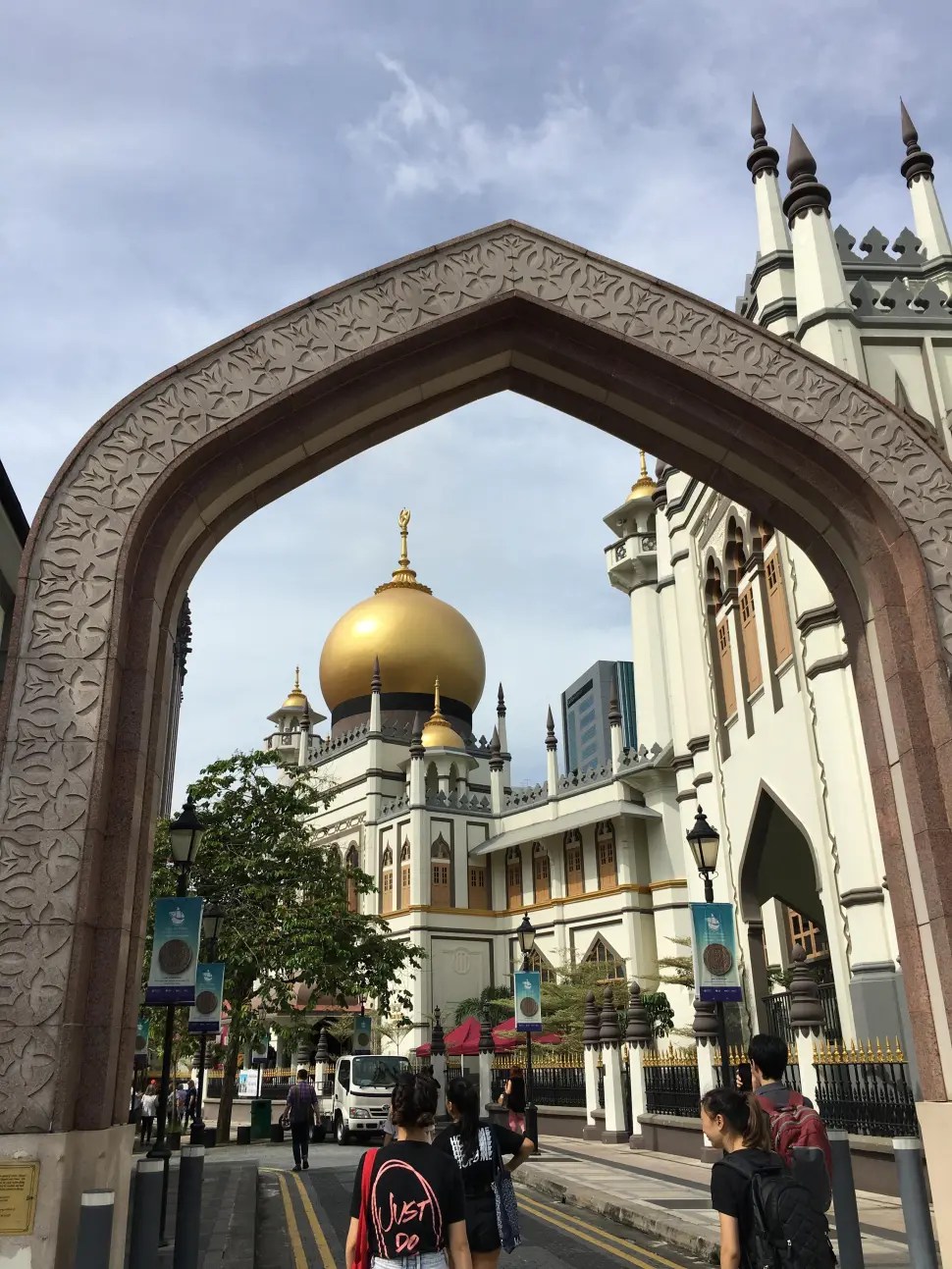
    This is where I get allocated to for my group project, Kampong Glam is an area of Singaporean Malay citizens live and where most of the heritages are find (maybe). The heritage centre used to be a residence and they reused the place for exhibitions purposes. This allows people to walk through in a better setting and helps them to understand the histories better as they are right in the place. Walk to the right side of the heritage centre, you can see the Sultan Temple which tells you that the mix heritage of Malay, Lebanese, Turkish and Arab. The gentrification of the area can be seen easily in this area, as the development of Haji Lane which is more of a hipster lane with graffiti on the walls. This has indeed attracted a lot tourists but it also helped Kampong Glam to lose its Malay identity.

    Sultan Temple

    This adventure helped me to explore three important heritage places of Singapore and also allows me to analyse Kampong Glam as research for my group project. I am very thankful for being this part of the studio and would definitely encourage students to take Lab B.

    Jing Yi Sun, Global Short Programs Student

  • Saving our turtles

    In a world where one in every thousand baby turtles reach adulthood, the survival of every endangered green turtle and critically endangered hawksbill turtle counts toward the continuation of their species. Battling predation by crabs and goannas, eroding shores, poachers and rising temperatures, the Conflict Island’s Conservation Initiative plays an important part in increasing the survival rates of these turtles through a number of strategies:

    • Conducting community awareness presentations where volunteers and the CICI Team communicate the implications of plastic pollution, poaching and predation on the survival rates of turtles. As well as this, explaining that the turtles within the Conflict Islands have been satellite tracked to Queensland, Australia – making them OUR turtles not just theirs – thus, dispelling their notions of having the right to take their turtles.
    • Relocating turtle nests that are below the high tide line or at risk to poaching to an inhabited island in a hatchery where they are protected, in order to increase their chances of survival.
    • Nursing baby turtles hatched in the hatcheries until they have gained enough strength to be released and hopefully increase their survival rates.
    • Conducting beach clean ups to clear the shore of large driftwood logs that prevent or inhibit turtles from nesting.
    • Educating encountered poachers about the importance of protecting the remaining turtles and attempting to convince them to release the turtles they have taken.
    • Fitting metal flipper tags and satellite tags to nesting turtles to track the population and their movements.
    • Collecting genetic samples from turtles to determine their relation to the Queensland turtle population.

    Assisting with these strategies whilst also enjoying daily snorkelling, paddle boarding and swimming in a breathtakingly beautiful location, certainly made for an amazing and rewarding internship experience. To sum it all up, I’ve created a video to document my experiences: CICI Turtle Internship January 2018. Please enjoy (in HD)!

    Alison Tran

    Global Short Programs Student

  • Sea turtle conservation in PNG

    The Conflict Islands in Papua New Guinea are a remote, uninhabited island group in the Coral Sea. This summer I spent two weeks there completing an internship with the Conflict Island Conservation Initiative (CICI), monitoring the local populations of green and hawksbill sea turtles.

    The Conflict Islands are a highly biodiverse region, and an important nesting site for sea turtles. However, sea turtles have long been a food source for the local communities around the Conflict Islands. Today, the most significant threat to sea turtles on the Islands is poaching. With so many other threats affecting sea turtles today such as ocean pollution, introduced predators and climate change, the additional strain from the harvest of nesting mothers and their eggs from these island beaches is pushing the species rapidly towards extinction. This is a problem CICI is directly addressing.

    I joined 15 other volunteers and 14 local employees aboard our boat, the Undersea Explorer, in Alotau, Milne Bay. From here it was a quick 10 hour journey out to the first island, Panasesa, which serves as a home base for the researchers in the Conflicts. This is also where the turtle hatcheries and nurseries are. Less than one in a thousand turtle hatchlings will survive to adulthood. In an effort to give as many hatchlings the the best chance at survival possible, eggs from some  nests are transferred to the hatchery along with eggs rescued from poachers to hatch in relative safety.

    The main aim of the internship was to develop a baseline population dataset of the turtles as part of a long term monitoring program in the area. This way, the success of any conservation efforts on the islands can be assessed. To monitor the turtle population we tagged the flippers of female turtles as they came up the beaches every evening to lay their eggs. Turtles that had been previously tagged and recaptured were also recorded. Every evening we left the Undersea Explorer and travelled in small  dinghies to the islands. We would patrol the island beaches looking for turtles until the tide went out too far for turtles to make it over the reef.  Many of our Papua New Guinean guides were previously turtle hunters. Now they are devoting their incredible knowledge of the island environment and turtle behaviour towards protecting turtles.

    In collaboration with Christine Hof from WWF we attached satellite trackers to every hawksbill turtle that we found on patrol. Long prized for their beautiful shells, hawksbill turtles are now  critically endangered. We hope that  the satellite trackers will help map the migration paths of the turtles and contribute to the conservation efforts to protect these species.

    On our last day of the internship we said goodbye to the Conflict Islands and travelled to Tube Tube (pronounced Tooba-Tooba) Island in the neighbouring Engineer group. Natalie, our marine biologist supervisor, gave a talk to the community about the threats facing sea turtles and how best to protect them for future generations. Ultimately, the success of CICI will be from the positive contribution of local communities.

    I had an amazing time in Papua New Guinea and I am so glad I got the opportunity to travel to such an incredible place. It was a privilege to work in such a biodiverse environment and meet wonderful people, especially lead researcher Natalie and the locals who are doing such amazing work in their communities. I look forward to seeing how CICI continues to grow and have a positive impact on the health of endangered sea turtle populations and I hope to be back in the Conflicts before long.

    Emma Bowen

    Global Short Programs Student

  • Reflections of Papua New Guinea

    During the first two weeks in December, I took place in a volunteer program in Papua New Guinea, tagging and surveying turtle populations among the Conflict Islands. The following was a typical day spent on board the research boat:

    Majority of our work as volunteers was done during the night, when patrolling the islands in groups to find any Green or Hawksbill turtles.  Giving us a chance in the morning to either sleep in, perhaps read a book, go kayaking or scuba diving amongst the amazing reef. With crystal clear waters, 98 ft visibilty when diving and marine life including reef sharks, mantarays and the stunning red sea fans, its easy to see it is any divers paradise  Once and morning activities were over and lunch was eaten, a chart would tell you your duty for the day, whether it be helping in the kitchen, bathroom cleaning duty, data entry or on the funner side helping in the turtle nursery. This involved making up their food programs, measuring their size and weight and feeding them tiny cubes of food from a toothpick. attending to theses injured or recovering turtles was by far the best morning duty to be put on.

    At 6pm, Nat, our marine biologist  running the program would write our teams and islands we would be visiting on the white board. Our guides were locals who also lived in on the boat during the turtle nesting season and were from surrounding island groups. They were hunters that Nat had approached and offered jobs in place of poaching. Meaning they new all the islands like the back of their hands already. Upon talking to nat and realising the declining populations of this species, they had become a team truely passionate about the conservation project. We would take the dingy’s from the boat to our designated islands, equipped with a snack bag of Arnotts biscuits, water, mosquito spray and all of our data sheets and tagging equipment. One we had made base we would walk laps of the islands from 6pm to around 12pm-2am depending on the tides. If the tide went out too quickly, the turtles couldn’t come up over the rocks. On an average night we would tag between 2 and 5 turtles, which sadly is quite a low amount, regardless of the moon and tide during these first two weeks. If we found a turtle we would log its shell size, species, gps locations and amount of eggs laid. Then we would tag each flipper with a metal id tag number. If she had laid her eggs in a vulnerable spot we would relocate these back to the hatchery on the main island.

    Once we headed back to boat we would all have a cup of tea, a de-brief and a sleep, ready for the following day.

    When patrolling the islands, our guides would climb the coconut trees for us and build bonfires to keep away the mosquitos. The 11 other volunteers and our guides on these patrols became such great friends. With the amount of time spent together each night, we truely got to have some great conversations. Over the two weeks it was amazing to learn of their culture, traditions, reasoning for hunting and reasons for stopping. It was a an amazing experience and I hope to be able to go back again year after year.

    Ella Bessen

    Global Short Programs Student