Nanyang Technological University is a massive and
surprisingly well funded campus. The first thing you will notice here is the
vast numbers of cleaners, gardeners and ground staff scattered around the
campus, spotted through bus windows and while stumbling lost for class. Similar
to the stereotype of Singapore itself, image and the portrayal of wealth is a
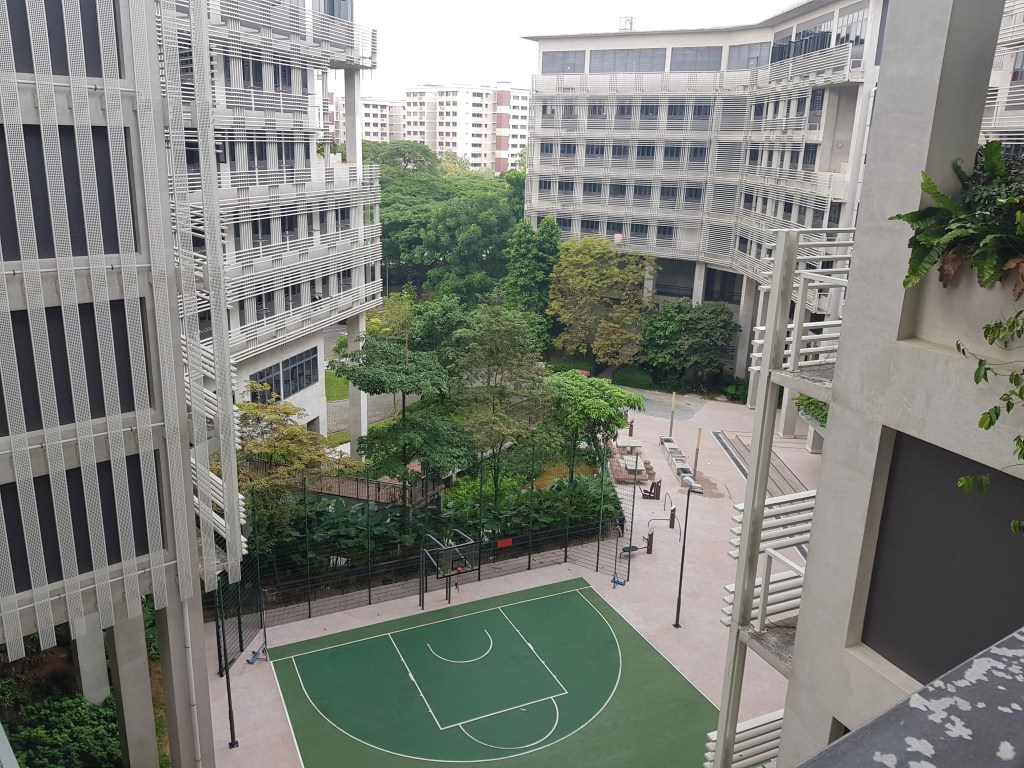
staple of all buildings and design here. While some student halls look
unmistakably ‘tropical’ with their low and open hall design, the vast majority
of the university’s facilities are breathtaking. So far, this has not translated
into a dramatically different experience however. All classes are run in
English by a diverse mix of teachers and lecturers, some recorded and some
compulsory. The first major difference in teaching culture that I noticed however
is that local students talk during the lecture (… the horror!). Of course, this
was not something seen as rude, but the felling of a collegiate between local
peers is certainly strong, and the interaction in lectures and classes is just
one way this shows through.
NTU itself boasts a respectable position in global
performance and university rankings, however attending class alone would not
have given me this impression. The teaching quality and materials are no
different to home; a lecture is a slide show and a tutorial is still a
roundtable conversation. However, it seems the culture here to achieve comes
from the environment around the classroom. Top quality sporting fields, tennis
courts, indoor courts, gyms, pools, and even performance spaces and halls are
all free to use and encouraged for all local and exchange students… I have
certainly been making the most of these. A day in the campus life looks like a holiday;
an hour or two of classes, lunch with friends from almost every corner of
Europe, gym, pool, and $3 dinner at the hall canteens. Food is so affordable it
takes discipline to not gain weight in a single meal.
On the most part, the exchange students have all stuck together and ridden out the confusion and fear of the first month together. Local Singaporean students are quite reserved towards us, but you can easily catch them practicing breakdancing in the middle of the shopping centre on campus, running a stall for the Student Representative Body for Aerospace Engineers, or asleep at 2am in the study rooms. Once I’d finished catching the wrong bus off campus to the local shops when I was already late for class, the buses around NTU are very easy as well. Even drinking in the canteens was allowed to slide for 2 weeks until a kindly worded email was directed to all 1300 exchangers, briefly reminding us of the risk of imprisonment for effectively any crime in Singapore. Just remember, don’t drink water on the train…
Overall:
Teaching classes: 7
Campus: 8
Buildings and tech: 9
Public transport: 10
Safety: 9
Locals safety around exchangers: questionable
Recommend: 10/10
Nicholas James Bachelor Advanced Science Nanyang Technological University Singapore
Australian Government New Colombo Plan Mobility Grant recipient.
Travelling has always been a part of life that I wanted to discover. This desire made me decide to travel miles away from Australia to Vietnam – a decision that is without an ounce of doubt one of the best I have ever made. My trip to Danang, Vietnam began on the 29th of July 2019. This two week trip was everything more than I had expected!
Being with people from all over the world not only taught me more about cultural differences but also how diverse our world is! These two weeks were intensely packed with classes and activities which made the trip wonderfully worthwhile. During the first week we went on a city tour to the famous Dragon Bridge, Marble Mountain, Hai Van Pass and the Old Buddha Sanctuary. Seeing these I was amazed at the amount of beauty hidden in Vietnam. To add to my delight, we took part in cooking classes and experienced the vast Vietnamese food culture (I can finally make their Vietnamese rolls, yaay).
A Few of the amazing places: My Khe Beach, one of the main tourist attractions in Danang. Hoi An, packed with colourful ancient night markets all lit up with traditional lanterns, fairy lights and street vendors bargaining to earn their extra bit. The Pottery village in Hoi An, all dedicated to hand made potteries giving that village a rustic ambience.
It was a delight to be in a world full of calmness, living away from the rapid, racing lifestyle that’s very common back at home. I observed how people strongly upheld their roots and traditions that were decades old. Overall, this city that is so full of artistry and tradition is a place worth visiting! Meeting the amazing people around the world makes it even more meaningful. Looking forward to more of such great experiences!
My name is Fotini, and I study Product Design at UTS. I finally arrived two days ago in the beautiful city of Eindhoven, after much organisation and preparation !It’s a 30 degree day here (which is not what I was expecting at all), and I’ve already had some time to explore and look around. I’m already loving the Dutch culture, even though I’ve only been here for a short amount of time. The people seem happy to help and communicate with me, even though English isn’t their first language. In fact I have found that English is quite widely spoken here; I haven’t had any problems in asking for directions so far.
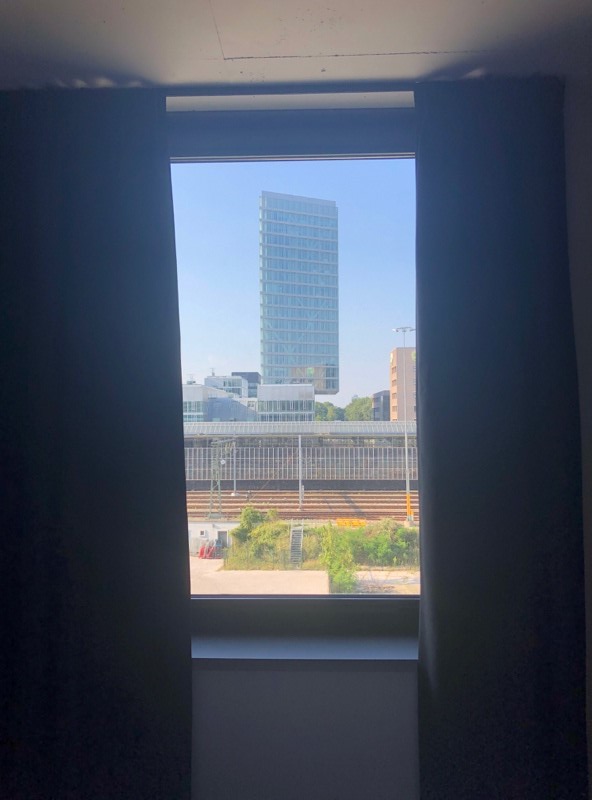
I’m staying in the Student Hotel Eindhoven, and I already
feel at home in my room. There are plenty of shops and supermarkets just across
the road from me. It’s been really exciting settling in. Although at times it
can feel daunting being here on my own, I know it’s a great experience that I
have to embrace. Everywhere I look I can see rows of bike racks with bikes
stacked on top of one another! Small things like crossing the road have become
a lot more eventful; there are separate bike lanes, and I’ve nearly been run
over a couple times.
I took a walk to the Eindhoven University of Technology
(which is 5 minutes walk from me) today, and I really liked what I saw. There
is a very relaxed vibe to the place, and I saw lots of people lying down in the
grass and looking up at the trees. There are lots of buildings that are spread
out throughout the campus. I think it’ll take me a while to adjust to this, as
I’m used to sticking to one building in UTS.
I’m most excited for my two introduction days. I can’t wait to meet other exchange students and make some friends. I’m eager to find out why other students decided to come on exchange; if it was to immerse themselves in a different country’s culture or if, like me, they really wanted to learn from industry professionals on the other side of the world. I’m excited for what this exchange journey has to offer, and I can’t wait to share my experiences back with my friends at UTS.
Fotini Theodoulou Bachelor of Design in Product Design Eindhoven University of Technology The Netherlands
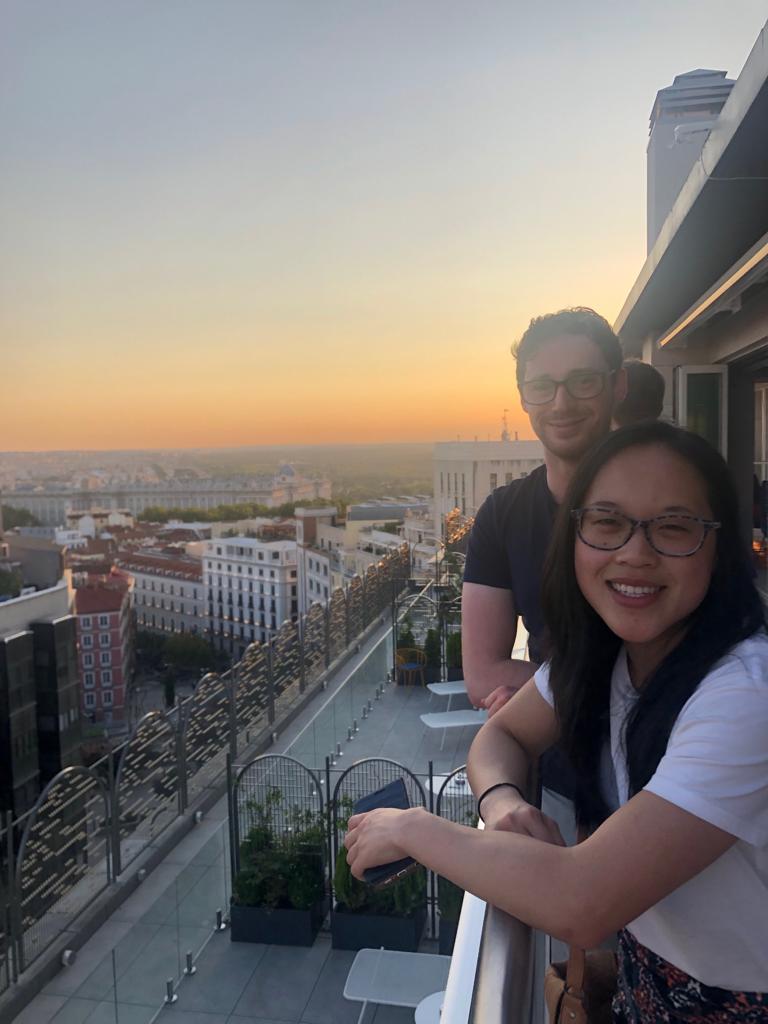
I have only been in the city of Madrid for 4 days and
its already been a whirlwind, and I haven’t even started classes yet! I’m
living in a 6 person shared apartment and have been hanging out with my
American and French housemates since I got here. Oh, and my new friend Lisa who
I met on the second leg of my flight from Australia. Lisa saved me by helping
me lug my ridiculous suitcase from the airport through the metro station all
the way to Arguelles train station. This same Lisa also happened to drag me to this
great Italian place ‘Grosso Italiano’ (calle de piez) the other night. The food
here is delicious so be prepared.
My biggest advice is ‘just do it’ like Nike says.
Definitely visit the parks, they are my happy place
when I travel especially as we don’t have a beach nearby in Madrid. So far I’ve
seen Retiro and Oeste which includes the Egyptian temple.
Explore as much as you can. If you think ‘ooh that
looks interesting’, then go check it out. The amazing thing about Madrid is
that you feel that at every turn you could find something new and exciting. I
came wanting to immerse myself in the language, the culture, the music, the
food… and strangely it’s been easier than I would have thought. Taking refuge
in the parks, just as the locals do on weekends to get away from all the hustle
and bustle. Retiro park on a Saturday: on one corner you have a violin, cello,
and viola playing, on another people sunbathing, meditating and throwing a
birthday party. Then if you walk a little further into the centre of the park you
even have people rowing boats and this is all happening in the middle of the
city.
I think the beauty of the city comes out in the spontaneity
of it all. Seeing two taxi owners arguing in the street, letting yourself take intuitive
turns as you explore not knowing where it will lead you, getting a little lost
and finding a duo guitarist & ‘drummer’ (@joemusicx & @lukitas_puente) near Puerta del sol
singing beautiful Spanish music with the captivating strumming of the Spanish
guitar filling the streets. All whilst you begin hearing a dog bark in time to
the music and the old Spanish grandmas starting to dance in the middle of one
of the busiest streets in Madrid. Sometimes it feels ridiculous and unbelievable
that any of this would be happening in one place, but it is. It feels like
there is so much more to discover, including the actual university!
I always think back to a phrase in Spanish ‘No tengas
verguenza’- Have no shame/Don’t be ashamed, mainly for practicing my Spanish at
every turn, every day and in every place I go, but also with meeting new people
on exchange. As my parents both said to me ‘you’ll blink and you’ll be back in
Australia’ so you truly need to make the most out of every opportunity and
moment. Really listen to that voice in your head telling you to just give it a
go because there is nothing worse than wondering ‘What if….’.
Song of the moment: ‘Dove e Quando – Benji & Fedi’
Gabrielle Agosin Bachelor of Communications (Media Arts and Production & Digital and Social Media) & Bachelor of Creative Intelligence and Innovation Universidad Pontificia Comillas de Madrid Spain
What happens when you gather 32 girls from 21 different countries? It’s simple, it results in an international family being created as a result of one amazing and priceless experience.
For the majority of July I spent my time in Austria, exploring the culture and history while being a part of the International Summer Academy in Engineering for Women (ISAE4W) at the university of Applied Sciences, Upper Austria. This program ran for two and a half weeks and covered a variety of topics that focused on exploring applied sciences, women in engineering, new technologies in medical science and gave us the opportunity to network with other women who are currently in the field.
The other participants of the program were from all over the world. Spain, Turkey, Ireland, Japan, China and Canada to name a few. All of us shared the same passion for engineering and natural sciences and it was a chance to not only connect with people from other countries, but also to make long lasting friendships.
When I first heard I had been accepted into the program I was excited to learn about all the other cultures that would be present at the program; I had always wanted to travel abroad so that I could experience living in a foreign place and have the chance to learn about different ways of life. Not only did Austria’s culture amaze me but hearing everyone’s stories about how they got to Austria was inspiring. None of us had the same story and we were each able to pass on bits of advice to our friends across the globe.
I would highly recommend completing a program abroad because it is an insightful experience that gives you the opportunity to make international friends and increase your understanding of the world we live in. It is true what they say about going abroad, you are forever changed by it; you bring a little piece of where you went home with you.
Madison Dias
Bachelor of Engineering (Honours) (Mechanical and Mechatronic)/Diploma in Professional Engineering Practice
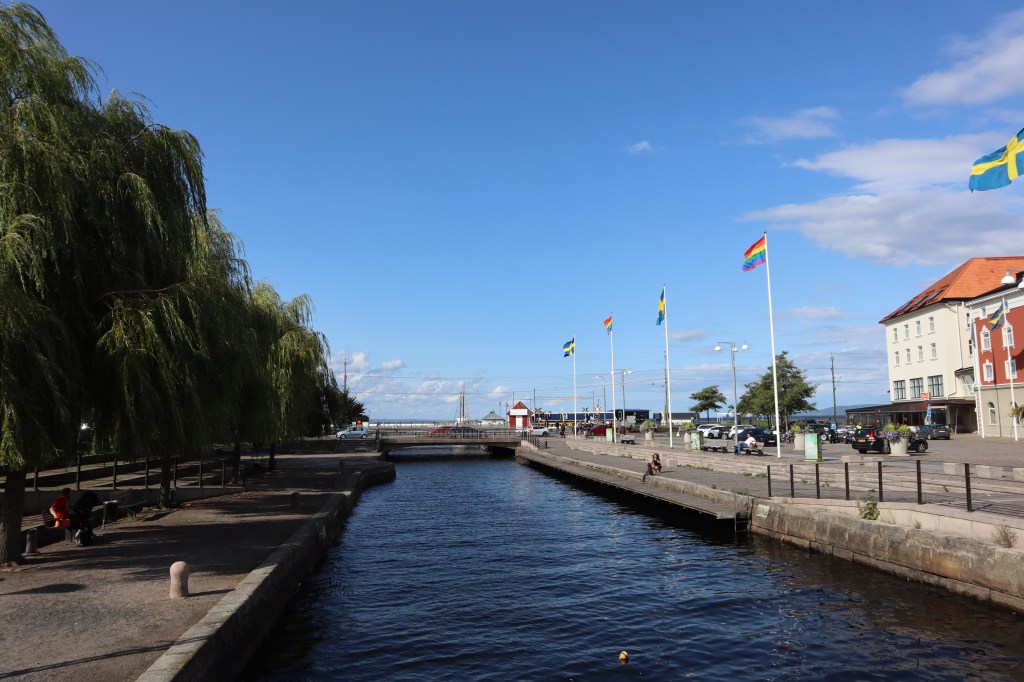
Lakeside views, low-hanging clouds, and the greenest grass
I’ve ever seen. This was the picturesque landscape I saw as I stepped out from
Jönköping Resecentrum. And what was to come after that was nothing I had
expected from this quiet little town.
At Jönköping University, the semester starts with a
two-week long introduction to university life. ‘Kick-off’ is an incredible
experience, thanks to the amazing university team who organises a range of activities
throughout the day. Challenges, dances and everything in between (oh, and did I
mention spontaneous singing?). It surely gets anyone out of their comfort-zone,
and in the easiest way possible since all the university members go out of
their way to include everyone in all the activities.
Jönköping University offers a simple application process to
get accommodation. The university offers a range of accommodation to suit your
preferences. If you want something on the social side, try råslätt. For me,
convenience was my priority and I was offered a room at Beta House, which is
situated on the main shopping street in Jönköping. I would definitely recommend
Beta House – it’s within walking distance to the university, all the stores as
well as the student club ‘Akademien’. It also comes with a beautiful view of
the typical multicoloured panel-houses here in Sweden.
Of course, I did not forget that this is a university and
there’s studying involved. Here, Jönköping University offers a language and
culture course called “Swedish Language, Culture and Society”. It is an ideal
way to learn about Sweden – to learn the minute yet important facts that make
up the Swedish society. In addition to the language courses, I am taking an English
Literature course and International Communications course – both of which are
subjects I am passionate about, but did not expect the university to offer.
So, if you are considering choosing Jönköping University, I
would highly recommend putting it as your first priority. It is honestly an
incomparable experience. The university takes the best of both worlds, with its
location near the serene Swedish nature and its strong focus on social events.
Hej då!
Lynn Chen Bachelor of Communication (Creative Writing) and Laws Jönköping University Sweden
The start of my self-discovery journey began in early July, and led me on an unimaginable adventure that involved becoming lost for hours in winding dirt roads after eating dal bhat for the third time that day, crossing knee-high flood waters to get to our next accommodation location, living with a family that had not the slightest clue of what I was saying when I asked where the bathroom was, and haggling with locals when trying to buy a skirt because it was only when I arrived did I realise jeans in a monsoon season did not dry overnight.
Did I expect any of this? Honestly, yes. Was I expecting to be nervous in the back of a taxi when I realised road rules did not exist in Nepal? Definitely. Did I expect not to go to the toilet for the first three days because I was scared of falling backwards in the squat toilet? One hundred percent. However, I did not expect the feeling of triumph and satisfaction after I accomplished each of these small challenges.
Before leaving for the Global Challenges International Study
Tour in Nepal, I knew that I was in for a tough two weeks. I knew that I would
be facing obstacles that one could only ever imagine in western culture, and I
expected to feel only relief when I hopped into bed each night. Surprisingly, the
only relief I felt was when I was able to escape the heat after walking up a
mountain for an hour while carrying a 50 kilogram backpack. I realised after
each obstacle I overcame that I was becoming mentally stronger, and I was
shocked that I felt such a strong determination to participate in each and
every aspect of the Nepalese culture, regardless of how daunting it seemed.
I was also overwhelmed by the eagerness to share by the Nepalese people I spoke to. Whether it was locals working at markets wanting to share stories of their experiences living in Nepal, the homestay families wanting to share their limited amount of food with visitors, or the farmers in the local village wanting to share their knowledge regarding the traditional ways of living, I was constantly surrounded by sharing. This willingness to give was completely unexpected, as I assumed the less someone had the less they were eager to share. On reflection, I could see that this was not the case for many of the Nepalese people I spoke to. In the words of Mother Teresa, “The less we have, the more we give”. I found that even though so many had so little, they were so content with what they had. I know now not to pity those that have less than me, as in some ways they may actually have more than me. Many appeared to be so content with both themselves and with what they owned, and had a smile planted on their face, regardless of the situation.
During this program, I had the opportunity to create an
innovative physical product that benefited the rural village of Dhulikel. I
worked collaboratively in a small, multi-disciplinary team with other
Australian students while partnering with both local ‘design for development’
experts and the community to develop a project with a focus on Nepali farming.
My team noticed that in the Dhulikel village, automatic
tractors had replaced traditional ploughing methods within the farms. Based off
research, we had expected to see traditional ploughing techniques to be
utilised, such as using the land effectively, ensuring rainfall was sufficient
before planting seeds, and undertaking tillage methods.
After speaking to the local farmers with the aid of a translator, I was able to understand the reasons behind replacing traditional ploughing methods with modern tractors. Traditional methods of farming were considered to be very labour intensive, less efficient and required strenuous man and animal labour hours. Surprisingly, it also cost more to feed and care for working animals than it did to buy a tractor upfront and maintain it.
However, it was through the discussions with both the farmers
and also local community members that we were able to understand the negative
environmental impact these modern tools were having on the land. While
miniature tractors are very time efficient, the ploughing tool connected to the
tractor overturns the soil, resulting in microbes and minerals from deep soil
being brought to the surface level. These nutrients are then destroyed by
direct sunlight exposure. Consequently, the quality of the soil in the Dhulikel
village for farming has depleted. Thus, this method of ploughing with miniature
tractors should not be continued.
My team decided to focus on this and create an innovative
ploughing tool to address the issue of soil depletion. While addressing this issue,
both the productivity of the product and the level of labour required had to be
considered. To ensure we were meeting all the requirements of all stakeholders,
we had the chance to interview both farmers and local residents. We were then
also given the opportunity to test our prototype on a local farm and receive
feedback from these stakeholders to improve future iterations of the model.
I found it quite challenging to ensure the criteria given to
my team was met within the one model, especially as there was only five days to
design and develop a prototype. As a student that has lived in the city her
entire life and studies a subject that does not even scratch the surface of
agriculture, I was very unfamiliar with farming methods, tools and techniques. As
a female within a group of males that lived on farms as children, I felt almost
inadequate at the beginning of the brainstorming sessions, as I had little to
contribute but a lot to ask. However, upon reflection, I have realised that
this was completely acceptable. I was able to learn so much in such a short
period of time by asking endless questions while interviewing local farmers and
villagers. This then allowed me to develop a new perspective on traditional
farming methods that my other group members did not have.
While we were receiving feedback regarding our ploughing tool
prototype, I found it very surprising the local’s level of concern regarding
the ploughing tool’s impact on the environment in both the short and long term.
From my perspective, I had assumed that their main concern would be providing
an income to support their family and their community. However, after numerous
discussions with the locals regarding the environmental impact of various
ploughing tools and techniques, I had noticed that my perception of what I
believed their main goals and values were had shifted. I began to understand
that their respect for the land that they grew their food in outweighed the
need to create a more comfortable life for themselves. This was shocking to
realise as I had previously assumed that, like in many western cultures, people
are generally primarily focused on their socio-economic status and their level
of income. I had taken my experiences from my own western culture and assumed
that it was transferable to the Nepali culture.
After considering various viewpoints and perspectives on these values and beliefs, I believe I now understand the reasons behind the people of the Dhulikel community having such respect for the environment. The land they grow their food on is both their entire source of income and is a large percent of the food that they provide their family. If this land was to become nutrient lacking after years of upturning of the soil as a result of ploughing, this income would halt completely. Likewise, they would want to ensure that future generations would have the opportunity to continue working on farms to provide for their own families. Thus, minimising the negative environmental impacts that their farming has on the land is extremely important, and I believe that they are willing to sacrifice some own personal comforts to ensure their efforts are sustainable.
Upon reflection, I now realise the importance of respecting the environment. This is especially important within western culture, where socio-economic status, income levels and power placement are valued so highly. This realisation has influenced the direction of my goals for the future – especially regarding career-related goals.
I am currently studying a Bachelor of Construction Project
Management and hope to be working full time in the construction industry by the
end of my degree. The construction industry is often generalised as one of the
most environmentally destructive industries, with little to no concern
regarding the environment.
While this issue has been brought to the attention of many
large construction companies, sustainability efforts to create more
environmentally sustainable construction methods, techniques and materials have
been slow to adopt. This is largely due to the demographics of the industry.
The construction sector is a very male dominated environment and comprises
largely of an older generation. This specific demographic has been reported to
have an “if it’s not broke, don’t fix it” attitude. Consequently, the longer
term negative impacts of the environment is often overlooked by these
construction workers as their efforts are often placed into ensuring the
project is completed on time and on budget.
After my experiences in Nepal, I have decided that I would like to delve deeper into the sustainability options that can be utilised within construction projects. I have realised that innovation and creative thinking have the potential to change the course of sustainable construction projects in the future. However, I believe it is the implementation of these new tools, methods and materials that will determine whether they are successfully adopted. Similar to those living in the Dhulikel village, I want to ensure that I am respecting the environment regardless of the industry I am working in. To do so, I have realised that I may need to sacrifice some personal benefits and gains to ensure I can play an influential role that will assist in protecting the environment.
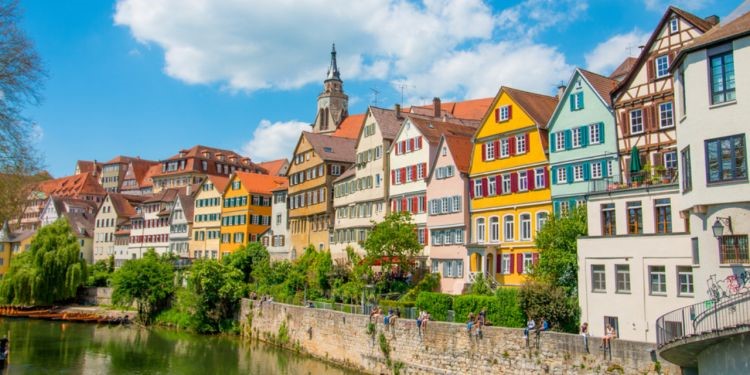
I am so excited to do an exchange in the beautiful southern
German city of Stuttgart. It has a wonderfully rich history with traditional
architecture surrounded by mountains and the Black Forest. Semester doesn’t
actually start until October, so I won’t be able to talk much about my
experience in this blog post. But perhaps there is another opportunity to
update UTS later in the year.
Instead I plan on telling a little about my planning
process. Because the main language in Germany is German, Stuttgart University
recommends that all exchange students participate in an intensive German course
prior to studying in October. This is a wonderful opportunity to brush up on my
language skill that I haven’t been able to use since the HSC. It also covers 7
ECTS points which helps in reducing the workload during Semester.
Although I applied for housing within the city centre, as it
would have been closer to University, shops and transportation, due to
receiving my admission letter to Stuttgart later than domestic students, I was
not able to receive a placement in the accommodation of my preference. However,
I believe that the housing I received is still better than nothing so things
will work out.
During exchange I plan on participating in several sporting
clubs to maintain my fitness and to meet new people. I am very fortunate that
Stuttgart has a broad range of sporting and social clubs which will hopefully
make it a more enriching experience. I feel like the language barrier will be
less of a problem when you are working in a team on achieving a sporting goal.
Regardless of how challenging it is, I believe in maintaining a positive state of mind, as well as anticipating that plans won’t necessarily be followed word by word and remaining flexible, while having back up plans will assist in making this exchange an unforgettable memory.
Larissa Phung Bachelor of Accounting Stuttgart University Germany
Hi there! I’m Parisa, a Business and Law
student at UTS, and am about to start a semester of exchange at Tilburg
University in the Netherlands.
In all honesty, I was never too adamant on
doing exchange. It’s not that I was sure that I didn’t want to, but more so
that I thought I didn’t need to do it and that I didn’t have the resources at
my disposal to do it. But last year, after travelling for the first time, I
realised what exchange could mean as an opportunity to travel and explore the
world. I heard countless stories from my friends who had previously gone on
exchange and no one had a bad thing to say about it. However, more importantly,
I realised that I was fortunate enough to have the resources needed to go on
exchange. I realised that it was possible to take up this opportunity at a time
in my life where it is completely practical. Together with things like a HECS
loan from the government and support from UTS, I decided to embark on this 6
month journey.
My exchange semester starts at the end of
August and I couldn’t be more excited. I was fortunate because the planning
process wasn’t too overwhelming and confusing. I felt like I more or less had
the information that I needed for all steps of the process. I decided to travel
for one month prior to university starting and it has already been a whirlwind.
I got caught up in the biggest heatwave Europe has ever had, which was an
experience in itself. I’ve already seen seven countries, and I’m eager to see
and learn more about this diverse and stunning continent over the rest of the
year.
Obviously, it has been a nerve-wracking
process at times. The thought of living away from home for such a long period
of time is daunting. Away from the familiarity of Sydney and the comfort of my
own bed and my mum’s food. However, I’ve tried to use this nervousness as a
further incentive to go, because I know that it will be a massive learning
curve no matter how it turns out.
All in all, I still have a long way to go in this adventure. From what I’ve seen in the time that I’ve been here, I know that exchange will be the experience of a lifetime.
Parisa Haider Bachelor of Business Bachelor of Law Tilburg University The Netherlands
On June 30 2019, 24 UTS Engineering students commenced a brilliant two week course at Shanghai University. With classes in the morning and city exploration in the afternoon, their fortnight abroad went by in a flash!
Below are some short reflections from a few of the students who recently embarked on this terrific overseas experience.
From the 30th of June to 13th of July 2019, our daily schedule consisted of lectures lead by industry professionals from 8:30-11:30am. The content covered a variety of engineering related modules ranging from advanced manufacturing, renewable energy, and city infrastructure which transferred to concepts and trends taught in my own mechanical engineering degree. After lunch, we’d assemble at 1pm for site visits to relevant companies and the opportunity to discuss issues and concerns with international experts in industry. The UTS x SHU trip provided an invaluable academic and cultural experience. I am looking forward to partaking in more BUILD programs and I have been raving to other students to get involved too.
– Anika Wenceslao
The comprehensive program enlightened me to a side of China not often conveyed in the Western world and has left me longing to return there and explore outside of Shanghai. I can’t help but smile when reflecting on the entire experience and was genuinely sad to return home after spending two weeks with some truly great people who I got to share the experience of a lifetime with.
– Lachlan Derrig
I hadn’t travelled outside Australia in more than ten years. Going to China has been one of my favorite things I have done. Exploring new cities, meeting people, creating memories, sharing moments with strangers and friends, eating, learning. That’s how I would summarise my experience abroad. There was always something to do, to seek, to learn. I’ll admit that I was scared. Scared to leave home, scared to not know anyone, scared to navigate alone. But all things exist in contradiction. I was excited. I was excited to leave home, excited to not know anyone, excited to navigate alone. It was liberating.
– Kassem Safwan
Visiting Shanghai was a very insightful and culturally eye opening experience. It was quite amazing to see a city that is almost completely cashless rely on payment methods such as WeChat and Alipay which are phone based applications in which you use QR codes to scan and then pay via an account. The best way I would be able to describe the atmosphere of shanghai, is that it is one giant factory.
– Will Lazaris
Despite spending my first night sleeping at Pudong Airport, I only had good moments in Shanghai. From learning some mandarin, walking around the city and making friends with the locals, I had so many eye opening experiences. Everyday became exciting. Shanghai is an incredibly exciting and lively city. From how cheap the cost of food and living is, to how densely packed the cities of China are, you’ll never run out of things to do. I can’t wait to come back!
– Nicholas Lukito
Shanghai has been an absolutely unforgettable experience. I was blown away by how much I was able to learn and experience in as little as 2 weeks. Admittedly, I was incredibly nervous before departing. I was about to embark on a trip with people I had never met, in a country I had never been. But as soon as I landed in China, that very quickly changed. From enriching cultural experiences, exploring sites such as Yu Garden and Tian Zi Fang, to insightful lectures paired with relevant company site visits, for example touring FANUC, a global robotics and manufacturing company, I can honestly say this trip had everything and more. I’m beyond grateful that I was fortunate enough to have such an incredible experience with such an incredible group of people. This program has truly exceeded my expectations and I strongly urge for students to take this rare opportunity to experience a BUILD Abroad program for themselves!
– Brigitte Zappia
The key thing that I learnt through this BUILD trip is that there is a big wide world out there and that in order to understand and comprehend it, you need to see and experience it! From my journey I had the chance to experience different societal views of government and how different governments influence the lives of the people. This was something I found confronting, especially when I asked some Chinese citizens about their freedoms they either responded with “I’d rather not comment” or “It’s complicated”. All in all, going to China was an experience I will never forget, which has taught me and exposed me to so many new and exciting things and given me a desire to further travel through Asia to countries rich with culture and history.
– Callum
Before I left for my trip, I set myself the goal of attempting to make my first video to capture my emotions and experiences of the trip. There aren’t many more words that I can say to do both my trip and Shanghai its true justice. However, I hope that this video does.
– David Pangna
Before I left for Shanghai many of my friends and family would ask me, “Are you excited?” I often answered with an uneasy “yes” or a truthful “I honestly don’t know”. As absurd as this sounds, I was truly quite anxious to travel to China as it was my first time travelling alone to a foreign country. To save all the suspense, I had an amazing experience! Looking back on it there was no single factor or event that made this an unforgettable trip but a magical and rare combination of everything. The friendships and lessons I have learnt on this short two week trip will stay with me forever.
– Veronica Gorgi
As part of our program, we had the opportunity to visit many popular cultural sites. The Bund was one of these. It is a waterfront area in central Shanghai which consists of buildings that light up at night, creating a beautiful view which cannot be described with words – you just have to be there to absorb its magnificence. We also had the chance to participate in a sight-seeing cruise along the Huangpa River which exposed us to breathtaking scenery. Along this cruise we saw the Oriental Pearl TV Tower which is an iconic tower seen in many western and eastern movies, and we were given the chance to go inside it to see Shanghai from above!
– Kelvin Luong
Before visiting China I always had a negative perspective of China and what they have done to the world. But, after this short program I got to listen and learn from the people there and my perspective has changed. I now look at China with an open mind.
– Synat
At first I was a little nervous, I have always had a distaste for travelling in groups. There’s always the bickering and the squabbling, trying to decide where to go. But thankfully, once we started the course, our days managed to stay teetering perfectly between everyone’s preferences. One of my favourite days was when went down to Shanghai Pearl Tower. The tower gives a panoramic view of the city, where you can stare down at the people on the city floor below and watch them going about their lives. Overall the trip was super enjoyable and I hope to go on another in the future.