Just over three weeks ago, I had the incredible opportunity to go on an immersive two-week Engineers Without Borders (EWB) Design Summit in Cambodia, guided by experienced facilitators and learn with other university students from different parts of Australia. The two weeks I spent there flew by way too quickly!
Saying goodbye to the new friends I made, the EWB team, the incredible people I met, and families I stayed with was really difficult. On our final night, the EWB team organised a graduation dinner, and everyone was in tears before dinner had even started! Before this trip, I wasn’t expecting to find or even build close friendships from this experience. So, travelling, exploring, and learning in a foreign country with like-minded people made this trip so much more special for me.
This design summit was jam-packed with really engaging workshops and activities. Before this trip, I expected that most of our time would be spent in a room learning about design through presentations. However, it turned out to be quite the opposite! Our schedule had culture and language workshops, design-thinking workshops, team-building activities, and museum visits!
One of my favourite activities organised by the EWB team was the scavenger hunt/ amazing race, where we were split into groups of 4 and explored Phnom Penh (Capital city) by tuk tuk (EWB covered all costs associated with planned activities and students were given the responsibility to manage funds that were handed out). We also got to practice our Khmer that we learned earlier in the week to bargain for an item we needed on our to-do list! Can confirm, that we did succeed in getting a discount! Every day, we were fed so well (like kings honestly) and had so much to share with our other teammates and facilitators about what we saw and learnt.
As the design summit progressed, climate conditions got more extreme. The daily average temperature was a breezy 36 degrees Celsius and 60% humidity. The trip did get tougher when we stayed on the island with the rural community. Living conditions changed drastically. However, we all made it through. Every day, we checked in on each other to make sure we were physically and mentally okay. During the hottest hours of the day, we were given time to relax, and we did just that in hammocks by the Mekong River! My group spent this time getting to know our facilitators! Hearing their life stories and careers has inspired me to want to explore more new things in my life!
To summarise this incredible experience, it would be to ‘become the change you wish to see in the world’. If I could turn back time, I would. Just to be able to experience this trip of a lifetime again.
Michelle Nguyen
Bachelor of Engineering (Civil) Hons Diploma of Professional Engineering Practice
Overall, my Global Exchange was truly a sublime and fascinating experience which is undoubtedly due to how welcoming, friendly, fun and hard working my fellow peers and the people of Bali are. I am extremely grateful for the numerous friends I made and will certainly cherish these memories I have.
Last summer, I was extremely fortunate enough to be a part of a Global Exchange Studio within the DAB Faculty called The Ayung River and the Subak of Bali : Hydro-agriculture meets Aerial Fieldwork. As a Landscape Architecture Student, I’m fascinated with the different and diverse landscapes this world has to offer, and undoubtedly, Bali, Indonesia, did not disappoint in the slightest.
The intent of this Landscape Architectural Led Global Studio was to investigate Bali’s Subak (Rice fields) and map these intricately engineered Hydro-agricultural landscapes through a variety of means, with one of the most crucial being Drone Mapping and Photogrammetry. What I quickly learnt about Indonesian culture was the Balinese dependence on the land and specifically their dependence on the intricate Subak system. The locals and farmers in Bali view rice as a gift from God and a symbol of life. Farmers pay special tribute to Dewi Sri, Goddess of Rice and Fertility, with small shrines they place in the fields.
During my time in Bali, I had multiple opportunities to work alongside tutors and students from the Udayana University, workers from Astungkara Way, farmers and many other locals. I had an enormously positive experience with the people I met and worked alongside, with some of the best experiences including working on the rice fields where we helped the farmers plant and harvest crops and explored the ways they moved water through their intricate troughed system which seeps through the land like an intricate web.
Within my group, I was in charge of piloting a drone to create a 3D model of the entire north side of the rice fields. This was such an amazing experience as I have never had the chase to drone and create models on this calibre. What was rewarding from this experience was the fact I was able to teach one of the Bali students how to fly a drone and also provide the local organisations with this data as they did not have the equipment to make their own. After a long day on the fields, we came together and learnt how to cook traditional Balinese meals with the plants and rice we had helped harvest.
After working hard in the fields and labs, we were also given some time off to explore different parts of Bali. Some of my favourite things to do in the offtime was to explore the many different restaurants and bars, in which I discovered a new love for Indonesian food. Some other cool things I got up to was climbing the Mt Batur Volcano and droning the summit. I also got to ride ATV’s through a muddy trail, swim in waterfalls and visit different temples and festivals.
I landed in Ireland late August, ready for a semester of fun, culture and new experiences. It has not disappointed.
Dublin is a great place to land for a few months. In my time here I’ve managed to forge friendships with Australians, Irish people and international students. The atmosphere in Dublin is super friendly (even if the weather is rainy), and the cosy culture of evenings spent at pubs having a yarn is truly special.
If you’re worried about meeting people and fitting in – fear not! Irish culture and humour is not too different from Australia’s, and you will meet so many other friendly exchange students. Go to a pub with a friend and don’t be afraid to start conversations with locals!
Trinity college has been a great place to study so far. I’m using my free electives to do some English and history classes here. The tutorials I have are amazing – only about 10 people in them, which has been such an interactive and engaging experience! Although enrolment may be a bit of a struggle (and you don’t get to select your own timetable) you should be able to get all the classes you want if you sign up quickly. The quality of teachers here has been amazing so far – especially in the English department.
I will say, the uni doesn’t really have any social events in orientation for visiting students. They do however for ‘Erasmus’ students (students on exchange from a European country).
Although Dublin is amazing, so is the rest of Ireland! I highly recommend doing a day trip to Howth, Bray & Kilkenny. If you have a spare weekend (which I recommend using), definitely check out the south-west Irish coast. Specifically, places like Dingle (check out the peninsula – which you can see here), Killarney (Gap of Dunloe) and most importantly, Galway.
Now, I will tell warn you about a few things about Dublin. There is a housing crisis here, and it has been difficult for Irish students to find accommodation here, let alone international ones. Your best bets are websites like daft.ie or official student accommodations. Trinity does affiliate with Kavanagh Court, a student accommodation in North Dublin, but it’s not in a great area, so I would aim for somewhere else if you get the option. I ended up at a student accommodation called The Tannery, which is pretty average to be honest. It’s in an amazing location though, which is great for going out, meeting young people and getting to uni.
The public transport within Dublin is not amazing – buses are at least usually 10 minutes late and quite often just won’t show up, so plan ahead if you need to be somewhere at a specific time. Good news though! Dublin is super walkable, and you can stroll to lots of different parts of the city (the southeast area is particularly nice).
Although Ireland may have an old rep of average food and poor coffee, this is a lie! Here are some great places you should check out:
Neon Asian Street Food (they do an amazing lunch deal)
Bunsen (a burger chain that does great student deals)
Cornucopia Wholefoods Restaurant (a healthy, affordable lunch spot)
Alma (nice café to treat yourself at for breakfast)
The Barge (amazing pub food)
Foleys (for a fun night with live music)
Ryan’s (crazy pub)
The workman’s club (Newtown meets Dublin)
Herbert Park Food Market
Phoenix Park (for a cute picnic)
I promise you will have a fabulous time in Dublin, especially if you put yourself out there. It’s a city full of great people, fun spots and beautiful places. Enjoy the craic!
Delegates of the inaugural Green Summit 2022, Humanitarian Affairs Asia
Imagine the feeling of going to a completely different country alone, knowing no one, and spending a few days with people who you haven’t met before from different parts of the world.
Being an international student, I had already faced this situation, but it was unique this time; delegates from 31 countries around the world, having different cultures, languages, etc. but one thing in common – the zeal for a better sustainable future, a hope to see this world a better place to live in. That is what united all of us, as one of my delegates said in his reflection speech, “they all were delegates when I first stepped into the hotel, but today they are my friends.”
Explaining each step of this journey would take so long, so let me make it short, but before that I’d like to thank Humanitarian Affairs Asia, the United Nations, and UTS BUILD for giving me this opportunity to be a part of the Summit.
Each day, waking up at 5 am and leaving the hotel at 8 am was tiring, at least it was for “not a morning person” like me, but honestly, I always looked forward to the next day with excitement for tomorrow, the hunger for more knowledge and to spend time with my fellow delegates (btw, not to forget United Nations catering was damn delicious).
For people who really want to get into the United Nations, here is a piece of good news for you. As Felipe Queipo, Communication Officer, says, “The UNITED NATIONS needs you much more than you need it”. As far as you have the passion to bring a change, why not?
The UNITED NATIONS needs you much more than you need it. As far as you have the passion to bring a change, why not?
Felipe Queipo, Communication Officer
Across the 3 days at the United Nations Conference Centre, we had 8 speaker sessions, one workshop, and 3 green day activities, so basically, a lot to do.
All the sessions were fantabulous and I can’t choose one but below I’ll mention the takeaway from the two sessions which I related to the most.
1) How to Talk to People Who Do Not Care About Sustainability by Felipe Queipo, Communications Officer, Department of Global Communications, United Nations, New York
I’m sure almost everyone has met people who do not care about sustainability, who do not think beyond themselves, and who never believe in giving back to nature. For me, I have met tons in the past one year, but these questions always remained unanswered – “What do I do about it? How can this problem be tackled? Is there even anything I could do or not?” Thanks to Mr. Felipe who answered almost all.
If I were to summarise in 5 words they would be – Communication, passion, empathy, channel, and mechanism. The answer to all questions lies here, and only when all of them come together, is when we can accomplish that.
Choose a channel, to communicate with the audience you are referring to, have a mechanism of engagement, and most importantly talk about something that connects to them rather than using the technical non-related (about the surrounding they live in) terms which most probably they won’t care about.
Individually, yes, we all can make a difference by erasing our carbon prints – but the question is, “How can we do it together?”
Don’t wait for someone to join you, be fearless and start it on your own, slowly and gradually there will be people who’ll be a part of your journey. After all, these are global issues and can be resolved only when everyone comes together – and that is exactly what Mr. Kim says as well.
2) Why You Should be a Climate Activist by Max Hellier Climate Activist
The first thing Max asked us was, “What is the picture of an activist in your mind?” Everyone had almost the same answer – an angry highly energetic person with posters in hand, shouting and protesting. Instead Max showed us it is not limited to only this. People who use controversy to put forward their story, make an uncompromising decision not to support an industry which is not sustainable, etc. are also activists.
The discussion we had in this talk, really moved me. Honestly, how many of you think about the sustainability of an item before buying it or before investing in a company? I’m sure very few.
So what should be done? Only support the businesses that morally and ethically line with your values. What do I eat? What to wear? Who do you elect? It all matters. Choosing renewable energy supplies, flying less, buying secondhand, electing wisely, and what you prefer on your plate can all be all conscious choices.
What do we do instead? Repeated blame on cars, airplanes, buses, because they are more tangible as we see them daily, but the industry itself is funded by our choices; and what exactly do we choose? Our choices are based on comfort, social acceptance, and most of all, if few things are unattractive, we tend to choose the easier option irrespective of considering its effect on the climate. Allow communities to come together and take part in collective activism. Don’t fund/support unsustainable businesses in any way. After all, “When choice becomes popular it becomes a movement, when movement turns into a passion-able community it becomes unstoppable.
It’s up to us to decide how the story ends, and we all surely do not want to be the reason for our extinction and hundreds of more species.
Shreya Gaur, UTS BUILD Global Ambassador Grant Recipient
On Green Day, we cleaned the river which did make us a bit sad and discouraged at first seeing how bad the condition was, but once we started cleaning it, we never wanted to stop and wanted to do more. The passion I saw that day, in everyone was massive, and I believe when people with the same motive, passion, and zeal for a better future come together they can make a change! The bus trip, vegan food, meeting the local community, and seeing the outer city side of Bangkok made it a day I would want to live again.
I’d like to end this by saying, “Perfection doesn’t matter; what matters the most is progress and improvement, each step you take toward a sustainable future counts!”
I highly encourage university students and young leaders to be a part of such summits, which give us the opportunity, to learn and build connections. After all, the most important things in life are the connections you make with others.
It’s now or never. # togetherweserve #climateaction
By Shreya Gaur Bachelor of Biotechnology UTS BUILD Global Ambassador grant recipient
About Humanitarian Affairs Asia (HAA)
Humanitarian Affairs was founded with a mission to empower leaders of tomorrow and provides boutique programs to youth who are curious about social change and desire to transform their communities.
Humanitarian Affairs aspires to tackle global challenges and serve society by getting young people involved. We believe in cultivating a spirit of selfless giving and contributing to the development of youth, no matter where they are.
I have been fortunate enough to study in France and participate in Centrale Supѐlec’s Artificial Intelligence Summer School program. As a civil engineering student, studying artificial intelligence seemed so intriguing as it is unlike anything I had ever learnt before.
Hence, upon arriving to the university in France on the 26th of July, I was filled with excitement not only to learn, but to meet other international students and experience student accommodation life in another country. I arrived with my friend from UTS who is also in the same course as me, and we stayed with two other girls; one who lives in France and one from Dublin. That day we met most of the other students as well, ate together and started learning about one another’s cultures, ways of living and educational backgrounds.
Throughout our two weeks at Centrale Supѐlec, it was extremely thrilling and exciting, learning so much about these other students. Attending class from 9am – 5pm together, with good uni-provided lunches in between, gave a good opportunity to network and make friends with the other international students. The course itself was very interesting and I must say, extremely difficult. Though I did find it hard to latch onto many concepts, due to my minimal computer programming knowledge, I learnt a lot about the capabilities and applications of Artificial Intelligence in the modern world. There were also opportunities to collaborate with other students to complete tutorial tasks and a major group project.
After class and on the weekends, we would make trips out to Paris to explore the city, go sightseeing, try delicious new foods and spend more time getting to know each other. Throughout the two weeks, the university also took us on three tours. The first was to the Arts et Métiers Museum; Europe’s oldest science museum, where we got to see and learn about an enormous collection of scientific and industrial tools, techniques, and inventions throughout the ages. The next tour was to the Palais Garnier, one of the world’s greatest ballet and opera houses. This was truly magnificent and grand; from the staircases to the walls, ceilings, floor, and theatre rooms, was all extravagant and richly decorated. This was my favourite tour out of the three we went on.
Lastly, we cruised along the Seine River, the second longest river in France. Then, straight after we climbed the Arc de Triomphe, the worlds largest triumphal arch and saw an amazing view of Paris. A few other monuments we saw during our own time were of course the Eiffel tower and Louvre, both of which were magnificent and grand in their own way.
I really learnt about the history and beauty of Paris whilst I was there, was able to immerse myself in the culture, the people, food, and monuments. I will definitely be back to continue exploring and learning more about this beautiful city.
Melissa Ruz
Bachelor of Engineering (Honours) Diploma in Professional Engineering Practice
Last Winter I was fortunate enough to take part in the 8th International Summer Academy in Engineering for Women in Austria.
Arriving in Vienna, I was excited and tired from the long journey. My main concern was trying to find a place to buy a sim so I could contact home and have data. Most shops at the airport were open and it was easy to find one that sold Sims and have it registered. Most people understand English in Austria so it was really easy to communicate, everyone was helpful and approachable.
The first day of the program I was excited to meet the other students but also concerned about what our course content would be like. The program content was diverse and exciting, addressing different engineering domains like Mechanical, Civil, Software and Robotics. An interesting workshop was about Sundials and focused on their construction. We were able to travel in the countryside and see three different ones. We learned about the projects started in relation to this that had started in the university and how we could participate from partner universities. Another workshop focused entirely on engineering advancement in the Medical field and were able to see them working in action. We met with Hubert Egger, a leading scientist who is using existing knowledge about motor and sensory nerves to build artificial high-tech limbs.
Other exciting things included meeting with the locals and learning about their lifestyle and culture which is extremely different to ours. I met with people from Spain, Canada, Bolivia, USA amongst others. We enjoyed our time in the endless museums that offered an insight into the rich Austrian history, their scientific advancements and their artistic pursuits. This experience has made me more culturally aware and allowed me to assess my lifestyle in comparison to many others. I highly recommend a global experience to everyone as it comes with great adventure and memories.
Yumna Zafar
Bachelor of Engineering (Honours) Bachelor of Business Diploma in Professional Engineering Practice
So many people here have asked me “out of all countries why did you pick Chile lol?”, and I never really know how to answer. To be honest I kind of closed my eyes and picked somewhere on the map. But woww am I glad I picked this country. I can’t even explain what an amazing experience it has been so far. I’ve been gone for 4.5 months now and it has been the best 4.5 month of my life, no debate.
Sand dunes of Huacachina in Peru
Previous to starting my semester in Viña del Mar, I backpacked for 6 weeks through Peru, Bolivia and the north of Chile. Amazing, amazing, amazing. If you decide to come to Chile for an exchange I highlyyy recommend exploring the surrounding countries, there is so much natural beauty and culture to discover.
The pictures below are a street in Cusco Peru, me doing a hike up a canyon in Arequipa Peru and my friend taking a photo of the sun in the salt flats of Bolivia.
I am now in my last month of my exchange semester in the Universidad Adolfo Ibáñez. When I picked this university I really had no idea what my experience would be like. Three month into my studies I can say it has been quite a good one. The university itself is a really cool building with an amazing view of the city. It has really great facilities, a nice gym you can use for free and a wide variety of sports groups and clubs you can be a part of. There are only around two- thousand students which gives the feeling of being in a little community where everyone seems to know everyone. In a way it feels a bit like high school where everyone just hangs together during class breaks on the grass or eating lunch outside the canteen.
I am studying 5 subjects here; Spanish Grammar, Business in Spanish, Chilean Culture in Spanish, Latin American Culture and Identity and Strategic Leadership. They are all subjects specially designed for exchange students. This means all of my classes are full of other students from all over the world. Although this means I don’t get to be in class with Chileans, it has enabled me to make amazing friendships with some really cool people who also came with an open mind, wanting to experience new things, grow, learn and travel.
In terms of the study load, it is pretty laid back. I have one class of 2 hours for each subject a week and only come in to uni Mondays and Tuesdays. The classes are usually a combination of lectures and interactive work either with the whole class involved or within groups. The professors are all really nice, encouraging and accommodating to our desires to travel and experience the culture. I think the best part of this exchange for me has been the opportunity to learn so much about Chile’s history and culture not only through my classes but also traveling to many different cities with the friends I’ve made.
Some highlights have been:
Exploring Valparaiso (left) which is about a 15 minutes bus ride from Viña del Mar.
Visiting the south of Chile with a solid group of exchange friends.
Camping in the north with some Chileans, Spaniards and a girl from the Netherlands.
Partying hard and often in Valparaiso.
Volunteering and staying for free in a hostel in a beach town for 2 weeks.
Just chillin with some cool people pretty much all day everyday.
Moral of the story is… I could not be more happy that I chose Chile to study in. It’s going to be really hard to leave this lifestyle of constant adventure and memory making with such incredible people. Probably going to shed a few tears when I leave but ultimately the pain will be worth it in exchange for a semester of pure legendaryness.
Sofia Viney
Bachelor of Communications (Journalism, Digital and Social Media)
My name is Zac and for 4 weeks in June and July I completed an entry-level German language course at Humboldt-Universität zu Berlin. I flew in to Frankfurt, Germany’s biggest airport, and did not waste much time before getting a taste of Germany’s cross-country rapid transit rail system. I arrived in Berlin in a flash (or what was really four hours later but it felt fast!).
My first full day in Germany was definitely interesting. My Australian friends and I got amongst the sunny streets of Berlin in an effort to kick our Jetlag. It didn’t take long to encounter my first few culture shocks:
Berlin, like much of Europe does not see the sun set until after 9pm in Summer: It can be quite jarring to see bright twilight sky at 10pm but for the locals it is normal and they adjust their schedules accordingly. A 7pm dinner reservation in Summer might attract some looks.
Germany does not open on Sundays: Everything short of pharmacies, public transport and some restaurants. It was nice to have a day each week of enforced rest but at times it was quite inconvenient to be unable to go to a supermarket.
Alcohol is cheap, really cheap: Perhaps the best thing about Germany is the availability of Bier for less than 1€, better yet, you could buy bottles in supermarkets in the same place you’d find any other non-alcoholic drinks.
My experience at Humboldt was great; my class timetable consisted of 3 3-hour lessons each week. The lessons themselves were intensive but I was afforded a lot of time during the week to see and explore Berlin. It was really interesting to see the local museums and historical sights including the surviving Berlin wall segments, the Brandenberg Gate and Checkpoint Charlie.
Humboldt graciously facilitated a tour of the Reichstag Building for students. The Reichstag Building houses the Bundestag, the German lower house of parliament. Its dome was famously destroyed, and it has since been rebuilt, a mix of modern influence and intentional preservation of history (the role of Germany in WW2). We were able to enter the viewing area of the parliament (pictured) and ask questions about the German system of government. Fun fact: Unlike Australia, the physical arrangement of seats in the German Parliament changes after each election based on the number of members from each party!
Overall, I loved it. The Global Short Program was a great way to experience the city as a short-term resident instead of solely as a tourist. It was great to experience a distinctly different city and learn a language along the way. I would recommend the exchange experience to anyone.
In our day-to-day routine, it’s really easy to forget about the big stuff. We tread the streets, running to catch our preferred public transport. We turn on the tap and rely on water just being there for our showers and drinks. Living mindfully takes…..deliberate intention!
On Saturday 24 September, the UTS BUILD Program ran the Global Goals Week Summit, creating that intentional space for us to explore “The Planet we Live On” through selected UN Sustainable Development Goals (SDGs). The speakers were experts in their fields and it was such an opportunity to learn from their experiences. The full list of speakers is at the end of my post.
Water sustainability workshop brainstorming
The opening keynote speaker, Councillor HY William Chan’s session was entitled, “Beyond 2030: Shaping Sustainable Development from the UN General Assembly to Sydney”. Addressing the future of sustainable cities (SDG 11), he not only encouraged the attendees to be visionary and look beyond 2030, but through his own journey from student, to architect, to public servant, encouraged us be active in our local communities to influence policy change.
Next Khunapong Khunaraksa ran a workshop entitled, “Water Innovation and Sustainability: One Size Does Not Fit All” highlighting the factors affecting and influencing clean water and sanitation (SDG 6). We learnt that, different places have different problems and require different solutions, and that water security is also an economic issue. We are all asked to workshop our own water challenge in groups with two presentations addressing clean water during covid times in New York City, and another on ideas to utilise grey water better.
The final event of the day was the “Earth in Crisis – Climate Action Workshop” (SDG 13) with Ailsa Lamont. It was a very informative, eye opening and interactive session. Whilst climate change can seem scary, we can act now at several levels of personal to business and wider social responsibility to lower our negative impact on the world. Some of the ideas covered included being more conscious or our carbon footprint and what we can do as individuals to reduce that footprint, such as swapping things e.g. modes of transport, to make more sustainable choices. She also urged us to adopt conscious living.
“Use your Climate handprint; think of your personal strengths and how you can use those in your career to contribute to the climate solution.”
The session wrapped with a reminder that whilst there are separate Sustainable Development Goals, they come into their power when we work together in partnership for the goals (SDG 17). Solutions for many SDGs are inter-related and comprehensive sustainability covers environmental, economic and social needs. The SDG Wedding Cake model shared during the workshop sums it up well.
Overall, it was a great event and I loved having the keynote speaker and two workshop structure. It was interesting having a couple of different topics covered but still seeing how they were connected.
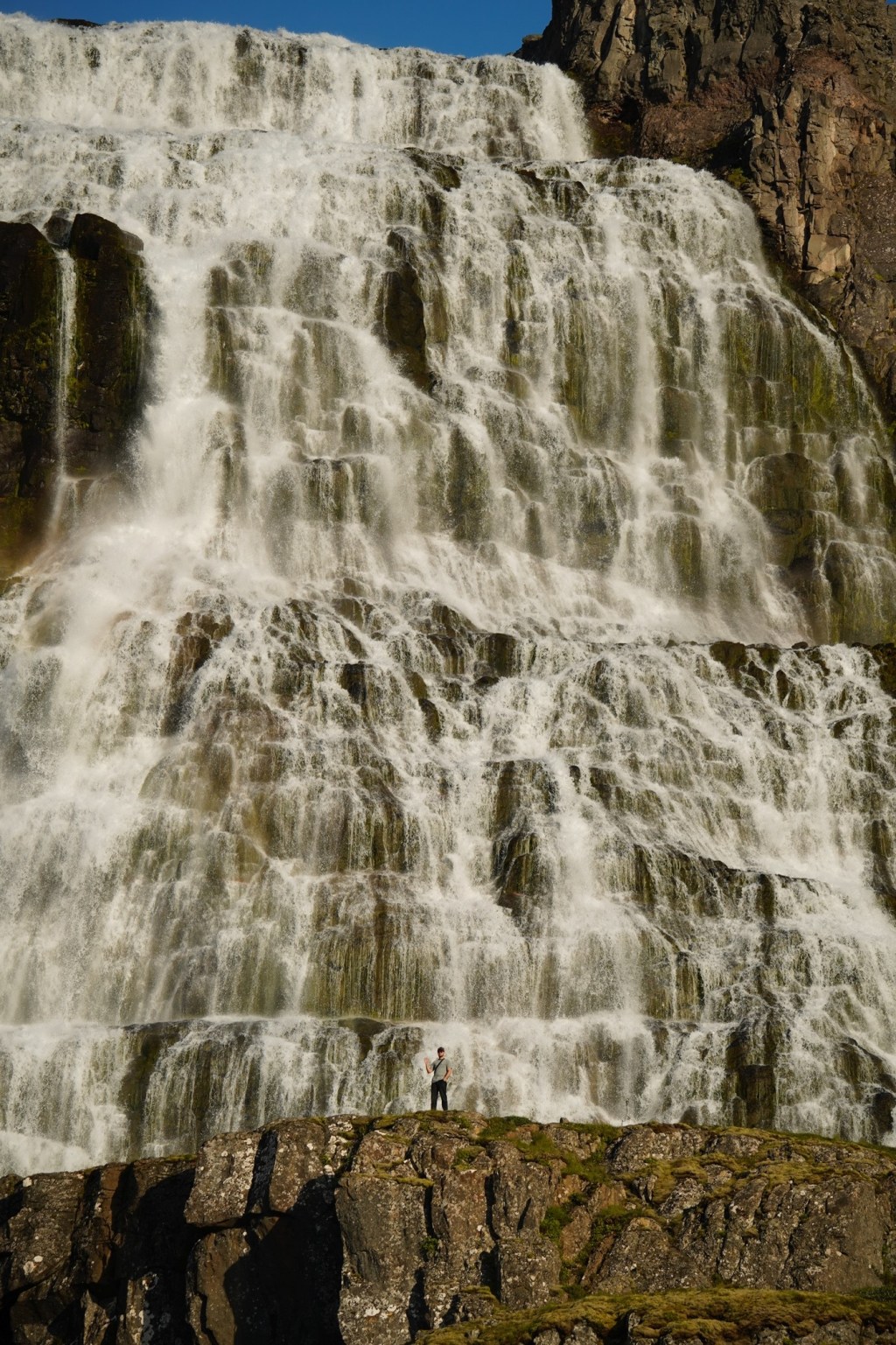
Hello! My name is Jaydon king, and I am doing a Bachelor of Marine Biology. I decided to go on an exchange and used my free electives to study at the university of Iceland in Reykjavik, the capital of Iceland.
I currently live in student housing where I have a shared kitchen but a nice private room with a private bathroom attached. I am paying around 850-900 Australian dollars a month in rent which is a lot cheaper than anywhere else in Reykjavik. They have a gym which is very good and is only 50 AUD a semester that includes an indoor sports hall and a sauna.
Because I am using my free electives, I was able to choose subjects with quite a lot of freedom, 60% of my subjects here needs to be within the natural science department but then I am free to choose any other subjects. My subjects are mainly geology and geography subjects such as map design and natural hazards but I’m also doing some language and tourism subjects too. The teaching styles here are very similar to UTS but maybe a little more relaxed. They use Canvas so it’s very familiar and easy to understand as all my subjects are in English and almost everyone in Iceland can speak English. They have both lectures and tutorials with a few excursions which are often out in the nature. One of the subjects I am doing started with a 4-day hike in the southern highlands which was one of the most amazing experiences I have done in my life.
The university of Iceland is cool as it’s a big destination for exchange students, so you will meet people from all over the world. The university is very good at making you feel welcome as they host many events such as bar crawls and trivia nights, I highly recommend attending these nights as you will meet many new friends. Most exchange students are in the same mindset so while you may go to classes during the week, every weekend there are people going on road trips around Iceland in which there is often space to join. Discovering Iceland is an incredible experience, you will see the most amazing things that you wouldn’t see anywhere else in the world and is truly a unique country, especially if you want to see the northern lights.
If you do decide to go to Iceland for exchange, I do have some recommendations. Iceland is one of the most expensive places in the world so you need to be prepared, getting the exchange loan was crucial to me and I would suggest applying for it. You can sometimes be limited in subjects as there are some only open to third years so if you want a more relaxing subject selection it may be better to go in your third year. You should apply for everything as early as you can, especially for student housing as it can competitive. Getting to Iceland early is a good idea so you have time to sort things out especially as most of you would need to get a student visa before you leave. Some students have gotten jobs here to help pay for some things which can be beneficial as traveling around Iceland can be quite expensive. However, my time here has been amazing, and I am very glad I chose to go to Reykjavik, if you decide to do the same you definitely won’t regret it.