UTS Think Global

Dream. Explore. Discover.

Disclaimer: All blog posts are written by students and do not necessarily reflect the views of UTS staff.

  • Exchange at Universidad de Navarra, Spain

    A little over a month into my exchange semester, I have nothing but good things to say. I am a 4th Mechanical and Mechatronic Engineering student, and am currently studying at TECNUN, in Donostia/San Sebastian, located in the Basque country of Spain, 20km west of the French border.

    As I am a double major student, I only have two restricted electives in my course program. As a result, my subjects are as follows:

    UTS SubjectTECNUN Subject
    Electromechanical Automation (48531)Fluid Power (02163)
    Electric Drives (02067)
    STM90849Prototyping (02164)
    CBK91080Energy Technology (02181)
     Spanish 1 (04103)

    Studying at TECNUN is very different to UTS, as the university is just FEIT students, and thus is only made up of 4 buildings and roughly 1000 students. Therefore, classes are often a lot smaller than UTS and offer a more interactive learning experience. However, as the campus is part of the Universidad de Navarra (based in Pamplona), the facilities at the university are up to date and offer new and unique technologies for use in practical subjects, such as Prototyping (02164). Classes are formatted similarly to UTS, however, with a mixture of lectures and practical sessions for most subjects. Some subjects, such as Energy Technology and Electric Drives, are small enough that the lectures and tutorial-based activities are integrated, rather than being separate timetabled slots as at UTS.

    San Sebastian (or Donostia is Basque/Euskara), is an incredible city to live and study in, and is a great change of pace compared to Sydney. While TECNUN doesn’t have its own dedicated housing, there are a few third-party university housing options. However, I opted to live in a shared flat closer to Zurriola Beach both in hopes to practice Spanish with local roommates rather than other exchange students, and have easier access to the city and beach. Despite living on the other side of the city than university, Donostia is small enough that it is still only a 20 minute bike ride into campus. In terms of living and activities, Donostia is great for someone who likes being social and spending time outdoors, as there is always something going on, with opportunities to go hiking, surfing or playing volleyball, as well as going out with friends. The city also provides great access for travel through Spain and other countries such as France and Portugal by road, or the rest of Europe easily accessed by plane from Bilbao or Biarritz.

    I can’t recommend Donostia enough as an exchange destination for UTS engineering students. It is a great change of pace from Sydney, and offers lots of opportunities to meet lots of people. If you are intending to study here, I recommend getting here a little before your commencement date. This allows you to find accommodation, if you are planning on living in shared accommodation as I am, as well as meet some people before you start the semester. Buena suerte!

    Reece Johnston

    Bachelor of Engineering (Honours) (Mechanical and Mechatronic Engineering)

    Global Exchange Student

    Universidad de Navarra – TECNUN, Spain

  • Exchange at Ghent University, Belgium

    Hi! I’m Olivia and I’m currently on exchange at Ghent University (Ugent) in Ghent, Belgium. I am studying a Bachelor of Software Engineering (Honours) Diploma in Professional Engineering Practice which places me in the Faculty of Engineering and Architecture here at Ugent. I am taking elective subjects at Ugent – as a requirement I need 50% of my courses to be within the Faculty of Engineering and Architecture which has enabled me to take courses outside my faculty including business and history subjects. I am also learning Dutch which is offered at around $100 AUD for exchange students. An exchange student welcome day and a faculty specific welcome was held started which really helped with preparing for the semester and with meeting fellow exchange students. A great bonus was receiving free tokens for fries, beer, and a boat ride around the city which I was quick to spend!

    Adjusting to classes at Ugent was simpler than I expected it to be as all my classes are offered in English. Similar to Canvas used at UTS, we use an online learning platform called Ufora. My classes are a mix of lectures and tutorials and are very interactive and discussion based which has been an enjoyable way to learn and get to know my classmates. The only downside for me if that the classes are 3 hours in length which is a bit long for me, however this does allow us to cover more content and with this I have just one class for each subject per week.

    I’m loving living in Ghent so far. It is a wonderful place for history, architecture, and art, with plenty of churches, historic buildings, galleries, and museums around and is a vibrant and multicultural city where many domestic and internal students and expats live. Because of this it is perhaps one of the best places to live in Europe for an English speaker, and I’ve found that most people speak English very well. Riding a bike is a great way to get around the city and one thing I’ve noticed is that Belgians will bike anywhere, whether it’s sunny or pouring rain (which happens more often than not in Belgium). Another great thing about Belgium is that it is closely located to other European countries like France, Germany, the UK, and the Netherlands, and I’d definitely like to do some international trips throughout this exchange experience.

    I live in private accommodation and pay around $750 AUD per month in rent which is average in Ghent.  The housing accommodation at Ghent University is limited and was not sufficient for the number of incoming exchange students in Ghent, therefore me and plenty others needed to look for accommodation in the private market. My advice for anyone looking to study in Ghent or a similar city would be to apply early to your university and for housing as it is extremely competitive. In terms of the private market, I was shown some websites and Facebook pages advertising places – with these it is important to be wary of scammers. Getting accommodation this way was also extremely competitive – listings can be up for less than 5 minutes before getting an expression of interest and when you live in a different time zone this can mean many missed opportunities. For this I’d recommend being vigilant and having notifications for important pages or contacts. If you know someone that lives near that city, you could also ask them to check out any housing options for you.

    What I have enjoyed most about my exchange experience so far has been making new friends from different countries and faculties. While it has been a mental adjustment with adapting to a new country, school, and home, I have found that the best experiences have come from saying ‘yes’ to things and stepping outside of my comfort zone from exploring cafes and bars in the city to taking weekend trips to other Belgian cities like Bruges and Antwerp. There have been great networks and social programs for exchange students to get involved in such as buddy programs, speed friending, pub crawls and parties which have allowed me to get to know Ghent and my fellow exchange students and for future exchange students, I’d recommend that you look for similar programs to get involved in.

    Overall, I can’t recommend going on exchange enough. Within just a month of coming to Ghent I have started to learn how to live alone, adjust to a new country, culture and university and make new friends and I’m excited over the next 4-5 months to grow and experience so much more!

    Olivia Pham

    Bachelor of Engineering (Hons) Diploma of Professional Practise, majoring in Software Engineering

    Global Exchange Student

    Ghent University, Belgium

  • Travelling to a utopia: Auroville, India

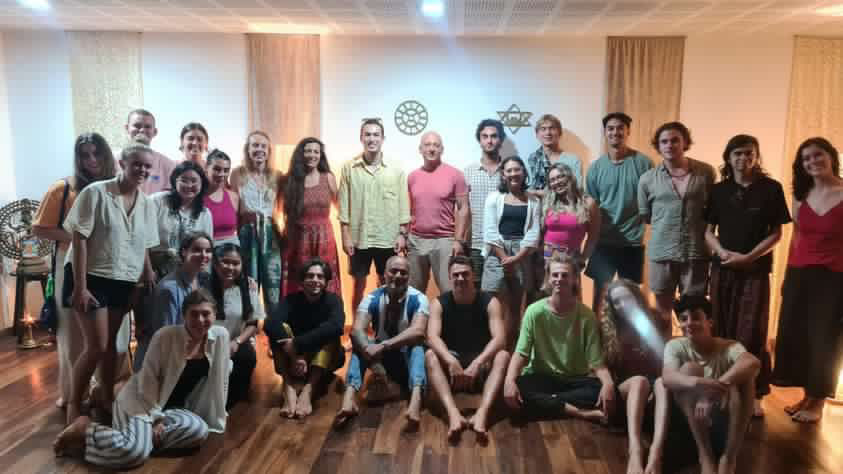
    Do you believe that a society can exist with perfect human unity? Well, I’ve just returned from a community founded on this intention. My month in India was one of the most challenging of my life and one of the most transformative.

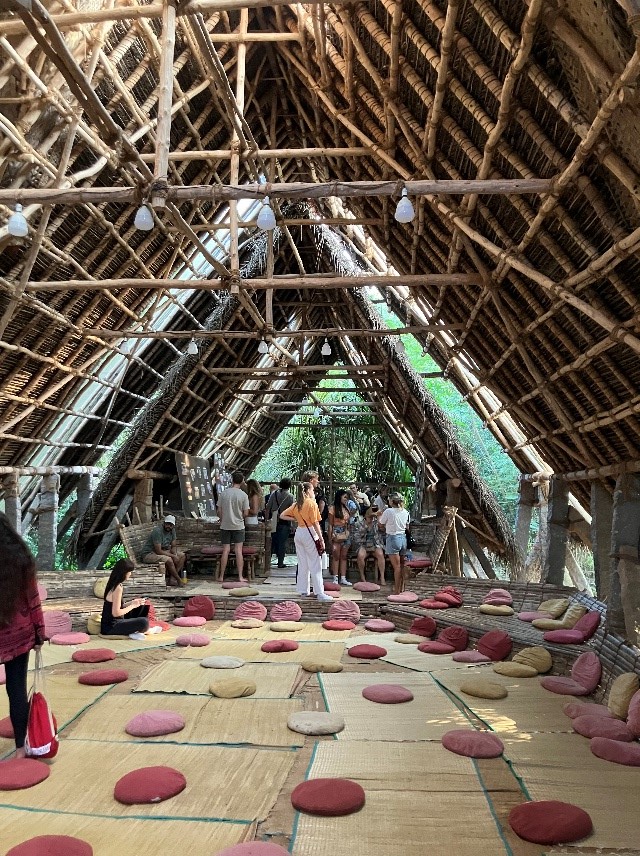
    The Matrimandir (translated as Mother Temple) is the golden temple in the heart of the community, which I admired several times a day while cycling through town. In the heart of the dark dome is a meditation room with a silence so profound I could hear my pulse and feel my thoughts! It isn’t very often in the western world that we find a space that can facilitate that kind of experience.

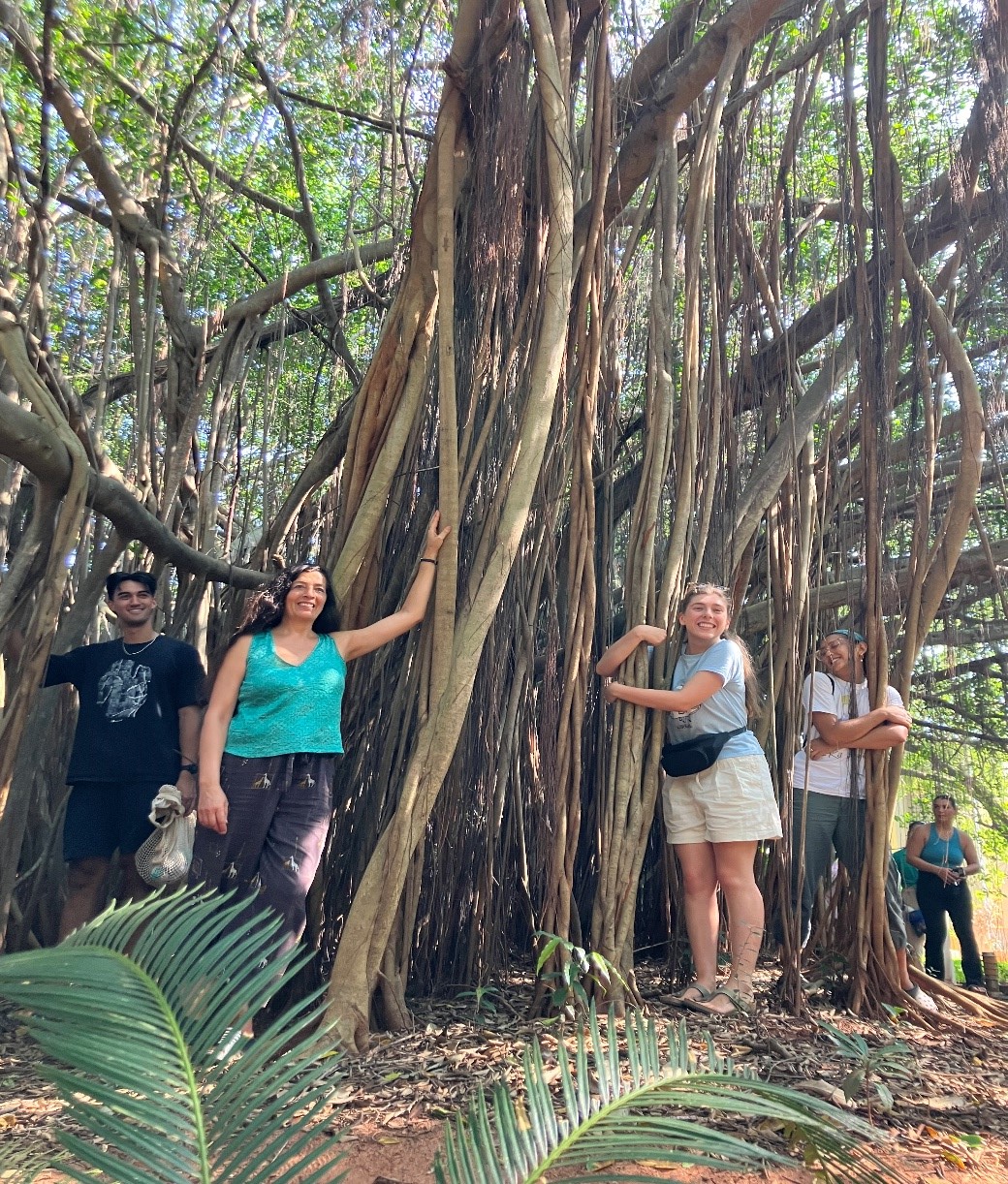
    But the greenery surrounding the Matrimandir was even more profound than being within the globe itself – or so I found. Our lecturer, Bem Le Hunt, led us on a walking meditation through gardens with names such as wealth, life and birth. I remember climbing the tree house in the garden of youthfulness, wondering how the arrangement of plants could inspire such deep feelings of lightness and playfulness within me.

    One of my favourite memories was visiting the vegan community living in Sadhana Forest – an offshoot of Auroville. I joined them at 5 am for stretches and their morning “hug circle”, before cleaning cow pens for two hours, followed by breakfast. They’re well known for some of their more eccentric practices, like living in huts, opting only for composting toilets (aka drop toilets), using human manure – not cow manure, showering under buckets and cooking without much oil or salt. “Character building” is the phrase that comes to mind. As an environmentalist, I was inspired by their water persevering techniques, including the three bucket dish wash system and the thin stream hand wash. I honestly see myself incorporating some of these design elements into my future home.

    During my time in Auroville, there were moments of lull, particularly between activities or when the connection dropped out. I remember how stagnating and painful the feeling of unproductiveness was. But then I started to notice the spacious cushion of boredom become more comfortable. I rested my head on the fact such sensations aren’t ones I have or will often get to experience, and they come with their own creative benefits and insights.

    As a journalist and creator, I loved growing my understanding of utopian thinking and resilience building in complex systems so that I can tell stories that create harmony, not division, in a time of global challenge. This experience has allowed me to challenge ingrained western assumptions making me question how I view work, collaboration and success. I know this experience will add richness to how I capture stories, removing some Eurocentrism and allowing me to be a more thoughtful and empathic storyteller for the rest of my career and life.

    Cogan, Eve

    Global Short Program Student (Faculty-Led)

    New Colombo Plan Mobility Grant Recipient

  • The incredible six weeks in Auroville

    The Auroville Global studio was an incredible and memorable experience that I will never forget. Six weeks in an eco-village in the south of India was a unique opportunity to immerse myself in a new culture.

    We spent time speaking with Aurovillians about the lifestyle and the inner workings of the complex system that is the ‘city’ of Auroville. We visited co-opts, local farms, small business owners and even had the opportunity to hear about Aireville’s history from its original founders and pioneers.

    We visited Sadnah forest, a property in Auroville that houses a congregation of people dedicated to regenerative practices and re forestation. They operate on a zero-waste model that allows them to live sustainably while ensuring that the forest is restored and flourishing.

    We visited Krishna’s farm, a pillar of the community run by a man who left his life as an academic in the UK to dedicate himself to regenerative farming practices in Auroville. We met a man named bill who came to Auroville when it was just a dessert waste land and an ambitious dream for the idealistic. He lives in a house entirely build from recycled materials called the trash Mahal and was instrumental in the development of a process of developing an alternative cashless economy in Auroville.

    We were able to take classes in yoga, pottery, Tai Chi, meditation and awareness of the body that allowed us to connect with the intuitive and unconscious knowledge systems that are often ignored in western societies.

    We engaged in daily meditations and reflective practices both individually and as a group that allowed us to make sense of our experiences in this unique eco-system.

    I had to opportunity to intern with a social enterprise dedicated to ensuring that access to and education on period products was available to everyone. Eco-femme was founded by an Australian and long term Aurovillian, Kathy who wanted to create a sustainable alternative to disposable pads while allowing women in rural India to have free access to their products.

    They hired a team of passionate and dedicated women who travel to schools around India educating women on their options when it comes to sanitary products and as well as the basics of what periods are and what they can mean within different cultural and social contexts. I had to opportunity to engage with my skills set as a journalism student by interviewing these women and helping to tell their story. I was even able to visit their factories and speak to some of the women who have been given employment opportunities through eco-femme that has helped give them financial autonomy as well as flexibility around family responsibilities.

    roux, Emilia Leonora

    Global Short Program Student (Faculty-Led)

    New Colombo Plan Mobility Grant Recipient

  • One summer in Barcelona

    Last summer I was extremely fortunate to have been apart of the Faculty-Led Global Short Program: DAB Global Studio (Spain) – Hydro-eco-urban: Barcelona Study Tour, whereby I was one of 19 students who were able to not only learn about our industry itself but the ways in which practices in Barcelona and Girona went about their projects. As a landscape architecture student, Barcelona was definitely a place to learn insightfully about sustainable practices and different ways in which landscape architects can help preserve such landscapes.

    Being able to distinctively compare Barcelona and Sydney and gather ways in which uprising landscape architects, like us, could further improve Australian landscapes, focusing on the sustainability of projects and the way in which we can improve landscapes in a naturalised way.

    Not only were we able to visit influential practices in Barcelona and Girona, but Louisa King, our wonderful

    Lecturer, was able to allow us to visit and see exclusive landscape projects that weren’t always open to the public, like Vall d’en Joan by Batlle i Roig. Being able to get such insightful knowledge and understanding by visiting such projects and getting guidance from their respective practices allowed us to truly grasp the different management practices that Barcelona, and Girona, take to create sustainable projects.

    In comparison to Sydney, and even Australia itself, Barcelona landscape projects often aim to be sustainable and biodegradable, an example being Roques Blanques by Batlleiroig, whereby the modern naturalised burial aims to be sustainable through the biodegradable elements of their design. By being able to apply such knowledge and understanding to landscape and design projects, we are able to thrive for a truly sustainable way of designing in Australia, through gathering ideas and insight learnt in Barcelona.

    I think the most memorable part of the entire trip had to be making friends and being able to experience such an insightful and engaging once-in-a-lifetime experience with other students in the same course. Being a first year, who usually would not receive such an opportunity, I was extremely blessed to be able to experience such an amazing opportunity with my friends. By travelling and getting to work with older years, it was extremely insightful to get different perspectives and experiences on the course and the industry itself, further engaging my interest and love for this course.

    Faculty-led Global Short Programs are definitely a once-in-a-lifetime opportunity that should not be passed upwhen given a chance to experience because the friends you make and the knowledge you take away from thisexperience is one you will never forget.

    Nguyen, Angela Pham

    Global Short Program Student (Faculty-Led)

    Bachelor of Landscape Architecture (Honours)

  • A sense of community

    It is difficult to summarise a three-week experience into a few short words in a blog post. This experience has by far been the best challenge, learning opportunity and period I have had the privilege to explore. I have been given so many opportunities to take my practise outside the confines of a university lecture hall and experience design and transdisciplinary on a new scale. But not only that, this trip has also changed my perspectives and outlook on life.

    Auroville is an experimental community located in South India, is a unique place that has had a profound impact on the lives of many who visit it. I have had the privilege of spending three weeks there, and it was truly a life-changing experience.

    To paint a picture I visited Auroville in south India filled to the prim with nerves, excitement and questions about what to come.

    The first thing that struck me about Auroville was its incredible sense of community. Despite the fact that Auroville is home to people from all over the world, everyone there seemed to be working towards a common goal of creating a sustainable and peaceful society. I felt a sense of belonging and connection with the people I met there, and this sense of community was something that I carried with me long after I left.

    One of the things that made my time in Auroville so transformative was the opportunity to learn from and engage with people who are deeply committed to spiritual growth and self-discovery. The community is built around the teachings of Sri Aurobindo and The Mother, and there are many opportunities to participate in meditation and other spiritual practices. I found myself delving deeper into my own spiritual journey and feeling more connected to something larger than myself.

    Another aspect of my time in Auroville that had a significant impact on me was the focus on sustainability and living in harmony with the environment. Auroville is home to many sustainable living initiatives, from organic farming to eco-friendly architecture, and I was able to learn a lot about how to live in a more sustainable way. This experience inspired me to make changes in my own life to reduce my impact on the environment.

    Overall, my three weeks in Auroville were an incredibly transformative experience. I left feeling more connected to the world around me, more committed to my own spiritual growth, and more motivated to make positive changes in my life and in the world. I will always be grateful for the opportunity to be a part of this special community, and I hope to return one day to continue my own journey of growth and discovery.

    Voyzey, Isabella

    Global Short Program Student (Faculty-Led)

    New Colombo Plan Mobility Grant Recipient

  • Exchange at Sogang University, South Korea

    Hi all,

    I am now a month into my UTS global exchange at Sogang University – and absolutely loving it! Here I’ll share a bit about my experience so far, and some tips for prospective students coming to Sogang.

    As I’m taking on this exchange as part of my International Studies ICS electives, the courses I’ve enrolled in centre around Korean language and culture. Korean Politics, Social Change, History of Korean Philosophy, and the Mediums of Korean Cultural Modernity are my ‘primary’ subject load. In addition to these subjects, I have enrolled in the KLEC (Korean Language Education Centre) KGP60 language class. This is the only Korean language course offered for undergraduate exchange students, as the other more intensive language courses run during the daytime (and thus, may disrupt your class schedules for ‘primary’ subjects). This is something to take note of if you wish to sign up for language studies here!

    Class times vary from 1-3 hours per class, each held twice per week. The classes are generally like an informal lecture, however some classes are more involved with weekly debate and discussions. The Korean university teaching style overall is quite similar to the U.S., so personally I took some time to adjust to the fast pace! My professors in each subject have studied in the U.S. previously, so it’s really interesting to hear their experiences there and in Korean society. On top of that, the class is full of international and Korean students – there are so many interesting discussions happening comparing our histories, cultural norms, etc.

    A few weeks into the beginning of semester, Sogang University Festival was held. For the whole week, there were different events happening all over campus: Market stalls were selling jewellery, vintage clothes, and pins. Temporary tattoo booths were opened, and you could sit for a 3 minute portrait of you and a friend for only 3000won! Food trucks were selling a wide variety of fast food snacks. The festival concludes with a concert at the end of the night – a tradition that happens in many Korean universities, and is super competitive to see what university can book which famous artists. This year, Sogang was headlined by the KRNB artist Jay Park!

    Life on campus is always thriving and exciting, there’s something new happening every day for you to discover. Sogang famously has cats all around campus that will happily chill with you during lunch or dinner hours. As Sogang is in the heart of Seoul, there’s heaps of options for entertainment and food close to campus as well! One important tip I recommend to future students is before your first day of class, take a walk around the campus. You’ll find shortcuts to get to different buildings that can save you time between classes – especially considering how Sogang is situated on a hill, so there’s a lot of steep, uphill treks you should mentally prepare for! However, the beautiful nature throughout the campus makes it all worth it. There’s plenty of peaceful gardens around campus for you to discover, decorated with Jesuit iconography and historical Sogang figures.

    My time at Sogang University thus far has been fantastic, from the academic opportunities to the people you meet here. If any prospective students have questions about Sogang University or Seoul exchange in general – feel free to reach out!

    Lauren Klugt

    Bachelor of Communications/Bachelor of International Studies

    Global Exchange Student

    Sogang University, South Korea

    New Colombo Plan Mobility Grant Recipient

  • A transformative experience: Trip To Vietnam

    Within 2 weeks of my International Management Field Study to Vietnam, I felt like I had a remarkable moment. This was an opportunity I could not miss. It was an exciting opportunity to gain first-hand experience outside the formal learning experiences in a rapidly developing economy. This was an eye-opening and most rewarding experience of my life.

    City to the Mekong Delta Countryside and Hanoi, I was offered a rich perspective of their work culture and education, including expatriates from Australia. I was extremely loaded with food like who doesn’t love food right. We had the Infamous ‘Ca Phe Sua Da’ (Vietnamese Ice Coffee), Pho, Banh Mi and many more that broadened my culinary horizons.

    One of the highlights was our 2 day Mekong Delta tour. Part of this, I witnessed the flourishing local daily life of traditional houses, floating markets, young kids in uniform, how traditional foods and products are made and most importantly the Út Trinh Homestay that we cycled to. We had the chance to cook special dishes and meet their traditional local family.

    It just gets better and better every time. There were many memorable moments. That included meeting Vietnamese locals in their markets and learning a new skill, bargaining with them, and it surprisingly worked most of the time. Even our amazing tour guide Hoang, who felt like a family that was there for all of us.

    Meeting students from the FTP University was incredible, the visit had an interactive workshop where we played games, learnt some Vietnamese words and tried on their cultural dresses (Ao Dai).

    I was extremely impressed through many of my business visits due to their
    innovative culture that I didn’t believe they had and the strong commitment
    working spirit of Vietnamese people to maintain sustainability and social responsibility. From building a stronger network, amending new friendships while gaining cultural awareness within Vietnam, it has helped me develop valuable leadership and communication skills.

    It was a great experience meeting Vietnamese people, exploring their culture and being able to meet with locals and understanding their hierarchy working structure. If I went back in time, would I make the same choice again? Most definitely! Definitely recommend taking on Global Short Programs to expand your horizons.

    Kylie Ngan My Du

    Bachelor of Business

    Global Short Program Student (Faculty-Led)

    New Colombo Plan Mobility Grant Recipient

  • A Semester Abroad in Denmark

    I am currently studying a Bachelor of Engineering (Hons) – Civil (Structures) and have been lucky enough to get the opportunity to study a semester overseas at DTU in Denmark. Copenhagen is a beautiful city, and the university is situated half an hour out of the city center in Lyngby.

    Academic Life at DTU

    I am taking a mix of direct equivalent and elective subjects at DTU. One subject that is different from my usual courses is “History of Technology”. I am really enjoying this more research-based subject, and we have already been taken on two outings to Museums for the course (Lyngby Open Air Museum and Design Museum Denmark).

    Life on Exchange

    Beyond the academic life at DTU there are a huge range of activities and societies to join, personally I decided to get involved in the women’s Rugby and Climbing – I was very excited to find that there is a climbing Gym a couple of minutes from my dormitory.

    The Orientation week was very well organized, with everyone being assigned groups with a mentor to show us around DTU and Copenhagen. I made my best friends here during that week, and we get together as a group often – just last week we did an international dinner, where everyone brought something from their country.

    Travel

    Before semester, I was able to travel throughout Europe, visiting Greece, Italy, France and Scotland! During the semester there are other opportunities to travel. I went on a university organized weekend trip to the other side of Zealand at the beginning of semester, and I will be able to visit Finnish Lapland on another DTU trip next month. Denmark is situated perfectly for visits to the other Nordic Countries, as well as the rest of Europe, so a weekend or day trip is never out of the question if it doesn’t interfere with your studies!

    For anyone considering DTU as an option for Global Exchange, I couldn’t recommend it more. My advice would be to get involved in the orientation week activities, and as many societies/events as possible. This semester has been one of the greatest experiences of my life, and I’m only halfway through!

    Evie Mort

    Bachelor of Engineering (Hons) – Civil (Structures), with a Diploma in Professional Engineering Practice

    Global Exchange Student

    DTU, Denmark

  • Immersed in Indonesia!

    Thriving. Culture. Exciting.

    Thriving. Culture. Exciting.These three words come close to encapsulating the whirlwind that was our intense two week trip to Jakarta!

    ‘You learn something new everyday’ was something I had heard before and occasionally experienced every now and then as well. But throughout this trip, I was learning something new every moment!


    Whether it be that you can’t flush toilet paper in Indonesia, or that Grab is the Indonesian Uber, or that the Indonesian start-up scene is blooming with small businesses like YCAB Ventures, an Indonesian social impact investing firm that’s bringing meaningful change in the lives of thousands of “Ibu-Ibu”, Indonesian women micro-entrepreneurs, through microfinancing!


    What made it even better was that we had the opportunity to work with YCAB to introduce new initiatives to help them further their cause, which we pitched to them on our last day!

    I immensely respect the importance Indonesians give to all religions. Did you know that in Indonesia, every business day, all breaks and meetings are timetabled around prayer times?


    It astounded me to see the level of tolerance and acceptance of other religions within one area. One part of the city was a buzzing intersection of beliefs – within only a few metres of each other, there was the largest Cathedral in Jakarta, Istiqlal Mosque (the largest in Southeast Asia) and a Hare Krishna Temple!


    I can truly say that I’m so glad to have experienced Indonesia, its people and its culture, which are as beautiful and vibrant as batik, the traditional Indonesian patterned clothing!

    We even met the Ibu-Ibu and visited their businesses as part of our primary research. It was so insightful speaking to them and hearing their experiences – it made me realise how different the business eco-system is in Indonesia.

    And to make our trip even better, we had a couple of Indonesian university students come along with us. They are such amazing people, I learnt so much from them about Indonesian culture and made some great friendships!

    Shreyashi (Shree) Sharma Nagwanyen

    Bachelor of Accounting (Co-op) Scholar

    Global Short Program Student (Faculty-Led)

    New Colombo Plan Mobility Grant Recipient