This year in January I was lucky enough to spend a month studying in Granada, a city in the South of Spain. I attended an intensive language course at the Universidad de Granada, which I found very challenging because I had no experience with Spanish prior to my trip.
Most of my friends laughed when I said I was traveling to Spain to attend classes completely in Spanish. When I arrived, I realised exactly how challenged I was going to be. I met ten other Australians prior to starting classes and learned that all had studied Spanish in some form of another. Even so, I decided to have a go and see how well I could do and ended doing quite well. The first few classes were very tricky, and I had to listen carefully and ask my smarter friends for help with my homework and understanding basic concepts from class. Soon I caught up, could understand most of what was said in class and had a fantastic time.
Over the month, I stayed in a residence in Granada, and visited four cities across the south of Spain: Seville, Cordoba, Malaga, Mallorca, and Marrakech. Our host university took us on many excursions, to the first two of these cities and to the Alhambra and many other attractions in Granada. We often attended these excursions with other international students who had come to study from France, the United Kingdom, and the United States. On Mondays we attended an Intercambio where we talked with students from all over Spain who were learning English, and we were able to practise our respective languages with native speakers.
Our residence also had many friendly Spanish students who invited us out just about every night and made us feel more than welcome in Granada. I had a great time with everyone I met and still talk to many of the students and locals I met overseas.
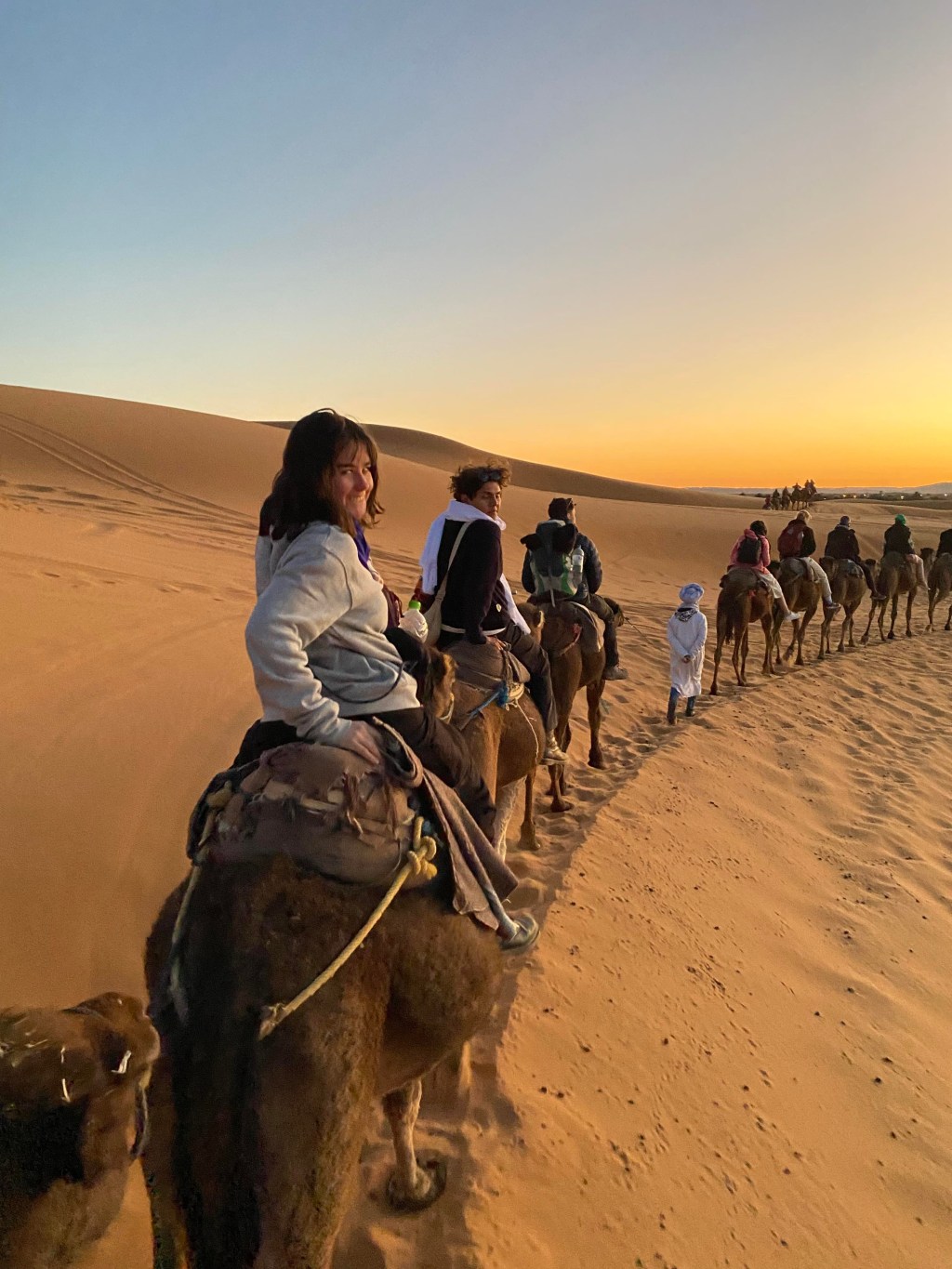
After our course, two of my friends and I visited Morocco for a week. We travelled around the country on a bus with seven Catalonians- unplanned, we met them on the bus. I was unbelievably able to chat to them as we travelled across the north of Africa. We spent nights in towns I still struggle to pronounce and rode camels through the Sahara. For anyone considering a Global Short Program, or who has an interest in improving their Spanish should strongly consider Granada as their place of study.
The name ‘Florence’ has Latin roots, meaning to blossom or to flower and certainly, Florence is a flourishing city. My brief two-week stay gave me a taste of what this unique place has to offer, and I think I would need to spend another six months more before I could truly say I’ve seen it all.
The iconic Duomo, the heart of Florence
Everywhere you turn in Florence, there is something beautiful, captivating or inspiring. As the birthplace of the Renaissance you can walk in the footsteps of the great masters of the Arts and see the everlasting marks they left on the city. One of the highlights of my stay was being able to witness much of this artistic heritage with my own eyes, such as Michelangelo’s ‘Statue of David’, Botticelli’s ‘The Birth of Venus’ and Leonardo Da Vinci’s ‘Annunciation’. Everything in the city has a story, a history and by being there, you become a part of it. I got to experience this history in many unique ways such as by eating at one of the oldest cafés in Europe, Café Gilli, which was the birthplace of the Italian literary revolution and by walking the sites of the ancient Roman walls that used to define the city.
Palazzo Pitti – Art was practically oozing off the walls
And if you ever feel you want a break from the city you are in the heart of the stunning Tuscan countryside. The picturesque landscape is so pristine it makes you feel for a second that you have entered a painting by some great master, because surely such a beautiful place couldn’t be real. If I could redo any part of this experience again, it would be visiting Tuscany as it really was a once-in-a-lifetime experience.
View of Tuscany from San Gimignano
But besides art, and history, Florence is a living city and offers a lot to do. Italian cuisine is at its peak here, so grabbing a gelato or going to a pasta class is a must!
Pasta Class was a hit!
The local landmarks like the iconic Duomo also offer a unique and breathtaking perspective of the city from above and if you head up to Piazzale Michelangelo while the sun goes down, you’ll experience one of the most beautiful and evocative atmospheres as everyone gathers to admire the city together.
Piazzale Michelangelo – An atmospheric view of the city
Truly whatever you plan to do in Florence, it’s worth it!
こんにちは! Hello, I’m Asa, and I’m studying Product Design & International Studies at UTS. I’m currently 4 weeks into global exchange at Sophia University in Tokyo, Japan! Getting here was quite the journey, as I was originally an ICS student set to go on exchange back in 2021 so it’s really exciting to finally be studying abroad.
About my experience here so far:
Orientation
I arrived a week before orientation and had some time to get settled and explore a bit before uni started (that was great, I’d recommend). We had an orientation day where they ran through a bunch of stuff pretty thoroughly, and they also provided us with resources to figure things out if we needed. There was also a welcome party for international students that I was really looking forward to, to make friends, but it was a bit hectic – too many people and too much going on. Enrolling in my course using Sophia’s Moodle system was also a bit difficult, and Moodle itself is really confusing and hard to use…
Studying at Sophia University
This semester at Sophia University, I’m taking the intensive Japanese course, as well as two elective subjects in the Faculty of Liberal Arts; Anthropology of Japan, and Women in Japanese History. I enrolled into free electives back at home at UTS, so choosing these subjects at Sophia was relatively easy. This semester, I have to take 16 credits (standard full-time load, at least 10 hrs/week at Sophia), however, the workload of the intensive Japanese course is far more than the 8 credits that it’s worth (16 contact hrs/week for Japanese, I have a total of 23 hrs/week).
In Japan, universities have set class periods starting from 9am, so I’m pretty much at uni from 9am-3pm weekdays. This has been an adjustment for me, as I haven’t had to do something like this since high school!
For the Japanese course, I took a 3 hour placement exam (so long?!?) at the start of the semester and was placed into an intermediate level class, after having completed a diploma in Japanese previously at UTS. I’ve forgotten a lot of stuff since I learnt it at UTS, so a lot of the content covered so far hasn’t been too challenging, as I’d learnt it before but gotten a bit rusty.
The classes are small and quite engaging – I feel like we receive lots of feedback and attention from the teachers. However, we were warned of the workload of the intensive course and I can say, it’s quite a lot! The class runs from 9am to 12:30pm from Monday to Friday. I have homework due every night at 10pm, three quizzes every week, and ~2 lesson tests on top of that every fortnight. If you really want to study and improve your Japanese, I would definitely recommend it! For those who don’t want to be buried in Japanese, and want to have more time to explore Tokyo or chill, I’d recommend taking the regular Japanese course, however I’ve felt I’ve still had (some) time to explore and hang out with friends outside of study (or just struggle to keep up with the workload…). I’ve definitely had to adjust and have been quite tired from the amount of studying and class time, whilst balancing social activities.
Something to note about classes is that the attendance policy is incredibly strict, especially for the Japanese course. They WILL fail you if you miss more than 15% of classes, and some real complicated stuff about being late = marked absent (but again, some teachers are a bit more chill, and one of my lectures doesn’t take attendance).
My two elective subjects that I study in English are both lectures running twice a week per class, with about 100-150 students. To be honest, I’m not a fan of such a big class as I feel that the teachers aren’t able to give individual students as much focus. For some of the homework I’ve been completing for my anthropology subject, I’m not sure if the lecturer is looking at my work at all before marking it, and we never receive any feedback. In that sense, I preferred the lecture + tutorial style teaching I experienced at UTS, which helped us better understand the content taught, or lectures with teachers that were more engaged student discussions, however I don’t know if that specific to the degree that I studied at UTS.
Facilities and Campus
Sophia University has a campus similar to UTS as it’s on the smaller side, it doesn’t have that ‘big’ university feel (pro or con, up to you), and has some modern buildings and newer spaces. I prefer the smaller campus as it doesn’t take you forever to walk from one side to the other. Sophia is also located in Yotsuya, central Tokyo area, and not far from some popular places such as Shinjuku and Shibuya.
There are several cafeterias and many other food options in the university, however because everyone has the lunch break at the exact same time, the queues can be extremely long if you don’t get there quickly. Lunch is always pretty cheap, averaging about $5 AUD, and there are vegan/vegetarian options available. Recently I’ve been getting a matcha soft-serve from the cafeteria for only 200 yen! ($2.25 AUD) おいしい~
One note though, buy something like a handkerchief/small towel to dry your hands with because at Sophia, other universities, and Tokyo in general, paper towels? don’t? exist? and neither do hand-dryers at uni…maybe it’s a Covid thing.
In terms of social life, there are many clubs or circles here at Sophia. Circles are more casual, whereas clubs are a bit more serious, like sports that compete with compulsory training. There was a day a bit like O-Day, and it was really good time to explore groups that I could join. So far, I’ve joined several circles (but also, you have to pay a fee to join and that varies from group to group) and had many opportunities to make friends and practice my Japanese J as well as meeting other exchange students apart from the ones in my classes! でももっと日本語を話さなきゃ〜
I tried out the wind-surfing club and went wind-surfing for the first time!
Living situation
I’m currently living in Sendagaya in a share-house run by a housing agency called Sakura House. It’s around 20-minutes walking to Shinjuku, and about a 20-minute walk+commute to Sophia University. I chose to live in a share-house, over a dorm, homestay, or apartment, because I liked the freedom, however I still wanted to be able to see and interact with people.
I live really close to Shinjuku Gyoen National Park. It’s beautiful, and I managed to catch the sakura season!
Each of these living situations has its pro’s and con’s and in the end, I chose this place because of its close location to my university and the popular areas in Tokyo, however it’s a bit on the pricier side but still cheaper than living in Sydney. Sophia University also has many dorm options to live in, and from what I’ve heard they’re quite nice and not too expensive, however most of them are a little bit further from the university, there are no dorms on or near campus. The commute can be deadly (packed like sardines) if you’re coming from further, but for me it’s alright as it’s only 2 stops on the train line.
Living in my share-house has been pretty good, all my flat-mates are foreigners living or studying in Tokyo and are quite friendly, considerate, and have given me some great pointers or tips for living, places to visit, etc. The Sakura House agency has also been quite good, helpful, and they respond to any emails I have fairly quickly.
Tokyo Skytree in Asakusa and the view from Tokyo Skytree at night
Life in Tokyo
When I first arrived in Tokyo, I felt like I was dreaming. I’d been wanting to come for so long! But soon after I arrived, I encountered many difficulties, for example, which one out of all these toilet buttons is the flush?!?! That one’s a bit more light-hearted, but some more stressful things include getting around with no data, getting a sim card (I went with Mobal, but they’re a bit expensive – I’d recommend looking into sim cards BEFORE you arrive in Japan), and generally navigating in Japanese. The train transport cost can also really rack up, especially if you switch train lines – I got a student commuter pass to save some money, but they tried to charge me double the price and I had no idea why! Filling out paperwork, applying for a residence card and the compulsory national health insurance, all in Japanese were definitely challenging.
Delicious veggie houtou noodles I had in Kawaguchiko, near Mt. Fuji
I was also vegetarian before, but I decided to go pescatarian in the time that I was here, as eating out can be difficult, especially with friends. However, I’ve made friends here who are vegan and managing, so I guess it’s possible but probably a lot of effort. Half the time I’m not sure what I’m buying at the supermarket, so the Google translate ‘camera’ function can come in really handy!
I haven’t made a bank account here yet as the university provided a help session that failed terribly, so I’ve just been using my bank card from UP bank (Australian) to tap and withdraw money. At 7/11 ATM’s the withdrawal amount is almost exactly the same as the exchange rate, and UP bank doesn’t have any extra fees so it’s really good to use.
In the end, living in Tokyo is still a dream, I’m still taking it all in. There is so much to do and so much to see! Things are unbelievably convenient here, 7/11 and the other convenient stores are amazing, the trains are so frequent, and you can get to so many places. And of course, the food – food in Tokyo is so good and often quite cheap!
I’m really looking forward to the rest of my time here, and I really do think that it’s helped me become more resourceful, take initiative and all that stuff you see online about going on exchange. Once again, I’d 100% recommend studying abroad if you have the opportunity!
Asa Li
Product Design and International Studies
Global Exchange Student at Sophia University, Japan
It has now been 4 months since I have arrived in Hong Kong and started my exchange at City University of Hong Kong and now that the semester is over and my stay is coming to an end, I can’t help but feel down about leaving. Upon first arriving at Hong Kong, I must admit that I was scared. I’ve never lived anywhere outside of Australia and even the thought of going out to buy dinner on my first night in Hong Kong had me terrified. It’s hard adapting to a new place and the addition of a language barrier makes it quite daunting. For the first couple of weeks, I was too nervous to visit the local restaurants and stuck with self-service groceries and food chains, gradually working my way up to purchasing from cashiers and fumbling my way through ordering off Cantonese menus. These initial weeks put me way out of my comfort zone and although my anxiety was through the roof, I’m so glad I put in the time to gain more confidence in my new environment.
I opted out of student accommodation at the City University of Hong Kong (CityU) and decided to find my own apartment in Kennedy Town on Hong Kong Island thus, I couldn’t meet my peers until orientation week. The orientation week mainly consisted of campus tours and group activities run by local students however, the overall structured and purpose driven method that the orientation week was run in made it hard to get to know people during these times. The exchange student Whatsapp chat had many events organise by exchange students and I was able to get to know more people by going out for drinks, going on hikes and dinner outside of school-run activities.
I am currently studying double bachelor’s degrees in engineering and international studies and only took elective subjects for my International Studies degree. These electives are highly flexible and are not too restrictive overall. I decided to study a range of different subjects which included: Chinese Music Appreciation, Cantonese Beginners, Global Social Movements and Architecture and Space in Chinese Culture. All these subjects only included one weekly lecture however, each lecture lasted 3 hours at a time. The classrooms at CityU are mainly large lecture theatres or classrooms with seats with half-desks attached to them. The subjects I found particularly enjoyable were Chinese Music Appreciation and Cantonese Beginners. Chinese Music Appreciation required students to attend 2 concerts performed at the Hong Kong City Hall and I was able to experience Chinese Opera and Chinese Traditional Music which I would have otherwise not thought to attend. Cantonese Beginners was great because our teacher was so engaged and passionate about teaching. My teacher would frequently bring in local foods for all the students to try and the language skills she taught were relevant to my stay and were a lifesaver when I ordered at restaurants and shopped daily. These courses were so refreshing compared to the physics and maths heavy I studied in engineering and allowed me to appreciate Hong Kong’s culture and understand more about the city I was living in.
CityU is in a very central location on Kowloon side of Hong Kong and its close proximity to a metro station makes it so easy to travel to from anywhere. The university itself has an Olympic size swimming pool (Which was getting repaired during my stay L), a huge library, lots of space to study and THE BEST CANTEENS! The food at the canteens is so good, the portions are huge and only set you back around $40HKD on average (~$8AUD). The only reason I regret not living on campus was because I didn’t get to eat at the canteen more often. Overall, the food in Hong Kong is amazing and not too pricey with a huge amount of Michelin starred restaurants that you can visit without breaking the bank. You can also walk down any road and there will be a dim sum stall or walk-in café with some of the best food you will ever eat ready to eat in 5 minutes or less.
CityU is very passionate about physical and mental health and wellbeing and often run small stalls and activities in the common areas to encourage students to take a break and have fun. They also run a number of P.E. courses which are run by professional coaches and allow students to take part in sports at a beginner, intermediate or advanced level. I had just stopped Muay Thai after getting injured in Australia and decided to start a new sport and picked up Volleyball with the Uni. It was extremely competitive finding vacancy in the P.E. course, but I persistently sent emails to the coordinators expressing my interest until a spot opened for me. I joined the beginner volleyball course and had so much fun learning the sport and the basics. I decided I wanted to pursue it further and the Uni was able to provide intermediate and advanced courses as well alongside recreational beach volleyball courses and student run fun games. After the first month, I was playing volleyball with the Uni 3 times a week at times and made so many friends who were mainly local students in the volleyball club.
I ended up playing volleyball with other exchange students at a park near CityU and met locals outside of Uni who played volleyball and started talking to them and ask to joine their game. I continued to play with this group and eventually one of the members of the group offered to teach me how to play for free! Him and his friends were passionate about volleyball and taught lots of local people how to play at a park near the university and I joined them at their local practices which took place multiple times a week alongside other local students from all over Hong Kong. Eventually I was invited to play at their fun games and was able to travel all around Hong Kong playing at different sports centres and parks and meeting people from all age groups and walks of life from Hong Kong. We were able to swap knowledge in Cantonese and English and people openly told me about their lives in Hong Kong over dinner after games and I was introduced to all kinds of local foods, games, and cultural quirks.
This was an unexpected part of my exchange but definitely the part I have enjoyed the most overall. I feel that from this experience I have seen the benefits of putting myself outside of my comfort zone. This mindset led me to experiencing so many more unexpected highlights of my exchange like playing mah-jong and drinking mao-tai with Cantonese locals till 3am in the morning, having a starlit barbecue lakeside under the shelter of two open van boots, and swimming at sunset after hiking across winding mountain paths.
Just a few extra practical tips for any students planning to study in Hong Kong in the future or in Asia in general:
TAKE ADVANTAGE OF THE CHEAP FLIGHTS! While I’ve been in Hong Kong I’ve travelled to Vietnam, Thailand and will be heading to China and Japan straight after my semester is over. Since you’re so close to so many other Asian countries, flights can be under $100AUD if you book at the right time and hostels are cheap, readily available and a great place to meet other travellers and interesting people.
APPLY FOR SCHOLARSHIPS BEFORE LEAVING! Even a year before you intend to go on exchange look for any scholarships that are available from your host uni and from UTS. Scholarships require a bit of effort when writing the applications, but they are worth the time. Not only do they give you a little much needed cash for a struggling student, but the application process will also help you to reflect on the reasons for why you are going on exchange. You are really challenged to evaluate what you want to get out of your exchange and the research required to fill in the applications gives insight into your host university and potential activities you might have otherwise overlooked. I felt more confident approaching my exchange with goals and a purpose which I had outlined during my scholarship application process. For those travelling to Asia look at the New Colombo Plan Scholarship and use the Scholarship search pages at UTS and your host university to explore what they have on offer. You never know what niche you might fill in terms of available scholarships.
APPLY FOR A STUDENT OCTOPUS CARD! Octopus cards are pretty much used for everything in Hong Kong and are necessary for using the metro and useful for paying for anything from groceries to food at the University Canteen. The student octopus card gives students a huge discount when using the Metro and has saved me hundreds of dollars in travel expenses.
BE CAREFUL OF HYGIENE! Tap Water is kind of off-limits in Hong Kong and a lot of my local friends won’t even drink tap water. I bought bulk water from supermarkets and kept it for drinking. Also, when you are at restaurants you will be given hot water or tea before your meal in a cup or a pot. This is not for drinking it is for washing your eating utensils. It is a common practice, and you should not trust the cleanliness of cleaning utensils at any common dining place unless it’s a bit fancier. Its good etiquette to clean the utensils of the older people you’re eating with and pour their drinks.
FIGHT FOR THE BILL! You might not want to pay for the bill, and you may not intend to but if you’re eating out with locals it is normal to fight for the bill. It’s respectful to at least offer to pay for the bill or offer to pay for your part of the meal. If you eat out with the same crowd frequently pay for the bill on occasion as they will pay for you at other times.
BOOK TICKETS FOR TOURIST LOCATIONS IN ADVANCE! There are a lot of people in Hong Kong and the lines can get kind of long. Either try to visit tourist attractions on less busy days or book your tickets in advance to save you from lining up for hours. I booked Disneyland and Ocean Park on Mondays and the longest I waited for any ride was 20 minutes.
BUY FROM THE WET MARKETS! The wet markets sell vegetables, fish, and fruits for much less than supermarkets. If you are planning to cook regularly like I did, it’s helpful to know a few bargaining phrases in Cantonese and understand their numbering system. Arrive early in the morning to guarantee you get the freshest produce and don’t be scared to crowd around the busiest stall as they usually sell the highest quality and cheapest produce. Seafood is sold live, and fruits and vegetables are sold separately to meat, so I felt that these food items were safe to buy however, I did wash them thoroughly when preparing them. As for meat, the wet markets usually only sell pork and chicken. I was not prepared to buy meat from the wet markets as I was unsure of the hygiene standards that sellers had and opted to buy my meat from supermarkets.
JOIN SUPERMARKET MEMBERSHIP PROGRAMS! In the long-term being a member of supermarket rewards apps like Yuu! will offer discounts on so many different food items and eventually discount on your entire grocery haul and even at 7/11s.
PACK LIGHT! It is super humid in Hong Kong. Even during Winter, it was humid and the temperature rarely dropped below 15 degrees Celsius. Pack warm clothes sparingly and only pack a few essentials for the rare case that it gets cold. Bring breathable clothing and not too many as Hong Kong living spaces are generally small due to the compactness of the city and high population.
TRY SOMETHING NEW! I feel like the most memorable moments of my exchange came out of me resisting my introverted tendency to say no to trying new things and forcing myself to say ‘yes’ and just joining in. Don’t get me wrong, it’s always ok to say no when you’re not feeling up to it or just want to rest at home alone but putting yourself out there and being open to trying something new might be the gateway to something amazing. (Use good judgement though… if it’s sus or illegal maybe give it a miss).
Exchange has been an amazing experience for me and there are so many amazing experiences, people and places in Hong Kong which I will never forget. To those who choose to go on exchange in Hong Kong or are undecided on their exchange location, I hope my experience is informative and helpful for you and to those who are still undecided on whether they want to go on exchange, just do it, you won’t regret it!
Ethan Bergan
Bachelor of Engineering (Honours) Bachelor of Arts in International Studies
Global Exchange Student at City University of Hong Kong (CityU)
My name is Kevin Chu, and I am a third-year student, currently undertaking a double degree in a Bachelor of Business and a Bachelor of Science in IT. Truthfully, I didn’t even think to go on exchange until my sister had told me about her experience one day and thankfully, this semester (2022 Spring for UTS or 2022 Autumn for KU) restrictions were eased and I’m in Korea as you might’ve guessed.
Namsangol Hanok Village
Subjects Doing a double degree meant that I had to do all direct equivalents for my credits and whilst this isn’t bad, this meant I did not have any free electives which could be used for language courses, but Korean is not needed for classes as they are taught in English. Subjects are taught twice-a-week with Monday/Wednesday paired together and Tuesday/Thursday paired. In terms of teaching style, I would say its different in that its not split into lectures and tutorials and rather you practice and discuss the content you learn as you go, but at the end of the day you still need to practice outside of class hours. The big difference I would say is the assignments and overall grading. UTS likes to have an assignment one, a group project and then a final exam. At Korea University, there are just more tasks with lower weighting, usually an attendance/participation mark, a few home-works, a mid-term, one or two group-projects and a final exam.
LG-POSCO Business Building
University Lifestyle It has already been one month since I arrived and yet I feel like I have still so much to explore. Just walking around the campus is somewhat motivating to me although that might be because I entered university during the COVID era which meant I had a total of three in-person subjects over two-and-a-half year, so campus life was near non-existent. Anyways, around the campus there are plenty of food options to keep you satisfied, that are cheaper than eating out around UTS. In fact, eating out can cost more-or-less the same as trying to make meals from scratch here especially when you factor convenience. This is particularly true for eating-out Korean foods and trying to make western foods.
Korea University Buddy Assistants (KUBA) are Korean students that can speak English and are a huge part of university lifestyle. They can be your translator, helper, lifesaver but most importantly they are your friends from the get-go. They will setup fun events and weekly get-togethers where you will meet new people from around the world, explore Seoul, eat tasty food, and probably end the night drinking 😊.
There is a lot to do in Seoul whether it be sight-seeing, café hopping, shopping, partying or just wanting to enjoy food. Just research a little and you will not be disappointed.
Bingsu (Shaved Ice) and Mul Naengmyeon (Cold Noodles)
Accommodation
Luckily, I had a friend who was also going on exchange, so I ended up in an Airbnb, which is definitely more expensive than living on-campus however, I’m not a fan of needing to share basics like a fridge and cooking utensils with everybody else in the building. That being said, the dorms are an easy way to create new friends and ideally you aren’t spending much time indoors anyways!
Banpo Hangang Park
Tips
Make sure you have backup subjects because they can be competitive to get into especially Business where classes filled up in less than two minutes
Apply for ARC appointment early before orientation for after orientation as it is the main identity verification used for online services (e.g., food delivery)
Get a T-Money card at the airport/nearest convenience store (opal card equivalent)
Learn the alphabet so you can read at the very least (lots of English words are transliterated e.g., ice-cream = 아이스크림 = a-i-seu-keu-rim
Be open to trying new foods
Be respectful
Forest Deers In Seoul
Anyways, that’s it from me. I hope you find the opportunity to go exchange as it is a truly fun experience and still counts to your degree! It doesn’t have to be South Korea, but it is really nice here.
Kevin Chu
Bachelor of Business and Bachelor of Science in IT
Global Exchange Studentat Korea University, South Korea
Hello! Welcome to my little world of studying at Aarhus University in Denmark. Honestly, where to begin? Exchange has been quite the experience already, with a new academic style, university, and city as well.
I suppose I’ll begin by introducing myself. My name is Anna-Sophia, I am 22 years old, and love the beach, cooking, flowers and hanging out with friends. I am half Australian/half Danish, speak Danish fluently and have always loved Danish culture, their innovative way of thinking and their lifestyle, so thought Aarhus would be perfect for me.
Aarhus is a super cute city of about 330,000 people and you will really get to live an authentic Danish life here. It is also a young city with a massive university life. The average age of a person in Aarhus is 24, so that speaks for itself.
Now I’ll get a bit into how my journey started, uni life, social life and all the practical components associated with this.
Uni Life
I am currently in my final semester of my 3rd year of a Bachelor of Biomedical Engineering (Honours) with a Diploma in Professional Engineering at UTS. I chose electives to go on exchange with, and selected Aarhus University’s Software Engineering Program.
I had done bits and pieces of software and programming during my degree so far and quite liked it, and I did a lot more during my first internship at Inventia Life Science, where I saw the importance of software engineering, skills and understanding to make R&D projects come alive. So, I wanted to give software engineering a go, and here I am!
This program covers 6 subjects (each worth 5 ECTS to make up 24 credit points) and is capped at 10 exchange students. The subjects I am currently doing are Software Engineering, Software Design, Machine Learning in Health Care Technology, Computer Games Technology, Advanced Front-end Development and Project Work. You can find more info here if you’re interested in their content: https://ingenioer.au.dk/en/education/international-programme/software-engineering
The cap of exchange students means that we are 10 software engineering students, from Switzerland, Germany, Poland, USA, Czech Republic, Iceland, and Taiwan who are all doing the same subjects and have the same classes. All classes are taught in English, and with a larger cohort of Danish students as well, so we generally average about 30-40 students per class.
Your timetable gets automatically generated for you, and you can’t control the days you are at uni, or timing of your classes. Lucky me, I got 3 x 8am classes in a row (ouch, I’m not a morning person). We are on the Computer Engineering campus, which includes almost all engineering fields except for Mechanical and Civil who are at ‘Navitas’ campus. It is a great campus with 2 main buildings.
The teaching style is very informal. The classroom environment really encourages people to speak up, engage in class discussion and people will actively tell the teacher mid-lecture if they don’t understand something. I have 1 class for each subject per week, which is scheduled for 4 hours. These normally finish at about the 2hour mark, and then there are exercises you are expected to finish afterwards.
This is great, but it also means that since tutorials aren’t scheduled into your timetable, you really need to keep on top of doing exercises and keeping up with course content in your own time.
Each subject has an exam, and you normally need to do 1-2 hand-ins throughout the semester to be eligible to attend the final exam. The final is a 20minute oral exam, where you have to explain your hand-in, and reasons why you made certain programming choices in the hand-in to your examiner (normally your lecturer) in a conversational like style.
Social Life
The orientation at Aarhus University was great. They had a couple of intro days, which I highly recommend attending just to get to know a couple of people. They have exchange and international events almost 2-3 times every week so there are lots of opportunities to get to know people.
Each faculty at uni has a ‘fredagsbar’ or ‘Friday Bar’. This is basically a bar, hosted by your faculty, that is only opens on Fridays, and it is really common to attend these at Aarhus. Personally, I really like the engineering one (a bit bias, I know), the medicine one and the business studies bar. There are lots of different types of bars and activities, so whilst some might focus more on drinking games, some bars, like the chemistry bar, have board game competitions as well. So, there is something for everyone!
There are lots of yummy cafes, bars, pubs, and restaurants around, and they fit a variety of budgets as well, so you don’t have to break the bank if you do cave to eating out.
Practical Parts – the boring (but important!) bits
When you apply for Aarhus University, you will be asked if you wish to be granted housing. You can select up to 3 types of housing accommodation you like, and you will (most likely because you’re coming from Australia, and they prioritise people who live far away), be given a housing offer. You receive 1 housing offer and need to accept or reject it within 48 hours. If you reject the offer, you will not receive another one. You can also look on the private housing market on Facebook if you wish to rent privately, or do not get an offer.
Once accepted to study at Aarhus University, you will get sent an email by your course co-ordinator who will ask you to specify what subjects you want to be enrolled in. Make sure you respond to that email with your subjects, by the deadline they provide.
You will be automatically enrolled at Aarhus University. Your timetable will be automatically generated, and you can’t change any of the classes. You can change subjects by their specified census date.
After receiving your housing contract, and moving into your new housing, you will need to visit Aarhus Borgerservice at Dokk1 to register your residency in Denmark. You also need to get a CPR number. You need to make an appointment online to do this, and there are specific days the university allocates for new international students, so just find a time on one of these days.
After you visit borgerservice, you should receive 2 cards. You will get your ‘Sysikringsbevisekort’ (a yellow card that states your right to free medical insurance in Denmark) and a Residence Permit Card (it proves your right to reside in Denmark, to travel around the Schengen region, and re-enter Denmark). The cards should take around a month to arrive. If you plan to travel around Europe before your Residence Card has arrived, you must apply for a free re-entry permit. This ensures you have proof that you are eligible to enter Denmark, even though you have a visa. You must apply within 7 days of your travel. Make sure you contact SIRI if you think something has gone wrong with your cards.
The End
So that is all! If you do choose Aarhus, you made a great pick, and that is all from me! 😊
Anna-Sophia Carter Omoe
Bachelor of Biomedical Engineering (Honours) Diploma in Professional Engineering Practice
Global Exchange Student at Aarhus University, Denmark
What subjects are you studying at your university? Are these direct equivalents or electives?
I am studying three subjects at my host university: polytechnic university. I study engineering, but my exchange subjects are all electives from the finance and accounting department.
What are the facilities like at your host university?
Extremely modern just like UTS, it’s a mixture of modern and Polytechnic’s unique red style architecture. Like UTS’s building 1 and building 11. The facilities at Polyu offers both modern teaching rooms, huge lecture halls and small tutor classrooms. It is quite often that you’ll find music performance performed by Polyu students every Tuesday.
How does the teaching style differ to that at UTS?
Teaching style is extremely similar, with both tutorial classes and lecture classes. However, there is more of an emphasis to come to the lecture in person, in comparison to UTS where most lectures are online.
Are you studying something really interesting or different to what you have done before?
I’ve always had an interest in economics and commerce. Coming to Polyu I’ve had the chance to study economics and its logics when we apply it to engineering projects. I am also studying a basic accounting class which proves harder than I expected.
How is life in your host city?
Life in Hong Kong is actually quite similar to Sydney to an extent, due to its colonial history and the fact that Sydney is so culturally diverse it’s hard to not draw similarities to Sydney.
However, the sense of personal space is quite small in Hong Kong, I’ve learned a lot of having a roommate that slept a foot across from me.
Overall life in Hong Kong is quite spectacular, the night life, shopping, everyone can speak and understand English to an extent and the city skylines is almost insane.
How was the orientation/arrival program at your host university?
I missed out on orientation day but the arrival program for exchange student was quite fun. We were introduced to the faculty responsible for us, we had a variety of support including mental support, health care, dental care and a lot of programs with local students we could interact with.
We also played introduction games and have had multiple opportunities to introduce ourselves, our nationality and university.
Housing – are you living on campus?
I live very close to the campus, a 10 minute walk. The housing is provided by The Hong Kong Polytechnic University.
Housing is composed of two rooms and a shared toilet. Each room has two beds and a study desk. Although at first it can be quite shocking to how small the rooms are, it’s a lot of fun when you get to meet your roommates.
What have you found most surprising about your new country/culture?
Some cultural differences I’ve encountered are they stand on the left side on escalators, sharing tables with strangers is very common. Food can be both extremely cheap and expensive.
Due to the limited spaces in Hong Kong people queue up next to each other with very limited spaces in between and was quite a culture shock when I first got here. And on public transport there is no tap off, the opal card equivalent over here covers the entire trip. There have been numerous times where I have paid for two tickets thinking I needed to tap off.
What are you enjoying the most?
Exploring the city and every day I can go to a different place and be amazed by what that specific area offers.
Different cities close to Hong Kong including Macau.
The shopping malls here are quite amazing. I am lying if I don’t say that I don’t enjoy that the most.
Night in Central in Hong Kong and Macau
Any top tips for future students?
Prepare enough cash so you won’t be charged surcharge every time when withdrawing cash.
Always have fun but stay safe.
Go check out the Monster Building, it’s a 1960’s style building with around 15-20 floors but houses 10,000 people!
Monster Building
Zuming Tony Yao
Bachelor of Engineering (Hons) Data, Diploma in Prof Eng Practive
Global Exchange Student at The Hong Kong Polytechnic University, Hong Kong
Hi all! My name is Kelvin, and I’ve been enjoying my exchange experience here at Chuo University’s Tama campus, which takes an hour and half west by train from the city centre. In this blog post, I’ll be sharing my personal experiences with the academic life here, and some of the things at Chuo that I encountered during the last month and thought was interesting.
Let’s talk about my academic life. As part of the exchange program, I was required to take at least 8 subjects that had relevance to my International Studies major: the subjects being Japanese Economic History, Sociology, History, Environmental Studies, and a collection of lectures and tutorials called ‘Global Series’. A weekday would be structured into 6 periods, with each period lasting 100 minutes, and a 10 minute break between each period.
Given that I had learnt from my studies at UTS and heard from my friends that society in Japan is harsher and more serious than it is in Australia, my impression so far was that most of the classes were surprisingly not as difficult and content-heavy as it was in UTS; homework were usually very short tasks (such as writing about the insights gained and thoughts regarding a lecture), teachers had relaxed standards when assessing assignments, and group work consisted of mostly verbal discussion. However, this might be because the faculty I was enrolled in, the Faculty of Global Management, have 90% of their classes taught in English regardless of if you were a Japanese student or an international student. As such, the standards were probably set lower so that Japanese students could understand and pass the subject.
The views of Chuo University during cherry blossom season.
As for facilities, the majority of the classrooms at Chuo University are relatively archaic; many of the rooms are only equipped with a basic projector, TV trolleys with DVD players and a chalkboard. This is in comparison with UTS, where buildings are visually more spectacular and newer, and where the classrooms use newer technology systems to support learning – an example being the bookable group meeting/study pods in Building 2 where students could project and share their content and charge their devices. On the other hand, I would say that the natural scenery within Chuo’s campus was beautiful, especially when the cherry blossoms were blooming. A big difference between Chuo and UTS was the amount of land assigned for student societies (referred to as ‘circles‘) and sport club activities; there were more than 200 student societies and clubs at Chuo University.
One of my highlights so far was joining a circle. If you exchange at a Japanese university, I will definitely recommend joining circles, whether it is something that you are familiar with or something that is completely new; It really is an excellent way to make new friends, practice your Japanese, and learn more about Japanese culture.
Which reminds me of a memorable incident; During the first week of semester, I had thought circles and clubs were the same thing… and oh boy, I was wrong. I happened to participate in a sport club‘s trial event without knowing the difference between the two, and the first thing the club president said to all the newcomers was “Members will be required to come here and practice from 6pm on the dot, 5 days a week. Otherwise, you will be kicked out”. So, here are my two cents. If you are looking to have fun and make friends while not having to commit too much, please join a CIRCLE (サークル) and not a CLUB(ぶかつ・部活)
Hanging out with friends after circle activities.
Oh right, the food! Future Chuo students, you’ll be in for a treat. There is a four-storey school cafeteria on campus dedicated for Japanese food- with each storey being around the same size of Alumni Green. Ramen, rice bowls (don), set meals (tei-shoku), bread, udon, sushi… you name it, they’ll probably have it. I heard from someone that Chuo’s cafeteria was ranked in the top 5 of all school cafeterias in Japan, so if you happen to exchange at Chuo, expect exceptional Japanese food at very affordable prices (you’re looking at $6-8 AUD) and a menu that changes almost on a weekly basis, just because they can.. and to you know…keep things interesting.
But anyways, enough talking… here are some photos of the food I’ve had at this cafeteria.
Food that you can find at Chuo University’s school cafeteria.
And so, I would like to end this blog post. It was fun digging through the last months’ worth of photos and typing this out. I hope it was informational for some of you! Please contact me if you have any questions regarding exchange nivjpn@gmail.com, and stay tuned for the next blog post where I’ll be talking about where I live, and some things that I wished I knew before starting my exchange.
Until next time!
Kelvin Jia Yu Huang
Bachelor of Engineering (Hons) majoring in Software Engineering/ Bachelor of International Studies
The thoroughly enjoyed the program and the opportunity it gave to me to engage with a new culture, city and environment. It was wonderful to work with international, interdisciplinary teams, and be challenged to face the culture shocks and opportunities of the Italian lifestyle and living.
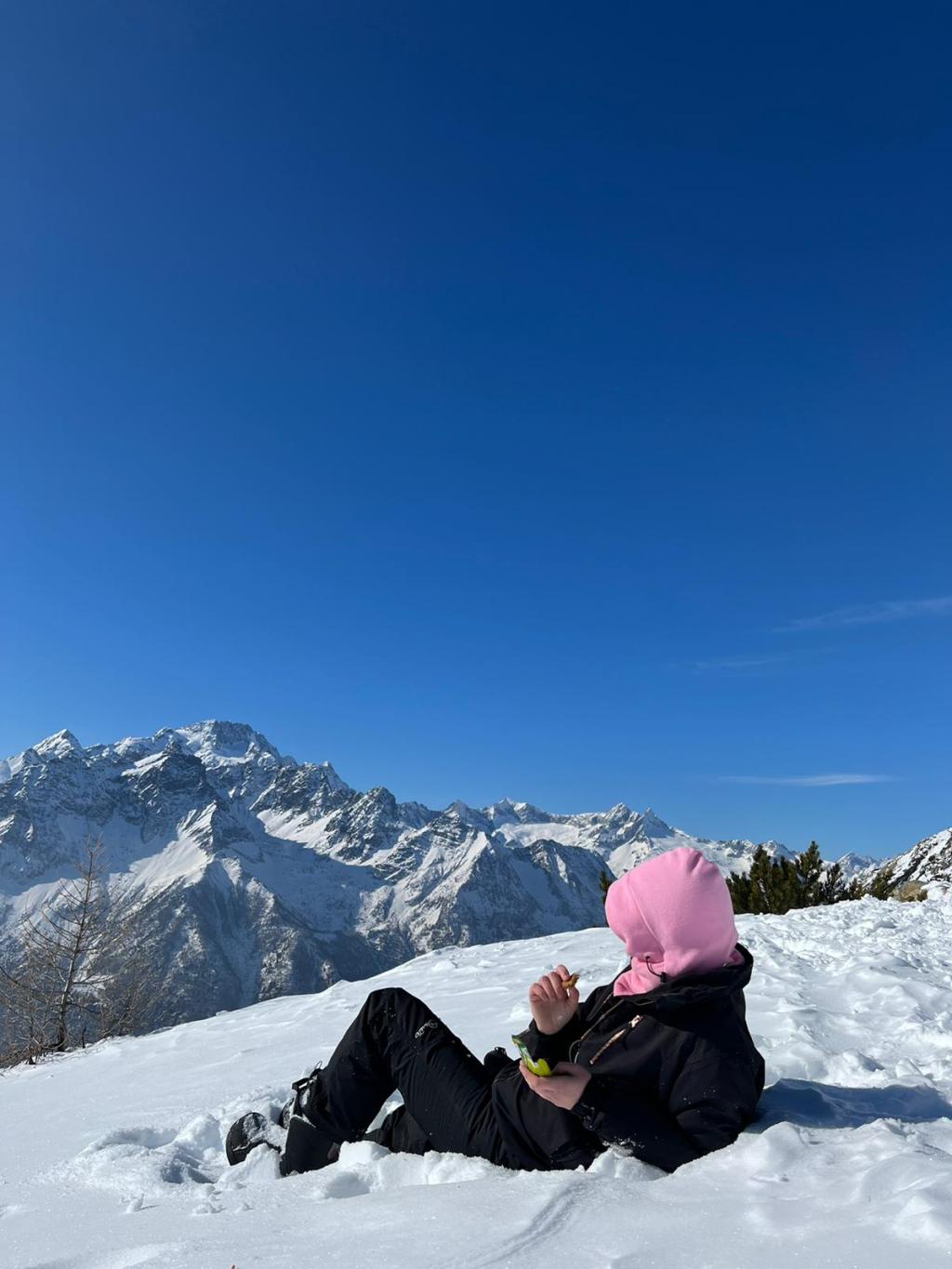
The subject itself was structured well, giving us the time to explore Milan, engage with the other students and build lasting friendships. The program had great foundations in bringing students together and steadily introducing us to the Milanese way of living. I loved engaging with the culture, and learning from a range of different international students, as well as socially exploring the region. We spent the weekend exploring Lake Como, skiing in the Italian Alps, the afternoons at museums, witnessing the Last Supper by Da Vinci, discovering cultural sites, engaging in aperitivo, and exploring Milanese businesses.
The program ran for 2 weeks, exploring the way green management and sustainability is performed in countries across the world. It was a compelling subject, enabling the students with the tools and knowledge to make informed, sustainable decisions in their everyday lives. We completed two day field trips to a Milanese shopping market, vintage store, sustainable fashion start-up and class dinner. It was an enlightening subject, transforming our view into sustainability as a business opportunity and moral obligation to be embraced into the future.
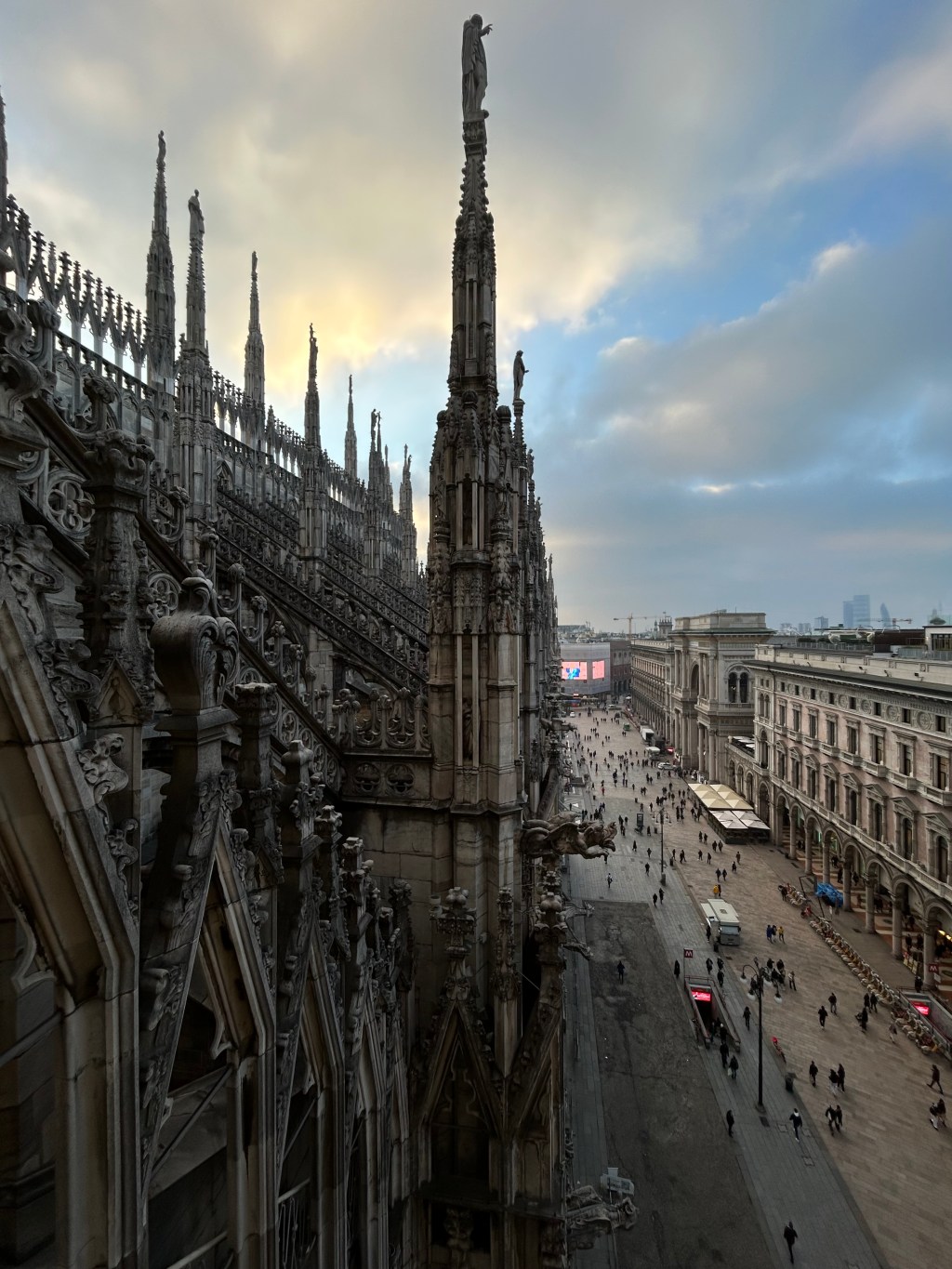
I thoroughly enjoyed the Milanese way of life and living in such a vibrant city. Each afternoon, the class organised an activity or cultural experience. We went to visit the Last Supper by Da Vinci, watched the sunset from the Duomo, shopped till we dropped, went to a range of cultural sites on a walking tour, had my team over for dinner to finish an assignment, enjoyed a few happy hour aperols, and bonded with my international classmates.
We spent the weekend exploring outside of Milan. On the Saturday, we left at 4am for a day trip to the Italian Alps where we went skiing for the day. Then on the Sunday, we took a ferry to Bellagio, Lake Como and treated ourselves to a beautiful lunch by the lake. We attempted to embrace the Italian language and appertivo, a traditional Milanese pre-dinner drink and buffet setting.
This subject and experience gave me a new found confidence and drive to explore out of my comfort zones. I loved navigating the city, language and culture, as well as embracing this experience with a new bunch of diverse friends. I found appreciation for cultural diversity and collaboration, increasing my social awareness and ability to work with different people and teams.
Take the risk – the best opportunities lie just outside our comfort zone!
I was fortunate enough to discover this upon completion of my global short program at Cattolica University in Milan. Before I left, I felt a mixture of emotions; having never travelled internationally I felt anxious as this would be my first foreign experience entirely. At the same time, I was also seriously questioning my choice of degree and career aspirations. However, despite all concerns, there was one thing I was truly certain of and that was partaking in this exchange.
Arriving in Milan (during Men’s fashion week!) all my expectations were immediately confirmed. Fashion and business are innately embedded in Milanese culture. The way in which the locals dressed and carried themselves was remarkable; everything is done with such class and elegance. The culture shock was almost immediate.
Waking up each morning in complete darkness and heading to University in near negative temperatures was definitely no Australian winter morning. Undoubtedly, the hardest part of the experience was our inability to speak the language. This made entering cafes/businesses, ordering food and asking for help daunting and led to some seriously humbling moments. However, a little goes a very long way! Learning basic phrases like hello/goodbye/thankyou and do you speak English? Was greatly appreciated by those with whom we interacted with and enabled us to get by almost perfectly.
The trip as a whole was like a series of postcards. Milan is truly breathtaking. From climbing the Duomo, to dinner in Navigli and of course my personal favourite – a day in Lake Como. There is so much to do either in or within a short distance from Milan. Once you have organised a pass / acquired tickets, the public transport system within the city is inexpensive and super-efficient.
Within a matter of minutes, you can move across the city-centre and the high-speed bullet trains make visiting other Italian cities too simple to skip. It’s also extremely hard to come across a bad meal in Milan. Once you’ve eaten your body weight in pasta and Luini panzerotti, be sure to check out the other cuisines on offer and visit up-scale European McDonalds (it’s no Maccas).
I could not recommend completing some form of exchange, short or long, enough to everyone. It’s the perfect opportunity to see the world whilst you’re still young and experience a different culture and lifestyle. You’ll make memories that last a lifetime and grow as an individual in various ways, returning home with a greater zest for life.