UTS Think Global

Dream. Explore. Discover.

Disclaimer: All blog posts are written by students and do not necessarily reflect the views of UTS staff.

  • Neon nightlife with Sophia

    Initially, I have been contemplating about doing an exchange to Japan and have made the decision not to. During my final year I have decided that I would like to do an exchange as it would be a once in a lifetime experience I will ever be able to come here as a student. I am glad I have come here to fulfil my dreams and enjoy this wonderful adventure in this beautiful country.

    Shinjuku Toho Cinemas

    I started my exchange with a short holiday to explore the biggest city in the world. I started my journey by going to tourist locations like Asakusa and Meiji Temple during the day to sightsee. Food in Japan is delicious and there is a large range of food everywhere making it a dilemma to decide what you should try next. Finally the best part of Japan is the beautifully lit streets during the night making it a sleepless city. There is just so much to explore!

    Asakusa Temple

    Dorm at Sophia Soshigaya International House

    When I first entered my dorm I was welcomed by my other students known as the Living Group Leader (LGL). They are volunteers to help with managing the dorms, helping students and create fun activities for other students in the dorm to join. It was straightforward and easy to enter the dorms, while they help ensure everything in your room is ready for you. Overall, it was a pleasant experience with the warm welcoming from the LGL and the dorm administrators.

    After you have settled in at the dorms you will have an orientation, which will explain some helpful tips and laws to ensure you have a safe and wonderful time. They will also help you go through documentation in Japanese to get an ID card and insurance during your stay in Japan.

    From Sophia Soshigaya International House, it will take about one hour to travel to Sophia University with public transports. It is recommended to get the commuter pass as soon as you are given the opportunity to do so. It will not only be saving you a lot of money travelling back and forth, you will be able to go to any station in between with a commuter pass.

    Shibuya Scramble

    University life with Sophia

    In my first few days off at my host University, I have been given the opportunity to learn how different the University is compared to Australia. The first thing I noticed was a high pace environment, because classes at Sophia are in periods leaving you time in between to have lunch or prepare for the next classes. After classes are finished many students rush to the cafeteria to get a hold of the cheap lunch available, so try to go to the cafeteria as soon as possible. My overall experience here feels very similar to going to high school in Australia, which is motivating, fast pace and fun.

    Cafeteria Food in Sophia University (Curry Rice)

    Recommendations before arriving in Japan

    Since there are lots of fees in Japanese banks and there are many requirements you have to meet to make a bank account, I recommend you make a Global Currency Account such as Citibank or HSBC. Since there is no fee when withdrawing money from an ATM in Convenience stores. Similar to the banks, sim cards in Japan are extremely difficult to get, so I recommend making a sim card with Sakura Mobile before arriving. Sakura Mobile has plans specifically for long term stay in Japan as a foreigner, which really helped me with my travel and it is extremely easy to apply. Finally, it is always important to stay safe while travelling!

    Chi Yiu Jason Lo

    Bachelor of Information Technology

    Global Exchange Student at Sophia University, Japan

    New Colombo Plan Mobility Grant Recipient

  • Summer at Vancouver Island University

    I undertook a Global Short Exchange Program recently over summer at Vancouver Island University to study Forensic Psychology. I was very excited by the opportunity to study at a university overseas and to gain a perspective of another country’s university lifestyle, and Canada did not disappoint!

    I undertook a Global Short Exchange Program recently over summer at Vancouver Island University to study Forensic Psychology. I was very excited by the opportunity to study at a university overseas and to gain a perspective of another country’s university lifestyle, and Canada did not disappoint! While it was on the colder side and a bit wet being that it was the middle of winter in Canada the program still allowed us students to make the most of our time there. Whilst studying our Forensic Psychology content, we went on a variety of field trips, such as to Victoria, the capital of British Columbia, to Mount Washington for skiing and snow tubing, and to the Malahat Skywalk which had incredible 360-degree views of the water and surrounding bushland below.

    Amongst all of the exciting excursions, the program I was participating in also educated us on the social and political issues British Columbia is facing such as increasing levels of homelessness and addiction illnesses. We were able to see first-hand how these issues are playing out in Vancouver Island and also what the government and the communities are doing to combat them.

    While the content of the Forensic Psychology course was challenging at times, being that I had never undertaken study of a psychology subject before, it was very interesting and engaging as we learned about topics such as criminal profiling, false confessions and the unreliability of eyewitness testimonies. As it was a condensed course, fitting two assignments and two exams in to just under 4 weeks was stressful, however seeing the study payoff with good results is always rewarding – it helped too that I enjoyed learning about the content!

    As part of the program, CIS Australia, the program facilitators, paired each student with a host family throughout our stay. I was extremely fortunate to have been paired with a couple (and their 6-month-old puppy Fergus!) who were two of the most welcoming and kindest people I have met. They went out of their way to show myself and my housemate the best of what Vancouver Island had to offer and we both felt like part of their family by the end of our stay.

    I have also made lifelong friends throughout my Global Short Exchange Program in Vancouver Island and cannot wait to reconnect with them all either in Australia or maybe back in Canada one day.

    McKeand, Alayna

    Global Short Program Student 

  • Explore and Experience Barcelona

    I had never travelled to Barcelona, Spain. Hence I was especially interested in going on this studio tour to explore and experience a different city.

    Travelling with my university friends was an incredible experience. We also travelling with the years below and above which was really lovely to meet others pursuing the same degree. In Barcelona we visited a few projects that were complete and under construction which was interesting to see the process of studios designing and developing in the city. As a group we went sight-seeing which was nice to have some leisure time to explore and experience the socio-culture of the city in addition to going on field trips to multiple studio projects. We saw places such as the Moco Museum, Park Guell, La Sagrada Familia, beaches.

    In regards to visiting studio projects, the projects in Girona were my favourite.
    We visited the Cap de Crues project and traversed through the rocky landscape which was surreal. The views were spectacular and sublime. Exploring the walk was a really lovely outdoor activity to do when visiting the coast – It was a great way to explore the Mediterranean coast. Staying and visiting the small quaint towns of Girona and Portbou, respectively, was amazing. The experience of seeing the everyday life of these small towns was really nice. We stayed in Girona for three nights which was the perfect amount of time to spend to explore the small town.

    I really enjoyed exploring Barcelona and Girona with my cohort. Throughout the tour I learnt so much about the city and how studios design for their society. Sight-seeing was a rewarding experience as I got to see a different style of architecture and design of significant buildings and parks that reflected the culture of the city and town. I really appreciated taking a subject that allowed me to see how a different county lives its day to day life and what other cities do to improve their landscapes.

    Paul, Anna Sanjana

    Global Short Program Student (Faculty-Led)

  • A wintry escape to the south of Spain

    In January of 2023, I was fortunate enough to fly off to Granada in the south of Spain for a short language intensive course at la Universidad de Granada.

    The classes at the Centro de Lenguas Modernas were incredibly engaging right from the start. Every weekday we had four hours of classes in the morning, with the time split between two teachers who swapped over during our morning tea break. The chance to learn from two different teachers was invaluable, as each provided a different perspective on the language, with differing styles of teaching keeping us on our toes.

    Having the opportunity to spend four straight hours using only Spanish forced us to keep focused and find a way to communicate our ideas, even if we didn’t have the words to express ourselves yet. Most of the classes had a range of students from different countries, with my class having about half of the students from America, half from Japan, and an Italian student and myself. As such, we only had Spanish as a means of communication as not everyone had experience in studying English. This turned out to be such an asset, as it is often far too easy to rely on speaking English when surrounded by English speakers.

    That’s my number one tip for any students planning to go on an international experience: surround yourself with students who don’t speak English as a native language so you can focus on your target language. I also found this levelled the playing field, as we all had similar levels of Spanish, and all felt comfortable making mistakes or tripping over words.

    Outside of the classroom, we had various tours and excursions planned for us, allowing us to learn more about the history of the city and the surrounding area (plus we didn’t need to do much organising of tours ourselves!). The tours ranged from visiting la Alhambra, which is an absolute must-do if visiting Granada. The history of the city is so rich, and it was fascinating to see this incredibly well-preserved aspect of Islamic culture. We also visited nearby cities including Sevilla y Córdoba, which gave us all further insight into the history of the area and how things have changed over previous centuries.

    Perhaps the most interesting part for me related to the cultural aspects of Spanish cuisine, with almost all dishes including some sort of meat. This was pretty tricky for me to deal with as someone who doesn’t eat meat, but after learning about some of the history of Spain I could see how changes in the ruling power of the Iberian Peninsula over the last millennia still influence so much of Spanish food and culture.

    I cannot recommend visiting Granada enough. If you have the opportunity to study there, or ever find yourself travelling through Spain, definitely book in a few weeks in the south of Spain.

    ¡Que tenga un viaje Seguro y feliz!

    Peter Rugg

    Global Short Program Student 

  • In January 2023 I was lucky enough to be chosen to participate in a study tour one of my favourite places in the world, Japan.

    The tour was structured with daily organised activities, but all accommodation, food, travel, and activities in your free time were self-guided. Figuring out how to survive on my own in a foreign place and coming to understand things like the JR and metro systems in Tokyo,(which seem nightmarishly complicated at first) granted me a sense of independence which I have really come to appreciate, as I now feel greater confidence in myself to travel solo in other countries too.

    Across the cities we visited, we stayed in several accomodation typologies, such as microapartmentsin Tokyo, traditional machiyas in Kyoto, ryokans in Kanazawa, and capsulehotels in Fukuoka. It was interesting to discover the inhabitation of Japanese people fromancient to modern, and how the layout of their dwellings often reflected unique culturalvalues and situations of the time. The tour also took us to the headquarters of specificDesign firms, such as Nendo; the company that designed the Olympic Torch for Tokyo2021. Getting to experience such unique and normally non-accessible spaces was anincredible privilege.

    The day we visited Nendo was also the first day we saw snow on thetrip, which resulted in the group having a snowball fight and building snowmen together.Other renowned works we visited included the famous Art House projects, Yayoi Kusama’syellow pumpkin, Tadao Ando’s Chichu Museum and the immensely stunning Teshima ArtMuseum.

    There are so many little highlights of my time in Japan that I could write about, like tryingall the convenience store snacks, meeting otters at an otter cafe, and bike riding on the ArtIslands, but one of the most personally surprising was staying at a temple in Koyasan; amountain village highly significant to Japanese Buddhism that is accessed via cable car.We stayed as a group in traditional tatami rooms, hosted by the monks who lived there,and were treated with the most extravagant vegetarian meal I’ve ever eaten as well aspartaking in a Japanese Buddhist morning ritual.

    The amount of places we visited within only two weeks was insane, and many of them, like Koyasan, were places I probably never would have visited otherwise. While this meant hours of travel on some days, it actually added to the experience; the time spent flying through the countryside on Shinkansen and eating delicious ‘ekiben’ were actually some of my favourite parts of the trip.

    As someone who would usually only visit the big cities like Tokyo and Kyoto, and generally prefers ‘modern’ Japan over traditional, the trip really showed me the value of stepping out of usual boundaries; exploring the many facets that a country has to offer and opening yourself to experiences that you normally wouldn’t think to do, because they might just subvert your expectations and become some of the best memories.

    Anderson, Claire

    Global Short Program Student (Faculty-Led)

  • Exchange at the University of Hawai’i

    My name is Luca Pearce and I am studying a Bachelor of Communications (Journalism) / Bachelor of Laws at UTS. I decided to go on exchange to the University of Hawai’i at Manoa as a part of my Journalism degree for the Spring Semester and am currently living in Honolulu!

    I am really enjoying my time here in Hawai’i! There are so many things to do and see; from amazing hikes to picturesque beaches and eating poke bowls on the sand. When I first arrived, Manoa International Exchange organised sessions to teach exchange students about the cultural differences and provided recommendations on food and things to do. These sessions were a really good opportunity to meet other exchange students, and I was able to make some of my closest friends here! Living here for the semester has allowed me to really learn about Hawaiian culture and experience what it is like to live on the island. I am living on off-campus student housing (Hale Mahana) in an apartment near the university. It is insanely expensive to live in Honolulu and I am paying $1664 AUD each month to live in a shared room.

    I am doing two restricted electives; American Studies and Hawaiian Studies, and two direct equivalents; Reporting and Journalism History and Trends. The classes here are more similar to Australian high school with weekly assignments. I have especially loved my Hawaiian Studies class as it has taught me so much about the culture and language, and I believe it is a responsibility of those visiting to learn about the history and treatment of Native Hawaiians.

    I choose my classes to be mostly in the morning, so in the afternoon (if I am not studying) I’m able to go on hikes or go surfing at Waikiki. Hawai’i is so unique in its environment so there are always things to do! I have been lucky enough to go to some of the other islands including Maui and Big Island, which has been amazing, and the flights are pretty inexpensive!

    If you decide to go on exchange to Hawai’i I definitely have some tips. It is very expensive to live here, one of the most cities expensive in the United States, so I would recommend coming prepared with savings. I applied for on-campus student housing but unfortunately was rejected, so I had to find alternate accommodation. Definitely look into housing earlier as it is really competitive here. There is sadly a bit homeless population here which was a bit jarring at first, but they don’t tend to bother you much. The university gives you a free bus pass that gets you around the island. It’s super easy to get around Honolulu with it but if you want to go to further it can be helpful to have friends with cars. Attend the football and sports games here! As a student you can get free tickets and it’s crazy to see the cheerleaders and marching band; it really is like High School Musical. I have absolutely loved my time in Hawai’i and I would 100% recommend to come on exchange here!

    Luca Pearce

    Bachelor of Arts in Communication (Journalism) Bachelor of Laws

    Global Exchange Student at the University of Hawai’i at Manoa, United States

  • ACICIS Public Health Tour, Indonesia

    Last summer, I participated to the Public Health Study Tour, a program organized by ACICIS, the Australian Consortium for In-Country Indonesian Studies and supported by the Department of Foreign Affairs through the New Colombo Plan Mobility Grant, of which I am a recipient. I wanted to complete the subject “Professional Placement” in a way I could totally dedicate all my time and attention to learning and applying all the acquired knowledge built up throughout my degree in relation of population health in the Indo-Pacific region. I had the chance to making sense of my years of learning and at the same time had a cross-cultural experience. I could not hope for a better way to complete the Professional Placement subject required in the final year of my Bachelor.

    During these two weeks tour, I had the opportunity to attend seminars on topics related to public health issues, as well as go on field visits. Participants like me were invited to learn about the Indonesian public health system, health policies, understand the multiple health challenges faced by the population in the very complex Indonesian context, but also learn about the strategies and interventions in place to address the challenges.

    I spent one week in Jakarta and one week in Yogyakarta. Our days were busy. We did not stop! The two weeks were packed with seminars, field trips, Bahasa classes, pre-readings and assignments. Dealing with tight schedules was challenging. My days stretched from 5.30am until 10pm (if not later) because I incorporated daily workouts to keep physically and mentally healthy.

    I have so many highlights: from the time spent with our local peers, to the food safari-kind of challenge that I happily took on my own. But my top highlight was the field visit to the World Mosquito Program in Yogyakarta, where I learnt about the innovative strategy in place to fight dengue fever, using Wolbachia-infected mosquitoes. Truly fascinating and of a great ingenuity.
    The initiative works towards protecting the community from mosquito-borne diseases using the Wolbachia method. The trip was memorable as I volunteered to feed mosquito offering my forearm, letting hundreds of “farmed” Wolbachia-infected mosquitoes feasting on it!

    I am still amazed by the kindness and generosity of the Indonesian people who accompanied us, ensuring everything run smoothly. My gratitude goes towards the health professionals, NGO representatives, academics, logistics people, local students, who contributed to my learning.
    I had a great human adventure. None of the participants knew each other. All were coming from all over Australia, all of us were in the mindset of letting the unknown in. I am grateful I had the opportunity to have an amazing cross-cultural experience. It is confronting to realize how little I knew about one of our closest neighbours…Such an eye-opening journey.

    I encourage everyone to embark on an adventure during their studies, whether it is Indonesia or another country. You’ll be left fulfilled, inspired, and smarter!

    Linda Benyunes

    Bachelor of Health Science

    Global Short Program Student – ACICIS Public Health Study Tour, Indonesia

    New Colombo Plan Mobility Grant Recipient

  • Exchange in Milan, Italy

    Are you considering a global exchange as part of your degree at UTS?  Ever wanted to experience a new country, city, and culture from the perspective of student?  If this sounds like you then keep reading for further insights into what a study abroad experience can bring, as well as my personal tips and recommendations on planning your global exchange at UTS. 

    I am currently living in Milan studying at the Universita Cattolica del Sacro Cuore (Cattolica).  Cattolica has provided me with an amazing study abroad experience so far, providing their exchange students with an international curriculum that not only teaches all subjects in English but also provides topics of international interest to their students.

    I was given the opportunity to complete 6ECTs through a two-week intensive Italian language course within the university before the official semester commenced.  This left me with only 24 ECTS left to complete throughout the semester which I am obtaining within the international curriculum.  My subjects cover Italian Food and Culture, Fashion Markets and Luxury Business Insights, all topics of popular interest for foreign students living in Milan (the fashion capital of Italy). 

    Here at Cattolica I have personally found the study workload to be significantly less than that of a regular semester at home.  However, I believe this is due to my participation within the international curriculum only, designed for international students living an extravagant lifestyle of weekend travel and social weeknights.

    Life as an exchange student has been extremely social, exciting, and educational.  When it comes to meeting new people and making new friends you really do get out what you put in.  Almost all other exchange students are open to friendships and expanding their social circles and there are plenty of organisations, promotions and planned events designed to bring foreign students together.  I have found that you learn just as much, if not more outside the lecture halls when living abroad, with each day providing new opportunities and experiences for growth.

    My key tips to any future students planning their exchange would be to gauge what you are really hoping to achieve from your time abroad.  Do you want to take this opportunity to travel as much as possible?  Do you want to immerse yourself within the city that you are studying in completely? Or are you perhaps hoping to just have a good time and social life?  Knowing what lifestyle you want to live can really help you choose what city to study in as well as what subject to build into your timetable. 

    I would also highly suggest doing a lot of self-research into your host country, city, and university as UTS only provides broad information on the planning process, due to each student’s requirements being highly unique depending on their destination. 

    Finally, decide and start arranging your housing and visa’s ahead of time.  This will save you a lot of stress and provide you with a solid foundation to build the rest of your exchange requirements upon.

    I hope this blog post can you help you in your decisions and planning and wish you all the best on your UTS Global Exchange.  

    Rohan Ball

    Bachelor of Management Bachelor of Creative Intelligence and Innovation

    Global Exchange Student at Universita Cattolica del Sacro Cuore, Italy

  • Dwelling in Japan’s Cities

    My 15-day study tour was undertaken with a class of Architecture students to look at the dwelling in Japan’s cities with a clear binary logic of the public, private and in-between spaces. With total immersion into the experience of the Japanese Urban condition. We studied distinct dwelling conditions and types and the critical micro studies within these spaces.

    Straight off the bat and on my first time travelling alone, I was full of mixed emotions. My nervousness and excitement constantly battled each other as so much was happening in the first few days, but looking back at it now, I wouldn’t trade it for anything.

    I found my accommodation relatively easy, and I surprised myself with how easy it was to catch the train in Japan, given how many different train lines ran through like a hyper-complex network that seemingly worked perfectly. After settling and dropping off my bags, I took off into the streets of Shinjuku for a bite to eat for dinner and found the most amazing little restaurant that served Takoyaki, Gyoza and a noodle dish. Absolutely delicious, and what surprised me the most was how cheap it was!

    And with good and well-deserved sleep, we were straight into the program, where we were introduced to 10 locations across Japan, including; Shinjuku, Koenji, Shibuya, Shimokitazawa, Kanazawa, Koyasan, Kyoto, Shodoshima, Naoshima, Teshima and Fukuoka by our team. We explored the urban characteristics of these areas from the streets, understanding and studying the differences between Western and Japanese cultures.

    Throughout each destination, we were lucky enough to get the opportunity to walk through the types of housing within Japan, which included the typical Tokyo apartment, Share houses, Machiya Houses, Special type houses and Externally influenced houses. What struck me the most was how I felt walking through Japan and knowing the importance of culture. Yet I discovered an absence of any heritage laws to prevent the loss of traditional spaces within Machiya houses.

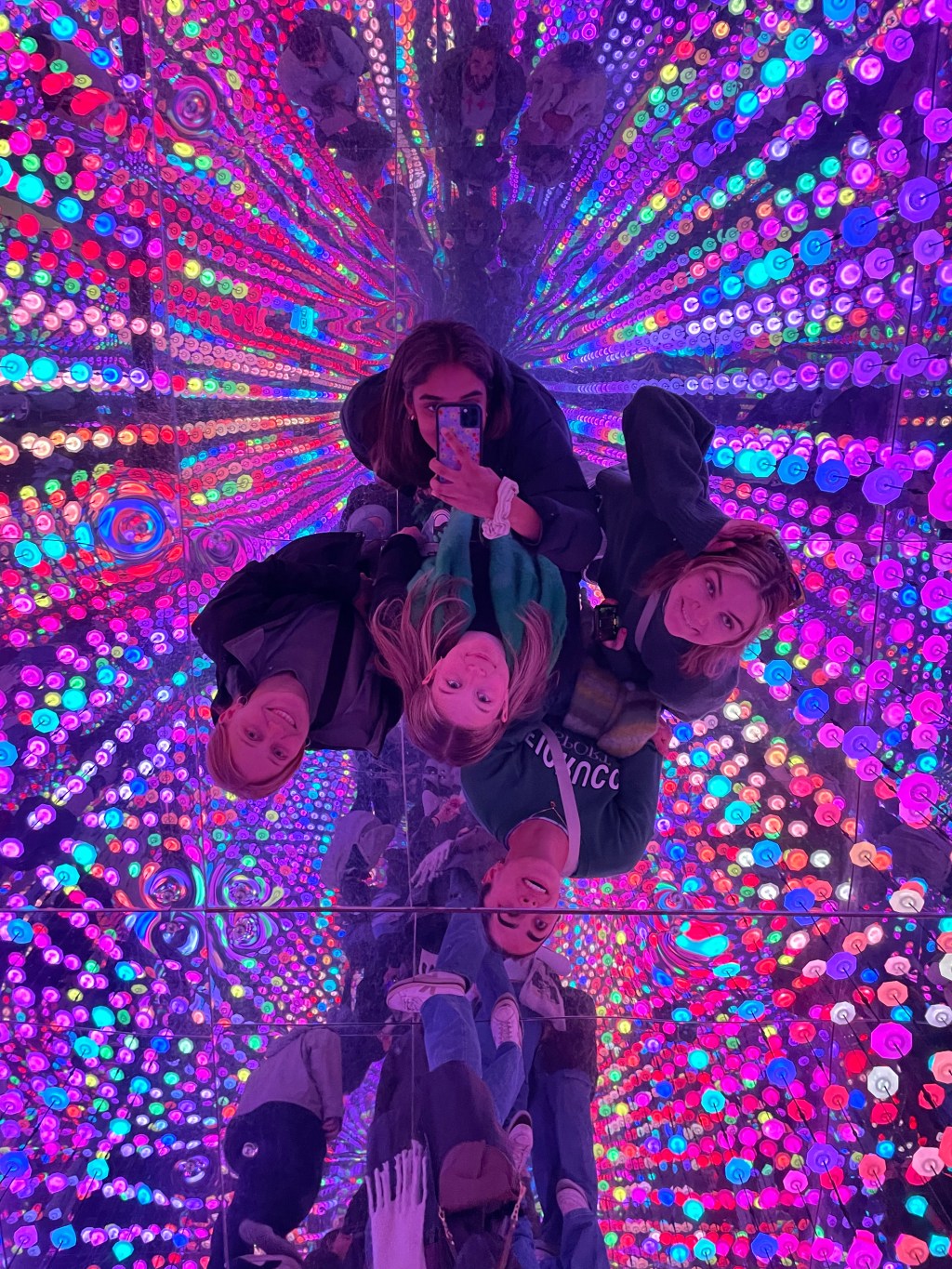
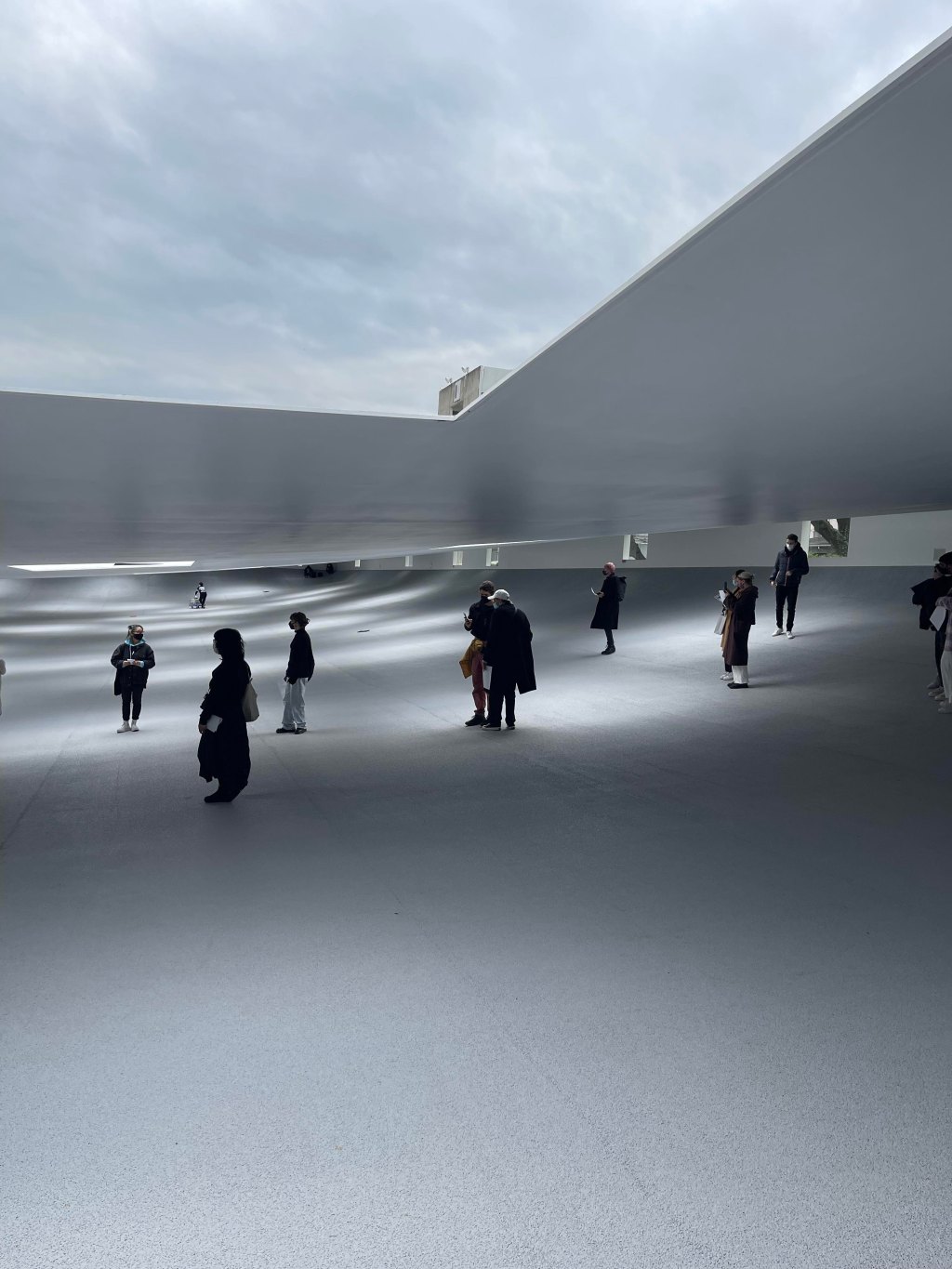
    I can’t count how many museums we went through, and looking back if I had more time, I would have loved to have spent hours, such as the 21st Century Museum of Modern Art, Minamidera, Lee Ufan Museum, Teshima Art Museum, TeamLab and any market places within each of the locations.

    What was interesting to me going through these spaces and having studied them for quite some time during my 3-year course was the feeling of alienation or surrealness and feeling what it was like to indeed be present in these kinds of spaces after seeing them through a screen. I will not forget how amazing it was to just sit and experience the atmosphere created whilst trying to study and understand how it was choreographed beautifully.

    Finalising the tour with an exhibition of our own photographs around Japan highlighted our collected experiences at each destination. I still cannot believe how quickly my time in Japan flew by. If I had another chance, I would take it in a heartbeat. Here’s to one of the most amazing trips!

    Mifsud, Monique

    Global Short Program Student (Faculty-Led)

  • Spending summer break in Malaysia with new experiences

    I would like to thank the agent company that supported me while staying in Malaysia. Their program, coordination and support made my life in Malaysia very comfortable and fun.

    They offer us a buddy program that allows us to interact with local university students. I could make local friends who were always willing to hang out and introduce their culture. I also had other student interns from other Australian universities from different states. Once, we went to a local friend’s house to celebrate her birthday with her family and her friends. We always hung out in the capital of Malaysia, Kuala Lumpur, where we had an internship. It has a bustling city known for its towering skyscrapers, modern shopping malls, and lively nightlife.

    We also travelled together to other cities in Malaysia. I had a chance to explore popular cities in Malaysia, including George Town, a UNESCO World Heritage Site known for its historic architecture, and Malacca, a historic town with a rich colonial past. The food in Malaysia is fantastic. As the country has a unique, diverse culture between Malay, Chinese and Indian, I never get bored of choosing what food to eat every day from each different culture’s cuisine.

    I had the opportunity to complete a global internship in Malaysia, where I worked for two different companies and gained unique knowledge and perspectives. The first company was Treta Exchange, a start-up financial company that provided cryptocurrencies on its platform. The second company was Glenreagh, a media company that mainly offered news around South Asia.

    Working for Treta Exchange, a financial start-up, allowed me to gain a deep understanding of the world of cryptocurrency and blockchain technology. I learned about the various types of cryptocurrencies, their uses, their potential customers and their impact on the global economy. I was also exposed to the challenges of building and scaling a fintech start-up in a highly regulated industry. I gained knowledge about the importance of regulatory compliance. Since the company was a start-up, it was a great experience observing how a company was building up in the early time at the same time.

    On the other hand, working for Glenreagh, a media company, provided me with insights into the world of journalism, particularly in the South Asian region. I was writing a media report that was about how Malaysia can boost its agricultural industry by introducing collaboration with the tourist industry. By analysing the actual data and overviewing interesting applications in other countries, I was able to expose to new implementations that Malaysia might be able to introduce in the future.

    My global internship in Malaysia provided me with a well-rounded experience that broadened my knowledge and skills in different industries and cultures. My time in Malaysia will undoubtedly benefit in my future career and personal growth.

    Asano, Yuma

    Global Short Program Student