UTS Think Global

Dream. Explore. Discover.

Disclaimer: All blog posts are written by students and do not necessarily reflect the views of UTS staff.

  • Life in Bern, Switzerland

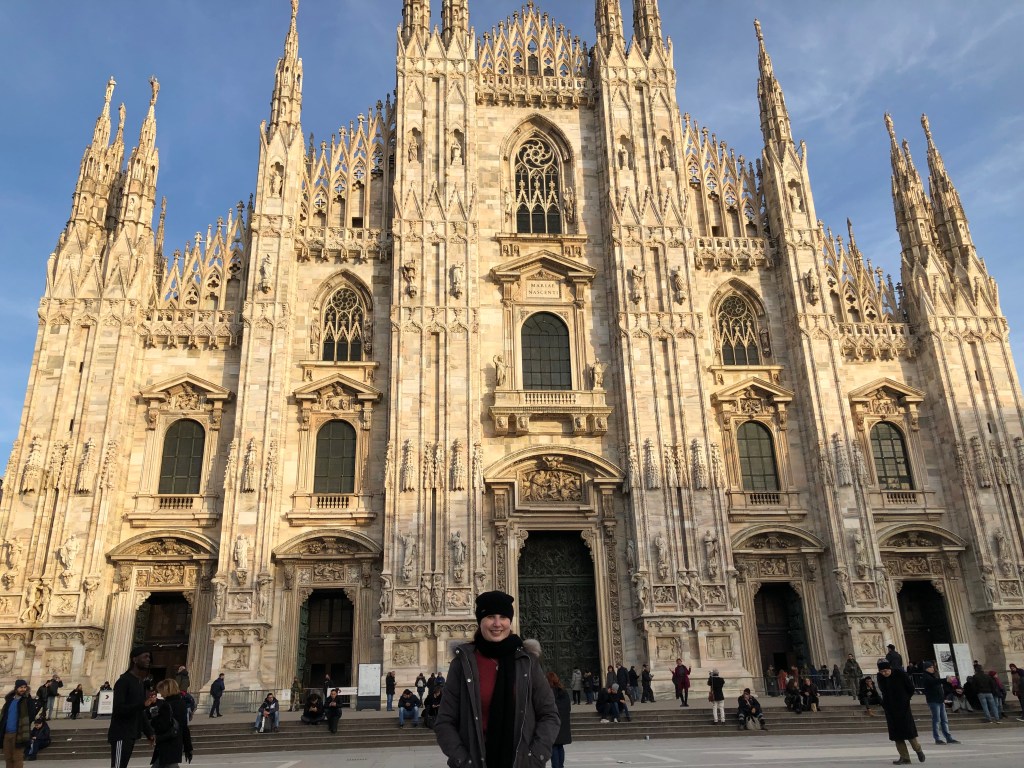
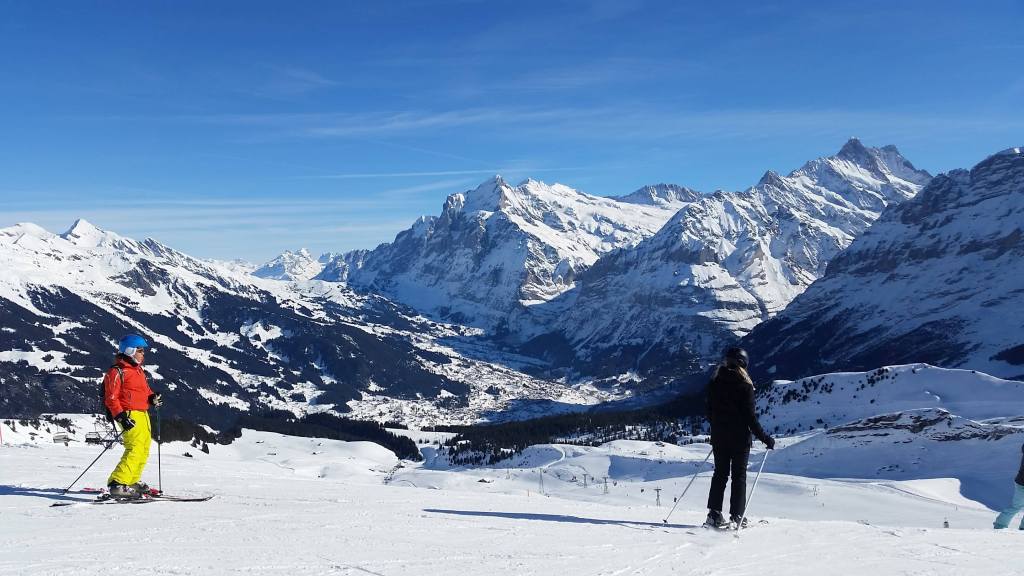
    I have now been in Bern for 6 weeks and it has been an amazing experience so far. I have gone skiing in the Swiss Alps twice and experienced the beauty of winter in Switzerland, enjoyed the sun in Milan and saw spectacular views of Switzerland at the top of Rigi-Klum. I have also travelled to a few different regions within Switzerland and am making plans for future travels with other fellow exchange students I have made friends with here in Bern.

    The city of Bern has a peaceful atmosphere and is a beautiful place to walk around in especially the old area of Bern with its cobblestone streets and various fountains, which you can drink from. I very much enjoy walking through the streets during my breaks from Uni and to sometimes sit in front of the main building to watch the view of the Swiss Alps in the distance.

    I have been living in a student accommodation called Fellergut, which is located next to a train station and is a convenient 6minute train ride to the center of the city of Bern. I chose this accommodation based on previous UTS exchange student comments about the liveliness of Fellergut and it has definitely lived up to the expectation. Although it is not the newest building it is a very welcoming place with a lot of other exchange students willing to meet up and organize trips together. I have made a lot of new friends by living in student accommodation from many different countries such as Finland, America, Belgium, China and South Africa. I definitely recommend staying in student accommodation however Fellergut will be under renovation in 2020 but Tscharnergut is another student accommodation close to Fellergut that provides the same fun experience.

    During the week before classes begin at the University of Bern, events are organized by the university for exchange students to meet each other and learn about life at the university. All the events were well organized, informative and very welcoming. These included information presentations, welcoming lunch and an Apero (free drinks and food!). You will be notified via email about these events. Similarly, an exchange organization called ESN has provided various events for exchange students to interact, such as a skiing weekend and pubcrawl. If you can, I highly recommend going to all the events provided for exchange students, as it is a great opportunity to make friends. By joining the ESN Bern Facebook page for exchange students I was put into a group chat with all the other exchange students therefore am able to stay informed and connected.

    The campus of the University of Bern is spread out throughout the city of Bern with different buildings for Law, Chemistry and Biology, Geology and Social Sciences etc. The walk between buildings is usually a short 5 – 10 minute walk or you can take the frequent busses to the different parts of the university. Although being an old University all the buildings are well maintained and there are many libraries to chose from. One underneath the main building is specific for Law students and my personal favorite for Social Sciences was originally a Toblerone chocolate factory!

    At the University of Bern I have found the teaching style to be quite different to UTS as for most of the subjects at the university there is only one test given at the end of the semester, which is worth 100% of your grade. However, for some social science and science subjects a presentation or essay is the required exam your grade is based on for the subject. Depending on the subject, a pass/fail or a grade is given for the subject but because UTS students only require a pass/fail this should not be a problem.

    At UTS I am studying a Bachelor of Medical Science and I chose to use three free exchange electives for my study abroad. Using free electives allowed me the freedom to organize my study plan so I could have a four-day weekend for travelling in Switzerland and around Europe. Therefore, at the University of Bern I am studying a variety of subjects, which include religion, gender studies and German language. All of my subjects are given as either a 1-2 hour lecture or seminar, once a week. For my lectures it is not compulsory to attend however like in UTS for seminars there are specific requirements for attendance.

    If you are a fan of sports then you are in luck because the University of Bern provides a large variety of sports for you to participate in. The main sport complex has a direct bus from the Bern main station and provides a gym and many indoor and outdoor sports. Most sports have limited spots available and require you to register, so make sure you are aware of the requirements for each sport.

    Things to know

    The main thing I can suggest to future Bern exchange students is to be well informed and aware of your budget because the pricing in Switzerland for most things is high. Travel by train is the most expensive, with a one hour trip costing around 50 Swiss francs (around $70). There are a few options for travel cards, this includes the GA (around 240francs a month for unlimited travel), Half-fare (pay around 185francs for a year) and Track 7 (129francs for free travel after 7pm for a year) and a monthly cost of 60francs for unlimited public transport within Bern. It is a must that you research these different transport options before coming to Switzerland and find out which option suits you best to avoid paying around $70 like I did for the train from Zurich airport to Bern when I first arrived.

    Jasmine Szakos
    Bachelor of Medical Science
    University of Bern
    Switzerland

    For more information about the UTS Global Exchange program please visit: www.global-exchange.uts.edu.au
  • Beijing Institute of Technology, China

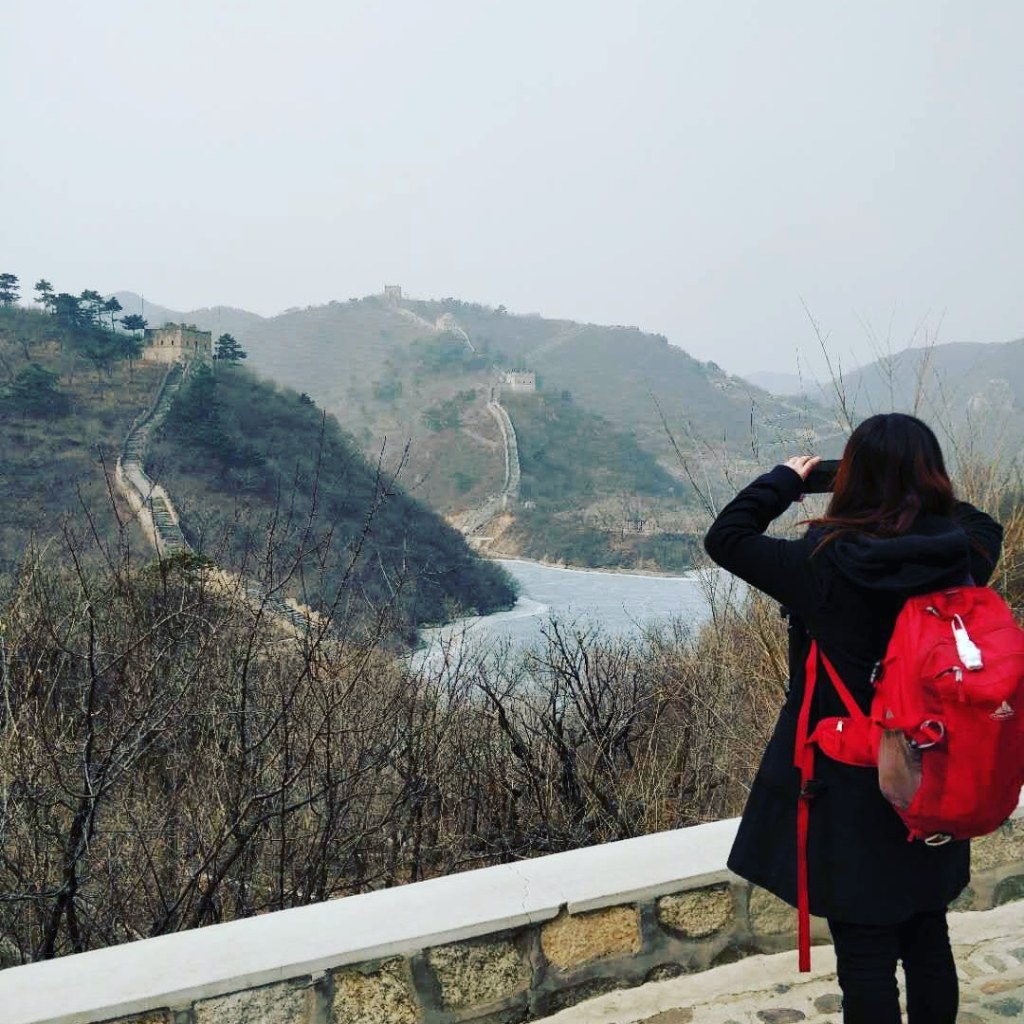
    Hi there! My name is Cherise and I have recently begun my exchange at the Beijing Institute of technology. It is currently only week two but I have been up to so much! Classes have started rather staggered (so half of my classes started in week 1 and the others will start in week 5) we only have lectures, which are held in a similar style to those at UTS. The subjects offered here are also very interesting and differ from those on my program back in Sydney. I am most looking forward to doing subjects on sustainable vehicle technologies and advanced automated vehicles.

    From day one I have experienced quite an extreme language barrier, but alas google translate is always there to help! Most google applications (without a VPN) are blocked in china, however google translate always seems to work regardless. I am taking the Chinese language course while I am here too which has enabled me to meet more of the international students here this semester. I am living on campus with three lovely girls in my room from Germany and France, and its been so fun to learn about their cultures too. The rooms provided are basic without cooking facilities, however it is cheap to eat at one of the 7 dining halls on campus with meals averaging $3!

    As pictured below, there is a massive sports hall at our university which was actually used in the Beijing 2008 Olympics! It’s pretty majestic and has badminton courts, table tennis rooms and so much more. I personally don’t play any sports but its nice to walk around at night to see all the courts full and people playing together.

    If I had some tips for future students I would say, make sure you have purchased and signed into you VPN before you arrive. Learn some basic Chinese (like the food you enjoy eating :D), and make the most of your weekends and days off class to visit attractions in Beijing and neighboring provinces. When you apply for your visa, its most likely you will only get one entry into China, but while at the university you are able to apply for multiple entries. I am currently planning a short trip to Vietnam and Seoul on the long weekends during semester and would highly encourage others to take advantage of the cheap flights from China too! When you get to China it is essential to make a bank account to use wechat pay (which is seriously so 2030 Australia is yet to catch up), make sure you go to a big bank like China Construction Bank or ICBC, as they are more used to dealing with foreigners. Best of luck if you choose to go to China on exchange! 😊

    Cherise Tabbiner
    Bachelor of Engineering
    Beijing Institute of Technology
    China

    Australian Government New Colombo Plan Mobility Grant recipient.

    For more information about the UTS Global Exchange program please visit: www.global-exchange.uts.edu.au

  • When in Reims

    I remember the exact moment I found out I’d been accepted for Exchange. I remember feeling elated, anxious and everything in between. 

    Exchange was something I had dreamed about since my first day of orientation at UTS, but also something I never thought I’d actually have the privilege of experiencing. It was a dream I shared with my best friend, and something that we spoke loosely of for about three years. The experience would be amazing, but how could we put our life on hold for six months?

    It’s not as impossible or even as sacrificial as it may seem. 

    I’ll never forget my first night in Reims. The sheer excitement of being in a foreign country, the delicious anticipation of the unknown and the unbridled joy of being there with my best friend. We had no idea what to expect but I think that’s best advice I can give to anyone considering exchange: don’t let expectation cloud your experience. 

    The first week of class comprised a series of orientation tutorials and seminars which introduced us to the ‘Sciences Po methodology’. The French adopt a distinct approach to education, to which they tightly cling. They know what they expect and this was made quite clear during this first week. However, Sciences Po has quite an impressive international reach so it was comforting to find that our classes would be mostly comprised of exchange students who were also learning to adapt.

    In light of this, there is definitely a strong international culture at Sciences Po. The subjects all find their roots in political science, and the breadth of international opinion creates a unique forum for us to learn and bounce ideas off our peers. With voices from the US, New Zealand and all over Europe, the diversity of opinion certainly fosters a layered and textured understanding reflecting political views and ideologies from all over the globe. It feels like learning from the world instead of about the world (and coincidentally means I now have friends from all over the place).

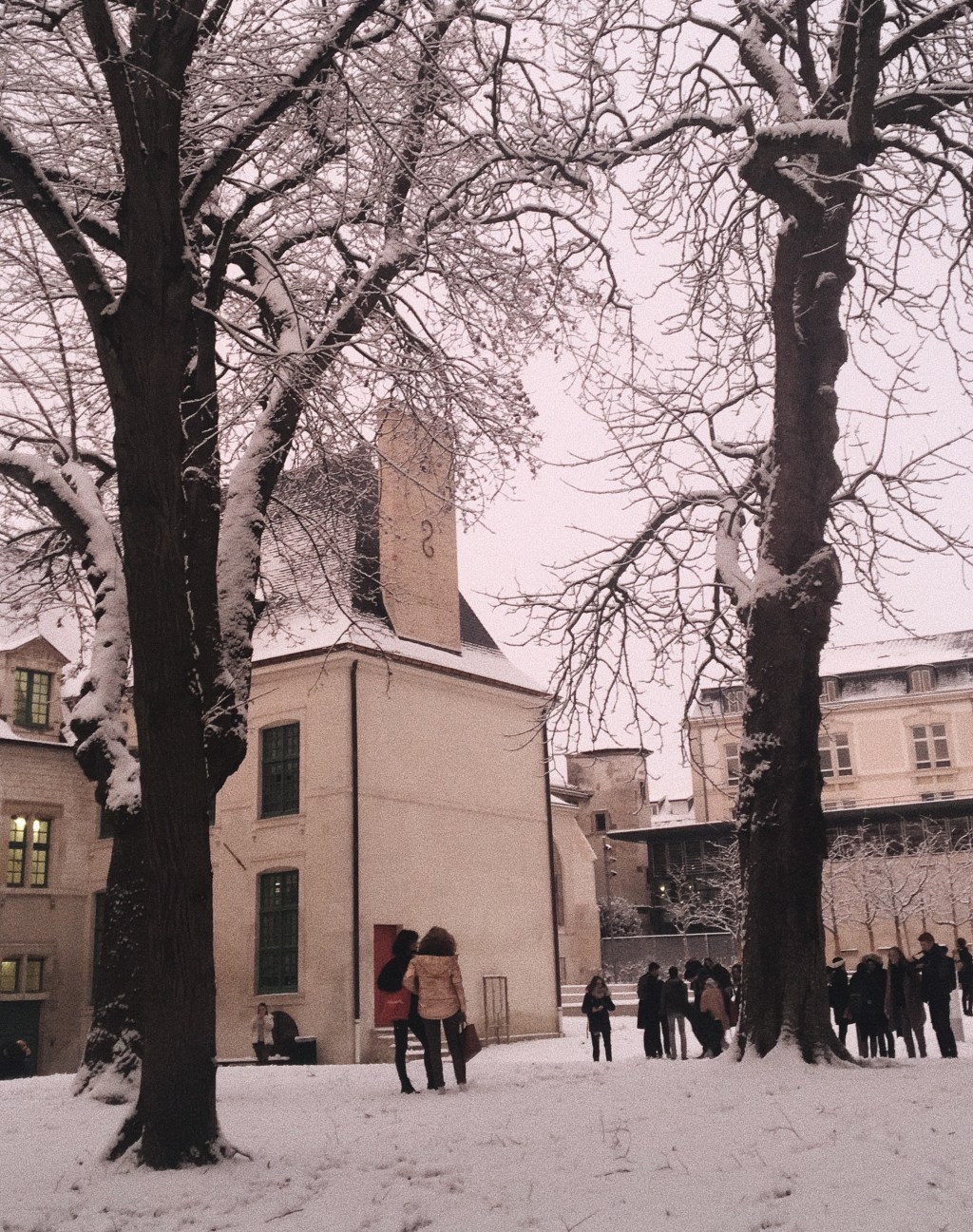
    Coming from a university as contemporary as UTS, the circa seventeenth-century Sciences Po campus certainly never gets old. Heritage buildings, winding staircases, stained glass windows, made even more impressive when dusted with a fresh layer of snow! This grandeur continues into the historic streets of Reims – it’s such a treat wandering past 13th century Cathedrals on your way to do the groceries. That being said, it didn’t take long for Reims to feel like home. It holds the comfort and warmth of a small town, but there’s still so much exploring and adventure to be found in the area and surrounding regions. Plus, it’s only a short bus or trains trip from Paris! For me, it’s been the perfect mix of country and city life. 

    But of course, everything in Europe is a bus, train or plane ride away. Every weekend is an opportunity for international travel, which simply adds to the global lens espoused by exchange at Sciences Po!

    Maddison Turansky
    Bachelor of Laws / Bachelor of Communications (Creative Writing)
    Sciences Po 
    France

    For more information about the UTS Global Exchange program please visit: www.global-exchange.uts.edu.au

  • University of Copenhagen, Denmark

    Studying Abroad: the run down

    Who am I:

    Hi, I’m Lara, a biomedical student in my third year. I’m here to tell you a bit about what the academic life of an exchange student is.

    Where in the world am I and why?

    I am studying abroad in Copenhagen, Denmark, one of the few places I could study due to taking 3 direct equivalents and wanting to go somewhere in Scandinavia. At the University of Copenhagen, the Science Faculty is one of the largest and therefore has a wider selection of classes as well as more specialized classes. The faculties (including that of science) are also more socially involved then I have found at UTS. They organize events together as a faculty and they organize a buddy system so that you can be paired with a local science student who can help you in your respective field of study.

    Structure of study:

    At UTS I have been studying in semesters with 4 subjects each semester. Here, instead of two big semesters with 4 subjects, they break the year into 4 blocks. Each block you take 2 subjects which run for less weeks than at UTS (so 4 blocks of 2 subjects each year). This allows you to really focus on your subjects.

    Teaching style:

    The actual teaching and assessment style is also a lot less demanding than UTS and I currently only have one major assessment or exam at the end of each block rather than lots of assessments which makes for a lot more free time. I am taking a second year masters class as an elective and I find the workload to be less than one of my bachelor subjects back home. The teachers/lecturers themselves are very, very open to discussions and interrupting class to ask questions or even challenge what they are saying. Classes are generally smaller than what I am used to at UTS and I have found a large emphasis on group work and class discussions although Kahoot is still a thing here! Unique to each subject is also the teacher’s style of delivering the information. I have some classes that use a ‘flipped classroom style’ but also some that are more traditional in their teachings. Whether you like this style or if it best suits your learning is entirely dependent on how you learn best and what you are looking for in a class.

    Same, same but different classes:

    Due to having to do 3 direct equivalents, I am studying subjects very similar to what I would be at home however with my one elective I am taking a class that is more specialized and something I couldn’t study at home – Human genetics (Masters). This has provided me with new drive and a new taste of something I would potentially want to pursue, which I had not been exposed to at UTS. Studying with other international students has also made me more open to what I can potentially study due to hearing the stories of what they are studying.  I also began my studies here with a month long language course and it was one of the best decisions I have made! It got me well established in my new country and I made most of my friends during it. It also gave me more insight into the culture of Copenhagen and helped me to navigate my way around so that when classes came around, I already felt like a local.

    But what about living:

    I have booked my accommodation through the university and am loving it! There was quite a range of choices although living in Denmark is much more expensive than in Sydney (hard to believe I know). The weather is freezing, something I was a little surprised by! I’m enjoying biking everywhere and of course meeting countless new friends. There are so many little changes and intricacies of living in a new city and moving alone that I could not begin to describe. If you are looking for more information or have any more questions than feel free to contact me via email!

    Lara Westwood
    Bachelor Science and Bachelor of Creative Intelligence and Innovation
    University of Copenhagen

    Denmark

    For more information about the UTS Global Exchange program please visit: www.global-exchange.uts.edu.au
  • Yonsei University, South Korea

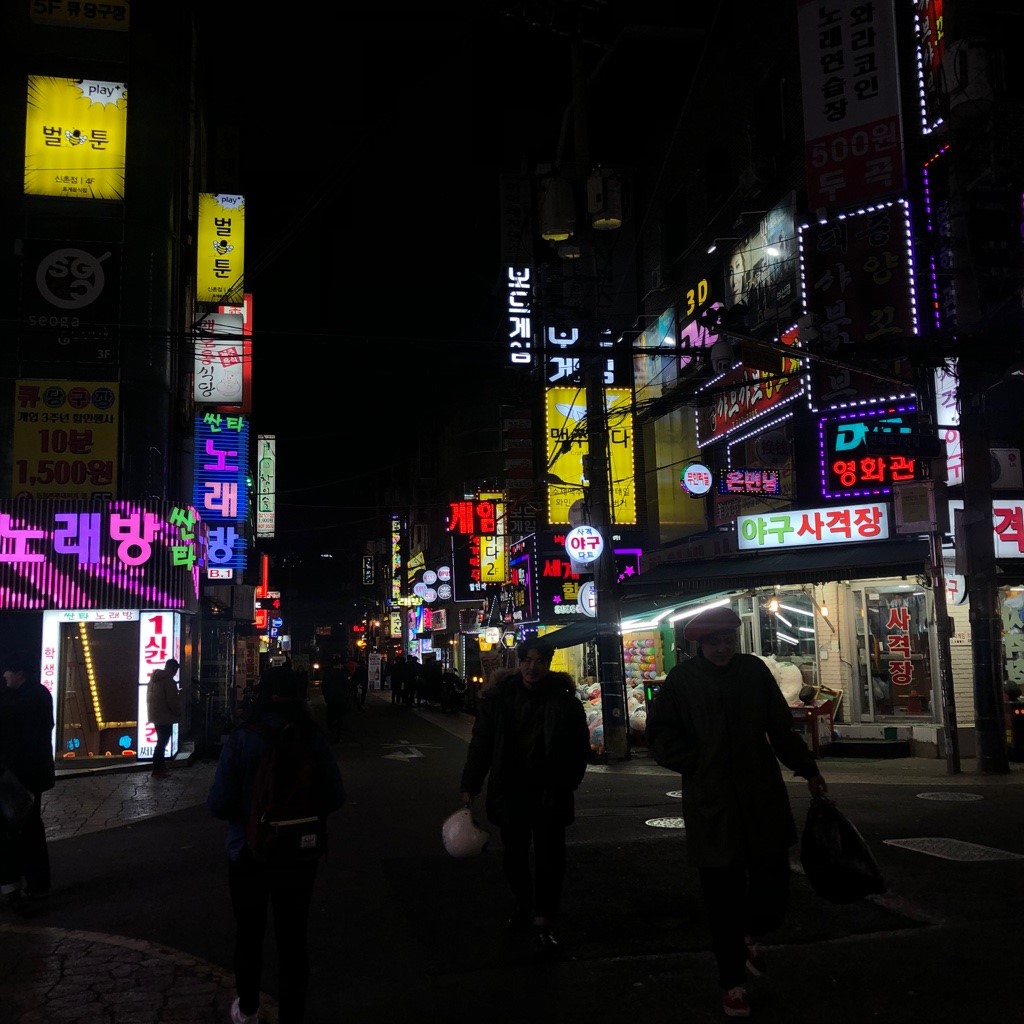
    South Korea is the country I’ve always wanted to visit and explore, not only because of the culture, but also because of the history. Seoul is the capital of South Korea, and Yonsei University (Sinchon campus) is located in western Seoul, a student-orientated area with Ewha Women’s, Sogang, Hongik, and Kyunggi Universities located nearby. I would recommend exploring the close area around Yonsei University, such as Sinchon, Hongdae and Edae, there are endless streets of restaurants, bars, street food, cafes, karaoke places and so on, so much to explore! Also, unlike Sydney, pretty much every store closes very late in Seoul, so don’t forget to enjoy your nightlife in Seoul!

    It’s been three weeks since the semester started. In the first week, there was an orientation held for international students, it provided really useful information, such as school facilities, introducing campus, library services, student clubs and so on. Some of the information was also included in the handbook they provided during the orientation. I would highly recommend joining clubs, such as mentor club or language exchange club, it is a great opportunity to get to meet local Korean students and make friends!

    In terms of the facilities, there are two libraries, SO MANY cafeterias and a large student centre which is called Student Union Centre. I personally often go to Student Union Centre, in this building, there are large dining halls, a convenient store, Health Service Centre, a barbershop, a hair salon, a bank, a post office, a shoe repair, a print on demand centre and an optometrist. Also, The Commons, which is an underground facility housing a book store, a souvenir store, a stationery store, Starbucks, a bakery and snack shops. Basically, you can find everything you need on campus.

    In terms of teaching, it is quite different from UTS. From the classes I did and what I have experienced so far, firstly, I feel like they don’t really distinguish lectures and tutorials, the professor who is teaching you takes the role of both tutoring and lecturing. Also, there is no mid-term break, which is kind of sad, because we won’t have enough time to prepare for exams or assignments. For me personally, there is one class that interests me the most, Korean language class, because I am always willing to learn a new language. Also, I think learning Korean language and knowing some Korean culture would also help me fit in the society better.

    Tips:

    1. When looking at subjects on Yonsei portal, please be note that exchange students can only do the subjects that with an “O” shown on one of the columns.
    2. If you don’t want to open a Korean bank, using Citibank is a good option. Because there is no international transaction fee when you pay with card, and if you want to get some cash, the ATMs located in most of 7-11 convenient stores don’t charge any extra fees.
    3. Living on campus is a good option, makes my life much easier, because I don’t have to find housing on my own. The location of our dormitory is good, it only takes me 15 minutes walking from the dorm to the classroom. Also, the price is reasonable and much cheaper than renting an apartment outside. Lastly, there is a resident manager in the lobby available 24/7.

    Yuxin Wei (Renee)
    Bachelor of Design in Visual communication
    Yonsei University
    South Korea

    For more information about the UTS Global Exchange program please visit: www.global-exchange.uts.edu.au

    Australian Government New Colombo Plan Mobility Grant recipient.

  • Bocconi University, Italy

    Ciao from Milano!

    It has officially been 2 months since I first touched down in Milan and I can honestly say my experience thus far has been an absolute blast. Being my first time coming back to Europe since I was 10 years old, I was quite nervous but also excited for the many adventures I knew were to come.

    Growing up with Italian grandparents, I always knew that I wanted to study abroad in Italy not only for the amazing food but also to practise my Italian and to experience the ‘Italian way of life’. Milan in itself is a very cosmopolitan city which has both historical and modern elements. It also maintains an excellent metro and tram system which makes it very easy to get around. While you still get the ‘big city’ vibe, finding your way around isn’t too difficult and you can also walk or bike to most places you want to go. You don’t really need to worry about not speaking much Italian as in most places you will be able to find someone who speaks English. However, Italians do really appreciate when you try to speak in the local language!

    I am studying at Bocconi University this semester which is a highly regarded business school in Europe located to the south of the city centre of Milan. It attracts many local and international students from across the globe and I’ve already met many people of various nationalities including Americans, British, Brazilians, French, Spanish, Dutch as well as some local Italian students. Milan being the fashion capital of the world is definitely evident through the way many of the local students dress and is completely different to the casual and relaxed dress style of Australian universities.

    I’m taking all my classes in English this semester and studying management units which have been particularly interesting including International Business, Management Consulting, Management of Fashion Companies and Digital Disruption and Entrepreneurship. There are two main buildings I have my classes in which are located a short 5 min walk from each other so moving around the campus has been pretty straightforward. In terms of the teaching style each subject has around 3 contact hours per week and the format is more lecture based with generally between 40-60 students in the class. I have noticed that the Italian university system places more emphasis on learning theoretical concepts and final exams are generally weighted more heavily between 60-70% of your final grade. You also have the option to take classes as an attending or non-attending student which means that if you are non-attending you don’t have the requirement to attend the classes and your final grade will be based off a 100% final general exam. However, if you are an attending student you will have either a group or individual assignment to work on during the semester and possibly a mid-term exam. I’m taking all my classes as an attending student this semester and only two of my classes have attendance requirements of 75% so this hasn’t been an issue for me so far.

    Bocconi organises many welcome activities in the first couple of weeks of semester which are a great way to get to know the university and the city as well as meet many other fellow exchange students. Some of the welcome activities I took part in included guided tours of the campus and Milan city, a speed exchange as well as the Welcome Cocktail. I also undertook an intensive Italian crash course in the first 2 weeks of semester which is a great way to meet other exchange students and have decided to continue with the follow-up course during the semester. Bocconi is also a member of the Erasmus Student Network which is the largest international students association across Europe. They organise many social events during the semester as well as weekend trips throughout Italy which you can partake in.

    Milan in itself is a fantastic and vibrant city and being one of the hubs of Italy, it is very easy to get cheap flights to many other destinations across Europe or you can travel via high speed train between many Italian cities. You also must go to an Italian aperitivo which many restaurants and bars will do each night where you pay between 10-15 euro and get one drink plus an unlimited buffet of Italian food. I highly recommend Maya in Navigli!

    I recommend Bocconi University to anyone considering going on exchange and I can tell you, you will have an absolutely incredible experience. I am looking forward to what the next 4 months of my exchange and travels hold.

    Natasha Cadalt  
    Bachelor of Business
    Bocconi University
    Italy

    B

    For more information about the UTS Global Exchange program please visit: www.global-exchange.uts.edu.au

  • Erasmus University Rotterdam, the Netherlands

    While Rotterdam used to be lost in the shadow of Amsterdam as it was severely affected by the bombing of World War II, it has now been rebuilt into a contemporary and culturally rich city with striking modern architecture. Although I was concerned I would miss the traditional landscape of a European city, Rotterdam has the perfect mix of old and new, with hidden gems to be constantly explored.

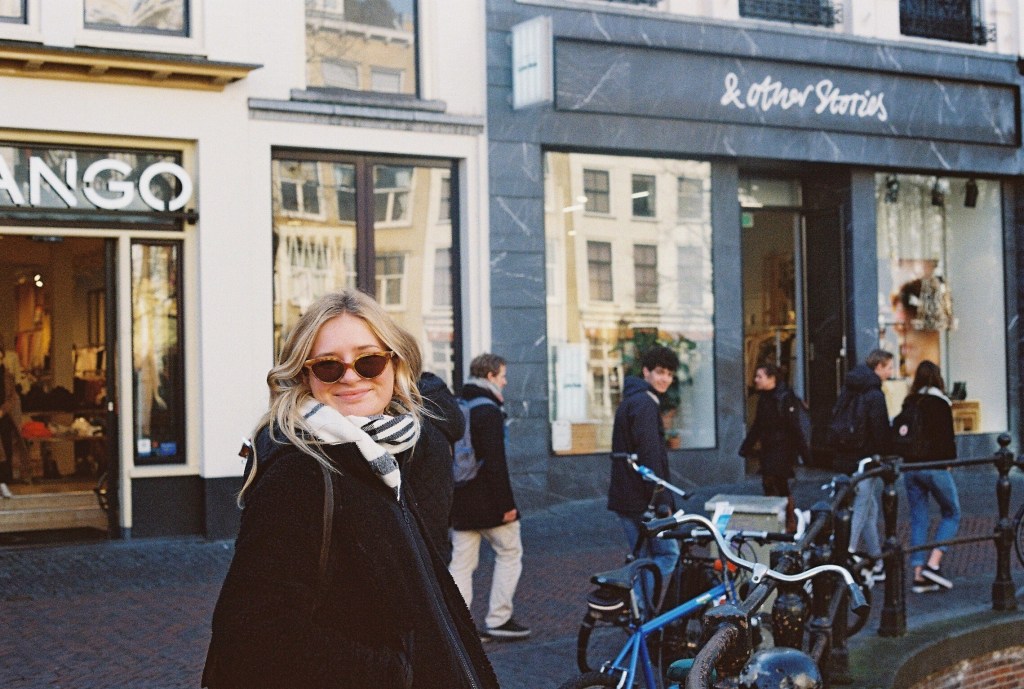
    Rotterdam has a strong student base, so it is very affordable to live here. With food markets every Tuesday and Saturday you can pick up a range of fruit and veg for just 5 euros. You can easily find funky bars, cafes and restaurants in the city that allows you to treat yourself to a tasty meal out without breaking the bank. To get around, it is essential to get a bike, with the designated bike paths and flat terrain make travelling throughout the city a leisurely trip. My suggestion would be to get a Swapfiets bike, a company which allows you to rent a brand new bike at an affordable price!

    I was lucky to be placed in student housing on campus (Hatta building), which allows me to slip out of my room 10 minutes before class and meet fellow students super easily. My accommodation is an apartment within a large building that I share with two other international students (however we all have our own very spacious rooms!), it is clean and features great facilities such as a bar, gym and a cafeteria.

    The Lectures and tutorials are pretty similar to my communication ones at UTS however the tutorials are 2 hours and 45 minutes long…which in comparison to the 2-hour tuts back home, I struggle to keep focused! Luckily they are very interactive, and student presentations occupy a large part of the learning structure. Attendance is very strict, when you miss two tutorials, you have to do a makeup assignment, or if you miss three you fail the course! I would recommend avoiding putting classes on Mondays and Fridays, so you essentially get a four day weekend every week, optimizing time for travel and exploring! Also, the central location of Rotterdam means you can be in a new country in less than an hour! Rotterdam also has a great ESN program, so you are always flooded with events and activities that allow you to get involved and meet new people!

    Overall, after being here for just over a month now, I would definitely recommend Rotterdam! With a strong culture that differs completely to back home, it is a chance to experience a whole new way of life!

    Gemma Grayson
    Bachelor of Communications (Media Arts & Production)
    Erasmus University Rotterdam 
    The Netherlands
    G

    For more information about the UTS Global Exchange program please visit: www.global-exchange.uts.edu.au

  • My Academic Life at Waseda University

    Having been to Tokyo a few times in the past, I thought I knew what to expect when arriving at Waseda, located in the Shinjuku district. Streets would always be busy, lights always bright and the faint smell of smoke on every corner. However, what I soon learned was that these expectations came from my experiences as a tourist, and was not at all a reflection of how life in Tokyo would be.

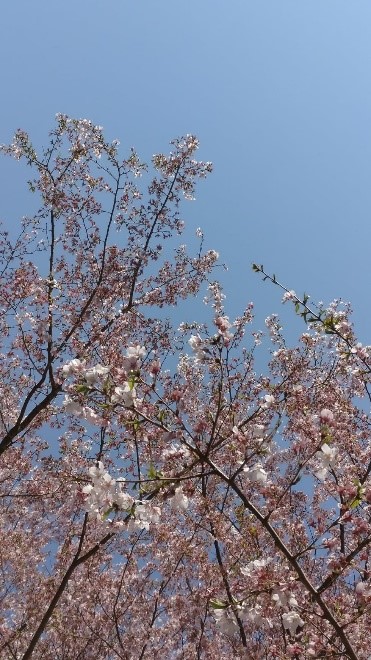
    Waseda is situated next to Takadanobaba and Shin-Okubo, both cities filled with huge buildings and swarming with people. However, the campuses and their surroundings are relatively quiet and peaceful. Cherry blossom trees bloomed in the many parks around the university. A five-minute walk from the campus and you would find a maze-like residential area where not many people come by and is quite dark during night time.

    The Waseda campuses and its facilities are drastically different to UTS. Probably due to the lack of regional space, all the buildings are quite condensed. The university’s long history could account for its collection of historical buildings and artifacts, like the Central Library that was established in 1882. The Science and Engineering campus where I belong to, is especially interesting with its factory-like structures between buildings and its overall industrial aesthetic.

    Classes at Waseda are more or less what I expected from a university. All the students typically sit in a classroom or laboratory while the professor teaches at the front of the room like any ordinary class in Australia. However, there are no lectures and we have one lesson per subject every week. Because I was limited to one department to choose subjects from, I am only taking Computer Science related subjects, which is not too different from my IT major at UTS. However, the content is pretty difficult so I am studying in my own time to keep up with the classes. What was surprising was the number of subjects we are expected to take while studying here. A full-time student at UTS generally took about 4 subjects per session, however at Waseda we are expected to take between 7 and 10. It is admittedly a challenge keeping up with this much content, but with a proper amount of revising I feel that there will be much to learn in this upcoming semester.

    Although six months may seem like a long time to spend abroad by yourself, I can already feel it going by at a really fast pace. It has been less than a week since classes have begun and I already feel the need to revise and study to keep up with the classes. With that said, I know there will be much to learn during my time here, both in and out of the classroom. I am looking forward to the day I can return home with a new set of skills and outlook on the world.

    Yukari Connelley
    Bachelor of Science in Information Technology
    Waseda University
    Japan

    Australian Government New Colombo Plan Mobility Grant recipient.

    For more information about the UTS Global Exchange program please visit: www.global-exchange.uts.edu.au
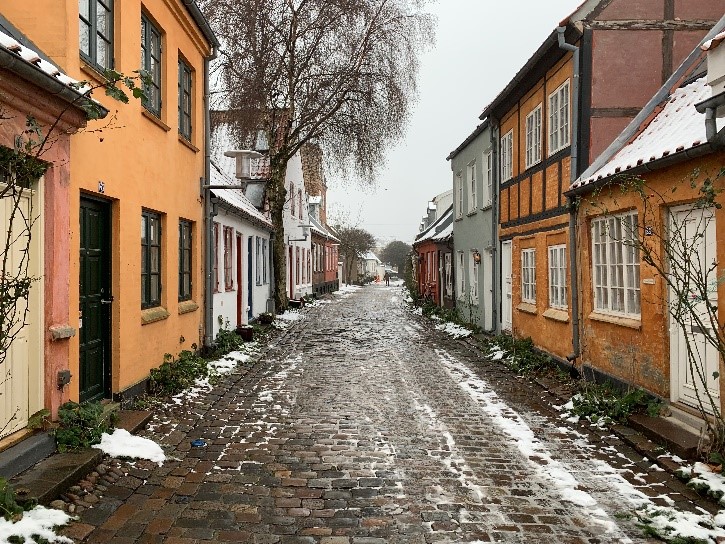
  • Hej fra Aarhus, Denmark!

    Before setting off almost 2 and a half months ago, I had never travelled solo or lived overseas! My only time spent in Europe was a family trip to the UK and the Netherlands as a child and in Sydney I live at home with my family. So it’s safe to say that when I chose to go on exchange, I knew it would be a big change in my lifestyle. I prepped myself for culture shock, the relentless expenses of Danish life/European travel and the 24-hour journey to the other side of the world with all of my belongings. My adjustment to the time difference was made much easier after staying in Italy with a friend for 2 weeks before going to Denmark, and I’d definitely recommend travelling beforehand!

    My first day here in Aarhus was overwhelming to say the least. I’d never even heard of it before applying for exchange and had no clue what to expect apart from some emails sent by the university. After pushing my 27kg bag up a hill with countless layers on (it was only a few degrees max), I walked in circles trying to find my student accommodation having only eaten half a can of Pringles that day. That night I slept in a cotton sleeping bag liner with some bundled up jackets as a pillow (bed linen is not provided in most cases). I was exhausted, disheartened, and wondering if I made the right choice to leave the easy and familiar for this place that I knew absolutely nothing about.

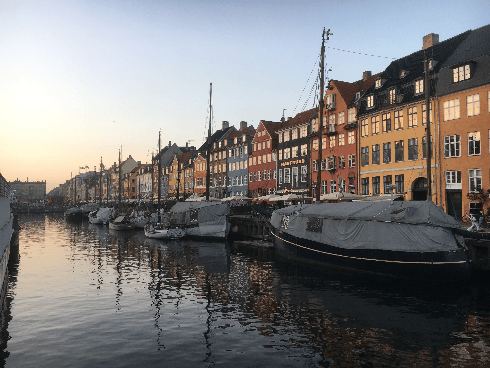
    I always knew the first few days would be a hard adjustment, so I woke up the next morning, walked myself straight to IKEA and started to make my shell of a dorm room feel like home. It’s been 2 months now since that very first day in Aarhus and I am so glad that I decided to get out of my comfort zone to come here. My student housing is in a beautiful part of the city called the Latin Quarter, surrounded by both stunning cafés and vibrant nightlife. I’ve also become very familiar with the Danish concept of ‘hygge’; a feeling of cosiness and comfort which is reflected in both their activities and the décor of their homes.

    The university here is an extremely welcoming environment and has a significant number of international students at any given time. I found their orientation process to be incredibly well organised! We all received a ‘welcome bag’ upon signing in at the International Centre, which had a local SIM as well as some vouchers for local attractions and information booklets. I have one 3 hour ‘lecture’ for each class, but in each case they only have around 20 students in the room, making it feel more like a tutorial. The teaching style is very informal, with students being free to disagree with the lecturer and interject as they please. Attendance is not compulsory which makes taking short trips easy to do, but obviously means you have to make sure you’re caught up before the final exam!

    Back at UTS I study in the Science faculty, but I was unrestricted in what subjects I could choose from over here due to having free electives. I’m currently studying extremely interesting subjects from the Cognitive Science and English departments. If it’s possible for you, I’d definitely consider branching out from your usual area of study as I’m loving the new learning style and opportunity to gain a new perspective in a new field! 


    The Royal Danish Library in Aarhus is a beautiful place to study!

    I met my main group of friends here at the orientation days, so make sure to take every opportunity to meet new people. The Danes are fairly reserved most of the time, but just wait until they start having beers at the university Friday Bars and they will really open up! I am currently sitting with 6 other international students in Northern Norway while snow is falling outside. We saw the Northern Lights last night and currently have short trips to Berlin, Poland, Lithuania, Latvia, Estonia and the UK booked (flights are dangerously cheap over here).


    Marselisborg Dyrehave – A park in Aarhus with roaming deer that are friendly enough to be pet and feed

    I have truly fallen in love with this place and all it has to offer. My initial worries were all proven wrong and every experience here has been priceless and worth it (even if my bank account says otherwise). If you have any questions at all feel free to email me! I’m having the best time and would love to help in any way I can to make sure that you do as well 🙂

    Rachel Thomas
    Bachelor of Forensic Science
    Aarhus University
    Denmark

    For more information about the UTS Global Exchange program please visit: www.global-exchange.uts.edu.au

  • Universidad de Montevideo, Uruguay

    This time last year I was finishing my first month of living and studying in Costa Rica; a decision that would prove to be one of the greatest of my life… and here I am a year later in Uruguay, doing it all over again!

    The past month has seen me move into a beautiful apartment only 200 metres from university, which I am sharing with my wonderful Uruguayan roomie Agustín. I make almost all of my important life choices purely on the basis of intuition… and as soon as I met my roomie and set foot in my new home, I knew that it was the perfect fit.

    I have also quickly fallen in love with the city of Montevideo and with the Uruguayans who live here. With its colonial architecture, pristine coastline (a warm reminder of my home in Manly beach), and its open and friendly culture, Montevideo is the perfect compilation of Latin charm that makes it so welcoming and so liveable.

    I am studying this semester at the private and prestigious Universidad de Montevideo, where I am taking all of my classes in Spanish. Its amazing the difference between this year and last year, as both my knowledge and confidence in Spanish has grown so that I am able to participate in class and critically engage in my communications, business and philosophy courses in a second language. The university is tiny in comparison to both UTS and UCR, so much so that I frequently bump into friends and classmates in the hallways between classes.  The buddy program has also been an amazing way to connect with the rest of the exchange group, as well as with other Uruguayan students who have been so supportive, and have welcomed us in like family.

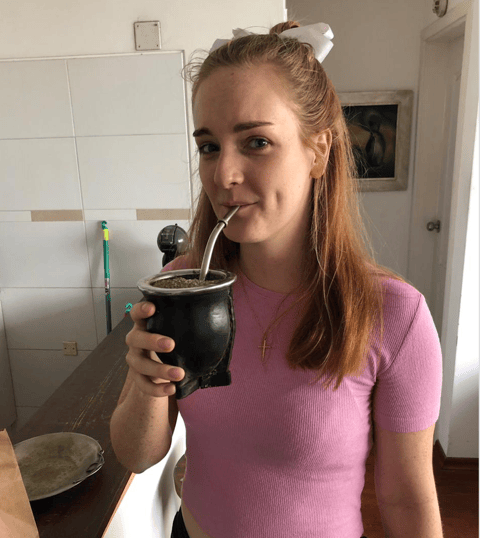
    The hot, herbal drink mate (pronounced mah-teh), is as Uruguayan as Vegemite is Aussie. Walking down the streets of Montevideo, every day I pass Uruguayans sipping mate, sharing the one drink between friends and sipping from the same straw, all the while gripping a 1L thermos of boiling water so they are caffeinated for the whole morning. Though I cannot yet say that I enjoy it, I am determined to learn to love it. Mate is designed to be shared and before the semester is out, I will be passing around my own mate like a true Uruguaya.

    Velvet-Belle Templeman
    Bachelor of Communication and Bachelor of International Studies
    Universidad de Montevideo
    Uruguay

    For more information about the UTS Global Exchange program please visit: www.global-exchange.uts.edu.au