UTS Think Global

Dream. Explore. Discover.

Disclaimer: All blog posts are written by students and do not necessarily reflect the views of UTS staff.

  • It’s not all study!  Nepal Winter 2019

    I participated in the global challenge by Unbound in Nepal, and the memories I have of my time will always be cherished. I was able to see historical sites, go on a safari, and see many spectacular views. What makes the experience so memorable is not the activities I did, but the people I met from other universities, the facilitators of the program and the Nepalese family I stayed with briefly.

    I had the opportunity to work on a project focused on encouraging ethical tourism in the village of Dhulikhel. I was excited to work with like-minded individuals that were passionate about delivering meaningful value to the community we had been welcomed too. For the project, I was able to revise on existing skills I had with human-centered design and apply them to a project outside of the Australian context. Human-centered design is a series of methods that allow you to investigate problems and develop solutions. Some other team members also had pre-existing knowledge of human-centred design, which made the process of knowing how to conduct interviews, break down problems, and solve the challenge a familiar experience. As a team, we developed a strategy and proposed different project streams people could be invited to Dhulikhel to work with the community on. Our project did not have a physical outcome for a product as we developed a strategy, but we did get to visit other teams as they created bamboo prototypes to help people with farming and in schools of Dhulikhel. As it was super warm at the time we were in Nepal after long days of working on the project we got to experience swimming in the pool to relax for two of the nights.

    There was still lots of time to explore the culture and sites of Nepal while working on the project. We often ate Dhal Bhat, a common household dish consisting of steamed rice and lentil soup. Some of us also had the opportunity to learn how to make momos. Being able to learn to cook momos was a highlight of my experience, even though my momos looked horrible, they tasted excellent.

    Overall, the experience has taught me a lot about working on projects in a country very different to Australia and how to have fun while doing it.

    Sophie Hawkins

  • International Legal Internship: Hui Ye in Shanghai

    July 2019 – one of the most riveting months of my entire life so far… was spent doing a legal internship in Shanghai! I certainly didn’t expect to feel this way when I first started my program.

    On the night of Thursday 27 June 2019, I arrived in Shanghai after a 10.5 hour flight from Sydney. As I lugged my huge suitcase into my single-bed hostel room, it really dawned on me that I would be spending an entire month in a foreign city with no one by my side. One reason that I chose a hostel to stay in was so that I could meet other travelers like me – so I could feel a sense of familiarity in what was a month of anything but familiar.

    Although I had a decent grasp of Mandarin thanks to my parents, I saw it more a curse rather than a blessing. I wasn’t able to express complex thoughts or string together long sentences. Although I was able to ask for directions or order food at restaurants without issue, ‘Add me on WeChat’ and ‘I want to open a bank account with a debit card’ were slightly outside my vocabulary bank. I also felt distinctly like a ‘foreigner’ – I couldn’t even order KFC at one particular restaurant because I didn’t have WeChat Pay, which unfortunately required a Chinese bank account. Paying for things in cash just wasn’t a thing in Shanghai!

    As I started with the internship the following week, I slowly but surely began to find my feet. By that point I had secured a Chinese bank account and was living and paying like a local! At Hui Ye Law Firm, I was introduced to the craze that is ordering milk tea (or bubble tea) using delivery services straight to the office. Can you imagine using UberEats or Deliveroo to send a coffee up to your office! I discovered that napping at work was entirely appropriate given Chinese business culture and the expectation to work long hours.

    Progressing with the internship, I began to appreciate Chinese cultural values such as ‘guanxi‘ (the relationship) and ‘mianzi‘ (the concept of ‘face’). This meant not approaching shy colleagues for a conversation until they were ready on their own terms to have a meet-and-greet. It similarly meant not bothering my supervisors for more work until they were ready to provide it. Overcoming these initial barriers in understanding a foreign culture was one of the major successes of this internship.

    Substantively, I was tasked with drafting various research papers, presenting on ‘Investing in Australian Real Property‘ to my Chinese colleagues and visiting both the Shanghai People’s Basic Court and the Shanghai Commercial Mediation Centre. In the final week, there was a brief change of scenery with a visit to the Nanjing office! None of it felt like I was doing things for the sake of an internship – it truly felt like each task was provided so that I would better understand Chinese culture, Chinese commercial law and Chinese working habits.

    Having stayed in a hostel, I looked forward to chilling out in the rooftop bar every evening after finishing work. Unwinding after a long day with a beer and some international friends – I couldn’t have asked for more! In my spare time, I visited the nearby city Suzhou (the ‘Venice of the East’), did tourist-y things around Shanghai and even sat down for a dumpling class! An honourable mention definitely goes to the unforgettable KTV (karaoke) nights!

    Striking a balance between work and play was perhaps one of the most enriching aspects of the internship. In some ways, I felt like I was truly an adult managing my own time, relationships, work and travels. Navigating the challenges, highs and lows of Shanghai, I feel like I have taken positive steps to becoming a Global Leader. I have found mentors from Hui Ye and friends across the world that I no doubt will keep for life.

    Jason Wang

  • I left for Tokyo on the 7th of January, travelling overseas alone for the frst time in my life. Having only been to Japan shortly once before, I felt a mixture of excitement and anxiety as I boarded the plane without any friends or family, leaving the comfort of everything familiar behind. This experience in Tokyo pushed me to go beyond my comfort zones, threw many challenges and adventures towards my way and was an amazing experience that I’ll never forget.

    I’ve always had a dream of living or going on exchange to Japan so when I was sent an email about a 7-week exchange to Senshu University in Kanagawa, I was immediately interested. I was in my first year of a Diploma of Languages in Japanese and thought this was a great way to improve my language skills and conversational confidence.

    The first thing that hit me when I arrived in Japan was the alienation of not being able to understand the language. Within the first few days in Japan, I don’t know how many times I thought “I want to go home”. This discomfort continued throughout my 7-week stay, however gradually diminished as I became accustomed to the country and it’s societal behaviours, transport system and currency. Eventually I overcame my fear of the language barrier.

    After reading reviews about Senshu University’s International program online, I didn’t expect to get to know the local students very well, having limited Japanese skills myself. I expected, or hoped, that I would stick with International students, as I assumed Japanese students would have limited English skills. I expected Japanese people to be on the shyer side compared to Westerners. I expected a rigidness to Japanese society, with a stress upon conformity. I also expected the Japanese students to be polite, as well as the entire society – a generalised assumption that many foreigners have about Japan. Many of the things I expected were correct, the initial excitement of arriving in Japan, then becoming overwhelmed by the unfamiliarity of everything, the language barrier, struggling to navigate the customs and society on my own. I soon discovered that I was also wrong.

    Global Short Programs Student

  • Memories of the Alhambra: Universidad de Granada

    You know that feeling when you just know that in that moment, you were supposed to be at that certain place at that specific time? Well that’s how I felt after a week in Spain.

    Prior to my abroad experience I kept thinking “I shouldn’t be going on another holiday, it’s irresponsible… I need to start saving more money”  and “What if something happens to me while I’m overseas?!”. Of course I knew I was just being paranoid, but I couldn’t help how I was feeling. The day of my departure, I almost didn’t even make my flight as I was running late, maybe unconsciously on purpose.

    All this was put to rest as soon as I landed in Spain. Everything started falling into place. I smiled when I thought about how overly anxious I was just a few days earlier. My trip turned out to be one of the greatest summers and one that I will always cherish (lame & generic sentence, I know)!

    I did some solo travelling before I arrived in Granada to study Spanish. Hostels played a major role in helping me to socialise. Some are really social while still providing a certain level of privacy, such as curtains, and same sex dorms.

    I slowly made my way to Granada, passing through Albufeira and Seville on the way. For two weeks, we studied four hours a day from Monday to Friday. The beginners language course was harder than I expected. Our teachers started speaking in Spanish from Day 1 and pushed us to use as little English in class as possible. They were hard on us but I guess it worked. I picked up so much in such a short amount of time.

    What I also love about Spain in summer is the amount of daylight that you get as the sun didn’t set until 9.30 pm. Every day, we would wake up and go to class in the morning, finish at 1 pm, and then go home to either study or have a siesta (nap). When the sun wasn’t as strong, we would start leaving the house again and meet up with our friends to go sightseeing or have some tapas. Here in Granada, they serve you free tapas when you buy alcohol. Needless to say we drank sangrias and beers everyday to get free food!

    The city is even more famous for its medieval architectural masterpiece – The Alhambra. In busy months, this Moorish wonder is booked out for weeks in advance. The fortress turned palace is also just as beautiful from the outside as it is from the inside. Every other day, we would climb up the hill to a lookout, to view the iconic palace from afar and watch the sunset. Every time I saw the grand structure, I was just as impressed as the time before. Granada is honestly the most beautiful city I’ve been to so far in Europe. And I am so glad that I chose to spend the two weeks here.

    Although everything worked out for me, it was not always smooth sailing. Fires broke out frequently as it was one of the hottest summers in Europe on record. I almost got pick-pocketed and indecently grabbed by an old man (both situations happening within 24 hours passing through Cordoba). Many other people had similar experiences. Some of my friends got pick-pocketed on busy subways, food courts, one even unfortunately got physically robbed and assaulted late at night, however this is a rare occurrence.

    As my trip drew to an end, I looked back at my old self, just a few weeks earlier. Although everything didn’t always go as planned, I smiled again, as I knew that this trip was meant to be.

    Global Short Programs Student

  • Hallo from Dornbirn! FH Voralberg, Austria

    Hallo! Ich bin Hannah und studiere Intermedia an der Fachhochschule Voralberg in Dornbirn, Österreich.

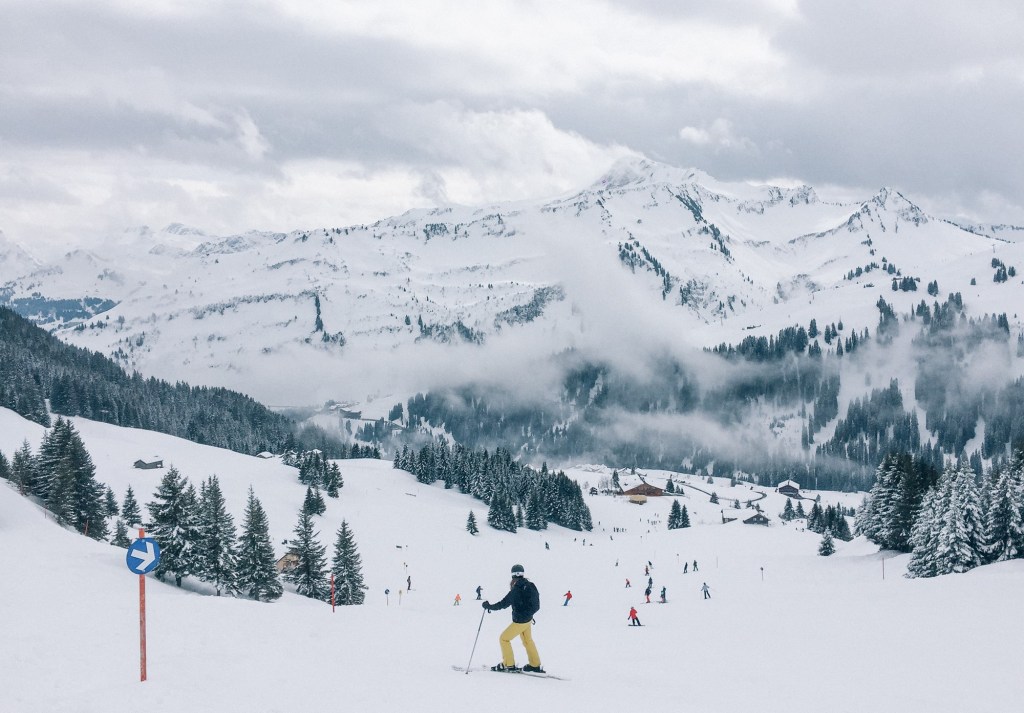
    That translates to, I’m Hannah and I study Intermedia at the Fachhochschule Voralberg (FHV) in Dornbirn, Austria. Dornbirn is a small town situated in the Voralberg area (west Austria) and it has plenty to offer. It’s only been three weeks and exchange has been one of the best decisions I’ve made while studying at UTS. If you’re weighing up a few different countries for exchange, I highly recommend Austria. Without a doubt. It’s a really beautiful country and located right in the middle of Europe, making it easy to travel to different cities and countries. Definitely come here to ski, even if you have never tried it before, it’s a great opportunity to learn. There are mountains all around the Voralberg area, with the closest skiing mountain, Bödele, being 15-20 minutes by bus from Dornbirn.

    The facilities at the FHV are very good for design students. They have lots of tools and spaces that are perfect for students who want to experiment with photography, interactivity/virtual reality and prototyping, just to name a few. Another great perk is the printing. Black and white printing is free for students as long as they provide their own paper. The teaching style is similar to UTS with lectures and smaller tutorials. However, the scheduling is done quite differently, with some subjects lasting the whole semester and some only a few weeks. The classes are about fifty-fifty exchange students to local students. Since I was already going out of my comfort zone by travelling to a foreign country, I thought I might continue along this road by choosing challenging subjects that I wouldn’t normally go for. For example studying interactive/creative code, prototyping and beginner German classes. Hopefully I’ll be able to converse with the locals at the farmers markets by the end of these 5 months.

    Living in such a small town has been a refreshing change from the busy Sydney hustle and bustle. I came to Europe in early January to travel around for a few weeks before starting my exchange. After three weeks of traveling, I stayed in Feldkirch, an old small town with some family friends for another three weeks. This gave me the time to settle into Austria, get used to the cold weather and do some solo travels around Voralberg. Living with a local family gave me a special insight into the traditional foods they eat and their Austrian way of life.

    I’m living in the Sebestrianstraße student accomodation, located on a hill just 15 minutes away from the university. After the first few action packed days of activities, we now cook together, eat together, ski together and take classes together. You make friends so easily in the house because everyone is in the same boat, and just wants to have fun while making the most of their exchange experience. There are about 10 different nationalities in the house, so when we have our weekly group dinners (which turn into feasts or parties) there is always plenty of food from different cultures.

    Austria has many traditions and customs, especially in the Voralberg area. One of the biggest traditions being Fasching – a big carnival where people dress up in costume, parade the streets in decorated floats and throw lollies (and sometimes liquor) to the crowds in the towns of Voralberg. Another strange Austrian tradition is the lighting of the Funken – Funkens are large wooden structures with ‘witch’ figures on top that they burn to drive away the winter. The Austrians are very proud of their food, with most of the traditional dishes being unique to Voralberg. My favourites are Bergkasse (mountain cheese) from the local farmers markets, Käsknöpfle (cheese noodles) and Apfelstrudel mit Vanillesauce (apple strudel with vanilla sauce). I love the quaintness of the town, the old houses and the abundance of bakeries selling fresh bread and sweets. Beer is huge here. You can find most people having 0.5L glass of beer at lunch or at the ski fields. If you’re not a huge fan of beer, not to worry, they also have citrus radlers which is lemonade with beer.

    Tips

    • For Viscom students – I thought the subjects had to be exactly to plan with the syllabus, but when you get here you have the choice to change subjects. I ended up changing half of my schedule and chose subjects that were more practical and skill based. Don’t be afraid to choose something out of your comfort zone.
    • Europe is cold. But they do have summer, so pack for all seasons. Dornbirn is also very bipolar with its weather, for example snowing one day and 15 degrees the next.  
    • If you have ski gear (jacket, pants , goggles, gloves), pack it in your suitcase. You’ll most likely go skiing because a lot of other exchange students choose this area specifically for the slopes.
    • Have fun and try lots of new things!!

    Auf wiedersehen!!

    Feel free to contact me if you have any other questions. J

    Hannah Seeto
    Bachelor of Design in Visual Communications
    Fachhochschule Voralberg
    Austria

    For more information about the UTS Global Exchange program please visit: www.global-exchange.uts.edu.au

  • 3 months after coming back from Japan for my In-Country Study experience, I was very fortunate to be elected as one of 6 student ambassadors from UTS for the New Columbo Plan initiative that paired with one of Japan’s largest multinational general trading company – Mitsui & Co. The program ran for a period of two weeks in Japan’s hot and humid summer, and despite swearing to not revisit in said season, it was one of the greatest experiences I ever had.

    Honestly, the single-page program flyer did not at all prepare me for what I was getting into.

    With also 8 other students from across Australia, from University of Western Australia (7) and University of Newcastle (1), I participated across a variety of seminars, business projects and cultural experiences at Mitsui’s headquarters in Tokyo. It was such a great, enriching experience as I was completely immersed in their business culture – challenged by following the standards and etiquette of Japanese business workers and it constantly amazed me. I was also given the opportunity to be exposed to the variety of specialties that Mitsui & Co. dealt with, especially ones they are operating in Australia and how such a large business company was able to manage and make decisions to last over centuries while still abiding by and keeping their values close.

    Not only was I able to learn about Mitsui, but also of the significance of Japan’s relationships with Australia that bring prosperity to both nations and how imperative it is to maintain it, especially from a dual-cultural perspective. The program also lead us on site visits that exhibit such processes which included: Kimitsu Steel Works, Shark Bay Salt processing plant, Toyota manufacturing facility, Toyota Museum and the Australian Embassy in Tokyo.

    Another site visit included the Moon Creative Lab in Harajuku, Tokyo – a branch office of Moon based in Palo Alto, California, and was one of the most memorable visits (a consensus among my fellow peers). The creative lab is a direct affiliate with Mitsui & Co, committed to incubation and development of new business innovations. It showed that a large company was capable of continuing to support the new, ever-evolving age but, it was not only this fact that amazed me. We were introduced Anna Hiraoka – an entrepreneur at the lab, where we were able to interact with her and her project’s progress. Being able to formally meet and greet employees and seeing progress and influence was the point where I realised how rare these opportunity were (and how there was no indication of this anywhere, but I think it was the best part – the surprise of it all).

    This program was very eye-opening into some of complexities of the world which I usually would not have delved in, even if it only covered a small part of it. So I am very grateful for the rare opportunity by providing me with significant insight into the corporate world, intricacies of international relations and furthering my own personal and professional skills that have improved since day one of the program.

    And I am not going to lie, it was the most content-heavy and tiring two weeks I experienced, with challenges that constantly greeted me at every corner. But, it was thanks to Mitsui & Co. and UTS BUILD that I was able to network and engaging with a range of professionals, diplomats, alumni and students from both Japan and Australia, forming ever-lasting relationships, friendships and memories that made it an experience I will never forget.

    Sandy Dang

    Bachelor of Property Economics, Bachelor of Arts in International Studies (Japan)

    Global Short Programs Student

  • Ryerson University, Canada

    “You came at the wrong time of year”, is something that has been told to me by almost every Canadian person I’ve met upon finding out I have come from Australia in the height of summer. However, from the onset I have disagreed with this statement and have found that not only did I come at the right time, but I could not have come at any better time at all.

    Two and a half months into exchange and the work is building up as we draw towards the tail end of the semester. The academic life at Ryerson University is similar in many ways to UTS, but also marks its difference in a number of aspects. Firstly, classes are scheduled in three-hour blocks consisting of both lecture and tutorial/lab. While this is incredibly draining, it is effective in making progress in classes as there is sufficient time to get properly stuck into the course material and allows students to apply what they have learnt in the lecture directly into the tutorial.

    Studying Media Production here at Ryerson is incredibly different to my Media Arts and Production major at home. Here, the university is very industry driven, producing students that at the end of their degree are fully prepared to enter the film industry in Toronto, with a full working knowledge of all the nuances of this vast profession. The classes I’m taking are all heavily practical, with subjects like Editing Specialty and Audio Post Production and Sound Design teaching me vital technical skills I feel I would not have had an opportunity to learn back home.

    In terms of accommodation, arriving at the Neill-Wycik Co-op where most exchange students stay, looked bleak. Very old and basic, it is not overly inviting. However, it is entirely what you make of it, and within a week of living there it began to feel like a home. This is due mainly to the roommates I live with. Somehow, I was lucky to be housed next to four of the most incredible people I have met in a long time who have made my time on exchange as amazing as it is and I cannot imagine having any experience better than this. With the inclusion of a few others, our friendship group is small, but I have formed connections with them I never imagined and am already saddened at the prospect of leaving Toronto and parting ways with many of them.

    It is because of these people that I have also been able to travel throughout the semester, as they express the same degree of enthusiasm as me, as well being companions I can spend all my time with without tiring of them. We were lucky enough to travel to Cancún in the reading week, with trips to Montreal and Blue Mountain coming up in the next few weeks. Trips like this would not be nearly as enjoyable as they are if I did not have such close friends to share the experience with.

    While Toronto and Sydney are very similar cities, what marks their difference the most, in my opinion, is the cold. Living in temperatures as low as -20 at the beginning of the Winter Semester establishes a completely different way of living than in Sydney. People move from A to B in the fastest manner possible, never lingering or hanging around on the streets, and going outside is always an event as it requires so much preparation. This being said, if you are well-prepared it is bearable, and for me, even enjoyable to a large extent. I won’t forget the inexplicable feeling of joy I had the first time I walked to uni while it was snowing, and the excitement I still feel every time I look out the window to see snow falling down to the streets. It’s a feeling completely absent in Sydney and has truly allowed me to feel far away from home in a completely different world.

    The people I have met and the time of year I have come have influenced my experience here on exchange that I know I could never live in Toronto because I will always be reminded of the time I have spent here, and I know nothing will live up to it. I do not feel that I came at the wrong time of year, I came at the time that was perfect for me as I cannot imagine having a better experience.

    Kamran Sachinwalla
    Bachelor of Communication
    Ryerson University
    Canada

    For more information about the UTS Global Exchange program please visit: www.global-exchange.uts.edu.au

  • I return from Spain with a greater world view for my career and future study options. This experience put me outside of my comfort zone, requiring me to lead teams in the classroom, to learn to communicate and adapt when travelling around the area or speaking with locals.

    I have a new found understanding for Spanish culture and their way of life.

    I understand where my studies sit in an international perspective.

    I also have a new found appreciation for Spanish food and music.

    San Sebastian, the city in which we were located, comes alive after 9pm. People flood the streets for ‘pintxo pote’, a night where bars serve hungry uni students Spanish finger food and beer. You’ll find this everywhere in the city, with students spilling out onto the streets.

    I plan to keep building on experiences such as this to work my way towards becoming a global leader. The friends you make on the way are the cherry on top.

    During my time at Tecnun university, I met American students, Spanish students and professors from all over the world. I made sure to teach the Americans some Australian slang to take back with them to Michigan.

    The BUILD program supported us fantastically while overseas. I encourage everyone to step outside their comfort zone and take a trip with BUILD.

    Siena

    Global Short Programs Student

  • From July 1-12 2019 I took part in the Robotics Summer course at TECNUN Engineering branch at the University of Navarre in San Sebastian Spain!

    It was an unforgettable experience that I shared with 2 other UTS students and 10 University of Michigan (UMich) from the USA.

    In the first week of the program we took an introduction to robots starting with theory, ethics and the progression of robotics from fiction to reality with Proffessor Emelio Sanchez.

    In our second week we used ROS to develop the programming infrastructure of the robot to control it as well as theory in machine learning and AI from Proffessor Borgh from the University of Alberg in Sweden.

    We also had many afternoon outings and weekend trips over the two weeks with the other UMich students.

    We visited the San Sebastian Aquarium, tried traditional Basque food called Pinxchos, visited the Guggenheim museum in Bilbao, took surfing lessons, took a boat ride around the coast, visited the boarder between Spain and France as well as visit 3 Basque towns in the Southern French coast.

    Sharing this experience with the American students was fantastic as we all laughed and remarked on the differences between Spain and our home towns. We also learnt a lot about the American University experience and shared the similarities and differences between Australia.

    I would recommend this BUILD program to all Engineering students. The robotics course was fantastic, and all the cultural programs included were unforgettable!

    Siena Reynolds

    Global Short Programs Student

  • I had the opportunity to go to Singapore for a short program with a group of friends for 1 month, it was fantastic!

    Prior to departing, I had worries about not being able to make new friends (since I chose to study in different subjects from my friends), keeping up with the subjects and staying healthy. Going there with friends was definitely a good idea as you have company.

    NTU GEM Trailbrazer Program

    So the Singapore Build Abroad program was called the NTU GEM Trailblazer Program and let me just say this – it was AMAZING! We had to arrive there before the program started because they organised orientation events for us. The first day was the NTU Amazing Race (race around campus). We split into groups and got the chance to mingle with other people from different backgrounds, even befriending them at the end. We were given clues and had to find places or things around campus. This activity was a good and fun way to get to know the locals, the university geography and meet possible people that you might be having classes with for the next 4 weeks.

    The next day, we had a Singapore Amazing Race wherein we did the same thing except this time the race took place around the city area! Through this event we got to visit some of the key and popular places in Singapore (such as Little India, Chinatown, Merlion and Haji Lane) as well as getting to know our way around to some of these places. We got lots of cultural exposure and tried some of the local snacks.

    Throughout the 4 week program GEM Trailblazer hosted weekly cultural events such as prata-making and glass painting workshops. These are definitely worth going to :). At the end of the program, we had a Farewell Party where we could dress up in our national clothes, watch performances, take photos and eat a feast!

    Living and studying at NTU

    Living in the university halls was such an interesting experience. I was lucky enough to be assigned in one of the good halls – Hall 3 – in which the locals told me that it was the best hall to live in. It was close to where my classes were and had lots of food places near it. One time I woke up exactly when my class started and I had an important quiz to do, so I just jumped out of bed and ran to my class, the short distance between my place and my class was a life saver!

    I had a roommate and though we didn’t talk much, we lived comfortably. I remember one time where I woke up late and found a note on my desk and even though it was just a simple message, I was touched.

    Another thing my roomate often did was leave the lights on for me before she went to sleep whenever I came home late, and always texted me goodnight. She was such a sweet roommate. Living alone taught me how to do my own washing, clean my own room, fold my own clothes and just do everything independently. By the end of the program, I have come to label my room – my home.

    The subjects I chose were Bioprinting:Principles and Applications and Introduction to Computational Thinking. Studying these two subjects were not an easy feat in under 4 weeks. There were many weekly quizzes, a final exam and a major group assignment. The classes were 4 hours long each. I had one day where I had both classes and it was 8 hours long! The classes were interesting and I loved the way they were taught. The teachers were very knowledgable which was engaging as they taught us beyond the lecture powerpoints. For Bioprinting, we had 2 workshops where we got to personally handle an actual Bioprinter and 3D printer and make structures. These was pretty awesome!

    Introduction to Computational Thinking was conducted in a flipped-learning way. The group assignment provided an opportunity to work with people from different backgrounds and to get to know them a bit more. This was my favourite subject. I got to learn Python in such a short amount of time. I was proud of the result of my team’s group assignment – we made (coded from scratch) an actual functioning Battleships game! I miss my team members very much!

    Weather, Food, and Others

    The weather in Singapore was very hot and humid, sometimes raining. No need for wearing tons of clothes like in winter in Australia. However whenever Singapore had thunderstorms, it scared the life out of me! 😂

    The food, oh my goodness! This was probably one of my top highlights. The food was so cheap. You can get a decent and filling meal way under $5AUD! The milk teas, you can get them under $3 in most places! Some hotpot and Korean/Japanese BBQ places are cheaper than the ones here in Australia so it’s worth trying them out. Singapore’s famous chicken rice dish is a must try and also the famous chilli crab!

    There was at least one shopping mall at most stops and these malls were very huge (the malls alone can be adventurous). Aside from these, I also visited places such as Changi Airport (there’s a waterfall inside!!!) Gardens by the Bay, ArtScience Museum, Marina Bay Sands, Universal Studios and Sentosa Island. I also went to visit Malaysia for a day trip with a couple of friends and their food and clothes were much cheaper than Singapore!

    In brief, if I was given a chance to go back, I would definitely take it! Singapore was such a nice country to visit. I befriended locals and people from other countries and in the process, learnt about various kinds of culture and adopted some of their language. I ate lots of delicious and cheap food and visited so many beautiful places. Studying there was a valuable experience and I would absolutely recommend this program!

    Michelle Jonatan

    Global Short Programs Student