UTS Think Global

Dream. Explore. Discover.

Disclaimer: All blog posts are written by students and do not necessarily reflect the views of UTS staff.

  • Maastricht University, Netherlands

    At the close of my first week of classes at Maastricht University, I’m sure of a few things;

    Workload, classes and PBL

    The learning system in The Netherlands (called Problem Based Learning or PBL)  is very different to traditional university teaching for undergraduates, but as a Masters student, I find it very similar to postgraduate study. You need to be a lot more self directed in your learning, and it’s really on your shoulders as to how well you do in class.

    I am studying in the School of Business and Economics, which is located in an old monastery, next to a beautiful park & bubbling creek, where you will often find students and locals alike lying in the grass soaking up the last of the sun, before the cold weather hits. What makes this even more idyllic is that the school is right next to the conservatory of music, so it’s not uncommon to be serenaded by an opera singer or orchestra on the way to class.

    Just some of the sights along the way to the School of Business and Economics

    Where to lay your head at night

    The housing market in Maastricht seems to be a form of Darwinism, only the strongest survive and find somewhere to live in the city itself! There is a general air of panic in the weeks before classes start, but people all seem to find a place to lay their head eventually. For undergraduate students, I would definitely recommend staying at the University Student Guesthouse, located in old hospital buildings,  there are heaps of students around & a packed calendar of social activities. As a Masters student, having done the student housing thing when I was younger, I opted to stay somewhere off campus in private housing, this is definitely harder to do, but you have to pick what’s right for you.

    The river cuts right through the centre of Maastricht & is an amazing place to sit, during the long evening sunshine & have a local beer.

    Location

    They call Maastricht the ‘city of the European citizen’, wedged between Brussels and Germany, and only a few hours away from France and the United Kingdom,  it’s definitely a melting pot of cultures here. It’s also so close to everywhere in the Netherlands, less than 2 hours to get anywhere you want to explore. Everyone here speaks impeccable English – the standard, and spread of fluency is so impressive. The locals definitely appreciate you trying to learn some dutch words, but be prepared to struggle getting some sounds right. Maastricht itself is pronounced more like ‘Mash-tree’ch’t’.

    Rebecca Linigen
    Master of Science
    Maastricht University
    Netherlands

    For more information about the UTS Global Exchange program please visit: www.global-exchange.uts.edu.au

  • Hokkaido University, Japan

    An efficient yet bureaucratic society

    Japan, I believe is a country of juxtaposition. Beautiful, traditional geishas alongside self-conscious, constantly adjusting their hair youths. Innovators in technology yet cash is more widely used when paying and everything you do has a physical form to fill out. The magnificent trees, mountains, flowers galore abruptly disrupted by concrete blocks for buildings with Shinto shrines and Buddhist temples hidden between.

    I have been in Japan now for just under two weeks and classes only started yesterday. We have had two orientations and an entrance ceremony (formal attire, all for one photo). Endless forms were filled in our first week and they won’t stop there, even the subjects that we had to register online for, need to additionally have a physical form filled out. Japanese bank account, health care, address registration, rental agreement, electricity, water and gas, subjects wanting to be taken and a whole bunch of paper than I simply cannot read! Every form accompanied with another page showing us foreigners how to fill the form in. My paper recycling bin is full. (Of course I’m keeping the necessary documents.)

    Japan is known for their extensive rubbish management, Hokkaido has gone three steps further. There are ten types of rubbish, all need to be sorted and some placed into a yellow coloured plastic bag (which can only be bought in stores). With so much plastic consumption, their efforts for recycling are almost matched. One would think the society as a whole would advocate to lessen plastic consumption but it seems that rather than being proactive they are reactive. I’m happy to comply as a passionate greenie and find it amazing that everyone actually sorts their rubbish. I think it’s wonderful they have wide scale soft plastic recycling unlike Australia where we have to take our soft plastics to Woolies or Coles (https://www.redcycle.net.au/).

    Hokkaido University has the largest campus in the whole of Japan. Originally the Sapporo Agricultural College, the grounds have fields, cows and crops surrounding the diverse faculties. There is a central road on campus with trees lining its path. Students hurrying to arrive early to class (lateness is extremely frowned upon), bikes flying passed and even tourists come to take photos of the university’s beauty.

    I am living in an all-women’s dormitory purely for international students. We have all bonded nicely with our common interest of Japan. I am lucky to be able to create my own little nest within 11m2 with the luxury of a bathroom and small kitchenette. However, food on campus seems to be cheaper than going grocery shopping. There are four cafeterias, all with similar dishes, udon and soba noodles, ramen, rice but the efficiency in which they serve students is astonishing.

    I am part of the HUSTEP (Hokkaido University Short Term Exchange Program) and one of 1,600 international students who study here. So far I have met students from: America, Poland, Tajikistan, France, Sweden, Germany, Holland, Finland, Estonia, Latvia, UK, Nigeria, Indonesia, China, Taiwan, Kazakstan and a few from Australia. As part of HUSTEP there are a large variety of classes, from science to politics, anthropology and engineering, all conveniently taught in English. There is also the option to take Japanese language classes alongside your studies. I am undertaking civil engineering subjects where the lessons are taught more than 50% in English. However so far, 99% of the students in my classes are Japanese so the teacher tends to speak in basic English and then translates what he’s said into Japanese. For engineering classes, there are two lectures per week and female presence in the class room is scarce. So you can imagine that I’m the only blonde, Australian girl in a sea of Japanese boys.

    Sapporo is the largest city of Hokkaido, large animated TV screens light up the city streets however unlike any other city, its streets are wide and less claustrophobic. The mountains are nearby and the countdown till the snow starts to fall is on.

    Raine Jackson
    Bachelor of Engineering / Bachelor of Science
    Hokkaido University
    Japan

    Australian Government New Colombo Plan Mobility Grant recipient.

    For more information about the UTS Global Exchange program please visit: www.global-exchange.uts.edu.au

  • Copenhagen Business School, Denmark

    It’s crazy to think that a little over 2 months ago I was packing like crazy, doing a Marie Kondo kind of thing where I was asking myself “Do I really need this? Will it bring me joy in Copenhagen?” Just a quick word of advice – bring a raincoat and it will definitely spark joy. I can’t tell you how many times I’ve been caught in the rain, and despite having the best intentions to buy one I just still haven’t gotten around it yet.

    Despite that however, the weather – although it’s super unpredictable – is not actually that bad. Before arriving in Copenhagen, I expected it to be super cold and overcast but that was definitely not the case! As it turns out, apparently the weather had cleared up to coincide with the arrival of Copenhagen’s newest batch of exchange students and for the first 3 weeks we were having picnics, going to the beach or Islands Brygge for a swim, and took GoBoats for picnics in the canals. Although the weather has taken a bit of a turn in the weeks since, I’ve adjusted to the temperature drop and there have still been plenty of sunny days.

    Another word of warning, Copenhagen IS expensive. Before coming everyone told me that it was, and I was probably a little naïve to think that it wouldn’t be that much worse that Sydney – but it seriously is! A good way to get around this though is to buy groceries and cook. Even better if you can round up some friends and make communal meals. For me, living in one of the residences offered by CBS has made this super easy as we have a communal deck, common room and kitchen and so there’s never a shortage of friendly faces and we often all eat together.

    In saying this though, I am a little guilty of eating and drinking my way through the city, and so the fact that everybody bikes everywhere has forced me to do some much needed exercise. It’s also an added bonus that it’s often the quickest and easiest way to get around the city. I would highly recommend Grød for seriously good risotto, acai bowls and porridge, Meyers Bageri for the best cinnamon buns you will ever eat and going to Reffen for the open-air food markets.

    Another added bonus of studying in Copenhagen is its location. The airport is only a quick metro ride away and has great connections to the rest of Europe. Just last week my friends and I went to London for 4 ½ days and the flights were $50 round trip. I’ve also got trips to Vienna, Stockholm and Norway planned and plenty of other places I want to visit – the hardest part is pulling yourself away from Copenhagen too often.

    So I guess to sum it up, I’ve already fallen in love with Copenhagen. The city is big enough to have a good nightlife, and great flight connections to Europe, but small enough that you can bike everywhere, eat authentic food and feel like a local in no time and I’m sure it you decide to go on exchange to CBS you’ll love it just as much as I am.

    Georgina Walker
    Bachelor of Business
    Copenhagen Business School
    Denmark

    For more information about the UTS Global Exchange program please visit: www.global-exchange.uts.edu.au

  • Hej from Uppsala!

    It is now my third week in Uppsala, Sweden and I still can’t believe I’m really here.

    I am living in Flogsta, famous for the “Flogsta Scream” which happens every night at 10pm and is used as a way to deal with the stress of university life. I share a corridor with 11 other students, with people coming from Sweden, India, Russia, Spain, France, Japan, Taiwan and Australia! The kitchen can get pretty crowded especially when we had our first corridor dinner, and all squeezed around our little table to eat tacos. I was extremely lucky with my corridor mates; everyone is so friendly and considerate (so we all keep the place clean)!

    I spent the last two years living in UTS Housing, and definitely took advantage of essentially living across the road from my classes. Here, that is not the case. The subjects I’m currently doing are located at campuses which are 10 and 15 minutes away… by bike.

    The cycling culture here is something that I really enjoy. There are bike lanes all through the city and heaps of overflowing bike racks. Luckily, Uppsala is pretty flat because otherwise I would be walking my bike a lot more often than I already am!

    The semester structure here is quite different to UTS, it’s broken up into four study periods and certain subjects will during different periods. The subjects I’m currently doing are Robotics and Sustainable Development: Project Management and Communication, both of which run for the entire semester, and in November I start studying Wind Turbine Technology and Technology-Based Entrepreneurship.

    My classes Robotics and SDPMC occasionally overlap and earlier this week, I went straight from a Robotics lecture – which was quite traditional, even with blackboards involved – into my Sustainable Development class where a guest speaker was running improv activities and a design thinking card game where my group had to invent a way for athletes to make friends that was also inflatable.

    Although I have a few months to go, I know it’s going to fly by, and I can’t wait to see where this adventure takes me.

    Paige Rottcher
    Bachelor of Engineering
    Uppsala University
    Sweden

    For more information about the UTS Global Exchange program please visit: www.global-exchange.uts.edu.au

  • Stuck in the middle…

    In the middle of the city where “east meets west” and the skyscrapers meet the picturesque coastline, my exchange is well underway in Hong Kong. As you might be aware, this also happens to be the city where Chinese police are currently “meeting” regularly with local Hong Kong protestors. It’s a potentially pivotal (and slightly tense) time for the region, but it’s week 5 of the semester and my new daily life is exciting, enjoyable and largely unaffected.

    This new life is based in Kowloon, in PolyU’s student accommodation. I’m one of around 300 other exchange students from around with world, with a disproportionally large number coming from Europe. I’ve found new friends also from the United States, South America, Asia and of course other Australians. Although some of the PolyU buildings are quite old, the university has a large and well-equipped campus. As a civil engineering student, I find the teaching style here to be very similar to UTS. I’m studying direct equivalents and I have a few other exchange students in these subjects (we stick together).

    I have lectures, labs and tutorials and the teachers have a good level of English. It’s especially interesting for me to learn about civil engineering and the local construction industry in the highly developed city of Hong Kong, with local case-studies and different standards to Australia. I’ve also taken a crash course in Cantonese – as a language of 9 different tones, it was just as confusing as it sounds. Luckily, I managed to condense my timetable to between Monday and Thursday nights, freeing up long weekends for travelling and other activities for my whole semester.

    A launchpad for exploring Asia, Hong Kong has flights to Vietnam, Philippines and Thailand going for under $200 return. These places are great for stretching your hard-saved travel money, allowing you to cover a lot more cocktails on the beach. I’ve recently visited a friend in Singapore and before semester I stopped for a few weeks of surfing and diving in Bali and eating and drinking in Thailand.

    Hong Kong may sound expensive… and it definitely can be. But, the university accommodation is super cheap compared to anywhere else – at around $70 (Aussie) per week. You can find a full meal at the student canteen for $5 and a half-decent coffee at the campus cafe for $4. So your budget all depends on how you work it… if you try central Hong Kong, expect to pay a lot for rent and meals and $8 for a coffee – yes, $8 for a small cappuccino.

    Being my second exchange, my big nights out are much less frequent. But if you’re up for it, Hong Kong is a vibrant city of rooftop bars, clubs, live music, free-flow drinks and all-you-can-eat restaurants and even raves on the beach. Lots of the exchange students are out all weekend… and week. As a bit of an alternative, I’ve been getting up early for hikes with new friends and have joined a CrossFit gym – also a great way to meet a community of the expats and professionals of the city.

    A lesser-known fact about the Hong Kong region is that national parks and green-areas make up 70% of the land. Personally, I find this strange contrast to be an absolute godsend – I’ve been camping on the beach (pictured), surfing, sailing, waterfall jumping (also pictured) or hiking every weekend that I’ve been in Hong Kong.

    Ultimately, I feel that Hong Kong provides something for everybody. It’s a cosmopolitan city of many different foods, landscapes, temples, markets, shopping areas, people, attractions and activities. Exchange here has been an amazing experience so far and I’ll leave you with one of the easier Cantonese phrases that I’ve managed to remember – bāi bái!

    Thomas Fisher
    Bachelor of Civil Engineering
    Hong Kong Polytechnic University
    Hong Kong

    Australian Government New Colombo Plan Mobility Grant recipient.

    For more information about the UTS Global Exchange program please visit: www.global-exchange.uts.edu.au

  • Comillas Pontifical University, Spain

    Comillas Pontifical University, Madrid. Early Afternoon

    2:00pm

    It’s hot. Blistering hot. Caliente. You’ve just finished class or ‘Current Issues from a Spanish perspective.’

    You’re engaged, interested and elated to be here. You’re excited to learn the Spanish language, the history, the politics. You plan to explore Spain’s historic cities and sleepy seaside towns. You think how much you’ve loved Madrid – the wide streets, the heaving bars and delicious tapas joints. But you’re roused from your daydream by a familiar low rumble, stirring from the depths of your stomach. You glance awkwardly at your peer – a girl from Rotterdam who you met at Orientation. Trying not to make eye contact, you close your laptop and mumble your excuse in bad Spanish. Lo…Lo siento, necesito…to go.

    You need food. Now.

    A close up of a bridge

Description automatically generated

    Comillas Train Station

    2.20pm

    You’re on the train. It’s a nice change from the blazing desert walk from Comillas’ Catablanco campus to the station. You lean you head back against the cool glass. The landscape is flat – a large expanse of oranges and yellows stretch out to the blue Sierra de Guadarrama. Like a Gaudi painting. Your tummy growls again. At least you’re not far from your apartment – just one metro stop and then 24 minutes on the overland train. You think, why didn’t I grab that extra croissant this morning? You’ve only been here a week and you haven’t adjusted to the pequeño Spanish breakfasts of café con leche and bollos. Your stomach stirs loudly now. A young niño in worn sandals and a signed Real Madrid jersey looks at you in shock and hides behind his mamá.

    A castle on top of a building

Description automatically generated

    La Calle De Gran Via / Cybele Palace

    2.50pm

    You’re walking down La Calle De Gran Via from the metro in a daze. The usual bustling streets seem quieter. Nothing looks open. The faint sound of the Spanish guitar echoes through the plazas. You’re starving. Craving the taste of tortillas de patatas and a refreshing sangria to wash it down. Your mouth is dry, sweat drips down your neck. A tumbleweed rolls past you through the square. You pause to catch your breath. And then, you see him. It’s Javier Bardem, except he’s holding a huge plate of tapas and glass jugs of iced sangria. Your mouth gapes like a happy puppy as you half run towards him in a desperate flurry. You can taste the patata. You’re nearly there…

    RESTAURANT CLOSED 15:00 – 19:00

    Wake up honey. You’re in Spain now.

    Caliente – hot

    Pequeño-  small

    café con leche – strong coffee with hot, frothy milk

    bollos – sweet rolls

    Sierra de Guadarrama – mountain range 

    Plazas – square

    Patata – potatoes

    Niño – boy

    Rubeena King
    Bachelor of Communications
    Comillas Pontifical University 
    Spain

    For more information about the UTS Global Exchange program please visit: www.global-exchange.uts.edu.au

  • Tilburg University, Netherlands

    After a whirlwind 6 weeks travelling Europe and visiting family and friends, I finally landed in Tilburg. After I sat down in my room on the first day and the excitement wore off and there was a moment when I worried, ‘What have I done?’ about going on exchange.

    But after one and a half weeks here, it already feels like home. What seems like a quiet, little town in the south of the Netherlands may not be your first thought for an exchange destination, but so far, I couldn’t have made a better choice!

    The exchange experience here is designed to make your transition as easy as possible. All exchange students arrive on one of two “registration days” at the university. This helps you get all your admin done, from renting a bike to registering for the sports centre, and has you meeting people the moment you step off the train. Following this, the university runs an orientation program called TOP Week, where you spend a week with an allocated group and I*ESN (international student association) mentors exploring the city undertaking all kinds of fun activities. This includes the infamous TOP Cantus, the largest official beer cantus in the country. There is no way I can describe how just drinking beer and singing in a mix of Dutch and English is one of the best but strangest experiences! Following TOP Week, your group continues to have weekly catch-ups.

    My accommodation is in student housing at Verbs, where I share an apartment with seventeen other exchange students. While that notion was absolutely daunting to me (how in the world can the bathroom, showers and kitchen stay even semi-clean??), I have come to absolutely love it. I live with people from all over the world – as close as Germany and as far as New Zealand and including everywhere in between from Chile to South Korea. Not only do you always have someone to hang out with and learn about different cultures, but you also get to try their food! You’ll never feel lonely in such a social place, but you can always retreat to your room if you need some quiet time. Heads up, rooms in Verbs run out in literal minutes and student housing in Tilburg is limited, so make sure you book it ASAP.

    But my highlight so far been living in the Netherlands itself! The lifestyle here is super relaxed and being in a student town like Tilburg is such a different and chill experience compared to Sydney. There is nothing better that riding a bike everywhere like the Dutch, and it’s honestly essential, so start practicing early! Communicating with the locals is easy because everyone speaks fantastic English and trains link up most of the country so you can easily go to Amsterdam or The Hague for a day trip. More importantly, there are cheap flights from nearby Eindhoven and Amsterdam airports so you can easily see the rest of Europe!

    It’s been an amazing start and I can’t wait to see what the rest of exchange brings! Feel free to get in touch if you have any questions.

    Christina Knezevich
    Bachelor of Arts in
    Communications / Bachelor of Laws
    Tilburg University
    Netherlands

    For more information about the UTS Global Exchange program please visit: www.global-exchange.uts.edu.au

  • Bright lights, warm nights & unexpected delights – a semester in Singapore

    NTU is situated on the west coast of Singapore, referred to as the NTU bubble. To get to town expect it to take about an hour, first a bus to the MRT station then an MRT. The campus is larger than most suburbs in Sydney boasting about 20 halls of residence, excellent sport facilities and endless places to study. The halls can be a fair distance from the academic precinct, which is concentrated on the west end of NTU, there are free campus shuttles transporting students to and from the halls to classes – god forbid you would walk. I organised a bicycle for myself to get around campus, this provides freedom and is quicker than waiting for the shuttles, albeit cycling in 30 plus degrees is hot work.

    The Nanyang Business School is highly regarded in Singapore and abroad, the building is called “The Hive” and is an award-winning sustainable building with green space it’s a very pleasant place to learn. All my classes are 4-hour seminars, not so much formal lectures but a collaborative learning style, whilst class participation is encouraged some of the Singaporean students are quite shy to get involved. Culturally Singapore is a high power distance society, meaning authority and status is to be respected. This is not a bad thing but in the context of a collaborative learning environment this can hinder classroom debate and students can be less likely to share alternative viewpoints. The workload in Singapore is quite heavy with regular homework and assignments to be completed on top of the usual study. I’m taking 4 classes totalling 15 credit points when only 12 were required for me to receive a full-time study load equivalent back at UTS. The reason was one class, cultural intelligence seemed interesting to me and thought what a better time to learn cross cultural frameworks than when experiencing it. This has helped me tremendously, applying what I’ve learnt to everyday interactions and situations – also have made some amazing local friends in this class.

    I have been enjoying life at Nanyang Technological University, very different to life back at UTS. The on-campus housing is by random allotment, before leaving my privileged life in Sydney I found out I would be in a single room without air conditioning. It was nice that I would have my own space, but I was mildly concerned about the temperatures I would be subjected to. Upon arriving in my room, I found a small room and a mattress with a vinyl cover on it, this is to stop sweat soaking into the mattress and being shared with the next person to stay in the dorm. Sorry to be graphic but hope you appreciate the heads up; the devil is in the detail, welcome to Asia. I would suggest either taking a mattress protector or getting one from IKEA after arriving. The room has a ceiling fan that is always cranked to full speed when I’m in the room which provides relief.

    Even though Singapore is an economic hub and financial centre of the region it is still in Asia, so some things are very different, I have found some things challenging. An example was when of my professor shared his view that there is no problem with child labour in the textiles industry etc. His reasoning was that at least employment is being provided to these children and their families. A rather pragmatic approach to the issue but also quite devoid of empathy and compassion for a child’s right to have a childhood and education. I had a discussion with him as I thought it was important to provide my point of view, I don’t think his views are representative of Singaporean’s overall. I have been treated with compassion and kindness from majority of the local people.

    Singapore is a hotbed of cultural fusion, Chinese being the largest influence with 70% of citizens being of Chinese descent. Malaysian and Indian influences are also prevalent in local cuisine. The beloved hawker centres serve up very affordable meals from about $3SGD, this is delicious and to be taken advantage of. Song Fa Bak Kut Teh, a Michelin stared restaurant serving up pork ribs in a broth is a taste to be experienced, at $12SGD you would be crazy not to. The vegetarian options in Singapore are fantastic, as dishes here are centred around delicate and strong flavours. In Australia a lot of meals are centred around meat, the old meat, carb and three veg. This is not the case in Singapore where tofu and other alternative mean you can easily get all your nutrients from vegetarian food.

    Regarding the region, South East Asia never ceases to amaze me. Having done some travel in the region previously I was excited to get back up here. Singapore is an excellent launchpad for travel in the region where you will struggle to find a flight that costs more than $60. Before my semester began, I flew to Singapore, dumped my bags and set off for Malaysian Borneo the next morning. Solo Jungle trekking, national parks, river cruises and chasing sunsets – this is what I needed. Traveling around for three weeks in the wilderness was such an experience, reminding me how precious our natural world is how important it is for us to preserve it. Whilst climbing Mount Santubong in Kuching by myself I encountered a King Cobra. Remaining calm and backing away until it left the fallen tree I had to walk over to get back to the park office will be a tale to tell. Writing this during recess week I decided to head up to Georgetown in Penang, Malaysia – what a place. Colonial shophouses, hipster cafes, street art and some of the best food Asia has to offer.

    Overall so far, my exchange semester has been completely different to my expectations and I wouldn’t change it for anything. I set out for a life changing experience, personal growth and to learn about the complex world we live in. At UTS I have been truly lucky to been afforded the opportunity and I implore anyone considering Singapore to jump at the chance, I have increased my network made many friends and acquaintances that will I have no doubt leave a mark on me for the rest of my life. Kudos to Julie Bishop’s vision of the New Colombo Plan, what an incredible legacy for her to have left from her career in Australian parliament. Also big thanks to the UTS study abroad team, they work very hard to provide such an amazing experience.

    Great to chat but I’ve got some exploring to do 🙂

    Alasdair Kay
    Bachelor of Business
    Nanyang Technological University
    Singapore

    Australian Government New Colombo Plan Mobility Grant recipient.

    For more information about the UTS Global Exchange program please visit: www.global-exchange.uts.edu.au

  • IE Universidad, Spain

    ¡Hola! ¿Qué tal?

    For a bit of background, I’ve been in Madrid for just over two weeks studying law at IE Universidad.

    Madrid as a city

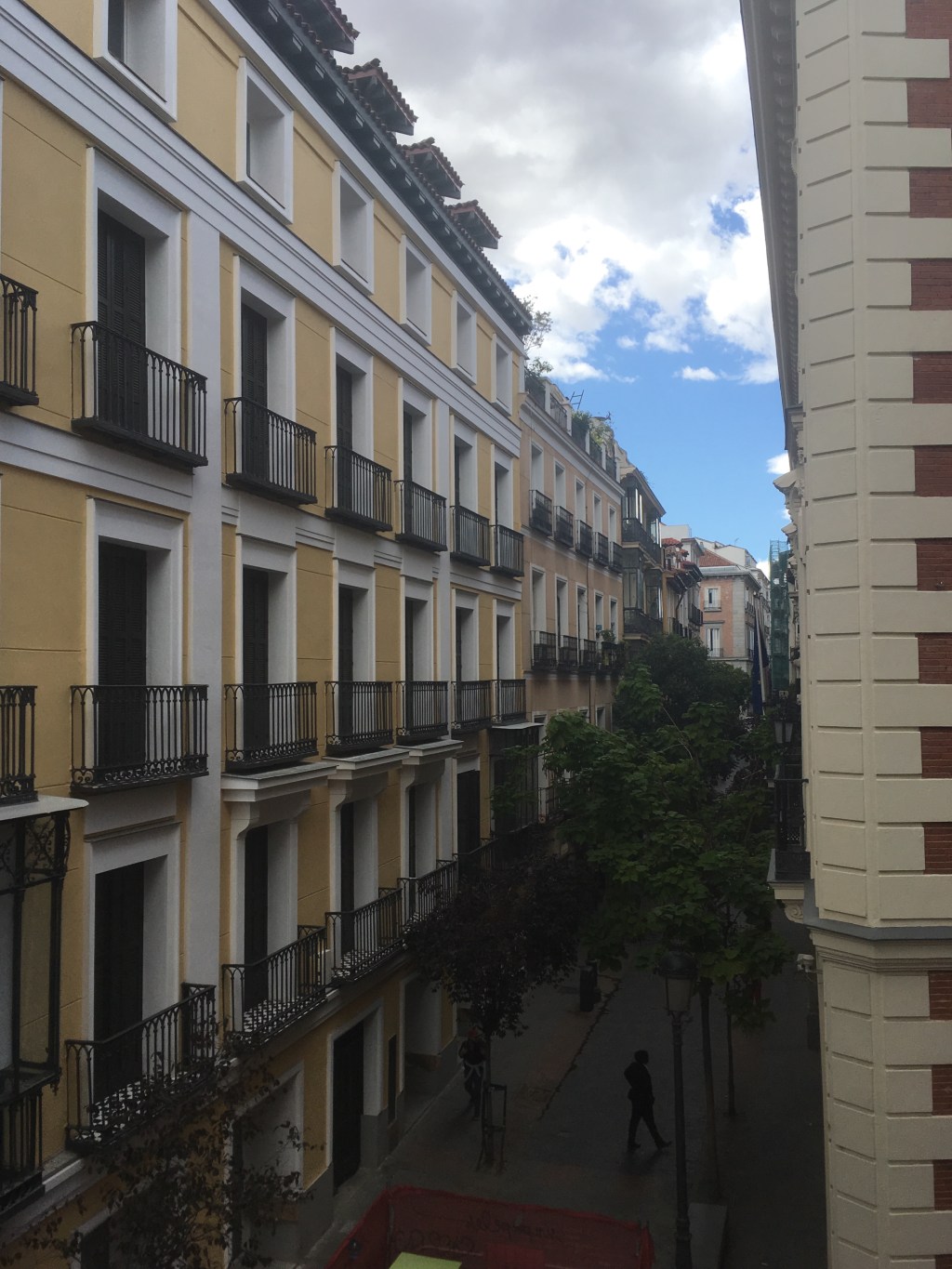
    Madrid is an incredibly vibrant city and I found an apartment right in the heart of it all, a short walk from Sol. Madrid certainly lives up to its reputation as the city that never sleeps – the streets are always bustling with people enjoying a cerveza or tinto de verano (the better version of sangria). While Sol can be a bit touristy, it is super convenient and in 5 minutes you can walk to some of the coolest barrios in Madrid, like: Lavapies, whose immigrant influences are full of Middle Eastern/Indian culinary delights; La Latina, famous for the biggest Sunday flea market, El Rastro; Chueca, the lively gay capital; Malasana, a trendy student barrio; and of course, Retiro, home to the biggest park in Madrid.

    Uni

    From the few classes I’ve had already, I can say IE is substantially different to UTS. The classes are made up of around 30-40 students and are all taught in our ‘tutorial’ style (that is, no lectures). The classes are taught in a very collaborative and interactive way, so you definitely need to keep up with the readings to make sure you can participate and answer questions the tutor directs at you. The workload is slightly more than at UTS (I’m studying 6 subjects to make up enough credit points), but so far the classes have been really interesting.

    While I was restricted to only doing law subjects, the law subjects have been quite business focused. Studying Law/Business at UTS, I’ve found this quite useful.

    Some practical advice

    For anyone studying at IE – or anywhere in Spain for that matter – make sure you apply for your Spanish visa as soon as possible, especially if you’re planning on travelling beforehand. The process took around 2-3 weeks for me but caused a fair deal more stress than it should have because of how late I left it. I managed to fit in 7 weeks of travel before starting uni.

    I found a room in an apartment using Uniplaces, but there are also plenty of other websites that IE recommends. While you don’t actually get to see the apartment or meet the people you’ll be living with, it saves the stress of getting to Madrid early to find a suitable place to stay. From my experience, it was definitely worth the slight risk and I get along really well with my housemates, so I’d highly recommend finding a place before arriving in Madrid!

    Gabriele Santoro
    Bachelor of Business / Bachelor of Laws
    IE Universidad
    Spain

    For more information about the UTS Global Exchange program please visit: www.global-exchange.uts.edu.au

  • Skema Business School, France

    Upon arriving in Lille, France I was filled with anticipation and didn’t really know what to expect. Having spent the month prior to my arrival in England and Spain, I was used to being away from home and more than ready to settle into my new life in Lille. Arriving at my accommodation was a great feeling as it was a difficult process to find something in the first place. This was my first real interaction with the French culture and how it differed from my own. For example, when applying for housing you must put a minimum of 12 months as the duration of your stay if you want your application to be considered! Thankfully my host university offered advice on this and when I arrived, checking into my accommodation was a quick and easy process.

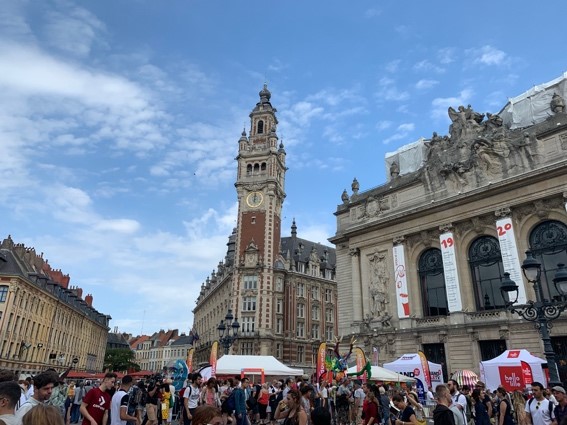
    My first weekend I was lucky to experience the Braderie festival which sees the majority of the city streets closed down, transformed into a flea market and brings up to 2 million visitors to the city. As I arrived knowing no one else in the city, there was definitely no shortage of company and provided a great insight to the culture of the city. What did strike me more than I thought it would was what a strange feeling it is living in a city where you don’t understand most of what is being said around you. This has only increased my desire to take advantage of my time here to learn more of the French language.

    Seeing Skema Business School for the first time was like a weight had lifted off my shoulders. After all the studying, research and work I had finally made it! My first day was an orientation with all the other international students coming for the semester. We received multiple lectures about life in Lille as well as a tour of the campus – which is much smaller than what I am used to at UTS! The campus is located above a shopping centre in the heart of the Lille so it is an excellent base for exploring and understanding the city. As Skema is an international business school it has a culture all its own, with students from 125 countries all coming together.

    Although it has only been a week, I am already falling in love with the city of Lille. I am looking forward to starting my classes and meeting more people that are on the same adventure as me!

    Christeena Smyth
    Master of Project Management
    Skema Business School
    France

    For more information about the UTS Global Exchange program please visit: www.global-exchange.uts.edu.au