One of the fun parts of going on exchange is having your birthday while on your semester abroad. Here is my Indian friend on his birthday. We made sure that he won’t miss home!

Sadra Boutorabi

One of the fun parts of going on exchange is having your birthday while on your semester abroad. Here is my Indian friend on his birthday. We made sure that he won’t miss home!
Sadra Boutorabi
Italy’s way of doing things can be both frustrating and fantastic! While trying to organise visas, residency certificates, tax codes etc will give you a great education on the anatomy of a waiting room, the structure of studio at Politecnico Di Milano has given us the best opportunity to experience and learn about the city. One component is to walk around the city in our own time and do a survey on a specific element of architecture in Milano while the other component is to design a building related to cycling, and therefore our homework is to have a cycle around Milan so as to better understand the experience.
I hope the rest of semester will be as catering to exchange students as it has been so far!
Georgia Jamieson
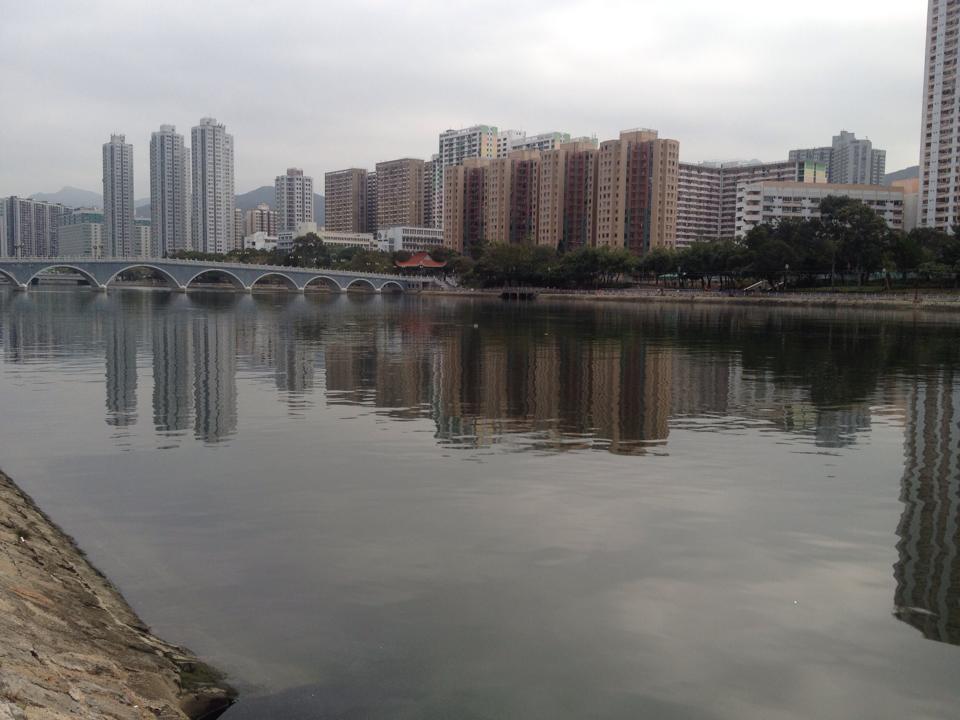
Morning jogs by the river, long bike rides to Tai Po to eat at little restaurants with menus entirely in Chinese characters, walking up steps upon steps to reach the 10,000 Buddhas Temple and look upon the beautiful green that is Hong Kong’s more peaceful area…renting a hotel with my boyfriend in Sha Tin was definitely one of my better ideas. I think I was almost as excited to get out of my tiny little room on campus as I was to see him!
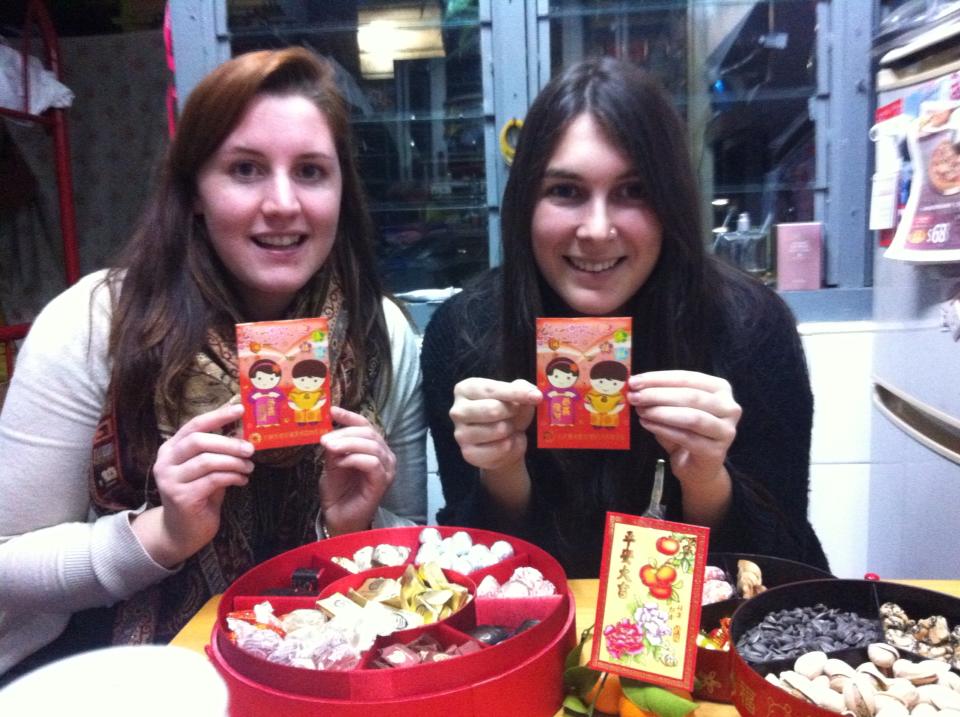
I and my Canadian friend were fortunate enough to be invited to a local girl’s house for a traditional Hong Kong Chinese New Year family dinner – complete with duck feet and plenty of sweets. I have stayed close friends with her over this exchange. Her mum was apparently impressed with our chopsticks skills.
Flagstaff is quaint town located in Northern Arizona. Northern Arizona University is a picturesque campus, surrounded by the majestic San Francisco Peaks. It is a vibrant and diverse college town. It’s ideally located for weekend trips away. Legendary Las Vegas is only 3 hours away and California is only a 6 hour drive. “Thirsty Thursdays” are the nights to go downtown as you can’t resist the $1 drink deals at the popular Irish bar Collins. On weekends there are usually a few parties off-campus although NAU doesn’t have the biggest party reputation. Some of the parties are like a scene out of American pie; bros playing beer pong, everybody drinking out of red cups and cute girls twerking on the dance floor.

SAN FRANCISCO PEAKS
If partying isn’t for you then there are many other options. There are many hiking trails in Flagstaff and Sedona is only a 45 minute drive away. Also within distance is the world famous Grand Canyon. Other worthwhile sites to see are Monument Valley, Canyon de Chelly and The Petrified Forest, all of which can be done in a weekend trip. There is also the option of going skiing up at the Arizona Snowbowl which is only a 20 minute drive away. So as you can see there are many things in and around Flagstaff to keep you entertained!

MONUMENT VALLEY
When it comes to actually obtaining your education the professors are laid back and the workload isn’t that demanding. The standard of work isn’t that high either. Most teachers will make you take weekly quizzes which contribute to your overall grade and that ensures that you actually do the assigned readings. American’s are really friendly and welcoming and as soon as they hear your accent they bombard you with questions. Most of them will tell you that they’ll never go to Australia because they’re scared of all the snakes and spiders. I’d recommend NAU to anybody looking for an authentic ‘college town’ experience!’ Bring on Spring Break!

AUSTRALIA DAY WEEKEND IN LAS VEGAS
Chris Hew
11218789
JUMBO! So we are now into our final week of our African adventure (Kenya believe it!?) and the general feeling is one of sadness that our time is up so soon! Every aspect of this trip has been amazing so far and I wouldn’t change anything, even the unpredictable showers and the occasional blackouts have added to the experience and made this trip an unforgettable experience.
So with the reminiscence out of the way, I will fill you in on the last few days. Last week we finished the school week with a social work class at the primary school which we actually got to participate in! We put our dramatic minds to the test and constructed a short and very simple skit demonstrating gender equality, as that was the theme of the week. While it was quite a good effort, I think we were outdone by the children, who performed a small skit also. The following morning was Friday, and we were lucky enough to spend the morning at a local village to get some cultural experience under our belts. It was great to see how the locals live and survive, often without many things we take for granted here and at home In Australia such as electricity and running water. The villagers were kind enough to perform a short dancing and singing display, as well as providing us with fresh coconuts as a beverage while we watched. Afterwards, some of the group decided to visit the witch doctor, who advised them on various illnesses and remedies.
The weekend was a big adventure once again, with a trip to Wasini Island taking up most of Saturday. We took a traditional dhow boat out to the kisite marine park for snorkelling and then on to Wasini island for lunch. I personally was beyond excited to get in the water and do some snorkelling and I wasn’t disappointed. Beneath the crystal clear, blue water was no shortage of exotic fish and other marine life. It was defiantly an experience I will never forget and an unbelievable contrast to the previous weekend spent on safari in the dry heat. It is amazing that such different places exist so closely together.
Sunday was spent on Diani beach, relaxing and embracing our last weekend day here before we leave. I went for a camel ride which was a great was to end the day. It is now Tuesday, so we only have three more days of school left and then home time. Luckily we get to visit every school this week so we can say our goodbyes and thankyous to the children, their teachers and of course the LSO staff who have been incredible!
Emma
Global Short Programs Student
Volunteer Kenya: Sport for Better Futures in Kenya 2014
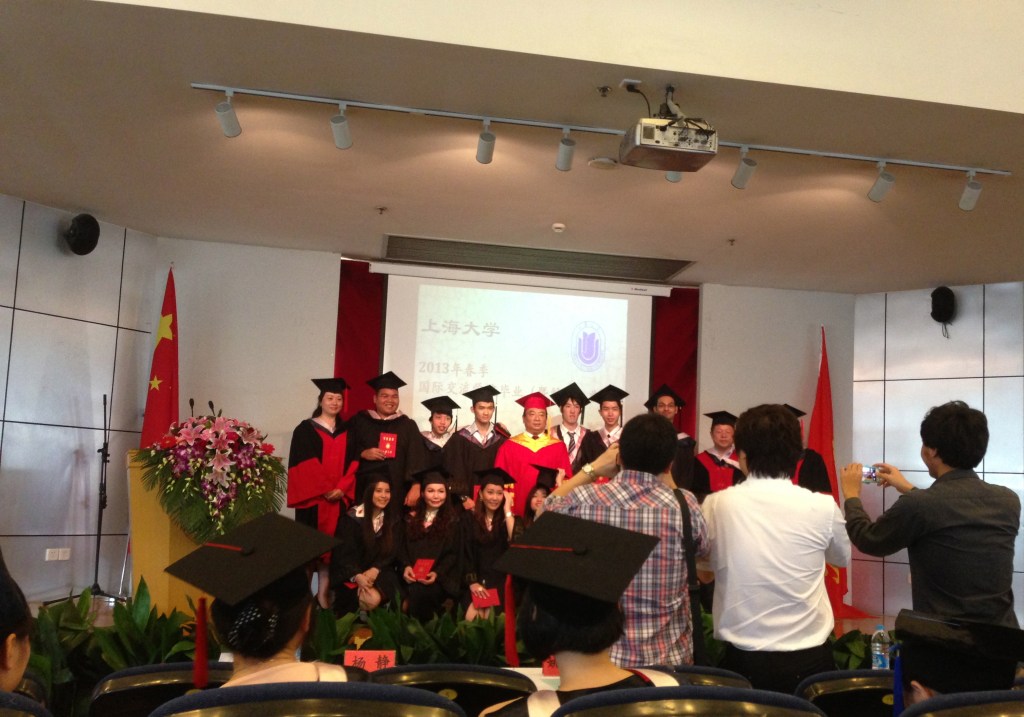
No international student exchange in China would be complete without attending or at least witnessing a university graduation ceremony. Such ceremonies as well as the plethora of extracurricular, on-campus clubs are part and parcel of the university culture in China: which is all about fostering a collegiate atmosphere and strong sense of community around universities. At Shanghai University international exchange students are invited to take part in a mini-graduation ceremony to experience this rite of passage for Chinese students. Curious to gain a deeper insight into the university culture and experience that shapes the lives of Chinese students, I decided to accompany some exchange friends attending their graduation.
The atmosphere is decidedly formal at first, with a parade of teachers and the long-term exchange students graduating decked out in full academic garb. The ceremony is conducted completely in Mandarin with speeches from the international exchange coordinator and a number of senior teachers. Then the long-term study graduates and academic prize and scholarship winners pose on stage for photos.


However, the formality soon breaks down when a group of international students take over the stage with a ‘thank you’ performance for the university. They perform a series of short comedy skits and original songs in Mandarin – at one point making the entire hall to stand up and sway along in unison to the music. This graduation ceremony perfectly captures the blend of formality and fun characterising the international student experience in China. Making the most of an international exchange in China is ultimately about achieving a balance between respect for the Chinese way and immersing oneself in the dynamic international student community.

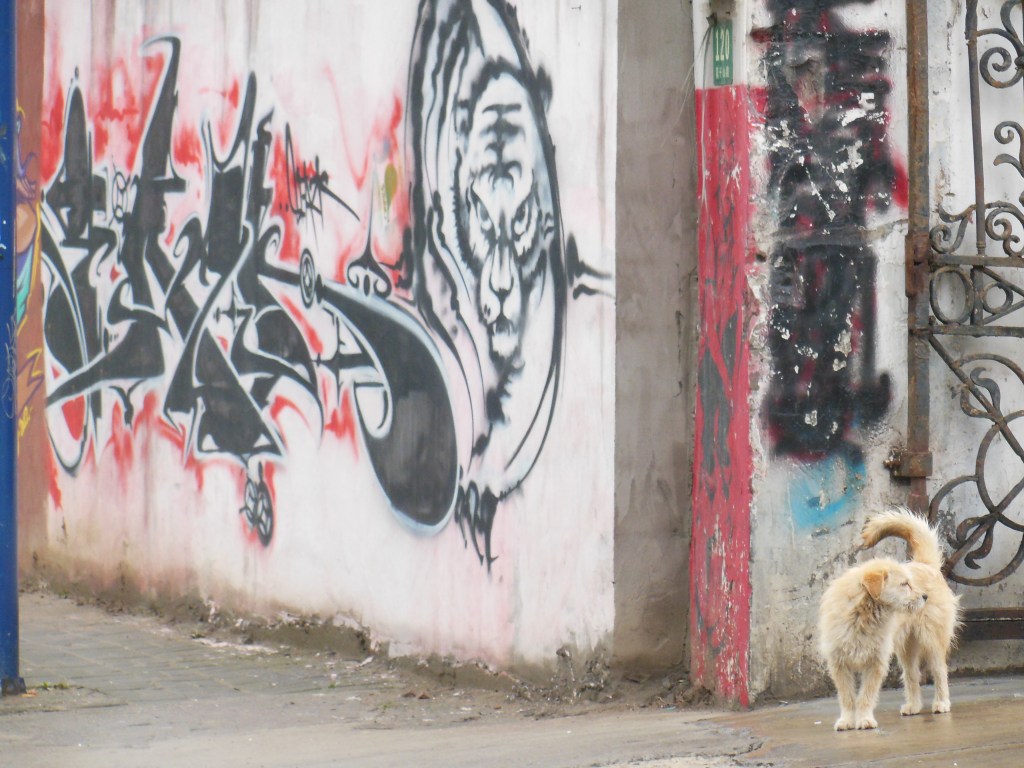

Nestled in between Shanghai railway station and the up-and-coming Suzhou Creek neighbourhood is Shanghai’s answer to SoHo, New York. The area is the city’s largest creative district and occupies the complex of converted warehouses and factories on 50 Moganshan Lu, now more simply known as ‘M50.’ Since its establishment in 2000, M50 has come to host a vibrant community of over 100 artists working across a range of different mediums. The district hosts an assortment of mod/contemporary galleries, art studios, street art installations and of course a notorious graffiti wall (spanning the boundaries of the district).


Entry is free and the district is open to the public most days (with the exception of national holidays). Some top gallery picks are: ShanghART, M97, Vanguard and V Art Center. Whether you’re a contemporary Asian art aficionado or just looking to dip your toes into Shanghai’s art scene – a visit to M50 is a fabulous way to while away a day in the city.

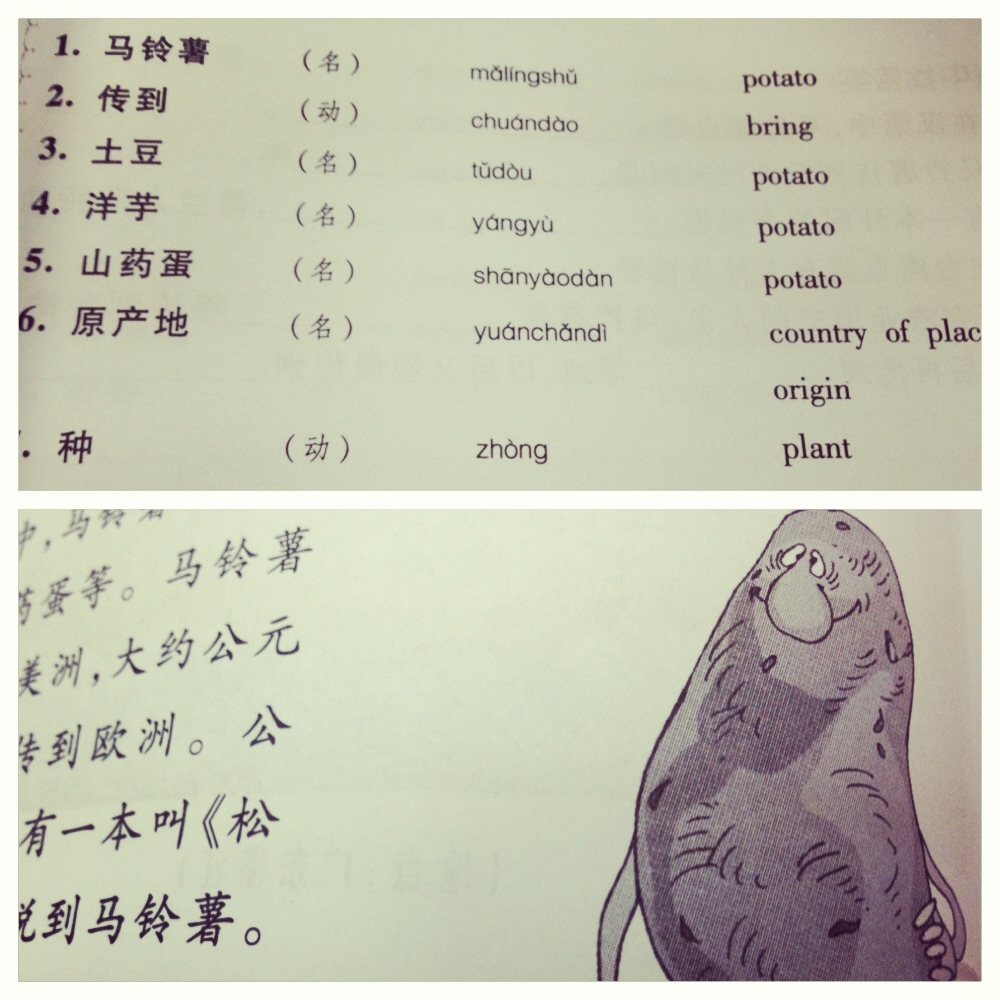

As an exchange student in China it can often be difficult to surpass cultural and language barriers and connect with local Chinese students. Particularly in Shanghai; given the incredibly international city that it is, it is often too easy to stay within the confines of the international student and expat ‘bubble.’
Discovering my local conversation corner in Shanghai’s Jing’an neighbourhood has been fundamental in driving me to venture outside of more culturally comfortable environments. These non-for-profit organisations aim to connect native English and Chinese speakers to enhance their language skills and cross-cultural awareness (and are a fixture at most Universities offering international exchange programs throughout Shanghai).
My local corner directly links international exchange students up with locals to participate in two-hour conversation sessions. One hour in is English and one is in Mandarin to facilitate an equal exchange. In my experience, these exchanges provide an informal space to build on classroom language learning through exposure to the actual, common vernacular currently used by people in Shanghai. To give just one example: despite the many words for ‘potato’ listed in my textbook I have learnt that Shanghai locals only really use two of these words!

Moreover, interacting and developing friendships with Chinese students and professionals at my local conversation corner has extended my understanding of the potential for language skills to build inter-cultural understanding. Over the course of my visits I have cultivated friendships with young Chinese people who share my passion for acquiring cross-cultural communication skills.
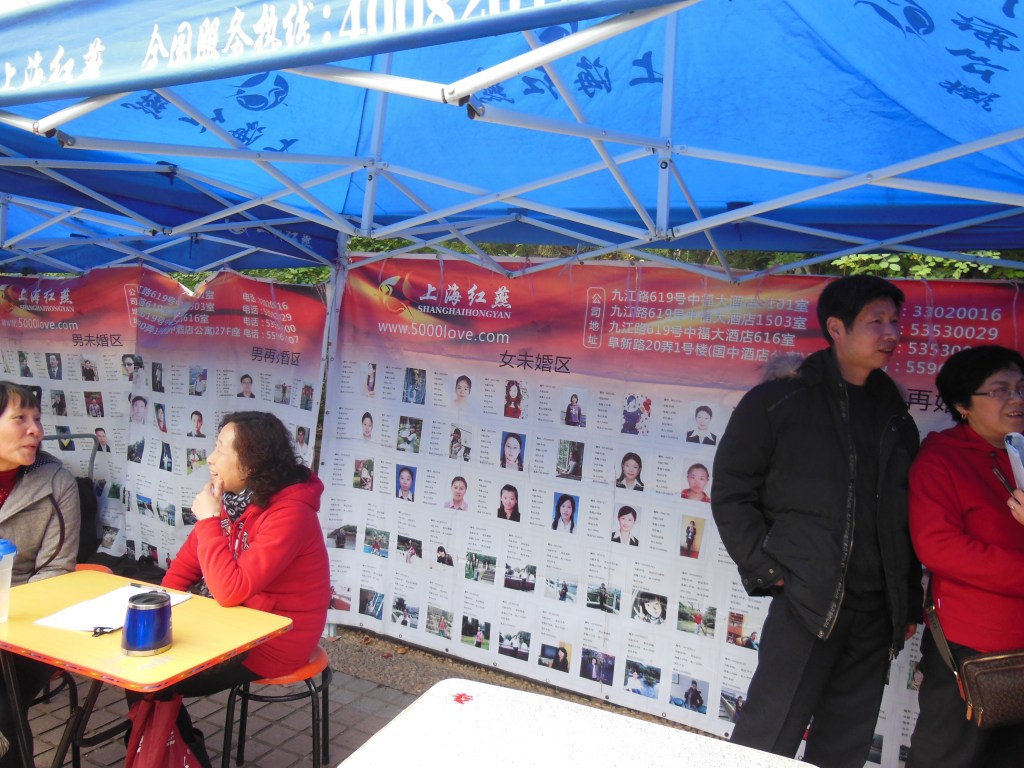


An unexpected and initially curious aspect of local culture, I encountered during my first weeks in Shanghai, was the phenomenon of the city’s public marriage market. Each weekend scores of middle-aged and older parents can be seen, flocking to Shanghai’s People’s Park, in search of a suitable marriage partner for their single adult sons and daughters. The national flags of Japan, England, America, Australia, Germany and South Korea etc are pasted on the pavement to represent the different nationalities parents view as acceptable spouses for their children.
I was struck at the invasiveness and apparent lack of boundaries for those involved in such an exercise, in which an adult’s personal details and romantic preferences are put on public display for all the world to see. Moreover, the concept of a marriage market seemed an odd cultural tradition in the sense that I never envisaged that such private matters would be aired so publicly in China.
However, engaging and conversing with the middle-aged parents at the market transformed my visit into a more meaningful cross-cultural interaction. As a consequence I am able to draw some parallels between my own culture (Sydney’s inner-west) and the culture of my host society (Shanghai), which are not so visible at first glance.
The concerns of parents for their children’s future is a common value that resonates in both societies despite their immediately apparent differences. Living in a modern industrialised society is something young Sydney-siders share in common with these single adult children. This environment demands an incredible pace and often imposes long working hours, leading to great prosperity but leaving little time for young people like myself to negotiate their private lives.


