UTS Think Global

Dream. Explore. Discover.

Disclaimer: All blog posts are written by students and do not necessarily reflect the views of UTS staff.

  • Greetings from Delft

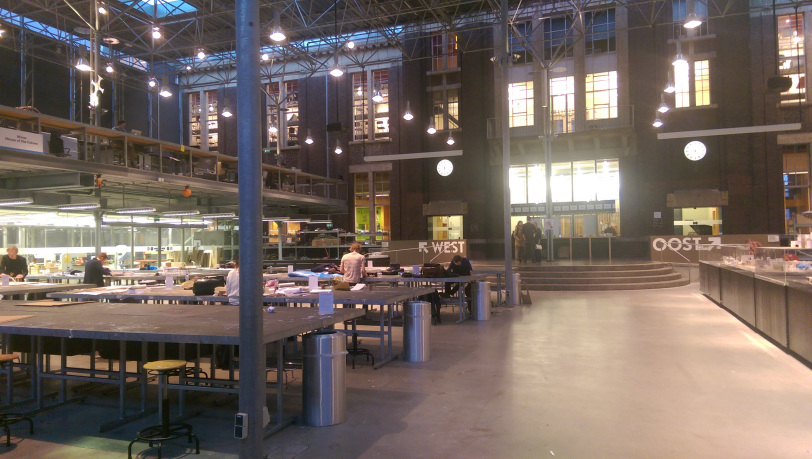
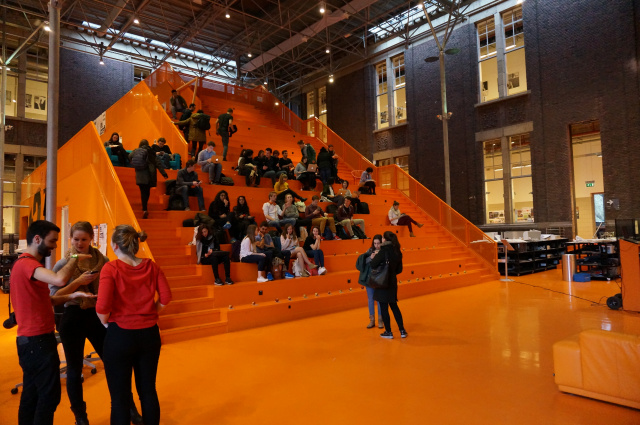
    My time studying architecture in Delft so far has been extremely rewarding. TU Delft has a large architecture school with fantastic facilities including a model fabrication workshop with lasercut, CNC, vacuum forming, woodwork and 3D print facilities, orange lecture stairs (see image) and architecture library. The approach to design education has its similarities and differences, but being able to experience architectural study in a new country with a different approach is such an invaluable thing. I have already learnt so much.

    Attending one of many free public lectures.
    Attending one of many free public lectures
    View from my apartment, Delft
    View from my apartment in Delft

    The Netherlands is an amazing country. The Dutch are such lovely, down to earth and direct people. Although I don’t quite understand the staple diet that at lunch appears to consist of bread, cheese, more bread and milk.

    There is a real appreciation for good design and pushing boundaries in Architecture, particularly in Rotterdam, which suffered greatly during WWII but in rebuilding has become something of an architecture playground.

    Rotterdam
    Rotterdam
    Rotterdam
    Rotterdam

    It is really easy to travel around to its many different cities via the rail network. Unlike Australia, you can travel across the country in a couple of hours and I’ve seen some beautiful architecture and gorgeous streets and canals in Utrecht, Amsterdam, the Hague and Rotterdam. The Dutch love to cycle and it is a great way to get around and see a city.

    The Hague
    The Hague
    Bike-lined canals in Utrecht
    Bike-lined canals in Utrecht
    DSC04773
    Rietveld Shroder house, Utrecht

    Travelling to neighbouring European countries is a also such a breeze. So far I’ve been to Denmark but I’ve got a massive Europe to-do list that includes Turkey, Paris, Prague, Budapest and more!

    Cycling is the best way to get around.
    Cycling is the best way to get around.

    Yvette Salmon 11432174

  • De Nederland

    Delft by Day

    The city of Delft in the Netherlands has been my home for the past 2 months.

    Arriving here a week before classes and in mid winter was a little shocking. Coming from the 24 hour environment of UTS architecture and the non-stop traffic on Broadway, Delft felt like a very sleepy, quiet village.

    Shiny Delft

    Though, as the introduction program kicked off and classes started up, Delft transformed into a non-stop student party. It was during these first weeks that I got to know the people who are now my close friends.

    Beer Olympics

    The international scene in Delft is huge! I’ve met people from pretty much all over the world and many of whom are in the same boat as me; study abroad students who are open to new experiences, friendships and discovering new places.

    Knokke

    Perhaps one of the best things about Delft is its location. The Netherlands is really like one big city. With an OV Chipcard I can be in Amsterdam within an hour and Rotterdam in less than 20 minutes. Belgium is an easy weekend trip and London is around the corner. This freedom to travel means I am away most weekends exploring Europe with old and new friends.

    Rotternight

    Now, 2 months in, I feel I have really settled into the rhythm of life in the Netherlands. I have started to figure out what I love (bikes, people, atmosphere, beer) and what I don’t like too much (food, weather) about this country.

    Rusty

    Yes, bike culture is enormous here. The Dutch ride rain, hail or shine, with their children and groceries piled on top. The infrastructure here is amazing and it is a joy to ride around Delft and beyond, just make sure you lock up your bike well.

    Australians 3

    Food here is great for a while but you can only eat so much cheese, waffles and hagelslaag.

    Gouda

    As for the TU, the architecture facilities here are amazing. Everything you could possibly need as an architecture student is at your fingertips and the studio environment is productive and creative. It is refreshing to get a new perspective on architecture and I feel as though I’ve learnt the most simply from being surrounded by architecture students from all over the world. Just to see how things are done elsewhere has been extremely beneficial and I can’t wait to get home and apply what I have learnt over here to my work.

    BK

    I can’t believe I’m half way through already but I’m really beginning to appreciate Delft and what it offers and I can’t wait for the summer to start!

    Charles Curtin 11723828

  • Seoul, South Korea may be known for being quite Westernised (especially with it’s reputation as a tourist destination) but it is as far from Australia as I could have imagined. Many people, especially those who have an online based knowledge of Korean culture and language will find themselves surprised when they actually arrive. It is nothing like the television shows, but perhaps that is for the better. Seoul is a city that is best experienced by those with a genuine interest in the culture and one should never assume expertise unless you have lived here previously. The language, culture and society is vastly different to what the bloggers tell us and it is intricate, complicated and strict.

    We are not in Kansas anymore.

    About the City

    Seoul is a city of contrast; on one hand, it is highly commercialised with large billboard advertisements, flashing lights and sales people screaming about discounts. On the other, it is still clinging to its history and culture with entire areas dedicated to traditional villages, art and independent Korean designers/artists. Coming from Sydney where historical sites are fairly sparse, it is experiencing this culture that will make the trip worth it. Don’t be afraid to try new foods, jump at opportunities to explore and live life like the locals. Also, bring a camera.

    Transport

    The transportation system is Seoul is extremely reliable and affordable, meaning that fewer people actually drive here. If you are travelling in the nearby areas, you are looking at around 1,050 won on the train (the equivalent of approximately $1.20). However, people usually use T-Money cards so ensure that you get one of those or, if you are officially a Yonsei Student, then you can use your student card for that. It is also possible to pay for things like cabs with the same card.

    There are no student rates for transportation – not that you would need it. Trains are generally five minutes apart, ten at maximum, so you’ll be absolutely spoilt here. Train stations are read out in English, but having basic knowledge of Hangul would definitely be beneficial.

    Accomodation

    Before you go to Seoul, it would be best to look up where you will be staying. I’m told that it’s not too big a problem if you figure it out once you’re here too (since there are Goshiwons everywhere) but I still think that it is safest to book in beforehand. I came to Seoul three weeks in advance, which I definitely recommend, and booked into a Guest House online. Don’t expect too much from these places because housing is expensive in Seoul and many places are small and cramped. Your main concern, really, is to ensure that it is clean with good security. You’ll spend most of your time outside, anyway.

    Shopping/Restaurants

    Shopping in Seoul can be either very cheap or very expensive, so it is definitely up to you. Areas around the universities (Sinchon, Edae, Hongdae) are very affordable while the upper end areas like Gangnam or Apgujeong can be more expensive. If you are a girl and wanting to buy clothes, like myself, then you should be shopping around. Many of these stores sell the same things from the same Dongdaemun wholesaler, so you can usually find things again. Also, a lot of people talk about haggling in Korea and I just want to say that you should only do this moderately and in certain establishments. Many sales people will give foreigners a higher quote so don’t be afraid to just walk away or show your objections (politely). If they are rude to you, just walk away.

    For restaurants, things work differently to in Sydney. 95% of these establishments will have free water that you have to get yourself and chopsticks/spoons are located in a small drawer attached to the table. In some, they will bring you kimchi or you will be getting your own. I feel that, in Sydney, waiters/waitresses are expected to serve but in Korea, the general consensus is that you are a patron, but they are not ‘lower’ than the customer. Generally, no one will ever be rude though.

    Food is often sweeter than they are in Western countries so look forward to sweet sandwiches, super sweet toast desserts, and even sweet salted popcorn. Fusion food is generally huge here but you’ll be finding some pretty creative combinations.

    (Don’t be afraid to try there. Just do it.)

    A lot of these restaurants also deliver and the service is approximately a million times better than it is in Australia. While you can get pizza, you can also get noodles, rice dishes, Korean fried chicken, snacks.. McDonalds delivers as well. All of these services are very reliable but most will need some knowledge of Korean language so you’ll need to ask someone to help you out.

    People/Life Style

    A lot of people talk about Korea being the most polite country ever and, while I would never generalise an entire population, I have to say that the idea of politeness and formality is very different to Westernised society. Many people will charge through streets without care for the people around them and, if they bump into you, they won’t stop to apologise unless they’ve seriously knocked the wind out of you.

    These are just differences in culture and society though so you don’t need ot be offended by this. If anything, I think that you will jsut gradually get used to it, like me.

    About Yonsei University

    Misconceptions

    Personal Story

  • General tips to Surviving an Exchange to China.

    When you arrive in China prepare to be shocked. If you have never been to China before, please be aware you are now in a completely different society and you will face a culture shock. In China you will quickly learn the bad things are quite bad, where the good is average, in all honestly it never hurts to be pessimistic when in China.

    When you Arrive

    I would suggest coming early to China relative to your University dates by about 3 days. Book a hotel during this duration, I cannot stress this point enough, and ensure that there is WIFI. The room / dorm that you will be assigned to may require cleaning and a lot of preparation to be liveable in. In some cases you might even need to find your own accommodation before you arrive or after you arrive. Regardless of which it is important to find a safe haven, a refuge to which you can go back to and just chill out and slowly assimilate into Chinese society. Tap water is not drinkable unless you boil it! It is not uncommon for student dorms to not have WiFi. Please ensure you try to check out the place you will be staying when you are studying, you may need to clean it and or share it with other people. I would recommend staying in the University dormitory as the other International and Exchange students will be sure to help you out as much as possible, where in many cases you will have a roommate. Unless otherwise stated be prepared to buy your own blanket, bed sheets, pillows, etc.

    Mobile Phone

    There are 3 main Chinese telecommunication companies. China Mobile, China Unicom and China Telelcom. Bring your passport and grab a Chinese sim card, so you can use your phone in China. There are various deals, if you have a friend whom can speak Mandarin, they can help you with this. There are various plans etc, where translation helps. Ensure you have set up Skype or other video-to-video chatting software to chat to your friends and family back home.

    Internet Access

    China has a ‘great firewall.’ Please do note, Google / Gmail / YouTube / Facebook, and other various websites and other things do not work in China. If you want to access these, you will need to acquire a VPN. Acquire the VPN and ensure it works BEFORE you leave for exchange, as you will not be able to attain one easily, when in China. If you can also, ensure you set up a VPN for your mobile phone. Google play store (Android’s version of Apple’s app store) does not work in China so you will not be able to download any applications without the knowledge of mobile phones. Please also note, google maps will not work, Apple’s version will. Ensure you download ‘Baidu maps’. Baidu is the Chinese version of Google. This will help you when you get lost, so you can search for the closest metro station.

    Transport

     GZ metro map 

    In China there are 3 main methods of transport. I would recommend either Metro or Taxi. Buses are okay if you can read Chinese, or know what you are doing. For the metro, there is always English so you will be safe, and it is by far the easiest way to travel, you travel visa coloured lines. If you’re a foreigner the Taxi drivers may take you for a longer trip than normal. Each city has its own transportation card, where I recommend you attaining one as it proves to be much cheaper than buying tickets for each travel.

    Bank

    You might also want to open a bank account to not have absurd amounts of RMB (cash) on you. Bank of China, ICBC, Bank of Communications and Construction Bank are the biggest 4 banks in China. Open a bank account in the city you are staying in, as there will be no withdrawal fees unless you withdraw from a different city. You will also need your passport here.

    My own Exchange Experience

    SYSU Sun Yat-sen statue

    I was selected to do the exchange program at Sun Yat-sen University (SYSU). One of China’s top 10 universities. Where I was assigned to live in the dormitory in the East Campus. There is no kitchen, WiFi, laundry and no bedding provided by the dorm. The South Campus is the main campus where there is the biggest concentration of international and exchange students located there. A trip to the South campus from East campus takes around 40-60 minutes via transport. There is a University shuttle bus to the North and South campus from the East. You will need your student card to go on board this bus, and that will be given to you in week 2. Until then Metro would be the best option. There is a metro station ‘中大’ which is SYSU’s south campus own metro stop. Look at the metro exit maps to ensure you exit from the right exit (Exit A). You will be at the south gate, after walking 5 minutes. My dorm is in the University megacity North (exit D). There are 10 universities in this university mega city, where Guangzhou University and SYSU, both have their own metro stations, being the two most prestigious universities in the University megacity.

    Buddy System at SYSU

    Business department

    SYSU also assigns to their exchange students a buddy from the same faculty upon request. I highly suggest you to select this option, as meeting new people will make your time at SYSU a lot more pleasurable. The buddy that you are assigned with will help you get accustomed to life in China and life at SYSU. Be sure to ask them for help for opening a bank account, attaining a Chinese sim card, where to shop, where to eat, showing you around campus and other little things like that. They will be your life saver. My exchange department is the Business department, one of the two faculties this school is famous for, the other is medical, upon which Sun Yat-sen is famous for, he was a famous doctor before achieving what he did.

    Attending Classes

    Map of South Campus

    (Map of South Campus)

    Classes at SYSU East campus is easy to navigate around, there is the only one teaching block, where all the classes are held. Whereas for South campus you are required to travel around the campus to attend classes which is much more fun. Great opportunity to practise your Mandarin and or English, and having fun exploring the campus to find classes for the first week. Reminds me of first week first year at University, running around looking for classes. Classes are structured differently compared to UTS, classes are usually 3 class (period) lecture, with Class 1 starting at 8:00-8:45, class 2 at 8:55-9:40, class 3 at 9:50-10:35, class 4 at 10:45-11:30… etc. This will be further explained during orientation.

    Closing remarks

    Hopefully this information will assist you into learning more about Exchanging to China. My own experience is unique and I enjoy getting lost in an unknown environment, I personally pick a metro station and aim to get lost and enjoy myself. With hopes to finding a metro station to arrive back to my room. Be sure to embrace a new culture and a new way of thinking. There are a lot of things that you will have to throw away. I came to China with a few changes of clothes, laptop, toiletries and a lot of cash, or access to cash. As I am only going to be here for one semester I thought I might as well buy some made in China items, which are easily disposable after the duration of my stay. After I have settled in I planned on purchasing more luxury items, over the necessities to make the place I live at feel more welcoming to myself. Be sure to talk to some current exchange students from SYSU studying at UTS. They will also help your transition into SYSU. The more friends you have already in your host university the more smoother your transition into exchange will become. Not everyone will be available to help you when you require assistance, but if you have 2-4 contacts over your buddy whom might be busy you may just have enough help about! I have made a lot of friends and the professors and other students are more than happy to help you out when they can. So be sure to talk to other students from your class even if they are shy, and as them for their ‘WeChat’ or ‘QQ’, which are the Chinese instant messaging applications. WeChat by far is more popular, so be sure to download that before you arrive to China. Local students’ written English is by far better than their spoken, so this may be their preferred means to chat. I hope this small guide has helped. Where I wish all the best to you on your exchange experience wherever it may be.

    Darren
  • Hej!

    Its been three months since I first arrived in Copenhagen to start a pre-semester Danish language course and while my Danish hasn’t improved much, Copenhagen continues to amaze me.

    kobenhavn

    Copenhagen is a small city but once you start to ride around (bikes really are a necessity) you’ll start to realize that this little city has so much to offer. I’m lucky enough to live in Tietgen Kollegium which is roughly a 15-20 minutes bike ride from the city center and a two minute walk from the København University Amager campus (the pre-semester Danish language course is located here). Apart from the incredible facilities and its great location for campus, living with Danish students at Tietgen has been incredible. There is a rumor that the Danes aren’t the friendliest of people, but it is simple untrue!

    11125427_10153177498859655_117983328_n

    Danish people are all about enjoying themselves – even in the cold weather. The concept of Hygge is a way of life in Denmark that is all about coziness, so think Sarah Lund jumpers, candles as the major source of light and delicious pastries and warm drinks. It’s a lifestyle I have happily adopted as I’ve explored Copenhagen.

    My favourite hygge-ly places in Copenhagen are:
    1. Sankt Peders Bageri
    If I could only eat one thing for the rest of my life, it would be the Kanelsnegle from Sankt Peders Bageri without question. Kanelsnegles are danish cinnamon snails with icing on top and they are readily available in almost every cafe, supermarket and 7/11(the 7/11 ones are surprisingly tasty and fresh!). But if you really want to indulge in some hygge, I recommend going to Sankt Peders Bageri on a Wednesday and grabbing a hot chocolate and a half-price Kanelsnegle. Be warned its a small bakery with only a few seats so get in quick and savor the most delicious pastry Copenhagen has to offer!

    2. Wulf & Konstali
    While Copenhagen has fantastic pastries for decent prices, coffee can be very expensive! Wulf & Konstali have two cafes in Islands Brygge and Amager and they do a great cappuccino for a fraction of the prices at Baresso. The cafe itself is always busy and the long share table is usually occupied by at least six other people but its a great place to go with a bunch of friends or to take your laptop and do a bit of work.

    3. Mikkeller Bar
    The Danes love their øl and while Carlsberg and Tuborg are classics, head down to Mikkeller Bar to taste some locally brewed draft beers. Like most places in Copenhagen the key to serious hygge in Mikkeller’s is the small venue, low lighting and some good friends. Drinks are expensive here but they are well worth trying, in particular I love the ‘Illegal Mikkeller’ from Norway. With an extensive beer and wine list, you can’t go wrong trying a few different drinks and if you’re ever in doubt, the guys at the bar are always happy to recommend their favorites.

    Going on exchange to Copenhagen has been the best experience of my life! If you are interested in exchange I can’t recommend København University enough, its a fantastic place to be as a student on exchange. The past three months have flown by and I can’t wait to continue cycling around Copenhagen for the next three months.

    By Caoimhe O’Sullivan
    11394145

  • First Impressions are Never Enough
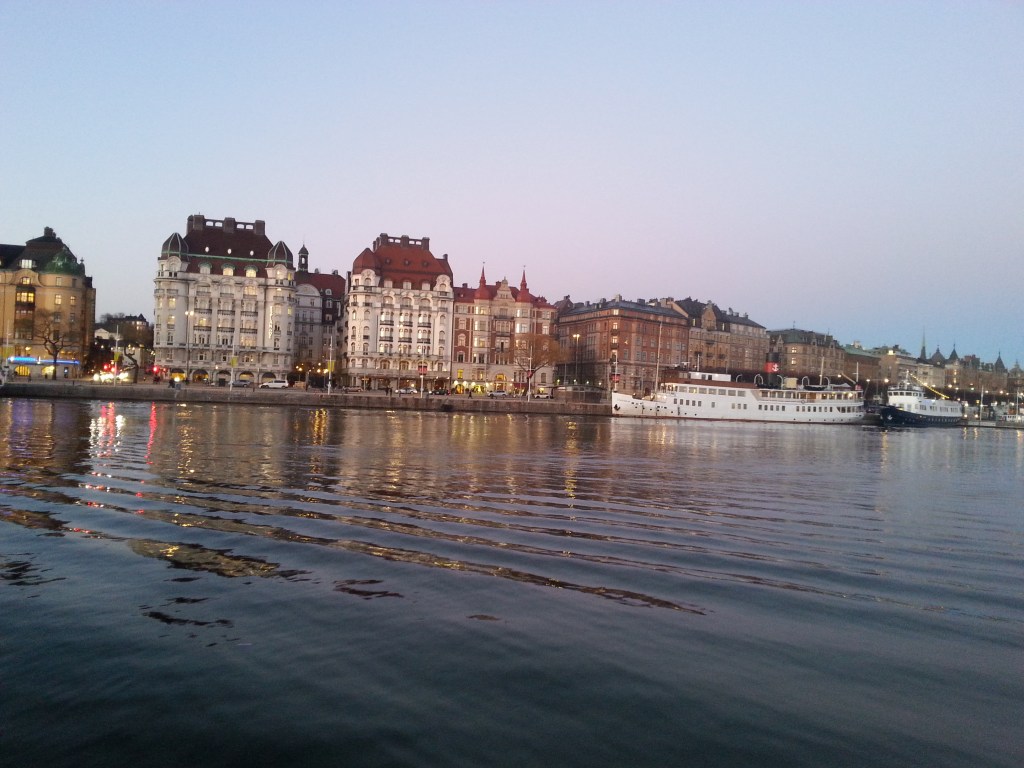
    Stockholm over the water :)
    Stockholm over the water 🙂

    My first impressions of going on exchange was wonder.

    I had heard about going on exchange in High School and throughout the years until I finally went, it was always in the back of my mind. But it had always been an idea. I think the reality only really set in when I finally went in the gates and was alone. And there I realised that I wasn’t going to see anyone familiar for the next six months. Barring, of course, the use of technology and the friends I had made in the Global Exchange mixer that I knew were going to Stockholm.

    But the reality of going on exchange was nowhere near what my first impressions of going on exchange was truly like. Going on exchange was terrifying and exciting. (It was a scary mix of the two, which may have squeezed a few tears out of me.) I was going to live in a foreign country for six months. By myself. Alone.

    This was going to be the best, craziest, and most frightening experience of my life. And now, more than two months into the program, I was right.

    My first impressions of going on exchange didn’t even come close to living the dream.

    My first view of Stockholm
    My first view of Stockholm

    My first impressions of Stockholm was that it was white, cold, and slippery.

    Like my first impressions of exchange, this was only the top of the iceberg.

    Arriving in a Nordic country in the middle of its winter, when I’ve only lived in countries that didn’t go below zero degree temperature was, shall we say, an experience?

    Luckily of course, my Father, having lived in Canada, in all his wisdom made sure that I was warm and toasty in my first white winter. But he did neglect to mention to me the ice. This is something quite easily overlooked, and something not quite that easy to warn people about if they had never experienced it themselves. But the ice that covered the ground, making it seem like I was walking on an ice rink, was probably the first thing that really struck out to me about Stockholm.

    Not really the best of first impressions. The country that I was going to be staying in for the foreseeable future was already ready to give me a concussion.

    The most dangerous part of Stockholm, the ice. Something that no one really tells you about...
    The most dangerous part of Stockholm, the ice. Something that no one really tells you about…

    But then, after a good long nap, something that is completely necessary after a 20 hour flight, the city showed its true colours. Yes it was still cold. And still slippery. And the sun set at 3pm. But it was different. And as I realised, the best kind of different.

    Going to Sweden, I was a little worried that there would be a language barrier. My worries were unfounded. The Swedes can speak English better than some native speakers.

    I was worried that I would get lost. I did. But it only meant that I got to explore more of Sweden. And having no agenda when travelling was the best feeling. I had nowhere I had to rush off to. And I had time to see everything.

    I was worried that I wouldn’t make any friends. I did. Everyone was friendly, especially with the University continually organising mixers for exchange students.

    So really, my first impressions of Sweden only touched the tip of what was awaiting me here in Stockholm. A city that’s more than welcoming to exchange students, but only if you embrace it, including the freezing winter.

    Meliana Chen

  • First Impressions are Never Enough
    Stockholm over the water :)
    Stockholm over the water 🙂

    My first impressions of going on exchange was wonder.

    I had heard about going on exchange in High School and throughout the years until I finally went, it was always in the back of my mind. But it had always been an idea. I think the reality only really set in when I finally went in the gates and was alone. And there I realised that I wasn’t going to see anyone familiar for the next six months. Barring, of course, the use of technology and the friends I had made in the Global Exchange mixer that I knew were going to Stockholm.

    But the reality of going on exchange was nowhere near what my first impressions of going on exchange was truly like. Going on exchange was terrifying and exciting. (It was a scary mix of the two, which may have squeezed a few tears out of me.) I was going to live in a foreign country for six months. By myself. Alone.

    This was going to be the best, craziest, and most frightening experience of my life. And now, more than two months into the program, I was right.

    My first impressions of going on exchange didn’t even come close to living the dream.

    My first view of Stockholm
    My first view of Stockholm

    My first impressions of Stockholm was that it was white, cold, and slippery.

    Like my first impressions of exchange, this was only the top of the iceberg.

    Arriving in a Nordic country in the middle of its winter, when I’ve only lived in countries that didn’t go below zero degree temperature was, shall we say, an experience?

    Luckily of course, my Father, having lived in Canada, in all his wisdom made sure that I was warm and toasty in my first white winter. But he did neglect to mention to me the ice. This is something quite easily overlooked, and something not quite that easy to warn people about if they had never experienced it themselves. But the ice that covered the ground, making it seem like I was walking on an ice rink, was probably the first thing that really struck out to me about Stockholm.

    Not really the best of first impressions. The country that I was going to be staying in for the foreseeable future was already ready to give me a concussion.

    The most dangerous part of Stockholm, the ice. Something that no one really tells you about...
    The most dangerous part of Stockholm, the ice. Something that no one really tells you about…

    But then, after a good long nap, something that is completely necessary after a 20 hour flight, the city showed its true colours. Yes it was still cold. And still slippery. And the sun set at 3pm. But it was different. And as I realised, the best kind of different.

    Going to Sweden, I was a little worried that there would be a language barrier. My worries were unfounded. The Swedes can speak English better than some native speakers.

    I was worried that I would get lost. I did. But it only meant that I got to explore more of Sweden. And having no agenda when travelling was the best feeling. I had nowhere I had to rush off to. And I had time to see everything.

    I was worried that I wouldn’t make any friends. I did. Everyone was friendly, especially with the University continually organising mixers for exchange students.

    So really, my first impressions of Sweden only touched the tip of what was awaiting me here in Stockholm. A city that’s more than welcoming to exchange students, but only if you embrace it, including the freezing winter.

  • Having a waffle of a time in Belgium

    Hello from Belgium, the land of waffles, chips and most importantly beer! 

    IMG_0724 3

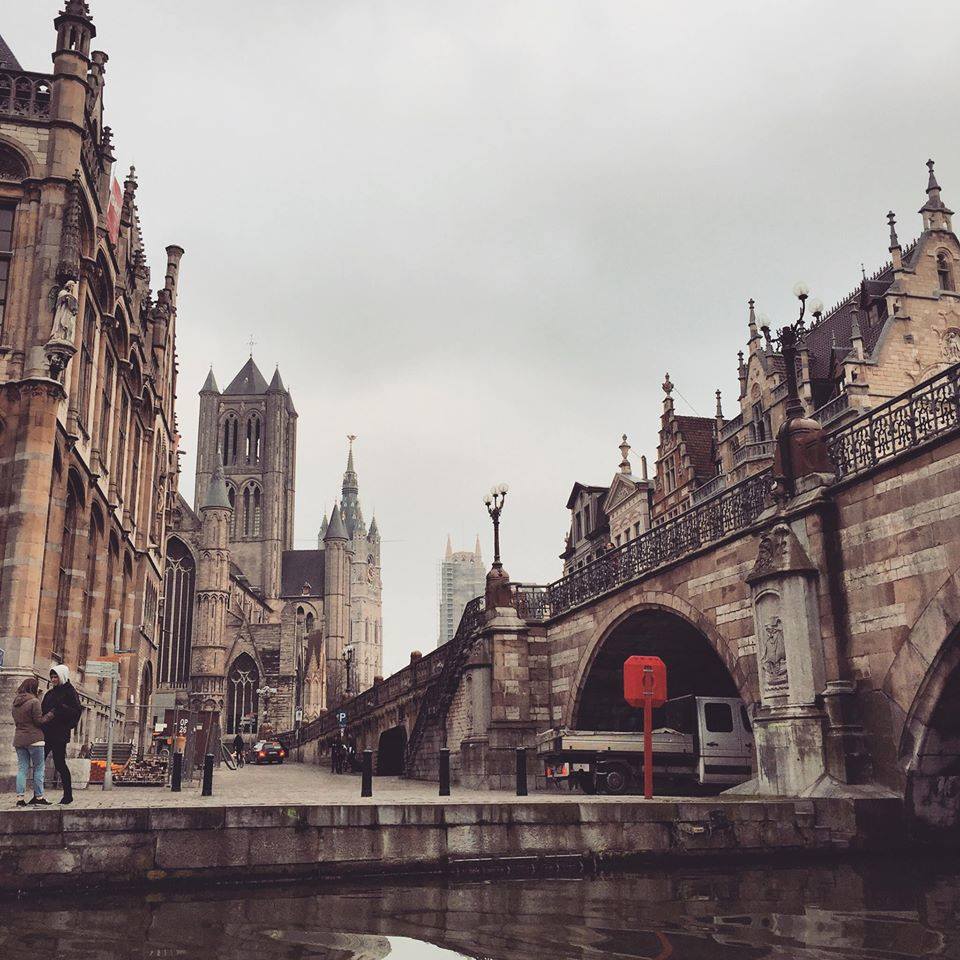
    I am currently studying in Ghent University in Belgium. Ghent is a bit of unchartered territory for fellow Aussies. The first few fellow Erasmus students I met (exchange for Europeans) had never met an Australian before. At first this was a bit daunting; would I be left surrounded by strange Europeans for 6 months? However I soon came to realise this has made my exchange experience all the more exciting and enriching.

    Processed with VSCOcam with kk2 preset1

    Ghent is a ‘city’ in Belgium, with 270 000 Belgium, which to me feels very small (I can bike ride nearly everywhere in 15 minutes). The best part is that 40 000 of the population are students living in Ghent, ensuring a lively vibe throughout the city with there always being something fun to do and someone to do it with whether its drinking next to the canal in the (so far oh so infrequent) sun or trying the different jazz bars and clubs around the city.

    Ghent was built in 650AD, so as you can imagine it is veerrryyyy old which is what gives it its charm. Don’t be fooled though, this doesn’t make the city boring: you can’t walk two steps here without stumbling on a bar filled with students drinking at all hours of the day, or fry stands with so many sauces you couldn’t possibly try them all in 6 months.

    I live in the uni-housing buildings which was the perfect choice because it means I’m with all the other exchange students and is right next to ‘overpoort’ – a street of semi seedy clubs packed every night of the week with internationals and locals a like partying into the wee hours of the morning. I wont say it houses the most classy establishments, think Kings Cross in Belgium… but can always be counted upon for a fun night out! The group ESN organises many events for exchange students, including international dinner nights, parties every week and trips to local towns and cities.

    IMG_0853 IMG_0894IMG_1587

    Belgium is the perfect place to go if you want to see lots of Europe, and if you are worried about living somewhere where you don’t know the local language. Everyone here speaks English and are more than happy to switch languages depending on where you are from (they speak minimum 4 languages each its scary!). Situated in the north-center of Europe it is very easy to go pretty much anywhere. First of all, other cities in Belgium are a 1 hour train ride away tops. I’ve already been to Bruges multiple times and Antwerp. Getting to neighbouring countries is just as easy, I’ve been to Amsterdam and Paris and am about to go on a trip to Germany and Poland.One of the perks of going somewhere with no other Australians is all the friends you make live throughout Europe and are always offering up there home to crash at (I have plans to stay with friends in Istanbul, Ljubljana, Budapest, Katowice…).

    14

    Last but not least is of course the classes. Ghent University is a highly ranked institution in Europe, and the classes are all really interesting. The only problem is that to make up the 24 credit points you need 30ECTS which can end up being a lot.. I had to enrol in 8 subjects to ensure I had enough!

    Anywhere you choose to go to on exchange I can guarantee you will have a great time, whether its meeting people from all over the world, travelling to places you never thought you would see or learning new skills (like how to cook!). Also check out Belgium if you’re in Europe, you won’t be disappointed!

    Phoebe Crow

    11700972

  • Sweden. If i asked you your first thoughts about this country, what would you say? IKEA, Aboslut, ABBA, blonde blue eyed folk, Vikings and Volvos? Before arriving here I knew little more than this. But having lived in Stockholm now for two months, I can heartedly say there is much more to this place. My time here so far has been a most amazing experience of meeting new people, understanding a different culture and visiting new places.

    Stockholm is a city very different to Sydney. It is built upon an archipelago and therefore varies between islands. To the south of the CBD is Gamla Stan where the castle of the royal family sits. Further south is Sodermalm, the Surry Hills equivalent. To the east is Djurgarden, an island with a garden as large as any suburb. The city is full of activities to keep you busy, be it the museums, stores, sights, nature or much else.

    Sthlm

    It is true that the winter is what one may expect from Game of Thrones, with 5 hours of light daily during January and temperatures at freezing for much of it. Though this is quickly acclimatised to, it is in fact comforting in ways. Swedes consume about 5 cups of coffee per person daily, and the weather is a good excuse to spend time in cafes, out or at home with friends. This is also the perfect time to visit northern Sweden, where one can observe the Northern Lights.

    Studying Law at Stockholm University has been an experience different to that I am used to. Students generally take only one subject at a time for about 2 months, having a more block-mode like approach to the topic. Having taken EU Competition Law as my first topic, I had lectures by guest lecturers from all about Europe, including judges, lawyers, professors and members of the European Commission. The class was a mix of exchange and local students, and was perfect for making friends from Sweden and elsewhere. Meeting Swedes may seem a challenge at first, but once they are comfortable like you, they are as good as any friend. It just takes a little initiative on your end to strike up a conversation with them.

    Travelling about is quite simpler and cheaper than in Australia. I have taken trips about Sweden itself and to Amsterdam so far, and shall be soon heading to the Baltic States. Since these places are so close, you can easily go away for the weekend and see somewhere new each time.

    Having had such an incredible time so far and looking forward to doing much more, I recommend Stockholm to anyone interested in partaking in exchange.

    Haran DeLillo

    11235708

  • 1. Style

    If I had to describe Aarhus to a Sydney sider it is a Surry Hills with Scandanavian flavour. The cobblestone streets are filled with small boutiques, each a different coloured home cram next to the other. Danes are almost exclusively and immaculately dressed in black and it’s not surprising with as the city with the most architects per capita.

    2. Chairs

    It’s no secret, Danes love their chairs and they have it all. Whether it is the Jacobsen Egg Chair, Reitveld’s Schroder Chair or even the School of Architecture’s specially designed pine chair, engraved with the signature triple A – your behind won’t have any trouble settling in. Not only chairs but Danish interior design as a whole creates a warm, minimalist and soothing atmosphere and it comes affordable with the prices at IKEA and bits and pieces left out on the road side. Friends have found mattresses, leather couches and chairs free and in good condition – so keep an eye out before you go spending any money. And don’t forget to buy lights… there are very few houses/apartments I’ve seen that don’t require byo lamp.

    3. Having a party could end in you turning a profit

    Being a host of a party in Denmark does not come without its major perks. Waking up to find the place scattered with tin cans and bottles as far as the eye can see is normally a disheartening sight especially with a heavy head and hang over. But if you take all those cans and bottles to your local supermarket and put them through a recycling machine they’ll be paying for your weeks groceries. See if you buy a six pack of Tuborgs beer it says it’s 6kr ($1.20) but you’ll have to pay 35kr ($7) that’s with the surcharge for the tins… so for every 6 tins you take back you should be getting around a dollar a can.

    Danes are very eco aware – the tax on cars is a whopping 25% and fuel is through the roof but there are no recycling bins. Go figure.

    4. ‘City of Smiles’ *                  *reserved for Summer

    Arriving in winter I was a little taken back by the lack of smiles going around town. This was the ‘city of smiles’ after all but the streets in the dead of winter are met by people going about there buisness as efficiently as possible with low energy and avoiding talk. This is what I have found in the culture of Danes to be as ‘efficient’ as they can be – you’ll never catch any “sorry” or “excuse me” because any unesseccary chat is culled from everyday life. If you find your in someones way the strategy is to slip past and hope no one noticed.

    As soon as there is a hint of sunlight out the streets are noticably fuller, more youth and more chatter. Locals are constantly promoting summer to me as if the city suddenly takes on a whole new philosophy that I’m yet to discover.

    5. Bicycles, a revolutionary mode of transport

    I’m not sure if it’s our hills, aggressive motorists or government’s disinterest in bicycle infastructure but Australia is behind.

    Q : Who knew a fun, healthy, cheap, two wheeled mode of transport existed

    A: The Danes

    This bicycle lifestyle give me a great freedom of getting around that isn’t achievable in Sydney. I’m already conceiving how i’ll miss riding past the beautiful Risskov forest around the Harbour side and flying down the sectioned off cycle way to school. I think I’ll have to take up a bicycle or motorbike back home

    6. Work hard play hard

    The Aarhus School of Architecture’s design and work philosophy is based around a very open program that gives you the freedom to work your project to your interests and with metal workshops, wood workshops, digital paper and laser cutting at hand. Even though you’re in the studio 9-5 it’s very flexible and gives you your own desk and space to develop and really sink in to your project. This keeps the weekends open for play.

    Brooke Rayner 11684154 Design in Architecture

    The Iceberg "Building of the Year" - Archdaily
    The Iceberg
    “Building of the Year” – Archdaily
    My Backyard
    My Backyard
    Moesgaard Museum Sledding on the snow covered roof
    Moesgaard Museum Sledding on the snow covered roof
    Deer Park
    Deer Park
    German Bunkers West Coast
    German Bunkers West Coast
    Godsbanen
    Godsbanen
    Godsbanen Culture Centre
    Godsbanen Culture Centre
    Godsbanen Culture Centre
    Godsbanen Culture Centre