UTS Think Global

Dream. Explore. Discover.

Disclaimer: All blog posts are written by students and do not necessarily reflect the views of UTS staff.

  • Discovering Berlin: My two-week journey learning German and forming lasting friendships

    I have spent two weeks undertaking an intensive German course at the Technische Universität Berlin. I am halfway through my year-long in-country study program in Italy and decided to spend my summer learning a second language. I am forever grateful for this decision.

    The course itself was incredibly valuable. I was shocked at how quickly I managed to pick up entirely new language and grammar forms. I was wildly impressed at my ability to order at restaurants and have basic conversations with locals at the end of only two weeks. There is so much to be said about learning a language while also being in the country and immersed in it.

    One thing I did not expect from my two-week program was the intense friendships I formed with other international students. I find that travelling dismantles the usual social norms that we employ when building new friendships. Somehow, I feel closer to some people I only met two weeks ago than friends I have known half my life. But I also think this may reflect how we treated the very short time we were given. As a group, we explored much that the city had to offer (or as much as we could fit around our intensive class schedules). We visited biergartens, flohmarkts, restaurants, cafes, museums and even took a salsa class together.

    A highlight for me was the Potsdam trip we did as part of the university’s summer cultural program. We had a lovely tour around the city and all the historic buildings. I loved seeing the Grave of the Potato King (I highly recommend googling King Frederick the Great if you are curious) and exploring the gardens and ruins of Sanssouci Palace.

    I would also highly recommend that anyone visiting Berlin check out the Humboldt Forum and see their interactive exhibition, ‘Berlin Global’. This incredible exhibit managed to synthesise Berlin’s highly complex and multifaceted history into a single engaging exhibition of the cultures, politics and communities that make up the city. It framed my experience of Berlin nicely by providing some of the context and awareness of how the town came to exist in the way it is.

    Berlin is unique with its love of the eclectic and the political; it may not be the prettiest city in Europe, but it is undoubtedly the most vibrant. I would encourage all UTS students to take advantage of the incredible international opportunities that UTS offers. These past two weeks have arguably been the most valuable of my entire degree.

    Bridie Macken
    Bachelor of Communication (Social and Political Sciences) Bachelor of International Studies

    Technische Universität Berlin Winter School, Germany
    Global Short Programs Travel Scholarship

    For more information about the UTS Global Short Program visit: www.uts.edu.au/thinkglobal

  • BUILDing a better world: How UTS BUILD made me reflect on my role as a global citizen

    I recently completed the UTS BUILD Program which has been a journey of learning, building connections and above all, reflecting on my actions as a global citizen. Throughout BUILD I have attended seminars, completed online courses, participated in interactive workshops and attended a conference overseas.

    For my first BUILD event, I attended a panel discussion, where one of the speakers, Sally Hetherington, Founder of the Human and Hope Association, made me more aware of the implications of “voluntourism”, which is where people travel overseas to participate in voluntary work for a charity or organisation usually aimed at alleviating poverty. I learned that tourists or short-term volunteers that visit orphanages in developing countries can unintentionally have a negative impact on those children in the orphanages – in some places, because orphanage voluntourism has become so popular, thousands of children have been removed from their families to fill these ‘orphanages’ and meet the demand of this form of tourism.

    As these negative consequences are unintended, these problems are more likely to go unnoticed. As someone who is passionate about social justice, this talk inspired me to reflect and critique actions and particular methods to combat social injustice. The examples of ‘voluntourism’ and ‘orphanage tourism’ clearly show that there are complexities to combatting social justice and different interests to be taken into account. There are a lot of organisations that claim to make a positive difference; however, it is important to do your research to find the ones that actually do. For example, I found a charity ‘Save the Children’ which works with organisations to support families so that their children can stay with them and prevent them from being put in profit-only fake orphanages. This talk encouraged me to reflect and to think more critically about the impact of an individual’s actions regardless of their intentions. This will help ensure that when I volunteer or donate to an organisation, my time or money will go towards an initiative that makes a positive difference and does not have unintentional negative consequences.

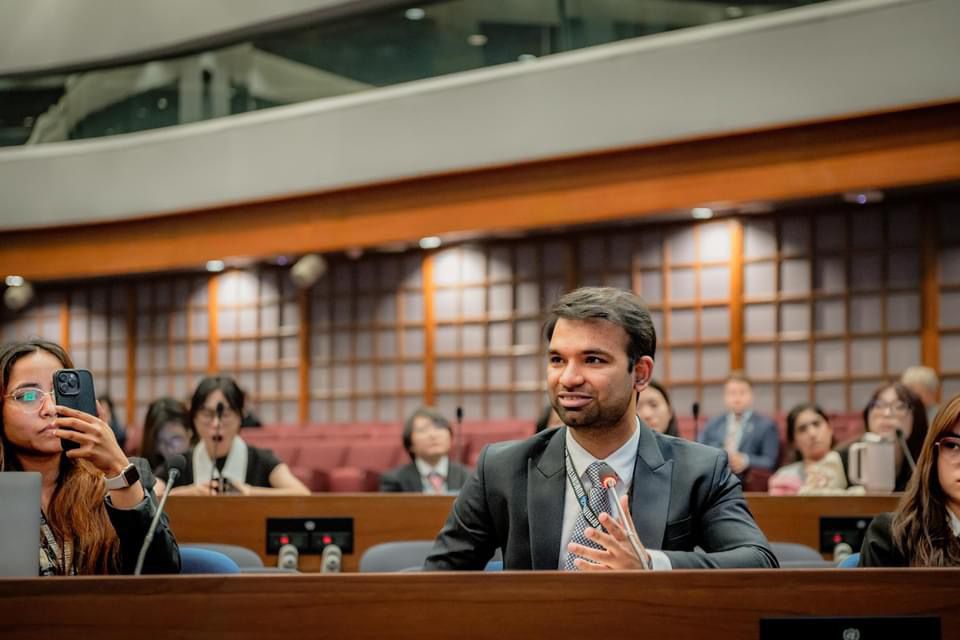
    Another reflective and thought-provoking experience I had during BUILD was attending the 4th Global Peace Summit for Emerging Leaders at the United Nations Conference Centre in Bangkok, Thailand in January 2024. This was an opportunity that allowed me to step out of my comfort zone by travelling to a new country alone and navigating an international conference for the first time. During the peace summit, I listened to very serious and confronting stories shared by extremely inspiring speakers, and I was grateful to have the opportunity to hear from survivors of conflicts. I found that it was important to be open-minded to different perspectives and willing to learn when engaging with the topic of peace and conflict.

    One of the speakers, Hassan Akkad, who is a Syrian refugee, filmmaker and human rights activist, talked about how propaganda and disinformation spread through conflict, saying that “in every conflict, the first casualty is always the truth.” He talked about how misinformation and disinformation has been especially prominent with the increasing use of social media. Hassan’s talk made me reflect on the importance of critiquing the information that I see online, and not always assuming that what I am seeing is the truth.

    It was an extremely enriching experience to attend the Peace Summit and be able to hear from a diversity of perspectives throughout the conference and share my perspective on issues as well. I really enjoyed meeting and connecting with the other young delegates, who were from 48 different countries. Following the conference, I took an opportunity to further extend my knowledge on peace and conflict that I had gained from the Peace Summit by undertaking the BUILD-endorsed online course, Positive Peace Academy at the Institute of Economics and Peace. This course enabled me to get a deeper look at the factors contributing to conflict, particularly the long-term factors, and introduced me to the concept of ‘positive peace’ which concerns the attitudes, institutions and structures that sustain peaceful societies.

    All of my experiences during BUILD allowed me to extend my knowledge on social justice topics and hear from different perspectives. BUILD challenged my thoughts and gave me an opportunity to reflect on my previous held assumptions and ideas about how to combat global injustices. UTS BUILD is a great opportunity if you would like to deepen your knowledge on social justice issues but most importantly, learn about the impact we all have as global citizens and the responsibility we have to strive for social equality in every facet of our lives.

    Zara Horton
    Bachelor of Communication (Social and Political Science) Bachelor of Laws

  • University Scholars Leadership Symposium (USLS) in Thailand

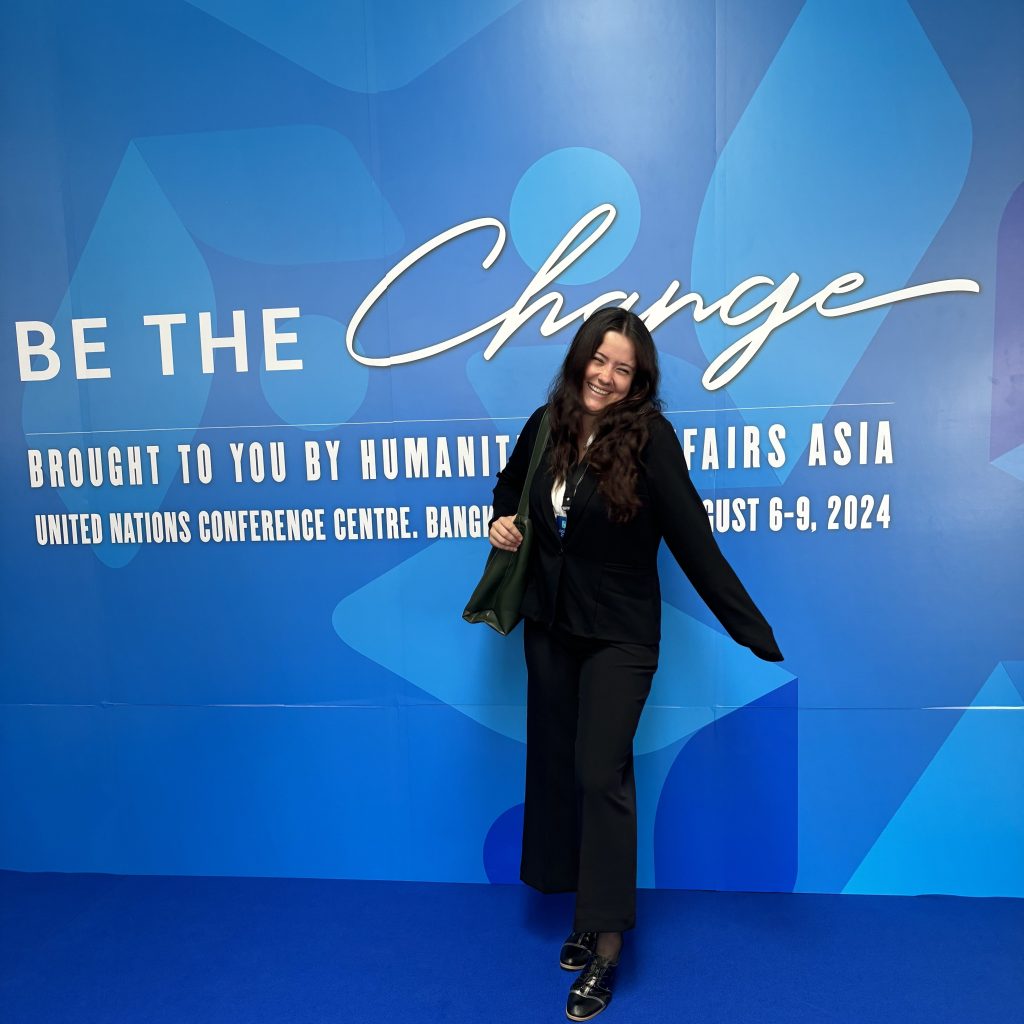
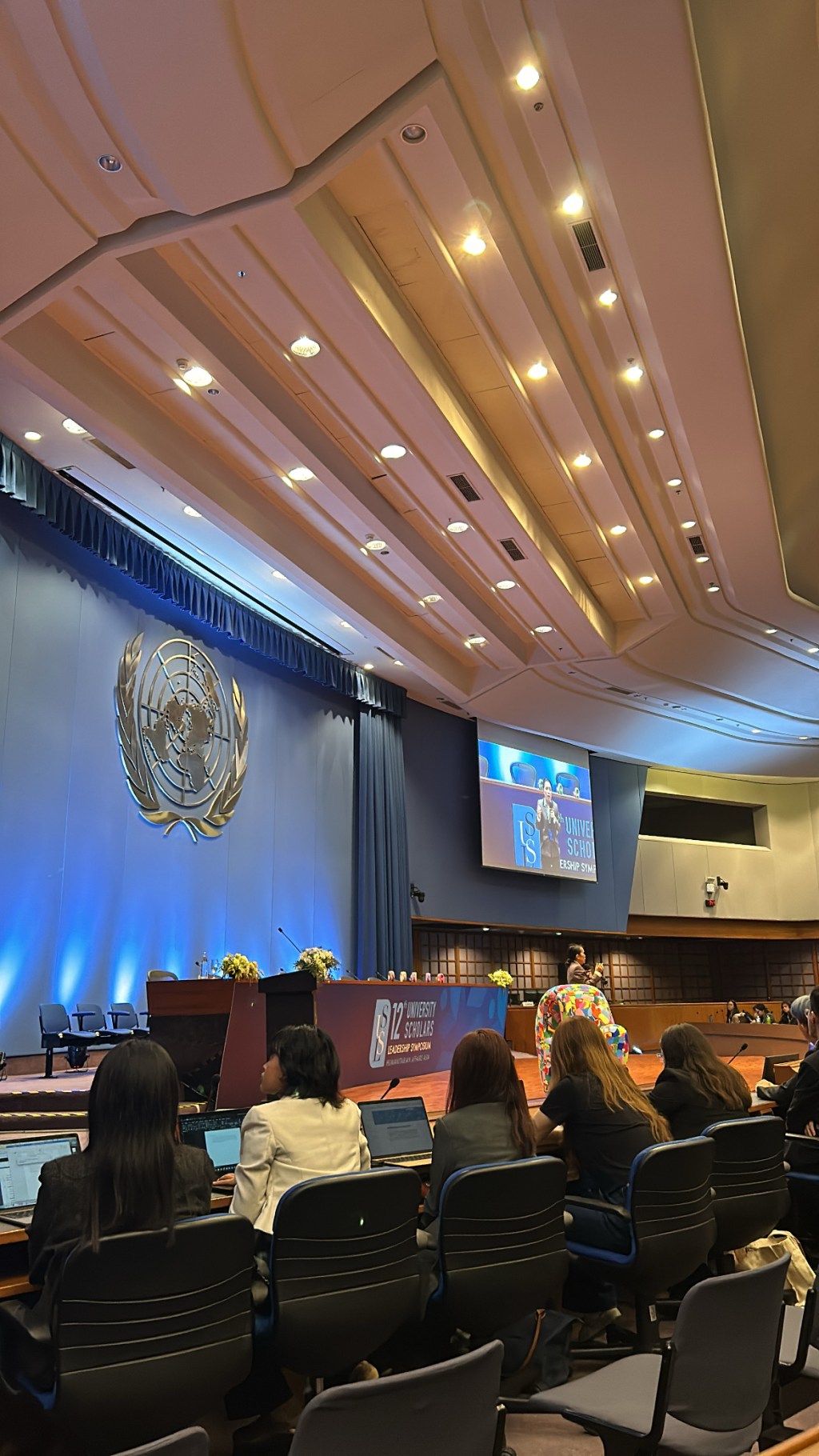
    In August, I was privileged to attend the University Scholars Leadership Symposium (USLS) in Thailand, held at the United Nations Conference Centre in Bangkok.

    One of the most impactful aspects of the symposium was the opportunity to engage with inspiring and thought-provoking speakers. Figures like Sir Peter Mathieson, David (DJ) Begbie, Jack Growden, Shomy Hasan Chowdhury, and Lek Chailert shared their wisdom and experiences, challenging us to think critically about global issues and our role in addressing them.

    A personal highlight of the symposium was participating in the Kindness Day activities particularly my visit to the Elephant Nature Park on behalf of Lek Chailert. This experience was eye-opening and deeply moving. We cleaned elephant pools at the park, prepared food for the elephants, and helped build stone fences. Here, I learned about the pressing issues Asian elephants face, including habitat loss and exploitation. The Save Elephant Foundation, led by the fantastic Lek Chailert, is doing incredible work to protect these majestic creatures, and being part of their efforts, even for a day, was an experience I will never forget.

    Beyond the workshops and activities, what truly made this symposium special was the chance to connect with like-minded individuals from around the globe. The diversity of perspectives and experiences shared by the youth leaders enriched my understanding of global issues and reinforced the importance of collaboration in driving meaningful change.

    Representing the University of Technology Sydney as a Global Ambassador at this symposium was an honour I will carry throughout my academic and professional journey. The experiences and lessons I gained from USLS have strengthened my resolve to work towards the SDGs and inspired me to explore new avenues for impactful action. Issues such as No Poverty, Quality Education, and Gender Equality resonate deeply with me, and I am more committed than ever to contributing to these goals.

    My time at the University Scholars Leadership Symposium was nothing short of transformative. It reaffirmed my belief in youth leadership’s power and global citizenship’s importance. As I continue my journey, I am eager to build on my understanding of developmental goals and work towards enacting positive change on a larger scale.

    Thank you, Humanitarian Affairs Asia and UTS BUILD, for entrusting me with this extraordinary opportunity to #BeTheChange.

    Domenic Romeo
    Bachelor of Medical Science Bachelor of Business
    BUILD – University Scholars Leadership Symposium (Thailand)
    BUILD Global Ambassador Grant recipient

    For more information about the UTS BUILD please visit: www.uts.edu.au/build

  • #BeTheChange

    This symposium left me with one clear message:
    If you want to be the change, you have to become the change— in your actions and your choices. Big or small, you can make a difference.

    In August 2024, I had one of those “pinch me” moments that will stay with you forever. I was honoured to be selected as an Australian delegate representing the University of Technology Sydney at the 12th University Scholars Leadership Symposium, organised by Humanitarian Affairs Asia. Supported by a university scholarship, I fully immersed myself in a whirlwind of cross-cultural communication, deep connections, and enough shared wisdom to fill a UN headquarters. Walking into that iconic building in Bangkok felt like stepping into a global history book—without the worry of overdue fines.

    A recurring theme throughout the symposium was #BeTheChange. On the first day, this notion felt a bit daunting to me. You’re alongside 500 like-minded delegates from across the globe, and we all definitely share that “how can we be the change?” question. Throughout the symposium, we listened to courageous, dedicated, and selfless individuals—the kind of people your parents would nudge you to emulate—and I began to understand. Firstly, that my parents should’ve nudged harder, and two, that these speakers weren’t just sharing their
    stories of heroism; they were offering blueprints for how we can all contribute to something greater.

    We heard from David Begbie of the Crossroads Foundation, who is transforming lives in impoverished communities, and from Ifrah Ahmed, whose powerful advocacy against female genital mutilation (FGM) was both sobering and inspiring. But what truly tied together these teachings for me was hearing from Lek Saengduean Chailert of the Save Elephant Foundation. I realised that change starts with who we are in our everyday lives.

    One of the most impactful moments was our Kindness Day visit to the Elephant Nature Park, founded by Lek. Watching these massive, majestic creatures transform into overgrown puppies at the sight of her was like witnessing the world’s biggest group hug. Lek’s energy transcended language, species, and size. Her genuine compassion for these elephants allowed her to establish such a close bond that they trusted her to help, love, and care.

    I used to think being the change was about grand gestures and sweeping movements. But this symposium turned that idea on its head. I learned that “being the change” isn’t just about what you do—it’s about who you strive to be every day. The tiny, everyday movements count—the quiet decisions to act with intention, kindness, and an open heart. Who knew that change could start with something as simple as a smile, a handshake, or, in one case, a very enthusiastic elephant trunk?

    Lek showed me that true change is rooted in compassion—the selfless act of putting another living creature before yourself. She couldn’t speak the elephants’ language, but her compassion communicated volumes. This symposium wasn’t just a gathering of over 500 participants from 46 countries; it was a collective energy of change. This symposium left me with one clear message: If you want to be the change, you have to become the change— in your actions and your choices. Big or small, you can make a difference.

    Thank you to Humanitarian Affairs Asia, the speakers, my fellow delegates, and the University of Technology Sydney for enriching my experience at this symposium, I’ll cherish it forever.

    Heather Donnelly-Zdebski
    Bachelor of Communication (Media Arts and Production)
    BUILD – University Scholars Leadership Symposium (Thailand)
    BUILD Global Ambassador Grant recipient

  • PRAGUE, PEOPLE & ‘PIVO’: WHY CZECH REPUBLIC IS A MUST VISIT!

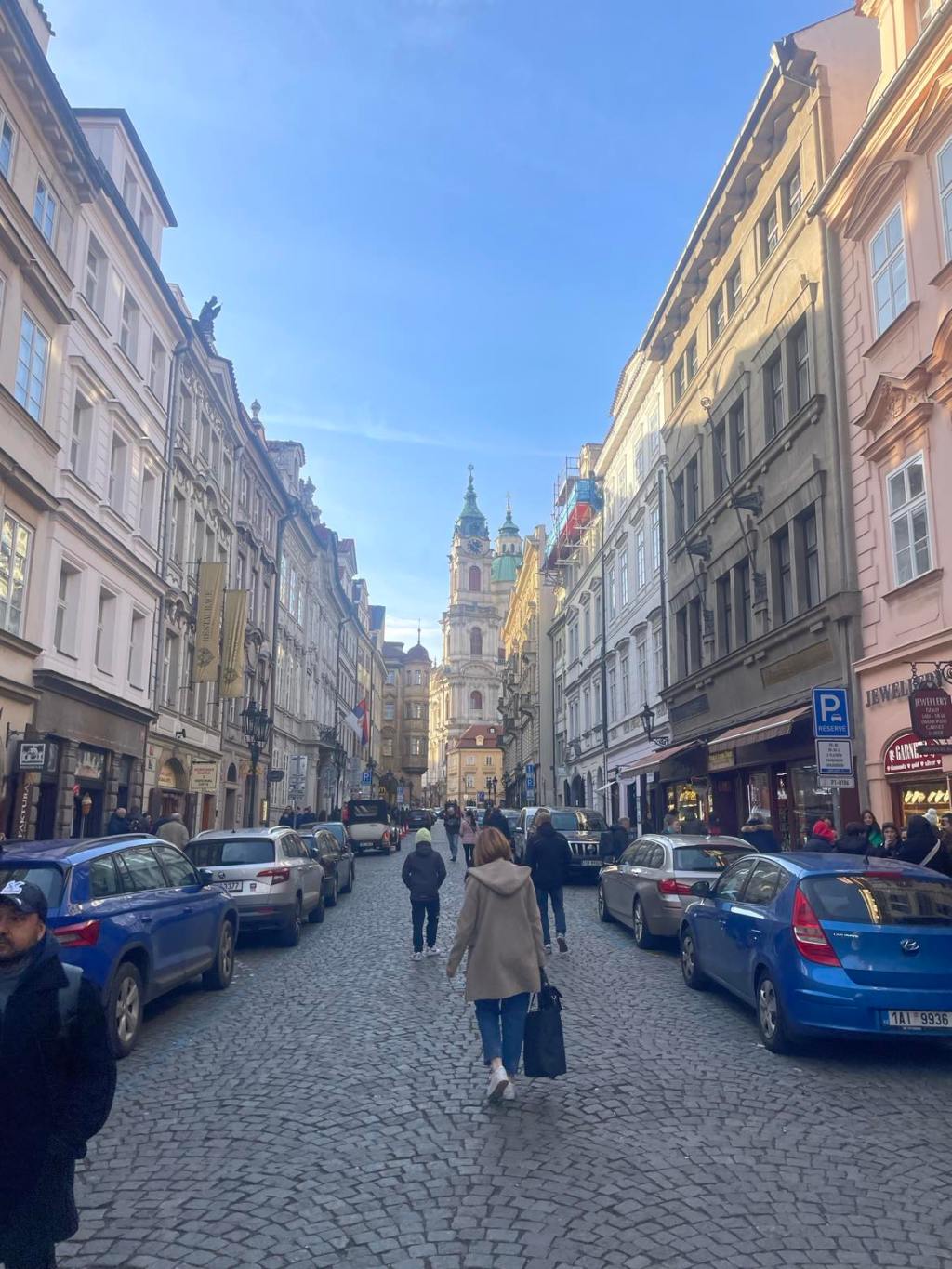
    Although only 3 weeks into my exchange, I already can’t recommend Czech Republic enough! Coming over here, I chose to study 2 direct equivalents and 1 free elective from my degree in Mechanical Engineering. I share a room with one other Aussie, and amenities with 4 other people from Italy and Portugal. Sharing a space with other nationalities is something I got lucky with on exchange, as it’s interesting to experience other cultures. Within a few nights, I was giving the Portuguese some of my Vegemite, and the Italians have already insisted that they cook us their Nonna’s carbonara recipe.

    Although it’s early in my course, the teaching is pretty similar to UTS. I have to attend lectures, tutorials, and laboratories, with my classes having a mix of exams and experiments. Even though I want to spend as less time at university as possible while I’m here, I’m really enjoying one of my subjects that looks at Instrumental technology and the manufacturing of small watch parts and ball bearings; something I’ve never been exposed to before!

    Although I haven’t explored the city nearly as much as I would’ve liked during the day, the Old Town is amazing and the nightlife is a lot of fun, with living much cheaper than Australia. My weekly food bill is also cheaper, and if you like beers, they’re as cheap as $3 a pint. Student accommodation is also very affordable, the dorm where I stay is only $84/week, which is crazy coming from Sydney rental prices. There is also a dorm society at my accommodation, where you are given access to the gym, fitness room, billiard room, and internet for a one-off fee of around $70.

    The International Student Club (ISC) here is also so well organised and there are so many events to meet new people. Since I’ve been here, I’ve gone to the city where Pilsner was first brewed, done an overnight hiking trip, gone in Prague scav hunts and parties organised by the club & played traditional Czech sports.

    The thing I have found so different about Czech Culture is the drinking! Consuming the most beer on average per person in the world, Czechs are notorious for big nights, and during some of the o week trips they were asking us to play drinking games at 9am in the morning.

    Czech Republic is also so centrally located within Europe, so it is easy and cheap to fly, train or FlixBus to Eastern Europe especially. Already, I’ve done two snow trips to the French and Austrian Alps, have already planned a Copenhagen trip, and am currently looking at flying to Albania.

    The thing I have enjoyed the most about the Czech Republic so far is meeting new people (locals or internationals) and building a new life around them. My tip would be to throw yourself in the deep end and join a sporting club or society with only Czechs to avoid seeing only international students. The other thing I’m glad I did was a summer subject at UTS before coming here because you don’t want to get stuck with a full 24CP workload overseas while your colleagues travel on their 4-day weekends.

    Eden McQueen
    Bachelor of Mechanical Engineering
    Czech Technical University in Prague, Czech Republic
    Global Exchange Scholarship

    For more information about the UTS Global Exchange program please visit: www.uts.edu.au/thinkglobal

  • Attending 12th University Scholars Leadership Symposium – Humanitarian Affairs Asia as a UTS Delegate

    Between Aug 6th to 9th 2024 I attended the 12th USLS HAA held at UN Conference Centre in Bangkok, Thailand. Even before attending the program the fact that the program will be held at the prestigious United Nations Conference Centre made me very exited about it, just thinking about the fact that I will be sitting at the same seats as the delegates from all the around the world seat, was a magical feeling. In the following passages I will share my experience of the four days I spent in the program.

    When I wore My Cultural Attire

    One the first day of the program we were encouraged to wear something that represents our culture, so I decided to wear a white ‘Top and pant’ with the newly gifted pair of sandals from my father-in-law. The day started with the opening speech from the Founder of HAA and followed by three lectures with half an hour break between them. The best part of the day were the breaks when we got to meet people from all around the world, learning about their experiences coming to the program.

    A Minute of Silence for the Souls Lost

    The second day started with the story of elephants, followed by series of lectures with half-hour breaks in between for networking. The best part of the day was
    when we all got up to observe a minute of silence for the protestors who lost their lives in the Monsoon Revolution in Bangladesh. It was organized by one of the lecturers Shomy Hasan Chowdhury, founder of Awareness 360, she is a big source of inspiration for the youth in South-Asia. Starting by coming from an under-developed country to running a global organization that specializes in helping people from those underprivileged country is an unimaginable challenge that she overcame, not to mention all the global awards she has won along the way, Forbes 30 under 30 in Asia to name one. Later that day, I visited the famous Bangkok night markets with one of my newly made friends from the symposium Sai.

    The Reality Check

    Third day of the Symposium was the kindness day, there were four options, and I took part in the activity where we visited the Refugee camps in Thailand next to Myanmar border. There we visited a school for the refugee kids, it was so humbling to see the kids and the classrooms they are taught in. It was certainly on of the best parts of the Symposium, where we got a reality check of how lucky we are to have all the privileges where we live. We also visited some of their homes and gave them few solar lights and snacks, that they can use in their daily lives.

    Our Last Day in the Symposium

    The last day was again composed of few lectures, question & answer sessions with global mentors and lots of networking. After sending full four days together it was hard to say goodbye to all the people, I got to know from all around the world, not sure when we will be able to meet again but we all connected through our socials and LinkedIn, and promised to be in touch.

    To conclude it was an amazing experience that I would cherish my whole life and would always be grateful to the University of technology Sydney for giving me the opportunity to attend and Humanitarian Affairs Asia for organizing this event.

    Tanzir Ahmed Bhuiyan
    Bachelor of Engineering (Honours)
    Faculty-Led – BUILD – University Scholars Leadership Symposium (Thailand)
    BUILD Global Ambassador Grant recipient

  • Tec de Monterrey, Mexico

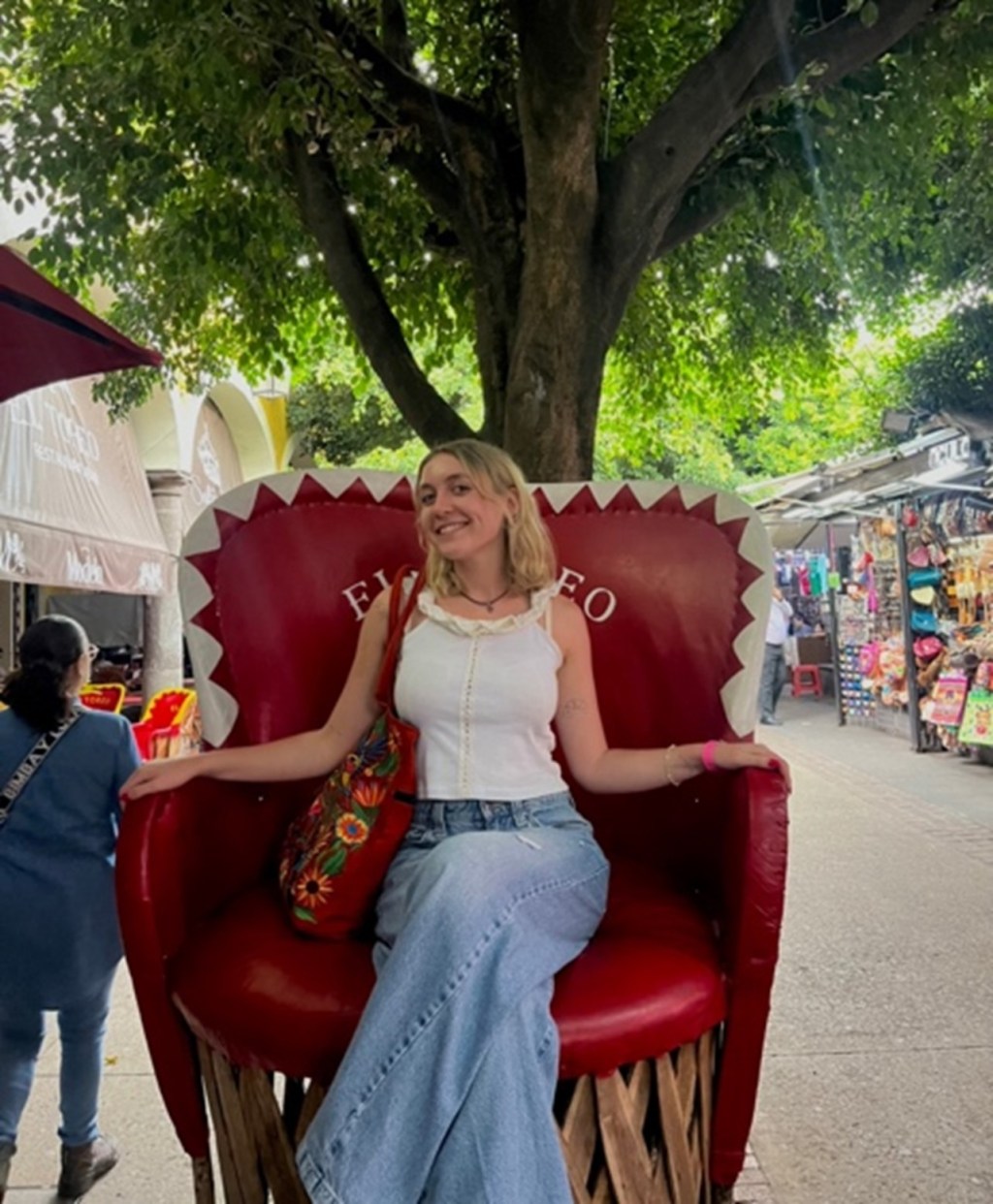
    Over the winter break I went to Mexico on a “Regional Economics” Global Shorts Program with UTS partner university Tec de Monterrey… I had the most incredible experience and already can’t wait to go back!

    Tec de Monterrey has 31 campuses across Mexico, of which we visited 4, spending a week in Mexico City, Puebla, Queretaro and Guadalajara. The university hosts 4 short exchange programs that run at the same time, across the 4 programs, there were 60 students from more than 15 countries. Being part of a larger group was a great way to make new connections and learn about different cultures, we all stayed at the same accommodation and could hang out in free time and during cultural activities. I was the only UTS student and the only Australian on the trip, while I took pride in representing my country, it would be great to get more Aussies travelling in Mexico and Latin America in general!

    The highlights in Mexico City were the Frida Kahlo Museum, the Central Bank of Mexico, the historic downtown area, Trajineras (gondola like boats) and Teotihuacan (Pyramid of the Sun). In 2017, the Mexico City uni campus was severely damaged by the 7.1 magnitude earthquake, Tec de Monterrey has since constructed a breathtaking memorial, and the resilience of the community is admirable.

    In Puebla, my favourite activities were visiting a Mezcal factory (distilled alcohol from agave plant), exploring the town of Calpan near the Popocatepetl (Volcano) were we had a cooking class with a local legend and attending a Lucha Libre (wrestling).

    Guadalajara was an amazing city; I would recommend for anyone visiting Mexico to go! The highlight for me was spending the day in Tequilla, the town where Tequilla was first made and home to the famous brand Jose Cuervo. We visited an agave farm, explored the town, toured the original Jose Cuervo factory and tasted A LOT of Tequilla.

    Querétaro was by far my favourite city, the town had a magical atmosphere, the buildings were so colourful, the streets were busy, the people were lovely, the food and shopping was outstanding!

    Overall, spending a week in each city was a great way to learn about the diverse cultures and traditions across Mexico. During each week we typically went to campus 2-3 times for classes, we had 2 days of cultural experiences and always a day or 2 for free time. I learnt a lot about the history of economic development in Mexico and the future for the country. The experience made me aware of many possible post graduate and career opportunities within Latin America that I am excited to explore. If anyone is considering travelling to Mexico or Latin America, don’t let language or security concerns hold you back! I felt safe everywhere and my little to no Spanish wasn’t a problem! I couldn’t recommend this experience more! I’m more than happy to chat with anyone curious about my trip or answer any questions for students interested in the program or studying at Tec de Monterrey.

    Alexander Heidi Green
    Bachelor of Economics

    Instituto Tecnológico y de Estudios Superiores de Monterrey (ITESM), Mexico
    Global Short Programs Travel Scholarship

    For more information about the UTS Global Short Program visit: www.uts.edu.au/thinkglobal

  • 12th University Scholars Leadership Symposium in Bangkok

    During early August 2024, I was fortunate to represent the UTS as an Australian delegate at the 12th University Scholars Leadership Symposium in Bangkok run by Humanitarian Affairs Asia.

    Over the 4 day program, we heard from numerous change makers that were living proof that we ourselves could do just the same.

    Each speaker spoke on a topic that was true to them, bringing unique and authentic perspectives that sparked so many emotions. You could see how much their work meant to them and no matter how many barriers they have faced on their journey for change, they’ve never given up.

    Having the symposium held in the UN Convention Centre was like a dream come true. I have always looked up to the United Nations and believed that I needed to be there to make great change. However, this experience revealed to me that you don’t just have to high up to make meaningful change. Grassroots organisations can be just as powerful in creating change even if it’s on a smaller scale.

    The highlight of this experience was our ‘Kindness Day,’ a day where we gave back and carried out acts of service. We went to a school where the majority of the children there were either refugees or children of refugees. They were the Karen people who are a persecuted ethnic group from Myanmar. To know what their families had to go through was heartbreaking but this didn’t stop these children from smiling.

    We played games with the primary school students, learnt dances, created art and had so much fun. We then went to the refugee camp and provided some resources to them. This was an eye opening experience and to see them so grateful made me reflect on how fortunate I am to have the opportunities I hold.

    This whole experience is one I will never forget and I have made some new friends all over the world that I am so fortunate to have met.

    Overall, having the opportunity take place in Bangkok was amazing! Exploring the city by tuk tuk, eating incredible food, going to markets and meeting incredible people was all so fun.

    A big thank you to UTS for providing me this eye opening opportunity that allowed me to meet people from all over the globe who could offer up fresh and innovative perspectives of how we could make change in this complex world.

    We were told each day to ‘Be The Change,’ and that’s exactly what I plan to do.

    Monira Abubakar
    Bachelor of Communications (Social and Political Sciences) Bachelor of International Studies
    Faculty-Led – BUILD – University Scholars Leadership Symposium (Thailand)
    BUILD Global Ambassador Grant recipient

  • Striving in Shanghai

    It has been a month since starting at Shanghai Tongji University and it’s crazy how different the culture is. And this is coming from an ABC who thought he knew everything about Chinese culture. Other than regretting not listening in high school Chinese class, here are some things I’ve experienced from my time in Shanghai.

    Chinese students study hard. But how hard?

    If you’re Australian born Chinese (ABC), you probably understand the pressure placed on academics. For a 7-year-old who just wanted to play games and watch TV, being forced to spend hours at tutoring seemed like a lot of pressure. That now 20-year-old has now realised that was nothing. At least once university rolls around, it becomes easier. Right…?

    Not so much in China.

    Back at UTS, full-time students are expected to study 3-4 subjects per semester. So, you would think China would be expected to have a few more. But how many more? On average, Chinese students study 8-10 subjects per semester, some even more. Not so rare to find students with regular 8am-8pm days of classes. Almost makes me feel bad about complaining about an 8am lecture.

    How did I find this out? Because I am only doing 3 subjects, a classmate asked how come she never sees me in class. I thought it was normal to not see each other when we only do 3-4 subjects. She induced me to a state of shock when she said she did 8 subjects.

    Studying this many subjects might seem intimidating. However, don’t let this sway you from applying to exchange in China because this problem is only a problem for the local students. Luckily, you’ll only be required to do 3-4 subjects for a semester.

    Differences between Tongji University and UTS

    The first month at Tongji University has been quite a wild ride. Good thing I’m used to roller coaster rides from watching the Parramatta Eels every week. Here are some differences between the two universities.  

    My first shock came with the class scheduling. There were still bell times and classes were still arranged using periods. When the bell rang signaling transition time, the empty hallways were instantly packed with students heading towards their next class. Not me. I was getting ready to head home. Coming to university made it feel like I stepped into the fountain of youth and entered high school again.

    Furthermore, there is only one type of lesson. Just one lesson once per week over a semester. No such thing as splitting a subject into tutorials, lectures, workshops, seminars etc. Thus, all the content is taught within that one lesson usually being around 90min.

    During the lessons, teaching style is similar to UTS. Most tutors use PowerPoint presentations to go over learning material. However, my experiences are that UTS tutors are more equipped with technology such as using I-pads and projective boards to go over the course work. In contrast to all the new technology, blackboards still exist in most classrooms.

    Tongji is a top university in Shanghai which is also reflected by its abundant facilities. Facilities range from a gym to a swimming pool and many cafeterias where you get an amazing meal for under $10AUD. There are many sport fields on campus, but no surprise, the main sports around here are badminton and ping pong.

    The Amazing Lifestyle

    Where do I begin? There is an abundance of places to visit around Shanghai, the most popular ones being Nanjing Road, The Bund, Yu Garden, Jing’an Temple, Huaihai Road, Xintiandi, Zhujiajiao and Disney Resort. The best thing is the Metro system which is one of the most efficient and reliable in the world. Throughout my stay, there have never been delays. There are many fun activities in the biggest city of China. Could not emphasise doing an exchange in Shanghai enough with all the activities, culture, and most importantly, only needing to study 3-4 subjects while everyone else around is doing double what you’re doing.

    Kevin Luo
    Bachelor of Business
    Tongji University, China
    New Colombo Plan Mobility Grant Recipient
    / Think Global Ambassador

    For more information about the UTS Global Exchange program please visit: www.uts.edu.au/thinkglobal

  • Mitsui  and Co, Japan

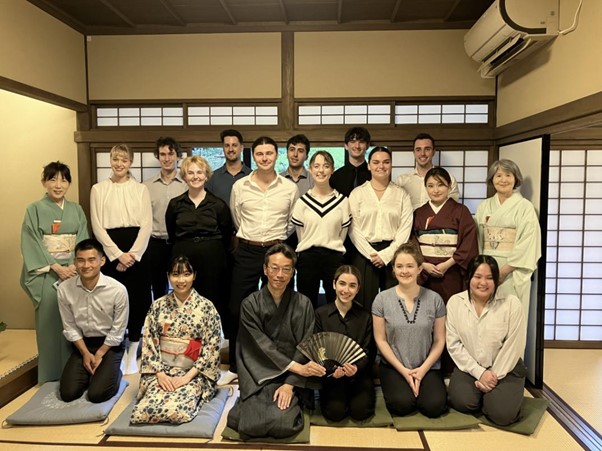
    I had an awesome time in Japan through the Mitsui and Co immersion program. We learned about a wide range of Mitsui’s operations, business units, staff and relationships with Australia, specifically projects they have in Australia. We also learned about cultural Japanese traditions and experiences such as tea ceremonies and they took us through to Sendai to learn about Japan’s developments regarding public disasters.

    Some highlights of the trip would have to be the tea experience, the excellent cuisine and food across Japan, also exploring the city as there is a large assortment of both temples, shops and interesting buildings to explore. It was also very fun engaging with my peers, meeting new people and engaging in activities such as karaoke.

    It was also very interesting visiting the Australian embassy, networking with Mitsui executives and meeting Tokyo university students. We also visited a startup hub; Mon Creative labs which also provided us with some interesting and insightful knowledge regarding the Japanese business sector.

    Overall, the blend of excellent food, cultural immersions, business experiences and engaging social activities made this trip one I will never forget!

    Alexander Socratous
    Bachelor of Communication (Journalism)
    Bachelor of Laws
    Mitsui Immersion Program, Japan
    New Colombo Plan Mobility Grant recipient

    For more information about the UTS Global Short Program visit: www.uts.edu.au/thinkglobal