I was recently given the amazing opportunity to study abroad at the university UAB in Barcelona as part of a UTS global short program. I decided to challenge myself and try something new by studying Beeology- a combination of beekeeping and the biology of bees. With no background in this field, as my core degree is in business, it was undeniably a challenge, for the most part, to understand concepts that once pushed me to drop these types of subjects in high school.
However with perseverance, the will to challenge myself, and hours of studying It became an extremely rewarding and memorable experience which took me outside of my comfort zone and inspired me to take more risks. My marks were able to reflect this.
While I haven’t developed a raging passion for beekeeping, it was fun to learn something new! I met a lot of amazing people along the way whether it be at uni or outside of uni at hostels and bars, it was an experience ill never forget and a story to tell! I would highly recommend everyone to take that risk and try something new, because its not every day you have an excuse to take off work and travel to Europe. One of my highlights was extracting honey and getting to try it. While I don’t have a particular interest in bees this is something that is almost considered a rare opportunity.
And that’s what the program is all about. It’s a great way to make friends from across the world, grow as a person and travel that’s suitable to the uni timetable.
Lily Platzer Faculty of Transdisciplinary Innovation Beeology: Honeybee Science from Theory to Practice at Universitat Autònoma de Barcelona, Spain Global Short Programs Travel Scholarship Recipient
Travelling abroad to Seoul was an incredibly enriching part of my Masters of Architecture Design Studio. My Design Studio was run under the 4th Seoul Biennale of Architecture and Urbanism 2023, Land Architecture, Land Urbanism: City of Mountain Ranges, Waterways, and Wind Breezes— Drawing of Seoul’s Next 100 Years.
Our studio was centered around proposing a new land bridge across the Han River in Seoul. The trip became not only an enriching opportunity to shape our design proposal for the remainder of the semester, however, it also allowed me to greatly expand my understanding and appreciation of architecture as an emerging architectural graduate.
This allowed me to explore the city’s deep history and fascinating architectural design. As a student of architecture, I was eager to learn more about the culture and history of Seoul, and South Korea and experience how that shapes some of the city’s most famous building and design practices.
Throughout the week we visited famous architectural buildings and practices whilst also immersing ourselves in the rich culture and delicious food of Seoul. We visited remarkable buildings and public spaces such as EWHA Women’s University by Jean Nouvel, Amorepacific by David Chipperfield, Seoullo by MDRVD, Seoul National University Gallery by OMA, and Mimesis by Alvaro Siza. One of the highlights of the trip was a day trip to Heyri Village, which is a fascinating epoch of contemporary architecture.
I was particularly compelled by how the architecture of Seoul balances between a strong recognition of its rich past and history, whilst designing and planning for the future. This was especially highlighted in Won Buddhist Temple by MASS Studies, which shifts between a traditional Buddhist temple, and also becomes a contemporary spatial device that brings together and links the city.
My trip to Seoul provided an initial glimpse into the fascinating ways in which practice shifts in different countries, contexts, and firms. Travel was harnessed as a potential way to develop our projects, propose alternative ways of thinking, and immerse ourselves in the history and styles of architecture. It is a special opportunity that I hope I will be able to have key takeaways that I can bring back into my work as I commence the next stage of my career.
Lily Cannon Faculty of Design, Architecture and Building DAB Faculty-led Global Studio in South Korea Global Short Programs Travel Scholarship recipient
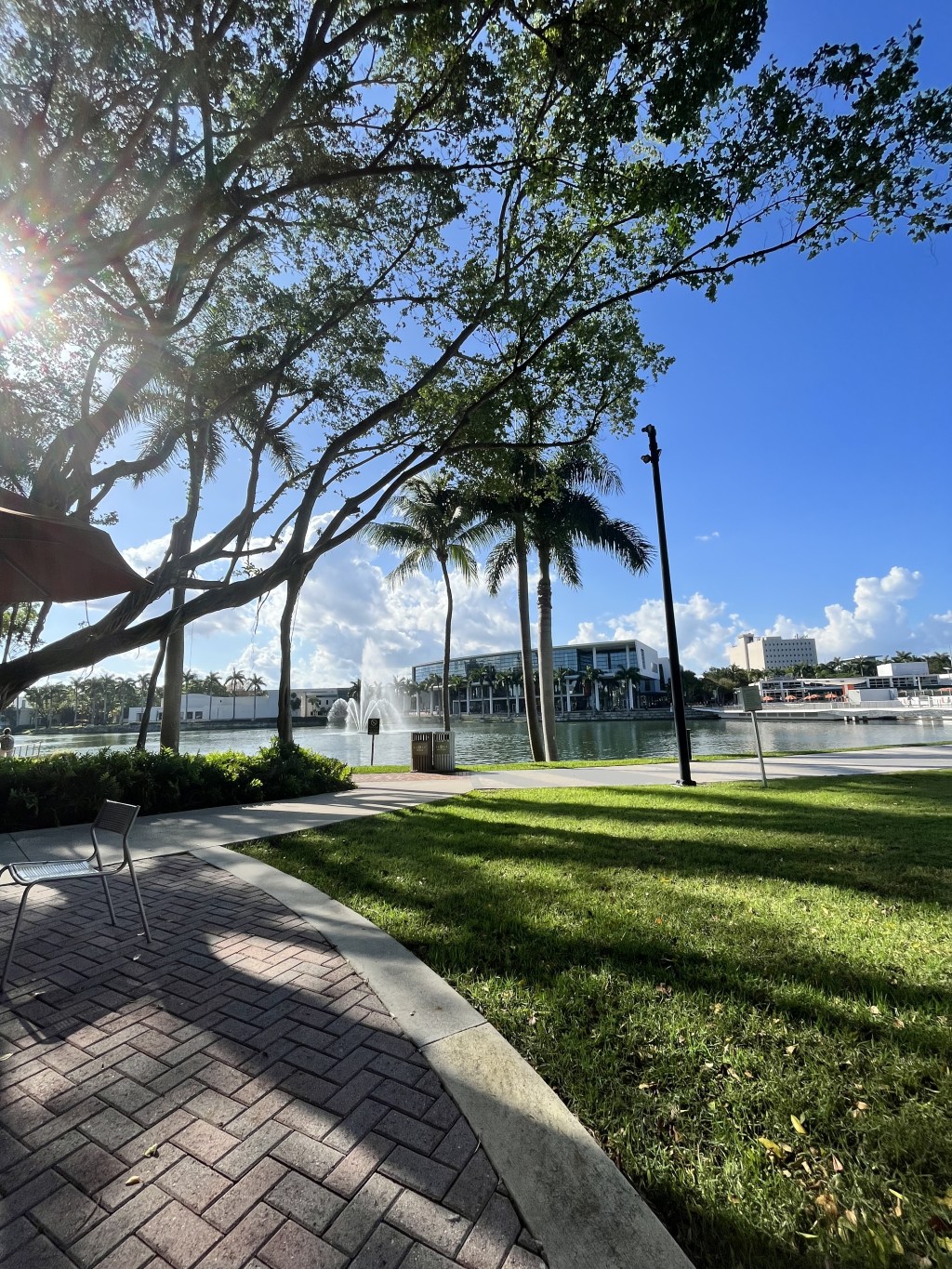
During my time at the University of Miami (UM) I studied non-direct equivalents of my Biomedical engineering course at UTS. Rather I chose electives that focus on other areas of interest. I took advantage of the opportunity to explore different fields of study and broaden my knowledge.
Regarding the facilities at the University of Miami, the institution has state-of-the-art facilities, including a medical campus that offers advanced research and clinical facilities, a sports complex, and modern classrooms equipped with the latest technology.
The teaching style at the University of Miami differs from that at UTS. The University of Miami emphasises an exam learning approach which is in contrast to UTS which encourages students to participate actively in class discussions and collaborate on projects. The professors provide individual attention to students as the class sizes are far smaller than UTS. UM also offers regular feedback to help them improve their performance which is consistent to UTS. I would say the UM represents an Australian high school style of learning, in other words very American.
Foundations of medical imaging is a fascinating subject that combines physics, engineering, and biology to understand how medical images are created and used in clinical practice. It highlights Ultrasound, MRI, X-ray, and CT Imaging. Functional human anatomy is also an exciting subject that focuses on the structure and function of the human body, which is crucial knowledge for anyone interested in healthcare. Elements of sport psychology and introduction to psychology are also interesting subjects that help students understand the human mind and behaviour. Elements of sports psych was a very easy subject which lightened the load considering during exchange I wanted to travel not focus on studying.
In conclusion, academic life at the University of Miami was easily one of if not the best experience of my life. The people I have met during my time here have been incredible and will be a part of the rest of my life. It was an enriching and fulfilling experience, with a focus on interactive learning, modern facilities, and exciting subjects. I would recommend using your study abroad program exploring new fields of study and broadening your knowledge base. Additionally, focus on the social aspect of exchange and throw yourself into the University culture that will guarantee you have the best experience possible. GO CANES.
Andrew Burns Bachelor of Biomedical Engineering Autumn 2023 Session at University of Miami (UM), the United States of America.
If you are considering doing a global short program, I urge you, do it! I can’t promise a completely glamorous experience by any means. I missed a connecting flight, and after hours of stressed emails and rebooking travel, I somehow stumbled off the 4-hour bus ride into the streets of Nottingham at midnight. I managed to somehow effectively communicate with the reception of my accommodation and finally dragged myself and my bags into my dorm.
I remember looking out my window and feeling a wave of excitement as it hit me about what I had achieved and the experience I was about to embark on. The weeks went far too quickly. Every day consisted of a coffee and a pastry in the morning, laughing our way down the street to our class 5 minutes before it started. During the first week, we got bussed out to historic locations close to Nottingham to take photos. Myself and my classmates, dubbed lovingly “you horrible lot”, by our tutors, moved between pottering, chatting and eating, and falling into zones of concentration, trying to get good shots of the scenery. By the second day, our tutors diligently specified if there was a cafe where we were going, in the morning brief for the field trips.
Nighttime was for a classic British pub feed, or a communal dinner in our shared kitchen, followed by a night out in the town. Sprinting between our dorms and Tesco because we forgot our ID to buy drinks was a common occurrence. We also had the opportunity for many social activities organised by Nottingham Trent University, including a day trip to York, where we got to roam the medieval streets, and take our time sitting in narrow 3-storey teahouses watching the rain on the window panes. The people definitely made the experience as good as it was.
I was so lucky to have met a lovely lot of people, mostly Australians from UTS and Canadians, who were equally as energised to explore as I was and always knew how to have a good time. There is so much to share but not nearly enough time to share it all. The experience of being a student overseas in such a condensed time meant that every day was lived out very intentionally. As a result, I was able to make so many amazing lasting memories.
Aoife Brazil Faculty of Design, Architecture and Building Photography and Heritage at Nottingham Trent University, UK Global Short Programs Travel Scholarship recipient
Last winter break, I studied abroad in Berlin at Technische Universität Berlin (TU Berlin) for two weeks. Arriving from a very long but scenic train ride from Amsterdam the Saturday before, my friend and I dived immediately into the German culture by venturing to the city centre through Tiergarten and the Brandenburg Gate.
The next day, Sunday, was quiet and started the first cultural shock I experienced on the trip. Sundays are a day of rest in Germany, with most shops, restaurants, and pharmacies closed or open for extremely short hours. So when you come to Germany, plan around Sundays with visits to museums, which are free on every first Sunday of the month, or going to a flea market at Mauerpark.
TU Berlin began with a ‘Welcome Day’, which was refreshing and a great way to start the program by introducing yourself to new people from across the world and in different programs. The first class began on the same day, and immediately we all connected and had lunch and dinner together. Every day we would go to the ‘Mensa’ (cafeteria), grab our food, and eat together whilst sharing our cultures and getting to know each other.
Besides the classes, TU Berlin offers various ‘cultural programs’. We explored museums like the Humboldt Forum, Jewish Museum, visited Potsdam containing the Sansscouci Palace, and went on pedal boats on the Spree. These excursions were a great break from uni work and made joining a group of students to explore Berlin easy.
If you are looking for tips on Berlin, here are some!
It is effortless to navigate around the city. TU Berlin gave us two seven-day passes for all transport in and around Berlin. You can access buses and trains (both U-Bahn and S-Bahn), which are enough to move around the city at any time comfortably. Use CityMapper instead of Google Maps for public transportation help. It was highly reliable with timings and exactly what train or bus to catch.
Bring cash. Although many places accept card payments, cash is preferable for traditional restaurants, and you can avoid unnecessary fees, which makes splitting bills in large groups easy.
For partygoers, clubs are abundant, but be on the lookout for special events. We went to a rave for awareness to make electronic music a cultural asset, which was a highlight of the trip. There is plenty of variety with clubs to party at and bars to have a drink and chill with friends.
Everyone should sign up for a Global Shorts Program. Even if it is a two-week program, you can organise a Europe trip around the program to immerse yourself in a completely new lifestyle.
Oliver Guerreiro Faculty of Engineering and Information Technology Modern Cloud Project with Java at Technische Universität Berlin (TU Berlin). Germany Global Short Program Travel Scholarship recipient
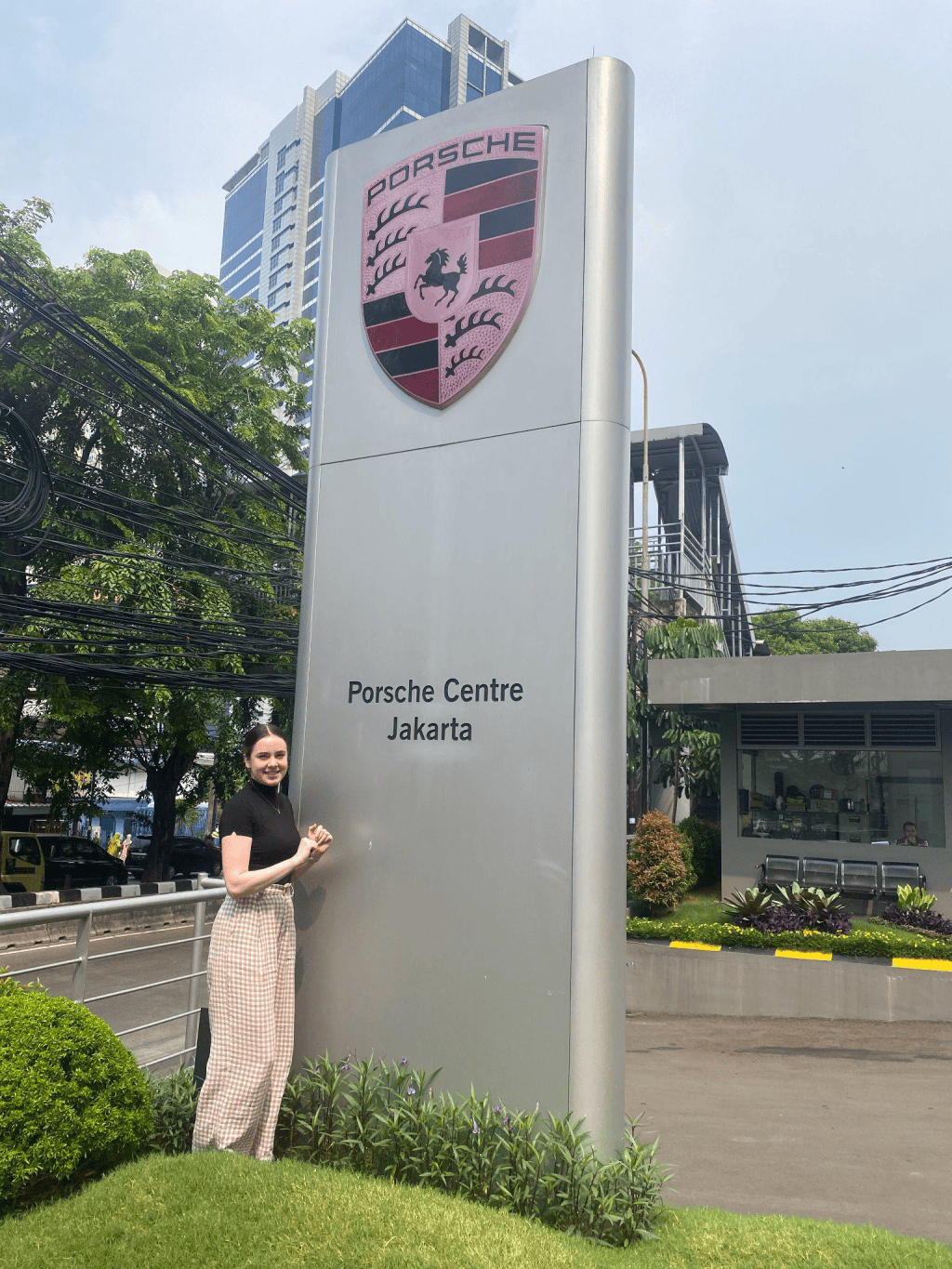
Just a few days of living in Indonesia as a student studying forensic science will shock you. I spent just over six weeks in Indonesia experiencing all the positives and the negatives there were to experience, as you would expect living in a country so unique to Australian people.
My work placement was at the University of Indonesia (known as Universitas Indonesia), in the Department of Criminology. My task was to provide a comparison between Australia and Indonesia in regard to the use and process of forensic science in disclosing crime events. At the end of this research report, I was asked to provide recommendations that may help facilitate the improvement of Indonesia’s forensic science system. Interacting with my Indonesian colleagues was a highlight for me as I had studied the language and culture in high school.
They were always excited to speak to a foreigner in Indonesian who understood the language, and they also significantly expanded my vocabulary, including the Betawi (nationality of Jakarta) slang. It was, however, a very eye-opening experience seeing how a criminal justice system operates in an underdeveloped economy. Unlike Australia, It is very uncommon for forensic science to be used as a tool to assign guilt in a courtroom. This allowed me to value the research and experience I was able to provide to Universitas Indonesia.
Outside of work hours, I was able to explore the island of Java, including visiting the Botanical Gardens, and going to Ragunan Zoo to see Australian animals. I also had the opportunity to experience Indonesia’s public transport, from taking a train down to Bogor (West Java), and using the new MRT (Mass Rapid Transit) to visit Ancol, North Jakarta Wharf. These experiences allowed me to engage with both tourism activities, as well as living like a local, where kicking a soccer ball and painting with the local children was a highlight. Eating out at local Indonesian restaurants with my work colleagues was an additional highlight, especially because they helped me to navigate the menu!
When considering my entire experience in Indonesia, I am extremely thankful to the longstanding New Colombo Plan Scholarship Program for allowing me to experience working abroad, and opening many global networking opportunities to me, within my field of study.
Ashlyn White Faculty of Science International Internship in Indonesia New Colombo Plan Mobility Grant recipient
I am currently enrolled in the Law Faculty at Chuo University. Chuo University began as a law school and remains a highly ranked law school in Japan. As a law student, I am very grateful that I can study at this university. To account for 24 UTS credit points, I am currently taking 8 classes at Chuo, 4 of which are law classes.
Although I have finished my law degree at UTS, I am excited that I am able to continue my law studies and enhance my learning. I am most excited for my class called ‘International Law from Japanese Perspectives’ as one of the lecturers previously served as a Judge at the International Criminal Court in The Hague, Netherlands. As I am interested in pursuing a career in international law, I believe this will be an amazing opportunity to learn more about international law and how to pursue a career in this field. I am also continuing my Japanese language studies and am enrolled in subjects offered by the Global Management Faculty which is based on Chuo University’s main campus at Tama.
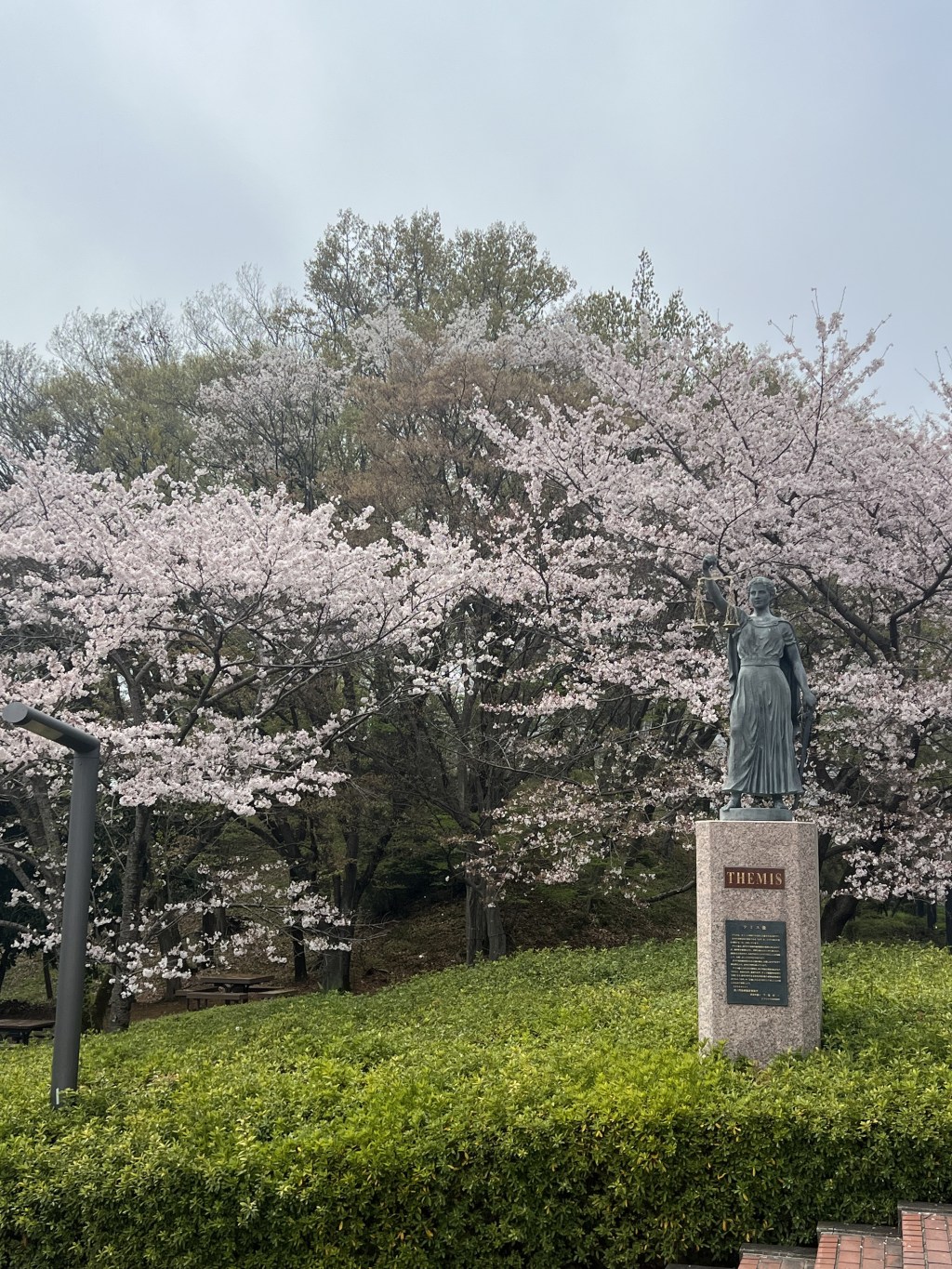
Chuo University’s main campus is extremely large, with incredible facilities such as a Japanese archery hall, volleyball courts, baseball field and even a horse-riding field. These facilities have produced top students. For example, two Chuo University alumni are representatives and starting members of Japan’s national men’s volleyball team. The campus is located on a hill and accessible via the monorail or by bus and walking. The buildings on campus are quite old and difficult to navigate due to the size of the campus, but the trees, in particular, the cherry blossoms lining the sidewalks are incredibly beautiful. I was fortunate enough to commence my exchange during April which is when the cherry blossoms were in full bloom. The benches underneath trees make for such a romantic and picturesque social space, especially when the blossoms flutter through the air.
Interestingly, Chuo University very recently opened a new campus in Myogadani (near central Tokyo) for its Law Faculty in April of this year. As a result, I am able to study at a new campus with brand-new facilities. I must say, however, the travel to Myogadani from my dorm is quite a distance, taking around 1 hour and 20 minutes by train. The law classes offered in English are spread out throughout the week which means that I must attend university almost every day. Thankfully, I was able to apply for a commuter pass which means that I can save some money on my public transportation fare.
The teaching style and class structure of each class are very different. Yet, a commonality between all the classes is that class participation is a strict requirement and comprises a large chunk of our final marks for each subject. Being an active participant is a must so be prepared! That being said, there are no preparatory materials to go through before Week 1 and few readings to do compared to the coursework required at UTS. Having studied at UTS for 5 years, doing the readings feels like a walk in the park. Thank you UTS!
A little tip for future students is that the University is still very much paper-based based so please be prepared to receive a lot of paper and handwritten notes. Many teachers do not allow the use of electronic devices!
Jennifer Zhang Bachelor of Laws/ Bachelor of International Studies Autumn 2023 at Chuo University, Japan
I am beyond grateful to have had the opportunity to participate in the UTS Global Short Program in Milan. As part of this enriching experience, I studied at the Università Cattolica del Sacro Cuore with an amazing group of tutors and peers from all corners of the world.
in Milan. As part of this enriching experience, I studied at the Università Cattolica del Sacro
Cuore with an amazing group of tutors and peers from all corners of the world.
Before I headed out, I was feeling all sorts of things. Since I’d never travelled abroad before, there was a mix of excitement and nerves as I was about to dive into a completely new foreign experience. Despite all those thoughts swirling around, one thing was crystal clear: I was absolutely sure about taking part in this exchange.
there was a mix of excitement and nerves as I was about to dive into a completely new foreign
experience. Despite all those thoughts swirling around, one thing was crystal clear: I was
absolutely sure about taking part in this exchange.
The course structure itself was well-planned, affording us enough time to uncover Milan, interact with fellow students, and form enduring friendships. Throughout my stay, my friends and I frequently gravitated towards Caffè De Amicis. Tucked away like a hidden treasure, this spot became our panini paradise – a place where we shared ideas and stories.
with fellow students, and form enduring friendships. Throughout my stay, my friends and I
frequently gravitated towards Caffè De Amicis. Tucked away like a hidden treasure, this spot
became our panini paradise – a place where we shared ideas and stories.
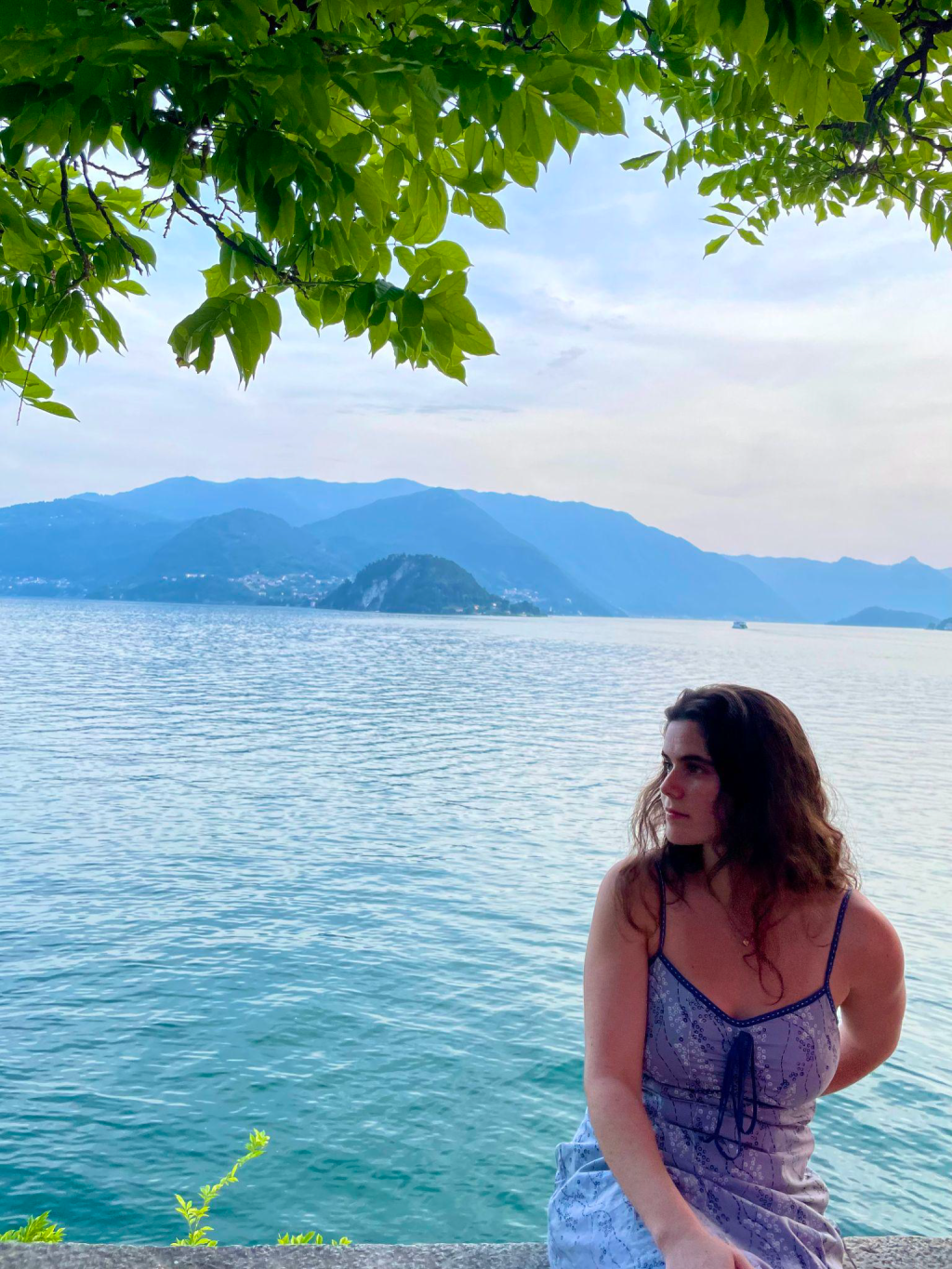
The program laid a strong groundwork for uniting students and seamlessly introduced us to the Milanese way of life. I relished immersing myself in the culture, learning from a diverse array of international peers, and embracing the social fabric of the region. I had the chance to explore some of Lake Como’s beauty and admired Venice’s stunning lagoons.
I jumped into the Italian summer festivities at a local event hosted by “Eatily.” Accompanied by a fellow classmate from Birmingham, we wholeheartedly embraced the festive energy. Dancing to live music, mingling with locals over drinks, we fully immersed in the vibrant atmosphere. This experience was like a language boost as I engaged in spontaneous conversations and navigated the celebration effortlessly.
During my time in Italy, I had the opportunity to cook with an Italian family in San Miniato. Despite the language barrier, I was able to make most connections between Italian words and context, enabling me to comprehend their instructions. This experience transcended the confines of a language class, offering a hands-on exploration of Italian culture and language. We chose to wrap up our chapter in Navigli. This place had a vibe like no other – a fusion of local authenticity and international allure. As the evening unfolded, we exchanged our final “ciaos” and “grazies,” savouring a timeless Italian tradition – the aperitivo.
Studying abroad in Milan has been nothing short of a dream come true. Italy’s rich history, vibrant culture, and the warm embrace of its people have made this journey truly unforgettable. The multifaceted nature of Milan’s academic and social landscape has provided the ideal backdrop for growth, reminding me that learning is not just an academic endeavour, but an exploration of self and society.
Emily Nicholls Faculty of Arts and Social Sciences New Frontiers in Brand Communication and Consumer Engagement in Università Cattolica del Sacro Cuore, Italy Global Short Program Travel Scholarship Recipient
When I first applied for this program, I had so many things I was anxious about such as how do I connect with people from different cultures and backgrounds and will I be able to adapt to these cultures. Fortunately, this program exceeded my expectations. I enjoyed the lectures that told me about different cultures.
One thing that is the most memorable to me from the lecture was “Finnish nightmare” (Google it up to find out what it is! Trust me it’s really interesting!). I never expected that such a culture would exist! Apart from the lectures, is the food. One of the students in the program has a Polish background and he introduced me to the Polish culture and foods. One word to describe this was “outstanding”. I tried different flavours of pierogi, which was absolutely flavoursome. I think people should try this when they go to Poland. He also told me the chocolate I should get whilst I am in Europe. Liqueur chocolate is a must-get thing in Europe. I tried one and fell in love with the flavour and I ended up buying a lot of them! Sitting down and getting to know your peers and listening to the lectures are important but people should go sightseeing too! There are so many things to discover in Poznan (you’ll know if you get the chance to attend this program).
Above all, I also got to know people from UTS too! I met some people who are studying the same major as mine and we get to share laughter and of course, fun! So, the highlights for me personally are learning different cultures, getting to know people from across the globe and most importantly foods. If you ask me if I’ve learnt anything related to management, yes definitely! Communicating with people and getting to know them allowed me to understand what management strategy the best for me would be and for them. For example, understanding the culture of how people work (e.g., procrastinator vs diligent type) will help me in finding a way to motivate them to give their best. In short, I recommend this program to anyone keen on learning about different cultures.
Farrel Separgo Faculty of Engineering and Information Technology Faculty-led program International Strategic Management Workshop at Poland University of Technology, Poland
I was fortunate enough to be given the opportunity by UTS BUILD and Humanitarian Affairs Asia to be a part of the 11th University Scholar Leaders Symposium from AUG 1st-4th at the United Nations Conference Center Bangkok.
Where to start? These four days were so overwhelming with mixed emotions that putting it all into words would be so difficult but let’s give it a try: 453 delegates from 46 countries are united by their passion for being the change and bringing an impact-breaking all cultural barriers and coming together. Even though I didn’t get to talk to all of them, I was stunned by everyone’s passion and desire to see a better future and work towards their goal. The insightful conversations I’ve had throughout the symposium have helped me to pause, reflect, think, reshape and target the possible ways I can contribute my bit towards my community and this world. After all, as Geraldine Cox says-“The greatest currency we will ever possess is how you affect others in the world, so always remember to be kind”.
I feel so obliged to have heard a few of the best speakers I’ve ever met in person – Sam Cawthorn, Felipe Queipo, and Sherina Sham, to name a few and each session had a major takeaway for me, a story that touched my heart deeply, and a few challenged my thoughts as well. Hearing those mind-boggling speeches was a mix and blend of so many emotions – sadness, satisfaction, frustration, compassion, fear, happiness etc.; and even though I’d say we have all laughed and cried together, these stories have embedded in our hearts and given us the strength to start our social impact journey with immense courage and guidance which was much needed.
During Kindness Day, I volunteered at the Suroutmaijaroen School on the outskirts of Bangkok and spent the day painting classrooms and interacting with those lovely schoolchildren. Even though it was a very small school with around 300 students and 20 teachers, they gave their hundred percent to welcome us into their community with the limited resources they had, and this made me realize gratitude is the best attitude. For those of you who hold yourself back, thinking that you don’t have enough skills/time/money to give back to the community, my friends- In life, it is not what we have but what we do with what we have that brings a positive impact, so do, it is only that one single step which will determine the rest of your life.
These four days were one of the best experiences I have ever had, and when I stepped out of the conference Center, I took with me loads of memories but, most importantly, hope for a better future. I was not at all uncertain about it anymore; these young emerging changemakers inspired me immensely, and I feel so grateful to have been a part of this marvelous symposium. Thank you, UTS BUILD, for giving me this extraordinary opportunity, HAA, and my fellow delegates – all this wouldn’t have been possible without y’all.
Shreya Gaur Faculty of Science University Scholar Leaders Symposium in Thailand BUILD Global Ambassador Grant recipient