On 28th June a group of 8 UTS students arrived in Cambodia where they will spend the next four weeks working closely with local NGO Anjali who support disadvantaged and orphaned children. The team will be helping to develop a social enterprise to help generate a sustainable source of revenue. Their goal is to help the organisation identify how it can use its collection of local photos and art to develop an international art leasing business with major hotels that can develop into a scalable business with positive local community impact.
Below is the first update from team member Alicia Crowhurst;
“Project Everest’s Arts for Change program is going great. Week 1 is down and we’ve already made impressive progress and are learning so much thanks to our wonderful team leader, Zoe, who was very welcoming.
This week has mainly been visiting Anjali house, the NGO we are working with and interviewing the staff, volunteers and board to start off our research and business plans. Yesterday (Sat) we visited Angkor Wat, which was incredible. “
Time has flown by since my arrival in Japan, even though this is my second visit I had yet to travel through Kyoto so I didn’t have any idea of what to expect from my exchange city. After a very busy and activity packed 2 months however I have really come to love Kyoto, its people and the many conveniences of being in one of Japan’s most historically rich cities.
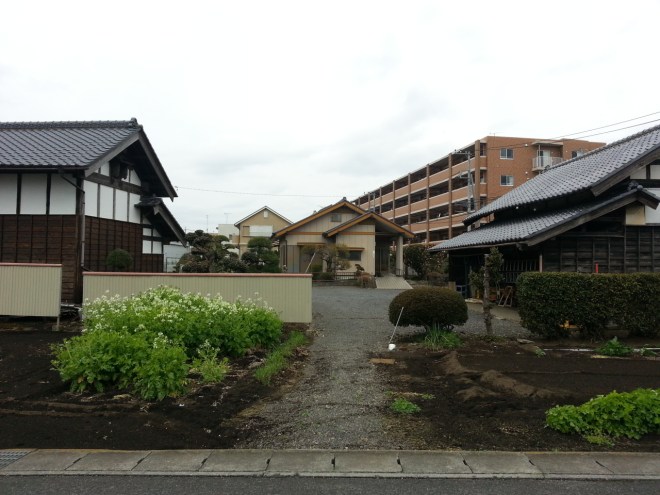
For my exchange period I was lucky enough to be placed in a studio in one of the most convenient areas, a short bike ride away from university and only 2 stations from Kyoto’s busy downtown areas Kawaramachi 河原町and Karasuma 烏丸. Aside from shopping and eating whilst you are here, you can also take a wander around Gion – the famous Geisha district – or as many couples and students like to do (myself included), go down to Kamo River with some food and a drink – beer is good!
I was also very eager to join in on the bicycling culture here in Kyoto as this is something that we don’t have in Sydney, and I can confirm that it is one of the best and most enjoyable commuting methods! Despite having a far more convenient public transport system than Sydney, Kyoto’s grid structure and flat streets makes bicycling the easiest way to get around in my opinion. In particular, biking is an especially convenient for touring all the surrounding temples.
Fortunately enough I had arrived just in time for 花見 (Hanami) Sakura season and was able to see all the Sakura trees in full bloom. It was an amazing first experience of Kyoto! Another first for me was to have taken part in 夜桜 (Yozakura) which is a night viewing of Sakura at 清水寺(Kiyomizu dera) one of Kyoto’s most popular temples – I definitely recommend it!
My favourite so far however has been a visit to Ryōan-ji and its famous Zen garden. During my stay I’ve really come to appreciate the close proximity to nature and of course the many beautiful Temples at my doorstep (Kyoto has about 1,600 Buddhist temples!). Because of how easy it is to get away from the city buzz, there is a great life balance between work and play in Kyoto.
Another great thing about Kyoto as well is the close proximity to other popular cities – meaning I easily do day trips or get away for the weekend. During my 2 month stay I have been able to visit Osaka several times to see the Aquarium, Universal Studios Japan as well as eat my fair share of Takoyaki and Monja. Being only a short train ride (1-1.5 hours) to big cities has really widened my opportunity for different cultural experiences, and has given me the opportunity see the different nuances between cities and its people.
I have even been to Kobe to see the spring festival!
Despite language barriers and being my first time in Kyoto, I couldn’t have asked to be placed in a better city. The close proximity to the city centre as well as hikes and temples has given a very fulfilling first 2 months on exchange. And despite the varied complexities of getting settled in, I am glad to be able to not just learn more about Japan but to be able to learn more and create friendships with those on exchange from all around the world in a truly intercultural experience!
Having visited Japan a few times before, I had a rough idea what Japanese culture was like before undertaking exchange. However, living here for just under two months has been filled with many surprises and it has been really exciting to be continuously exposed to new experiences!
I’ve only ever been exposed to the major cities in Japan (Tokyo, Kyoto and Osaka) and had never heard of Mito, let alone Ibaraki prefecture before this exchange. Being around 2 hours north-east of Tokyo, it’s definitely a lot quieter than metropolitan areas, but the people are so welcoming and there is no shortage of things to do. The initial culture shock was really obvious here, because hardly anyone speaks fluent English, but within a few weeks of constantly using Japanese (and doing a lot of dictionary checking!) I can really feel it starting to pick up.
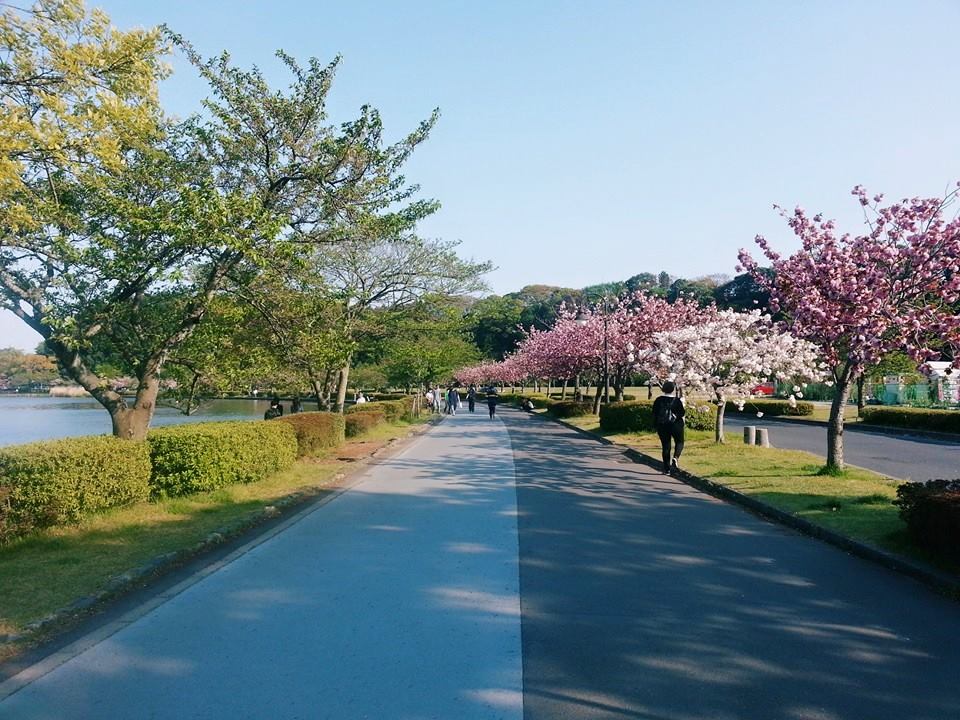
Two places in Mito that are well-known are Senbako Lake and Kairakuen Park – one of the best things to do around here on a sunny day is to ride around the bicycle track at Senbako or go for a picnic at Kairakuen. If it’s not holiday season it’s usually not busy and in Spring most of the flowers were still in bloom.
In comparison to Australia, most things are cheaper – a good meal out will cost around anything from 400-700 yen, or around $5-10. The kinds of foods available are also really diverse, with Japanese cuisine, western burger joints and even sri-lankan restaurants all being located in the university vicinity and choosing a place to eat out at is always difficult!
Another really great place in Ibaraki prefecture is Hitachi Seaside Park, which is about 30 minutes away by car or around an hour by public transport. The flowers are different depending on the season and I’ve been lucky to see it during both daffodil season and the nemophilia/baby blue eyes season! Hopefully in summer and autumn I’ll get the chance to go back and see the cochia too, from what I’ve heard and seen it’s really impressive!
2 hours mights seem far for a commute to Tokyo, but it’s close enough to make day trips, and far away enough to get away from the crowded city life. I’ve visited Tokyo a few times now, once to go to Kanagawa and visit the Kanama-Matsuri and another time to go to Design Festa – a huge convention where people have booths to sell anything from artwork to figures and jewellery/clothes.
Studying here has been a really good experience since the Japanese tertiary education system is slightly different from Australia. Apart from taking Japanese language classes, at Ibaraki University it is a requirement that you take an additional 2 classes minimum. The university offers a handful of classes taught in English, but in order to challenge myself and also cater to my interests (being a design major) the university also offers design/art classes. Understanding the classes has been a bit difficult, but also really rewarding in terms of doing the assignments and seeing the differences in they way the classes are taught.
A major difference between visiting and living in Japan is definitely the paperwork – the first few weeks was filling out a lot of forms (most of which I couldn’t read) but everyone is so helpful and accommodating to making sure that you settle in just fine. The university provides accommodation for international students, and although it might seem a bit small by Australian standards, it’s low maintenance and has everything you need for everyday life. It’s also a 15 minute walk to the university (or a 5-10 minute bike ride) and close to a convenience store and 24-hour supermarket – even if it might be regarded as rural, Japan never fails on the convenience level!
Despite the language barriers, I’ve been able to learn about not only Japanese culture, but the cultures of all the other students doing exchange – many of which are also non-English speaking countries. Although I’ve only been here for around two months I’ve learnt so much, and I’m excited to see what the rest of my time here has to offer!
Living in a new place away from home is not easy, especially if you’re living in a different country. As the new semester starts, I’m here in Seoul, South Korea, on the UTS Global Exchange program.
On the first day, I arrived at Incheon Airport at 6am and, boy, it was freezing! The temperature was -3 degrees! It was opposite from the summer weather back at home. After being lost in the huge airport for quite sometime I found my way to the bus to get me to the hostel I booked since I arrived 2 weeks before the school semester starts. There’s actually the subway train system, which is much quicker than the bus and much cheaper as well. I’d recommend getting the train rather than the bus.
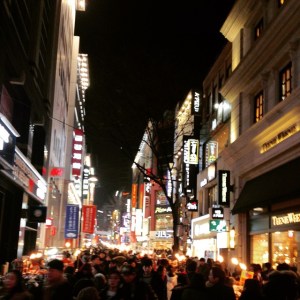
I booked my tickets 2 weeks before the semester at Yonsei University starts because I waned to explore the area more since I won’t have much time after Uni begins. I started off exploring the area around my hostel first, which was in Jongno-gu. It’s only 15-20minutes bus ride away from Yonsei. The area is really lively at night because of the restaurants there, though, company workers mostly occupied it.
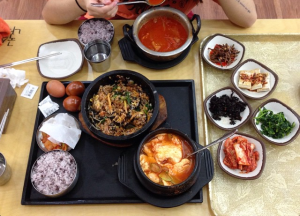
The food was awesome but I had trouble ordering food in the beginning of my trip. I have little knowledge about the Korean language and only knew a few words that my Korean friend taught me before coming here. Most of the time I would be using my hands to signal what I want. It wasn’t so difficult as Korean do borrow some English words like Japanese.
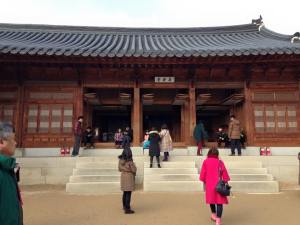
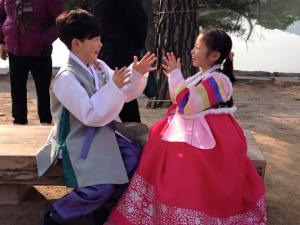
I visited other places prior the starting of uni as well. Gyeongbokgung Palace was the first. I visited the palace during the Lunar New Year since I wasn’t able to spend the Lunar New Year with my family. It was so interesting to get to know the history of the palace as well as seeing people in traditional Korean Hanbok at this time, especially on little children.
Myeongdong is another tourist attraction that I adore. It has all of the low-range to mid-range make up stores that are affordable for adolescent and young adults.
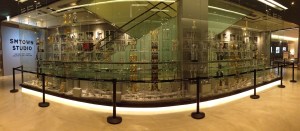
For K-Pop or SM Entertainment fans, you have to visit SM Coex Artium located outide of Samsung Station. SM Coex has every activity for Kpop fans to enjoy and you can also experience what your idols do such as make up, hair, vocal training and recording, dance, and video recording located on 3rd floor. On the 5th floor, you can watch music video clips of your favourite idol group on a panorama screen. What I enjoy the most was the hologram musical, School Oz starring SM entertainment idols.
Starting Uni and dorm life:
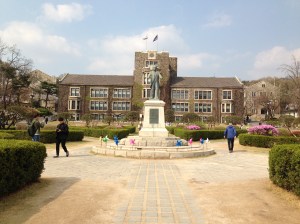
After spending 2 weeks touring Seoul, I started my university life at Yonsei University. Being directionally slow, I entered Yonsei via the main gate pulling my giant luggage around and getting lost. I finally found the SK Global House building with a helps from people I found around the uni. I found out I was suppose to enter Yonsei via the East gate (dongmun- 동문) instead. I settled my belongings down after picking up my key card at the reception area on the ground floor. Then I had to go down again to pick up my beddings that were wrapped in a big bag downstairs. I chose SK global because it has 2 choices of a double and a single room in which I wanted the single room all to myself. Although having a roommate seems like a nice way to make new friends but I like my private time in my own space.
Uni started a week later. The first week was stressful due to the subjects changing and since I was in a different environment it was hard to find my way around. Luckily I had a friend that came with me from UTS to help me out so it was all right. We soon adjusted to our new temporary home and made new friends. My stay here started out quite rocky but now it’s fun as I get to explore different aspect of Seoul and its people.
Pros: fast public transportation, cheap taxi fares, good food, nightlife, affordable shopping, and it’s extremely easy to get around because there’s English everywhere.
Cons: Hospital services aren’t as pleasant because of the language barrier. Be careful when crossing the street because even if there’s a zebra patterned crossing on the road, it does not mean it’s a pedestrian crossing.
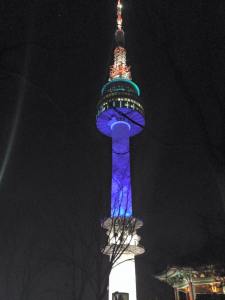
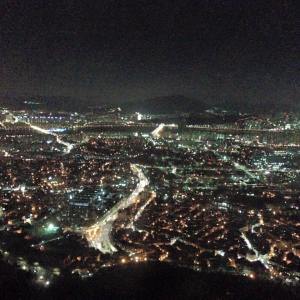
Additional photos from Namsan Tower:
-Rene Nguyen (student no. 11726407)
UTS Global Exchange to Yonsei University, South Korea
I’ve been in Japan for a little over 1 month and my expectations did not disappoint! So much has happened in this time and it has been like a whirlwind. I arrived at Kanazawa (on the West coast of Japan) just as the sakura/cherry blossom season started. It was a purely magical sight to see. For those who don’t know, Kanazawa is a smaller city full of nature, is centered around one of Japan’s most beautiful gardens, Kenroku-en, and is a wonderful place in Japan to explore if you prefer to avoid the hustle and bustle of Tokyo or Kyoto. Cherry blossom season is a must-see experience but there are plenty of other festivals and seasonal events to see if you happen to miss it. The trees holding these small and delicate flowers lined the streets throughout the town. A festival was held at Kenroku-en and people dressed in traditional kimonos and hakamas came to view the flowers, eat, drink and celebrate this special week of Spring.
As a foreigner, I initially got many stares and puzzled looks from people when I tried to communicate and even come across people who completely walk in a different direction when they see you coming but Japanese people are generally kind and are interested in helping you and may strike up a conversation about where you are from. Japanese people are also very polite and like to praise me on my broken Japanese. Being my first time overseas, I compared everything to their equivalent in Australia. Everything including living spaces, transport, food and cultural norms was different and it made the transition from Australian life to Japanese life all the harder. Living spaces in Japan are condensed and upon arriving in my university dormitory, I was shocked by the size. To be fair, it had everything I needed: a bed, bathroom, kitchen and storage space but seriously how could I possibly live in a room that is the size of regular bedroom in Australia? After settling in, I laughed because it is more than enough for what I need and it is extremely comfortable and low maintenance. And now everyday after uni or just a day out in the city, I can relax and call this room “home”.
Transport in smaller cities are mainly buses, taxis or bicycles. Personally, bicycles are the best options. It gives you the freedom to travel wherever you want whenever you want and the roads are extremely safe because you can either ride on the wide footpaths or the designated bike lanes. I bought a bicycle from the local bicycle shop near the university and in a month I’ve used it so much. It is so satisfying riding from one campus to other each day and passing the beautiful scenery that looks like its frozen inside a picture hanging on the wall. Its a common cultural norm in Japan to travel by bicycle and I definitely recommend it.
And now for the all important topic of food haha. Food in Japan is cheap…ridiculously cheap. 380yen for a bowl of ramen at the university cafeteria. No seriously any restaurant you go to you’ll find a good deal and grocery stores are like department stores. They are huge and sell many delicacies. My first experience shopping at AEON, a Japanese grocery store, was overwhelming. It had a section which sold freshly made takoyaki and okonomiyaki, a bakery, a section with fresh cooked tempura and skewered meat, a salad bar, a sushi and sashimi section as well as the stock standard aisles full of drinks, packaged food, meat, fish, confectionary and fruit and vegetables. This was just my local grocery store and it was huge. There was even a section with imported foreign foods so for those who cannot live without vegemite or tim tams, do not fret! I tend to try something new each time I go shopping. Most of the time it works out well and you can try something weird and wonderful.
My advice to anyone coming to Japan would be to get involved in absolutely everything whether it be something culturally specific to Japan like visiting castles, temples and shrines, participating in traditional tea ceremonies, dressing in kimonos, playing Japanese instruments or related to popular culture like cosplay and going to maid cafes. Of course be prepared for some unexpected complications but more importantly embrace every experience even when things are not going to plan because sometimes you can discover hidden treasures like I did when I was walking behind a shopping centre and found a historical samurai district. Just get out and about whenever you get the chance and see the real Japan.
Adjusting was possibly the hardest part of integrating into Japanese society and their way of life and as time passed I thought “when in Rome, do what the Romans do”…and so I stopped comparing each aspect of daily life in Japan to Australia and just took it for what it was. My whole outlook on Japan changed and now I relish the fact that I have this opportunity to be in Japan.
Often, when people think of Hong Kong, all they think of is the endless amount of tall buildings, busy roads, and of course, cheap food and transportation. And to no surprise, this is the life that I am currently experiencing. But there’s more to it. Apart from the stereotypical environment that people may place on this city, there are also other amazing attractions which has left me in awe. But first, I want to write about my first few weeks of settling into Hong Kong.
It was very unsettling. The fact that it was the first time in my life where I was able to catch a plane and fly to a foreign country. Well, maybe not so foreign. I spoke Chinese, that was the only thing that separated me from most exchange students. But I couldn’t read or write. That was a complete struggle. The only thing that eased me was the fact that I was with another exchange student, Adrian. It wasn’t until the pre-departure workshop when we first met. Since then, we planned most things together including travel documents, plane tickets, and reminding each other what to pack and where we’ll meet up at the airport. And well, for the flight, you know.. watching an endless amount of movies. . sleeping . . more movies, you know the drill.
Once we arrived in Hong Kong, the paperwork we had to do wasn’t over. We had to sign papers foraccommodation and receive our student cards.
All this had only happened on the first day of exchange. . .
Within the next few weeks of exchange, it was surprisingly a lot easier than I had imagined. Everything that I needed to stock up and purchase was within a 10 minute walking distance so it was extremely convenient for me. If you were ever hungry, you could either go downstairs to the cafeteria or go outside and there would be an endless amount of food stores open till midnight.
Whilst the life as a student was pretty much the same as studying in Sydney, the adventures which I had experienced as a student tourist was amazing !
I met many different people from all around the world including locals, students from America, Canada, Finland, Korea, France, and those were only some of the places which they came from.
During the Easter Break, we decided to go on a trip to Beijing. We went to see some of the most well known sites including the Great Wall and Forbidden City. Surely, it was an experience which I will never forget.
Aside from that, for those who are considering to go on exchange and worried by the fact that there will be nothing planned for you to do, you are definitely wrong in that mindset. There are always social activities set up by the university including various tours and I could definitely say that some of these tours are well worth going to. Some of the tours which I went on included the City tours and Macau Weekend tours. By joining these tours, you are able to meet so many new friends and will only increase the enjoyment of your stay here in Hong Kong.
It was truly a wonderful experience and I will definitely be back again !
Put a bunch of happy and excited architecture students in a room and to party is on! First day inside the world of architectural education in Aarhus, Denmark….pretty amazing~
Orientation was pretty straight forward… with the usual intro and what not that i got on my first day, talking to the head masters administrator. The IT guy came and gave a little intro to the IT department… and if you remember me telling you about my adventure trying to find that stupid computer room… Well i asked this same guy, twice, “where the room was” he told me he had no idea… and today, he showed a photo of it and its location … charming man. Anyhow, when we got our little tour of the school i had a pretty good idea where i was… but bare in mind, this school is VERY dispersed. I thought UTS was hard o get your head around… this uni is small but like a maze. The students that took us around were undergrads, and have mostly been with the uni for over a year…and they didn’t know their way around very well either! There are so many undergrad studios, all very chaotic inside with models and drawings everywhere, and they are all hidden inside a maze of old buildings. My studio is on the edge on the more busy side of the uni. There was a lot of warning about students spending 24/7 in the studios… basically camping there – and the importance of participation and asking questions (two things I can say i’m good at:)) So far, I am getting very good vibes about the school and a very positive and refreshing difference to UTS – which is exactly what i was looking for.
We also got an amazing tour of the incredible library (a super democratic library – all very free to do anything borrowing as much as you like…. and ALL ARCHI books) I can’t emphasis the immense joy of having a comfortable library…with an incredible materials library in the basement where you can touch, weight and see a super large range of materials.
After the big tour, I was very exhausted (woke up from a big temperature drop half way through the night – balcony iced up again~ so awesome). I had met up with some of the other UTS students (a total of 8 – all from bachelors) and met two girls from Chile (one of which is actually danish…but born and raised in Chile – also named Maria!) I also met a girl i met yesterday at the registration….the evening was an explosion of meeting people.
I just came back from the dinner/party where everyone got to mingle, drink beer and shout over loud music to have a conversation. In general, everyone was super happy to talk and I have so many stories in my head right now its impossible to write them all down.. but thank goodness for easy names!! I am actually doing pretty well at putting faces to names tonight….. except of this super friendly danish guy with a name i can’t pronounce hahah!!!
Was wanting to hang out with people over the weekend, but most people are still trying to settle and move…and shop… SO! I am planning a weekend of museum visits, cleaning and hanging out in the school library (still don’t have internet at home) !!!
Anyways, I am safe and happy:) and am getting used to being alone~
Insert mandatory, cliche photo of Uppsala Domkyrkan here.
The environment is very friendly and welcoming to foreign students, and the majority of people speak English. If learning some Swedish is your goal, everyone assumes at the beginning of a conversation that you speak Swedish, so until they hear you struggling or you ask for English, you get to muddle through a conversation at your leisure.
University life is a little bit different. Courses are taken usually linearly and not simultaneously, so in one semester you will still do four courses, but you will usually take them consecutively, with an exam or other assessment task due four weeks after beginning the course.
Uppsala University also has a thing called “student nations”. They are basically student-run organisations all around the city centre that own several buildings and provide student services. Membership of one of these nations is mandatory (technically not but you gain nothing from not joining) and the membership card acts as your university identification.
Where I live in Sunnersta.
I joined the Norrlands nation and spend quite a lot of time in their cafe and pub. Pub is members only and serves cheaper drinks than other pubs as it’s subsidised by members. Expect to pay Sydney prices for your pint as taxes on alcohol are extremely high here. Contrary to popular belief however, alcohol bought from the Systembolaget (Sweden’s state-owned alcohol monopoly) are on par with Australian prices, with some even being a little bit cheaper.
Several of the nations own clubs as well. Been to a couple of nights. Quite fun, even for someone who isn’t that much of a partygoer.
If you come to Sweden for less than 12 months, you will not receive a “personnummer”, which makes life a bit more difficult. Opening a bank account can be painful, and eventually when you get one, they will not give you internet banking nor a visa or mastercard. The debit card you receive will not work for online transactions. This became a problem as my Australian cards were rejected for paying my rent, so now I have to pay rent by going to the bank and doing a bank transfer, which also costs money on top of the bill… fun times.
Intense February sunset.
If you’re one of the lucky people who happens to get ill in Sweden (I got pneumonia on my fourth day!), it can be a bit stressful. Quite a few doctors have no idea how to help you, and if you don’t have a personnummer, they can struggle to even see you as a human.
Australia has a treaty with Sweden where our medicare card is valid for public healthcare here when you have acute issues such as illness that are more appropriately treated in the current country of residence. Pointing this out is usually enough to get the help you need.
Sweden is just great. It is the simplest things that will have you saying “why don’t we have that?” like LED signs on busses informing you of the next stop so you don’t miss it.
You also might end up crying once you realise that the free wifi in cafes in Sweden is faster than the Internet you’re ever likely to get at home in Australia.
You can also ride a bike to almost anywhere, with elaborate tracks that go all around Uppsala. If you live within the city, it’s very convenient (I live in Sunnersta which is a 20 minute bus ride so less convenient). If you have to get a bus, it’s about $70 per month for unlimited rides for a student.
Yes, this is Swedish bacon, your new staple diet.
Stockholm is only about 40 minutes by train, and it’s a beautiful city. Large, sandstone buildings everywhere, with rivers throughout the city and cobblestone streets everywhere.
I would highly recommend going on exchange to Uppsala. It is like nothing else you will experience.
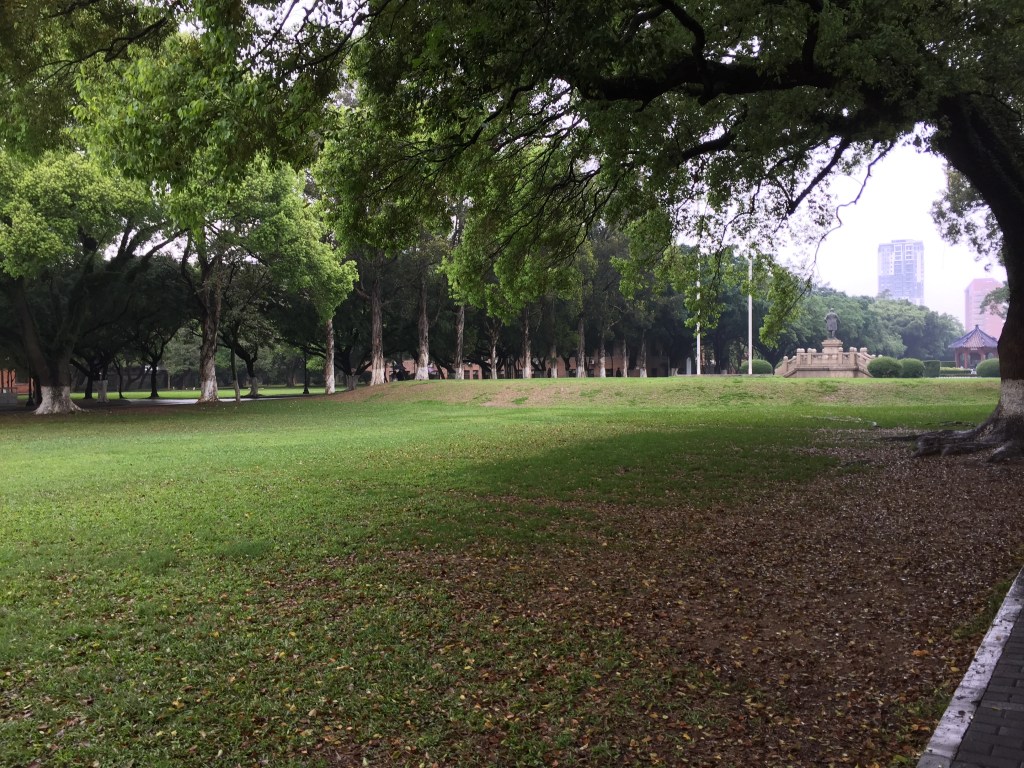
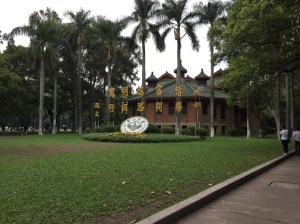
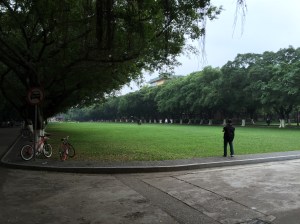
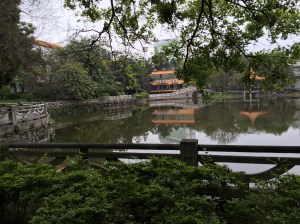
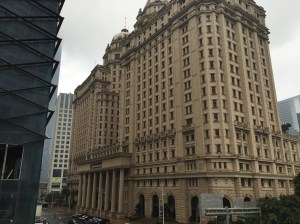
The thought of going on exchange excited me throughout uni life. After months and months of preparation, here I am in Guangzhou
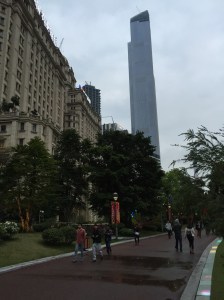
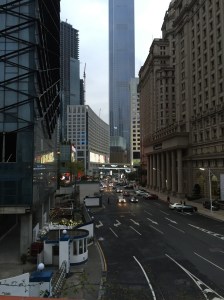
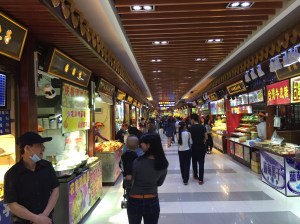
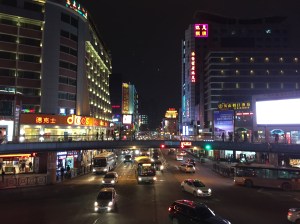
My first impressions of the city were – chaotic, polluted and people, so many people. For the first few weeks of my stay, I experienced culture shock. With 15 million people in one city, there’s little room for privacy in public places such as metros, restaurants or supermarkets. You may be pushed, squeezed when catching public transports or someone might decide to skip the line in the supermarket. While this is not acceptable back home, it is considered to be normal by the locals. Tolerance and understanding that people do things differently in a different country helped me settled in.
Guangzhou is vibrant, bustling and has abundance to offer – culture, food and history. Many local restaurants serve authentic local dishes, snacks and drinks. Cantonese cuisine is one of the most famous eight Chinese cuisines. For those who love food, Guangzhou is a paradise. There’s always something new to see, something new to eat and something new to play ranging from affordable shopping to enjoying a cruise on the Perl River. A quick one-hour high-speed train ride can take you to Hong Kong or other nearby cities in China. After two weeks of settling in, I’m loving my exchange experience here.
This was set to be the one of best experiences that uni could’ve offered me.
Besides windmills, clogs and tulips, not much else came to mind when I first thought of dutch culture. I could have done my research, but in typical wanderlust fashion I decided to jump into living in the Netherlands and learn as I went. One of my earliest and favourite dutch experiences was by far Carnaval.
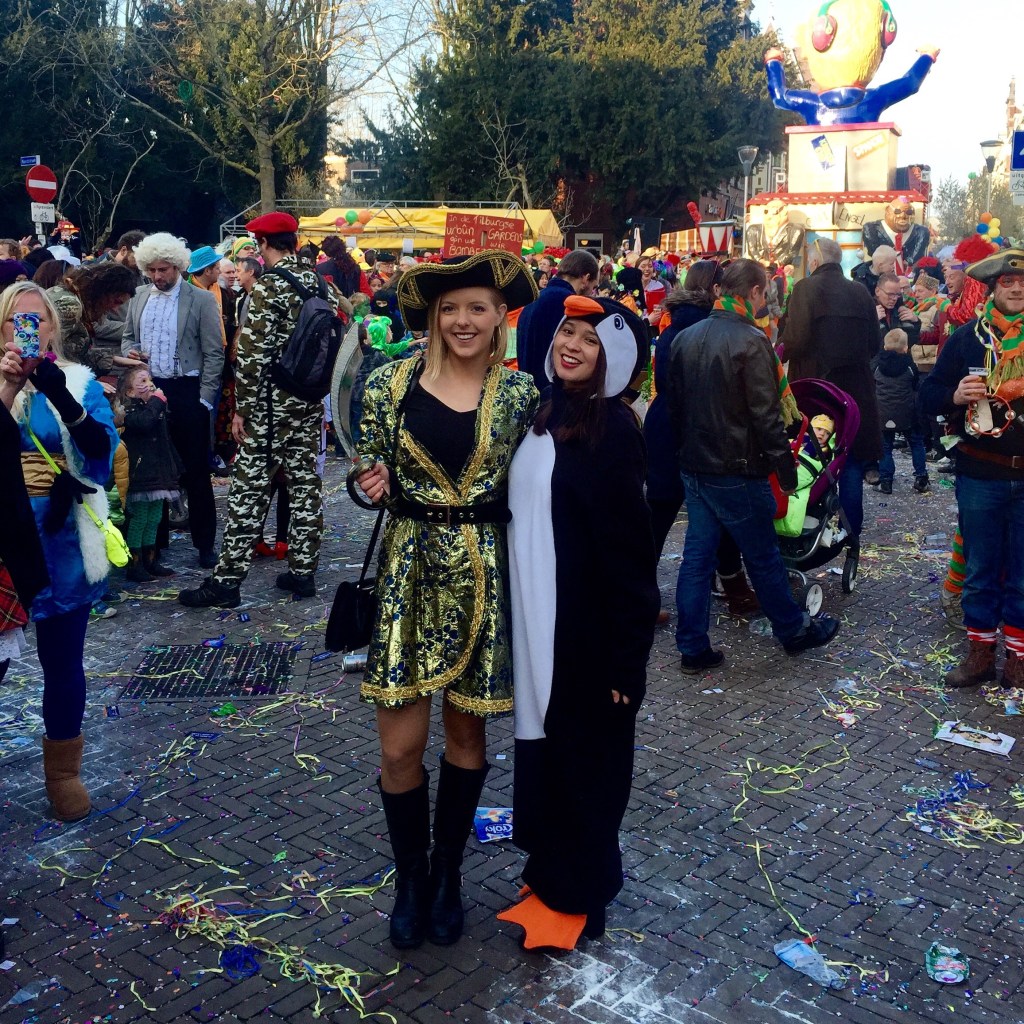
Carnaval is a Catholic festival celebrated in the south of the Netherlands, Venice and some parts of France. It is a 5 day indulgence and party period that precedes the solemn 40 days of Lent. And indulge we did. From pirates to penguins, beer bottles to baby dragons and anything else we could find, in our colourful ensembles our crew took on our home town of Tilburg and the South of the Netherlands.
After a dinner of pasta courtesy of my Italian roommates/personal chiefs we started Carnaval at our beloved student pub Carpe Diem and drank and danced the night away. Unsure how we would survive the next 5 days we decided to take the next day slowly. We had decided to attempt to attend the Eindhoven parade, and then watch an Irish rugby match (the Irish insisted), continuing to party in true Carnaval spirit. In typical student fashion we didn’t get organised in time and missed the parade but enjoyed watching the game.
The next day we went to see the parade in Tilburg city centre. The parade was incredible, strange floats of caricature men and women twisted and sang. Huge rabbits and cartoon characters peered down at us, bobbing to the music from the brass bands. The parade even featured two gate crashing Australians who just couldn’t resist being involved. After the parade we attempted to make our way home and instead got swept up in a street rave. With DJs, smoke and dutch music we pretended to know the words to, the Carnaval craziness continued. The spontaneity of the day was thrilling and we rode our bikes home exuberant.
The next two days were spent in Cologne, Germany where the famous Rose Parade took place for Carnaval. The rose parade featured men and women in traditional German costumes showering the crowd with chocolates and flowers for the ladies. Eager to get a flower, my friends and I jumped and grabbed at the raining roses, tulips and lilies. And as per tradition, though males are meant to bestow flowers on their female counterparts, we brandished flowers to each other accompanied by declarations of love and laughter. The rest of the time in Cologne was spent exploring the beautiful city, visiting the untouched Old town, the Art museum and the magnificent Cologne Cathedral which took everyone’s breath away.
Carnaval was an experience of a life time. After all where else is it not only appropriate but culturally acceptable to dress up in crazy costumes, drink copious amounts of schobler (a dutch spirit), sing as loudly as you can, and dance in the street. Carnaval is an event that gives adults the chance to be children again, and children the chance to see their heritage. In a paradoxical way, Carnaval represents the passing on of a historical religious tradition that is so irresistibly mad and outlandish. It will be an experience I will be sure to remember.