
Marine Conservation Philippines (MCP) – Global Short Program
What a way to start 2024.
Diving on some of the most incredible reefs, twice a day, 6 times a week, for 4 of the most insane weeks of my life.
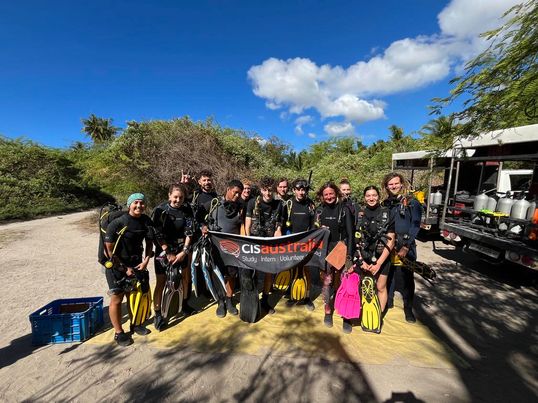
Our group of Australian uni students were indoctrinated into the life of a substrate surveyor and came to appreciate the complexity of coral and the interplay between reef structure, environmental conditions and the life that it sustains. Being able to identify corals, fish species and inverts plus understanding ecological processes within these ecosystems makes the world of diving even more rewarding. MCP takes a passive approach to conservation and works on surveying the health of the reefs. There was a big milestone recently as MCP now has enough data from previous years (8 to be exact!) that they can shift from comparing the data from Marine Protected Areas (MPAs) and non-MPAs to comparing MPA data across the years.
MCP is the brain child of two incredible people, Helle and Søren. I had the pleasure of listening to Helle tell the story of how MCP began. They’re the embodiment of good conservationists, employing transdisciplinary and co-design techniques from the get-go, most importantly a thorough understanding of all stakeholders at play. Locals, all levels of government, the tourism industry (especially diving), other environmental organisations, schools and of course themselves. Helle knew that she didn’t want to just be working FOR the community, but work ALONGSIDE them to achieve a healthy reef in order to benefit the locals and sustain their livelihoods. Throughout our time at MCP it was constantly reiterated to us that the Marine Protected Areas (MPA’s) are there to sustain the ability to fish and that local fishing is encouraged. They want a good rapport with the fisherman so that they feel comfortable asking for help when their nets are lost. MCP are more than happy to recover the lost nets as they can be expensive for the community to replace but additionally prevents them wreaking havoc on marine life. During our stay, Søren dove to 100m in an effort to recover a lost fishing net that was recently purchased with a grant the local community received. Unfortunately, it was unsuccessful, but if that doesn’t show a commitment to the community then I’m not quite sure what does. Sitting next to Helle I can really appreciate her poise and the calmness of her presence and I could understand exactly why the locals put their trust in her and Søren. Helle continued to explain that the best thing they’ve done in terms of education was to employ a local teacher. Often the alien presence of a foreigner in the classroom became the main attraction and although the children clearly enjoyed the workshops, the interaction dulled the focus on the environment.
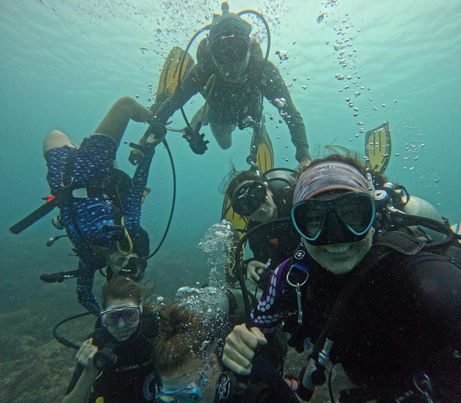
One of THE most passionate and knowledgeable people on the MCP team is Caeser. A local who was originally a fisherman and a part of MCP’s maintenance team is now a Science Officer and Diving Instructor. Growing up on the reef his knowledge of the coral and mangrove ecosystems were unmatched and he was always down for a chat about any of these topics. He would also never fail to let you know how delicious something is to eat! Another amazing local staff member is Junior Science Officer and Instructor Bea! Just by her being around to chat to, I learnt so much, not only about fish and coral but Visayan culture and language and the infectious joyousness of Filipinos.

The most valuable knowledge I left with wasn’t learning the difference between an encrusting sponge or an encrusting ascidian but the realisation that MCP’s scientific and community success is rooted in the understanding that millions of people rely on functional ecological systems to be restored for their food and livelihood. I am so grateful to be able to contribute to this project and overwhelmingly fulfilled by the new relationships I’ve built. Thanks MCP <3.
Kiara Allison
Bachelor of Science Bachelor of Creative Intelligence and Innovation
Marine Conservation in the Philippines, CISAustralia
Global Short Programs Travel Scholarship
For more information about the UTS Global Short Program visit: www.uts.edu.au/thinkglobal
Categories

 UTS Think Global
Thanks Kiara for the mention on the UTS Short program page. For anyone interested, the link to the NGO is http://www.marineconservationphilippines.org