
Navigating Adventure and Academics in Tokyo: Sophia University
Unlike many global exchange students, my journey to Sophia University in Tokyo was not one I had originally envisioned. Initially set on completing a full year’s study abroad in Beijing, China, as part of my degree and as an ICS student, those plans were soon thrown out of the window with no great thanks to the COVID-19 pandemic. Nonetheless, sometimes an unexpected turn of events can lead to some of the most incredible adventures and experiences. So simultaneously thanks to Covid, Japan emerged as a compelling opportunity, and Sophia University became a great alternative for me to explore a culture vastly different from UTS.
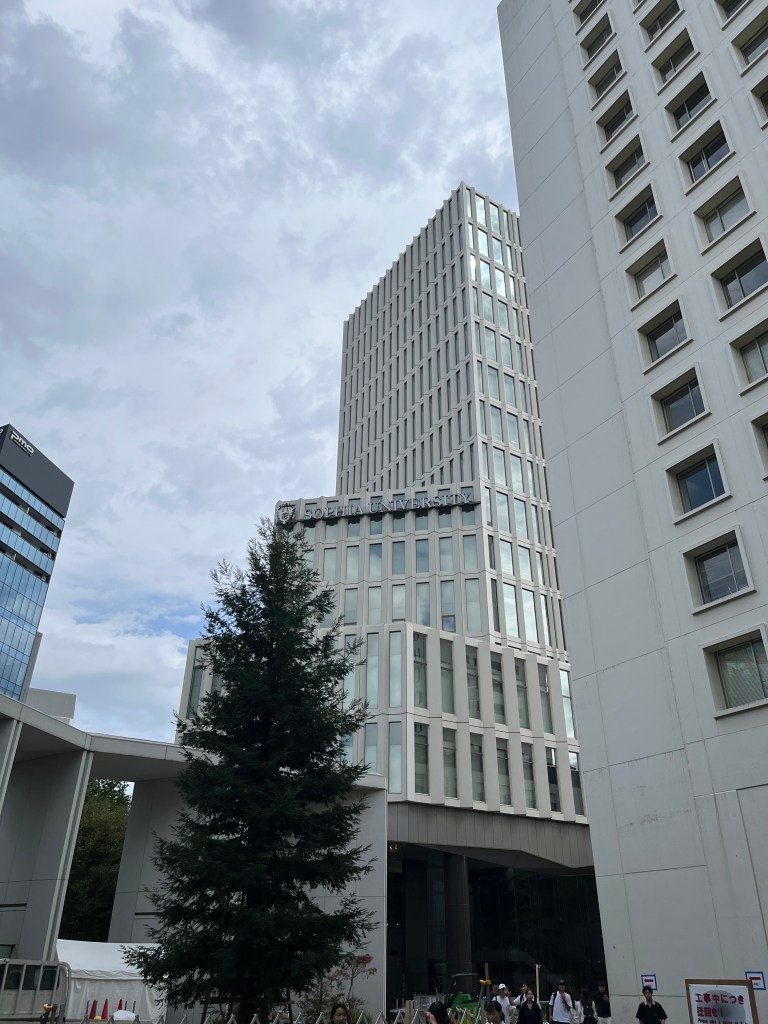
Life in Tokyo
At the time of writing this blog post, I’d already arrived in Japan about two and a half weeks ago, have started my classes, and have slowly begun adjusting to life in Tokyo, but I think a quick recap of my arrival is in order.
After clearing customs and immigration at Haneda Airport, I headed straight to one of the counters to pick up my SIM card which I had ordered online. I’m currently using a SIM card from Mobal, which I highly recommend for those who need/want a lot of data and are staying long-term. The activation process was simple, and within 30 minutes, I had 4G connection.
Since I’d been to Tokyo before on family holidays, I had some knowledge of Tokyo’s intricate yet convenient train lines. The train ride from Haneda Airport to my assigned dormitory wasn’t as difficult as I thought it’d be, apart from experiencing the incredibly humid 30-degree heat and having to carry a heavy suitcase in each hand. Within an hour or so, I’d made it to my dorm in Nakano-Sakaue – Dormy + Café Nakanosakaue to be exact.
I’ve chosen this dorm due to a few reasons, but mainly because of privacy, comfort and accessibility. Although the dorm is one of, if not, the most expensive option out of the selection of housing provided by Sophia, having a private bathroom, private shower, and being a 15-minute commute to Sophia University makes it entirely worth it. (Thanks mum and dad for helping me pay for my room!) However, if you’re someone who wants to meet other students and interact with people, I wouldn’t recommend this dorm as there isn’t really a communal area for people to socialise in. Dormy + Café Nakanosakaue’s building used to be a business hotel that had been recently renovated into a dormitory, so you can expect the sort of privacy a regular hotel normally has. The café next door does serve free breakfast though!

In these two short weeks, I haven’t experienced Tokyo as much as I’ve wanted to, which will hopefully (no doubt) change in the future. The dorm is situated 2 stations away from Shinjuku, so exploring, shopping, and eating has been relatively easy. My first proper meal in Japan was at Ichiran, a popular and affordable chain ramen restaurant famous for their rich pork-based broth. You order what you want from a unique vending machine and get seated at these individual booths – perfect for introverted people! One quick tip, if you have enough room in your belly, make sure to order a bowl of rice and dump it in your leftover broth. Thank me later 🙂
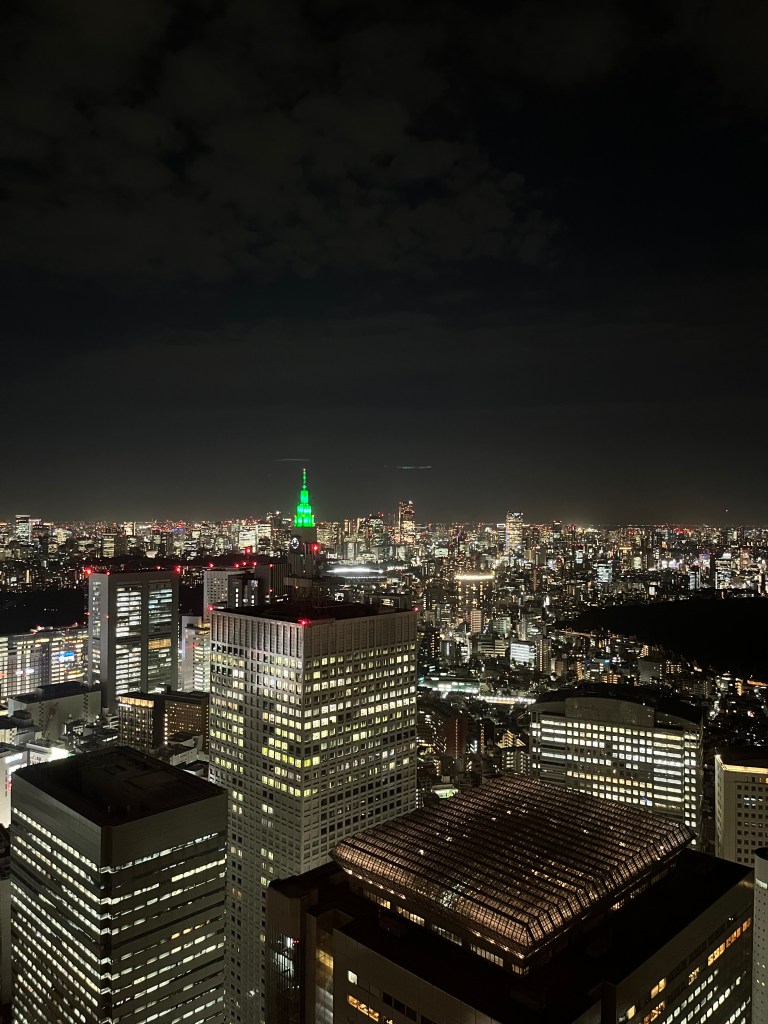
One of my earliest adventures in Tokyo was ascending to the top of the Tokyo Metropolitan Government Building in Shinjuku at night. I’d met up with another UTS student who is also currently attending Sophia University, and when figuring out what we should do whilst sat in a Starbucks in the middle of Shinjuku, we thought it’d be a fun idea to witness the city’s skyline at night. The views from the observation deck were amazing, especially for a place where you don’t need to buy a ticket or line up to go to the top! Being able to see Tokyo’s skyline at night was such a memorable experience, and I know for sure I’ll be visiting more observation decks in the future.
Life at Sophia University
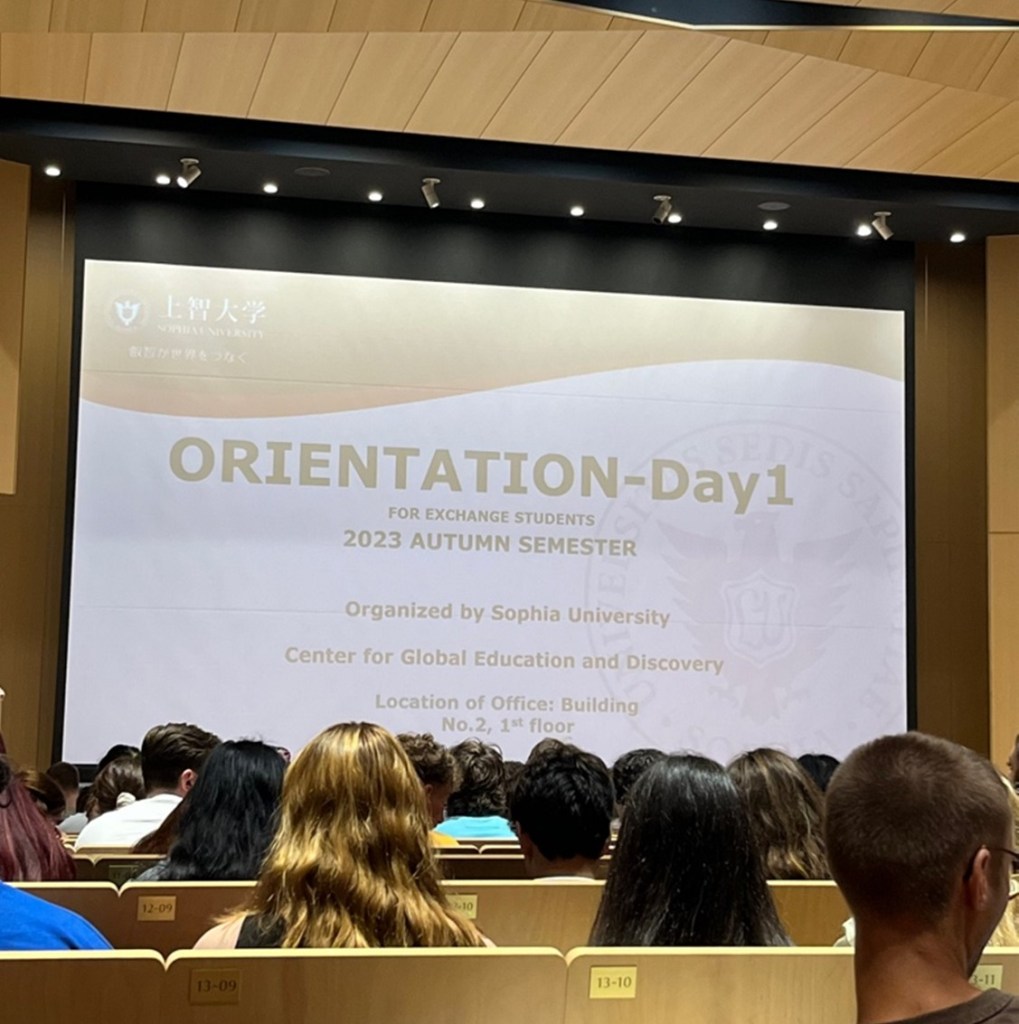
Sophia University prepared 2 orientation days which were both mandatory for exchange students to attend. These sessions were extremely helpful and provided a lot of important information regarding subject/course/class registration, how to use Moodle (UTS Canvas equivalent), and any safety procedures. We also received our student ID cards and had to pay 800yen for some sort of ‘Personal Accidental Insurance’. Be sure to use this time to meet and socialise with other exchange students.
I’m currently studying 4 subjects at Sophia (or 16 credit points), which is equivalent to 24 UTS credit points. These subjects include Modern Japan, Japanese Popular Culture, Chinese Cultural History, and Introduction to Cultural and Social Anthropology, all of which are under the Faculty of Liberal Arts (FLA). Do note that all subjects in FLA are taught in English. Each of these subjects have 2 classes per week, making a total of 8 classes a week which is great as exchange students are required to take a minimum of 10 hours of classes or 6 classes a week as required by the student visa. If you decide to change subjects (which you can only do within the first week of classes), make sure to decide quickly as you’ll still need to send UTS an eRequest to have those subjects approved, otherwise you won’t be able to withdraw from any extra subjects you may be enrolled in at Sophia until the withdrawal period, which is about 2 months into the semester.
Classes and teaching styles differ quite a bit from UTS. First off, classes follow the format of periods, much like high school in Australia, which makes queueing up at the cafeteria for lunch a rush as all students try to take advantage of the cheap food that Sophia offers at the same time. Class attendance is also fairly strict. In most subjects, attendance and participation make up a certain percentage of your final grade, and being late to class can also affect those grades. Unlike UTS, classes at Sophia are more like seminars and don’t follow the UTS structure of having both lectures and tutorials. This means some subjects may have over 100 students whilst others may only have around 30 – entirely dependent on the popularity of the subject.
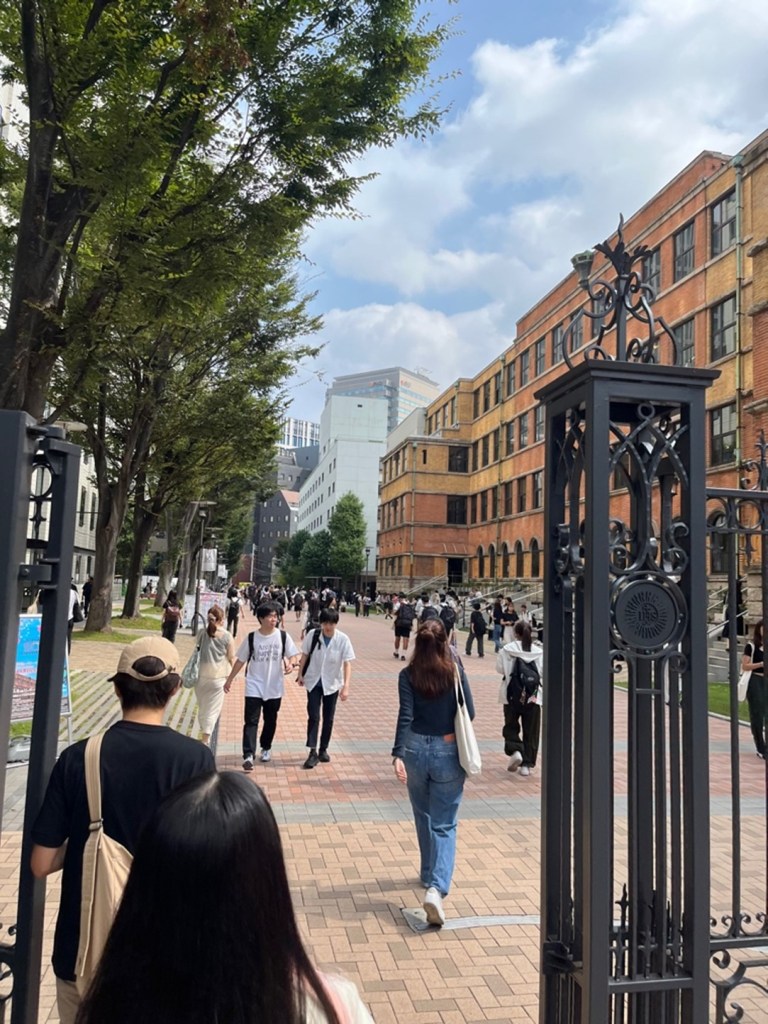
Sophia’s campus feels a lot like UTS’s and is situated right next to Yotsuya station, making it very easy to commute to. There are a few cafeterias on campus which all sell incredibly cheap food, averaging about 500 yen or less for a meal set, great for us students on a tight budget. There are also a variety of food trucks scattered around campus during lunchtime, which serve as a great alternative if you don’t want to wait in line at the cafeterias, a 7-Eleven on campus, and other food options located close to and around the university.
Final Tips
Although I’m only a couple weeks into my exchange, everything I’ve experienced has been valuable, memorable, and no doubt makes me want to continue exploring and immersing myself in Japan.
Do make sure to prepare all your documents ahead of time, especially when you’re in the process of applying for Sophia University. Exchange students are also required to register their status of residence and apply for the national health insurance at the local city office within 14 days of arrival. The process may feel difficult, but I’ve found that the workers at the city office are all extremely diligent and helpful, even if they don’t speak any English.
Remember to buy a student commuter pass as soon as you received your student ID card, which you can do at any station office. You can travel for free between your dormitory and the university campus and can also go to any of the stations in between for free! As for bank accounts, I don’t really have a lot of knowledge on different banks, but I currently have a HSBC account which is great as you can transfer your AUD into JPY, and have your account hold your JPY until you want to spend or withdraw any of that money.
Finally, put yourself out there! Yes, you may feel nervous as it 100% feels like the first day of school all over again, but everyone is in the same boat as you, so be proactive and try talk to other students. If you’re planning to go on exchange, make sure to relish the opportunity and appreciate being able to study abroad! Most importantly, have fun! 🙂
Lucien Kuang
Bachelor of Public Communication and Bachelor of International Studies
Sophia University, Japan
New Colombo Plan Mobility Grant Recipient
For more information about the UTS Global Exchange program please visit: www.uts.edu.au/thinkglobal
Categories
DAB, Global Exchange, International Studies, Japan, New Colombo Plan

 UTS Think Global