Learning to See – Aboriginal Heritage and Culture at the Coal Loader Centre for Sustainability
When you are walking in your neighbourhood, what do you see? Maybe you see other people living their lives, maybe you see trees and birds and the natural world, maybe you can see the history of that place embodied in in its landscape… As an exchange student, I’ve been on my fair share of excursions to the some of the most beautiful natural landscapes in the world. But I have realised that though I looked at the natural world around me, I did not see. At a BUILD field trip to the Coal Loader, I had the opportunity to question the way I look at the world and learn a new way of seeing. It was a privilege to have Karen Smith – Education Officer for the Aboriginal Heritage Office – bring us on a journey and tell us about what she was seeing.

Banksia Tree
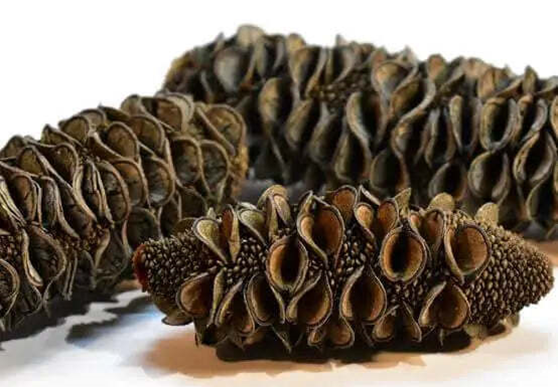
(Image of cones from a Banksia tree)
When I first saw the cones of the Banksia tree that Karen showed us, I thought that it was some kind of shellfish. But she explained that the cones were once gathered by Aboriginal people to be used as torches and fire starters, and that one cone can burn for many hours. I was reminded of the stories Karen had told us about Aboriginal resistance to colonisation: about Pemulwuy, a Bidjigal man who led resistance against European invasion for many years. This was very different to what I had previously understood about the ‘peaceful’ settlement of Australia – I did not see that Aboriginal people had never given up on their land nor did they ever cede sovereignty. Now when I spot a Banksia tree, I see its connection to Aboriginal life and sovereignty, and in its cones I see seeds of continuance: a resistance to colonial violence that continues to burn.
Paper Bark
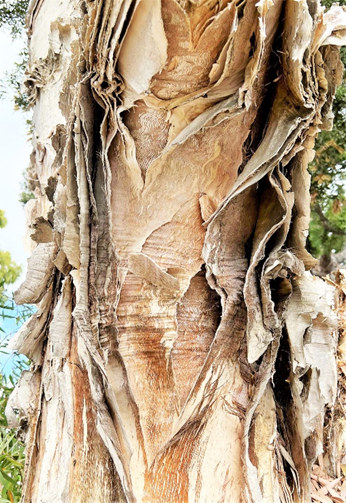
(Image of a Paper Bark Tree)
I have often encountered Paper Bark trees on my travels in Australia, but never before did I stop to look closely. Karen passed us all a piece of its inner bark, and I was shocked by how velvet soft it was, and to learn that it has antibacterial properties. Karen explained that where European colonisers saw acres of bush to be cut down for arable farming, Aboriginal people have always seen Country; a place that provides food, medicine, shelter and a deep spiritual connection. It made me realise how the invasion of Australia caused not just human and ecological losses, but a devastating loss of cultural knowledge. This underscored to me my responsibility as a global citizen to protect the environment and all life, especially through prioritising Aboriginal land rights. I know that the next time I look at a paper bark tree, I will see it as an embodiment of millennia of Aboriginal knowledge, and a reminder of the necessity of centring Aboriginal voices in the fight against the destruction of our natural world, not least from climate change.

(a photograph I took of a Sydney Red Gum tree a few days after the field trip. Karen taught us that they are sometimes called ‘grandmother trees’ and that the gum has medicinal properties)
Learning to See
The way I see has been changed thanks to Karen’s presentation on Aboriginal culture and heritage, and getting to walk with her to learn about the Country around us. The biggest takeaway for me as an emerging professional was realising the impact of connecting to the natural world. Being an empowered global citizen is about making connections far beyond your LinkedIn network – it is about being grounded in the web of life that surrounds you. As an exchange student, I am just a visitor to Gadigal Country where I live and work, but I have so much to learn from it. We cannot save the natural world if we do not acknowledge our own place in its ecosystems, and we definitely cannot solve the wicked global problems that face us without Indigenous knowledge. Today, I saw a group of white ibises making their nests in a willow tree on the street where I live – my new neighbours. What do you see?
Emily Cathcart
Exchange Undergraduate student from Ireland

 UTS Think Global